September 14, 2026
Our 37-bit access control RFID blank HID cards are designed for organizations that need reliable proximity credentials for door access, employee identification, parking systems, and other low-frequency RFID applications. These contactless cards can be supplied in standard CR80 size and customized with different materials, printing options, chip configurations, and card formats according to your access control requirements.
Operating at 125 kHz, low-frequency RFID technology is widely used in legacy and proximity access control systems. Depending on the required credential format and access control system, compatible options can be selected for new installations, replacement cards, or large-scale credential programs.
For applications specifically requiring a 37-bit credential, we recommend confirming the reader, controller, card format, facility code, card number range, and encoding requirements before ordering. A “37-bit” specification describes the credential data format; it does not by itself identify one universal RFID chip or guarantee compatibility with every HID access control system.
What Are 37-Bit Access Control RFID Cards?
37-bit access control cards are contactless credentials designed to communicate with compatible RFID readers. When a card is presented near the reader, the reader detects the card and transfers the credential information to the access control controller.
The 37-bit format can be used in different access control configurations. HID documentation, for example, identifies multiple 37-bit credential formats, demonstrating why the exact format should be confirmed rather than treating every 37-bit card as interchangeable.
Our blank RFID cards can be supplied for customers who need a clean card surface for later personalization or who require custom printed employee, membership, visitor, or identification cards.
Key Features
- 125 kHz low-frequency RFID technology
- Contactless operation
- Standard CR80 card format
- PVC, ABS, or PET material options
- Glossy, matte, or frosted surfaces
- Custom full-color or monochrome printing
- Suitable for access control and identification applications
- Optional barcode, magnetic stripe, signature panel, and other personalization features
- OEM and bulk production available
- Custom card configurations available on request

Specifications
Material: PVC, ABS,PET
Surface: glossy, matte, frosted
Size: 85.5*54*0.84mm, or customized
Frequency: 125khz
| Item: | 125khz RFID HID cards |
| Material: | PVC, PET, ABS |
| Surface: | glossy, matte, frosted |
| Size: | standard credit card size 85.5*54*0.84mm, or customized |
| Frequency: | 125khz/LF |
| Chip type: | -LF(125KHz), TK4100, EM4200, ATA5577, HID etc -HF(13.56MHz), NXP NTAG213, 215, 216, Mifare 1k, Mifare 4K, Mifare Ultralight, Ultralight C, Icode SLI, Ti2048, mifare desfire, SRIX 2K, SRIX 4k, etc -UHF(860-960MHz), Ucode G2XM, G2XL, Alien H3, IMPINJ Monza, etc |
| Reading distance: | 3-10cm for LF&HF, 1m-10m for UHF depends on the reader and envirnment |
| Printing: | silk screen and CMYK full color printing, digital printing |
| Available crafts: | -CMYK full color & silk screen -signature panel -magnetic stripe: 300OE, 2750OE, 4000OE -barcode: 39,128, 13, etc |
| Application: | Widely used in transportation, insurance, Telecom, hospital, school, supermarket, parking, access control, etc |
| Leadtime: | 7-9 working days |
| Package: | 200 pcs/box, 10 boxes/carton, 14 kg/carton |
| Shipping way: | by express, by air, by sea |
| Price term: | EXW, FOB, CIF, CNF |
| Payment: | by L/C, TT, western union, paypal, etc |
| Monthly capacity: | 8,000,000 pcs / month |
| Certificate: | ISO9001, SGS, ROHS, EN71 |

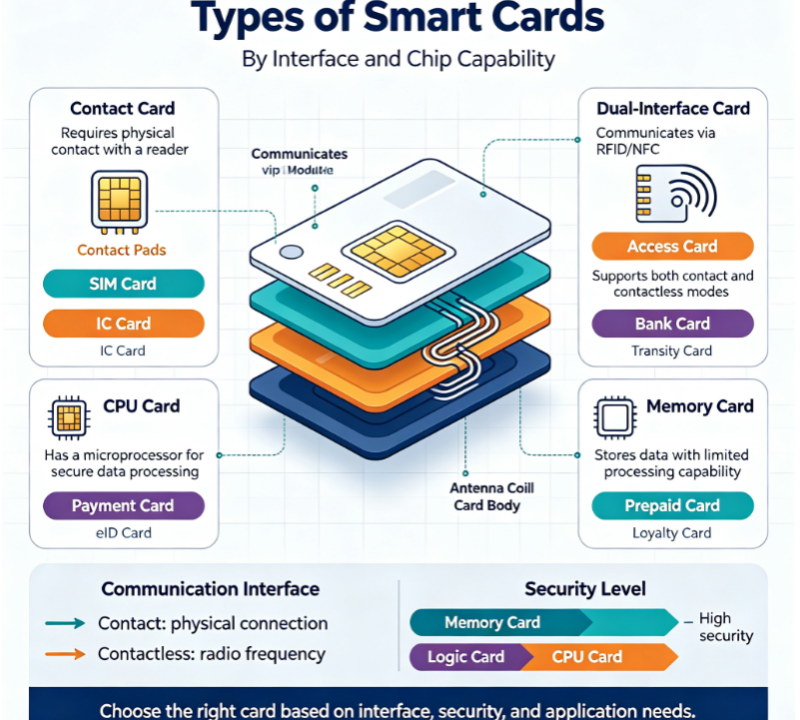
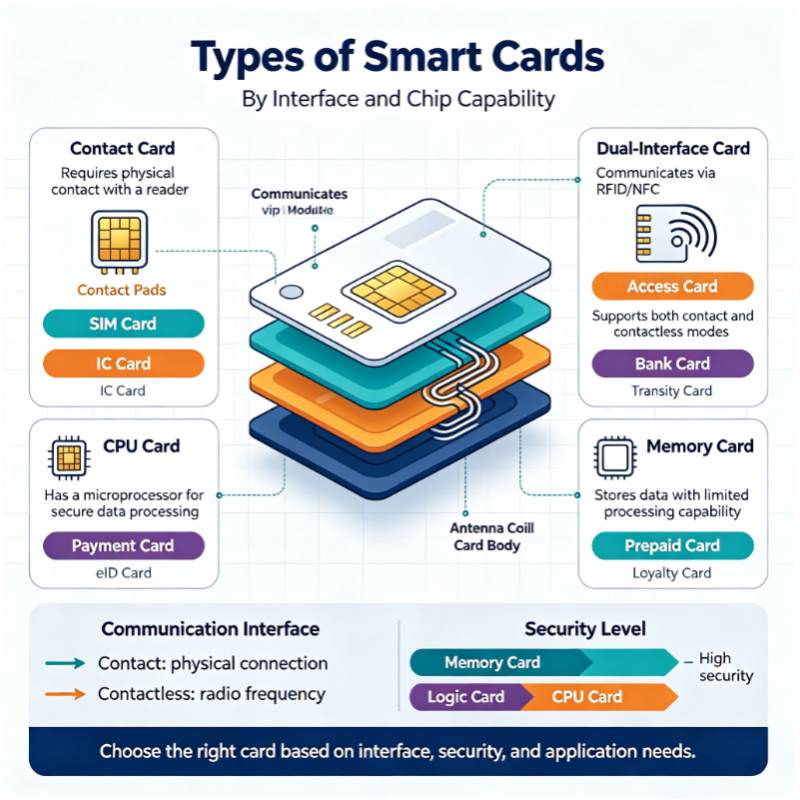
HID provides the industry’s broadest range of smart card-based credentials such as cards, tags and keyfobs. As part of its portfolio, HID offers non technology IDs as well as single technology, multi technology, and contact chip-based smart .
Package details:

Why Choose a 37-Bit RFID Access Card?
Access control systems use credential formats to distinguish authorized users and transmit identification information to the controller. A 37-bit format can provide more available data space than simpler credential formats, depending on the specific implementation.
However, bit length should not be considered independently from the complete credential format. A compatible access control system may also require a particular facility code, card number range, parity structure, or proprietary format.
For this reason, the best purchasing approach is to match the replacement card to the existing access control system rather than ordering solely by frequency or bit count.
26-Bit vs. 34-Bit vs. 37-Bit Access Cards
| Feature | 26-Bit | 34-Bit | 37-Bit |
|---|---|---|---|
| Common Use | Legacy access control | Access control | Access control and extended formats |
| Data Capacity | Lower | Higher than 26-bit | Depends on format |
| Facility Code | Often used | System dependent | Format dependent |
| Card Number | Format dependent | Format dependent | Format dependent |
| Compatibility | Depends on reader/controller | Depends on system | Depends on system |
| Best For | Existing 26-bit systems | Existing 34-bit systems | Existing compatible 37-bit systems |
| Verification Needed | Yes | Yes | Yes |
The important point is that 37-bit does not automatically mean universal compatibility. HID’s own documentation lists different credential formats under 37-bit configurations, reinforcing the need to verify the exact format before purchasing.
37-Bit RFID vs. Other RFID Frequencies
RFID cards are available in multiple frequency ranges. Selecting the correct frequency is essential because a 125 kHz card should not be assumed to work with a 13.56 MHz or UHF reader.
| RFID Type | Typical Frequency | Common Applications | Typical Read Characteristics |
|---|---|---|---|
| LF RFID | 125 kHz | Access control, identification | Short-range |
| HF RFID | 13.56 MHz | Smart cards, NFC, transit, access | Short-range |
| UHF RFID | 860–960 MHz | Inventory, logistics, asset tracking | Longer-range |
Our 37-bit access control card is primarily positioned for 125 kHz low-frequency access control applications. If your reader operates at 13.56 MHz, a different RFID technology and chip configuration may be required.
HID also maintains a broad portfolio covering low-frequency, high-frequency, smart-card, and other credential technologies, so matching the card to the reader remains essential.
Available Card Materials
Different projects may require different card materials based on durability, appearance, cost, and intended use.
PVC RFID Cards
PVC is a popular choice for standard employee ID cards and access credentials. It provides a smooth surface suitable for high-quality printing and is appropriate for general indoor applications.
ABS RFID Cards
ABS can be considered when additional mechanical durability is required. It is suitable for applications where cards may experience frequent handling or more demanding operating conditions.
PET RFID Cards
PET offers another material option for customers looking for a different balance of flexibility, durability, and card construction.
| Material | Main Advantage | Typical Application |
|---|---|---|
| PVC | Easy printing and cost efficiency | Employee access cards |
| ABS | Durable construction | Frequent-use credentials |
| PET | Flexible material option | Specialty cards and identification |
The final material should be selected together with the required chip, antenna, printing process, and environmental conditions.
Custom Printing and Personalization
A blank RFID card does not need to remain visually blank. We can customize the card surface with your company logo, employee information, card number, branding, or other visual elements.
Available personalization options may include:
- Company logo
- Employee name
- Employee photograph
- Card number
- Barcode
- QR code
- Signature panel
- Department or job title
- Color background
- Security artwork
- Sequential numbering
- Magnetic stripe
Full-color CMYK printing is suitable for professional employee ID programs, while simpler one-color or silk-screen printing can be considered for cost-sensitive projects.
For large credential programs, numbering and card personalization can also be coordinated with the required credential data.
Access Control Applications
37-bit RFID cards can be used in a range of environments where compatible 125 kHz proximity credentials are required.
| Application | How the Card Is Used |
|---|---|
| Office Access | Employee entry through controlled doors |
| Commercial Buildings | Staff and tenant identification |
| Schools | Student and staff access |
| Hospitals | Employee and restricted-area access |
| Parking Facilities | Vehicle and user identification |
| Hotels | Staff access and identification |
| Warehouses | Controlled-area access |
| Membership Systems | Member identification |
| Residential Buildings | Resident access |
| Industrial Facilities | Restricted-area access |
The appropriate credential format depends on the access control infrastructure already installed at the site.
Replacement Cards for Existing Access Control Systems
When replacing an existing access card, the safest approach is to collect the technical information from the current system first.
We recommend checking:
- Reader frequency — for example, 125 kHz or 13.56 MHz.
- Credential technology — proximity, smart card, or another RFID technology.
- Bit format — such as 26-bit, 34-bit, or a specific 37-bit format.
- Facility code — if used by the system.
- Card number range — the credential identification number.
- Reader and controller model — this helps confirm compatibility.
- Existing card sample — useful for identifying physical and technical characteristics.
- Encoding requirements — confirm whether the card needs to be pre-programmed.
This information can significantly reduce the risk of ordering cards that look identical but are technically incompatible.
What Is the Difference Between a Blank RFID Card and a Pre-Encoded Card?
A blank card generally refers to a card supplied without the customer’s final visual personalization or credential data. A pre-encoded card is supplied with the required credential information according to an agreed specification.
| Card Type | Printing | Credential Data | Recommended For |
|---|---|---|---|
| Blank RFID Card | Blank or standard | Depends on configuration | Customer-side personalization |
| Printed RFID Card | Custom | Depends on configuration | Branded ID programs |
| Pre-Encoded RFID Card | Custom | Programmed before shipment | Ready-to-use access credentials |
| Fully Personalized Card | Custom | Programmed + numbered | Large access control projects |
Please note that “blank” does not necessarily mean “rewritable.” Some RFID technologies and credential formats are fixed or require specific programming equipment. The chip type and encoding method should therefore be confirmed before placing an order.
How to Select the Right 37-Bit RFID Card
Choosing the correct card is easier when the selection process starts with the access control system rather than the card itself.
Step 1: Identify the Reader
Check the model number and operating frequency of your existing RFID reader.
Step 2: Confirm the Credential Format
Determine whether the system requires a particular 37-bit format. A generic “37-bit” description may not be sufficient because different formats can exist within the same bit length.
Step 3: Confirm the Chip Technology
The chip must be compatible with the reader and required credential format. Do not select a chip solely because it operates at 125 kHz.
Step 4: Confirm Card Data
If cards need to be encoded before delivery, provide the required card numbers, facility codes, or other credential parameters.
Step 5: Select Card Construction
Choose PVC, ABS, or PET based on your application, printing requirements, and expected usage.
Step 6: Approve a Sample
For replacement projects or large orders, sample approval can help verify card appearance, dimensions, printing quality, and system compatibility before mass production.
Why Order Custom RFID Cards in Bulk?
Bulk production is suitable for organizations replacing a large number of access cards or establishing a new employee credential program.
A customized production program can combine:
- Consistent card dimensions
- Consistent RFID performance
- Company branding
- Sequential numbering
- Pre-encoded credentials
- Individual personalization
- Bulk packaging
- OEM production
This approach can help organizations maintain consistent credentials across multiple departments, buildings, or locations.
Card Design Options
A professional access card should balance visual identification with practical usability. Common design elements include a company logo, employee photo, cardholder name, department, employee ID, and access card number.
For cards used in security-sensitive environments, organizations may also consider visual security features such as custom backgrounds, microtext, UV printing, or other anti-counterfeit design elements where appropriate.
The RFID function remains independent of most visual printing elements, allowing the same credential technology to be integrated into different card designs.
Quality and Production Considerations
For access control cards, consistent manufacturing is important because large credential programs may involve hundreds or thousands of cards.
Production quality should be evaluated across several areas:
| Quality Item | What to Check |
|---|---|
| Card Dimensions | Consistent CR80 dimensions |
| Thickness | Consistent card thickness |
| Surface | Smooth and suitable for printing |
| Antenna | Properly integrated into card |
| Chip | Correct technology and configuration |
| Printing | Accurate colors and sharp details |
| Numbering | Correct sequence and legibility |
| Encoding | Matches approved credential format |
| Packaging | Protected during transportation |
For large projects, a pre-production sample can be used to confirm the final specification before mass production.
Frequently Asked Questions
Are these cards compatible with all HID readers?
No. Compatibility depends on the reader frequency, credential technology, bit format, and access control configuration. A 37-bit label alone does not guarantee compatibility with every HID reader or controller.
HID’s own product documentation shows that its access control ecosystem includes multiple credential technologies and formats.
Are 37-bit cards the same as 26-bit cards?
No. 26-bit and 37-bit refer to different credential data formats. The correct choice depends on the access control system and controller configuration.
Do 37-bit cards operate at 125 kHz?
They can be configured for 125 kHz proximity applications, but bit length and radio frequency describe different aspects of a credential. Always confirm both parameters before ordering.
Can I use these cards as replacement cards?
Yes, provided the replacement card matches the existing system’s frequency, technology, credential format, and programming requirements. We recommend providing the existing card or system information for confirmation.
Can you print our company logo?
Yes. Custom printing can include logos, employee information, photos, card numbers, barcodes, QR codes, and other approved artwork.
Can the cards be pre-encoded?
Pre-encoding may be available depending on the selected chip and credential format. Please provide the required card format and data structure for confirmation.
What is the standard card size?
The standard card size is approximately 85.5 × 54 mm, similar to the common CR80 identification card format. Custom dimensions may also be discussed for specific projects.
What information should I provide before requesting a quotation?
For the most accurate quotation and compatibility assessment, provide the reader model, card frequency, bit format, facility code if applicable, card number range, required quantity, card material, printing artwork, and whether the cards need to be pre-encoded.
37-Bit RFID Card Ordering Checklist
Before placing an order, use the following checklist:
| Requirement | Confirmed? |
|---|---|
| Reader frequency | ✓ |
| RFID technology | ✓ |
| 37-bit credential format | ✓ |
| Facility code, if applicable | ✓ |
| Card number range | ✓ |
| Chip configuration | ✓ |
| Card material | ✓ |
| Card thickness | ✓ |
| Printing artwork | ✓ |
| Encoding requirement | ✓ |
| Quantity | ✓ |
| Packaging requirement | ✓ |
| Sample approval | Recommended |
Providing complete information at the quotation stage helps avoid compatibility issues and makes it easier to select the appropriate card configuration.
Get a Quote for 37-Bit Access Control RFID Cards
Whether you need replacement proximity cards, employee access badges, custom printed RFID cards, or a large OEM production run, we can help configure the card according to your application.
Send us your reader model, existing card specification or sample, required bit format, quantity, and artwork. Our team can review the requirements and recommend a suitable RFID card configuration for your access control system.
For projects involving an existing HID-compatible infrastructure, confirming the exact credential format is particularly important. HID’s current documentation covers multiple Wiegand and credential configurations, so technical verification should be completed before mass production.