October 21, 2026
Introduction: Solving the #1 Challenge in Metal Asset Tracking
In today’s data-driven industrial landscape, losing track of high-value metal assets isn’t just an inconvenience—it’s a direct hit to your bottom line. Traditional barcode systems fail on curved, dirty, or recessed metal surfaces, while standard RFID tags become useless when placed directly on conductive materials like steel or aluminum. This is the critical pain point that the 860–960 MHz UHF anti-metal RFID tag was engineered to solve.
This comprehensive guide goes beyond basic specifications. We’ll explore why this specific tag is the trusted choice for global enterprises, how its unique design overcomes the physics of metal interference, and the real-world ROI you can achieve across manufacturing, IT, logistics, and defense sectors. If you’re evaluating solutions for tracking metal assets, this is your definitive resource.
Why Standard RFID Fails on Metal (And How Our Tag Fixes It)
Metal and radio waves are natural enemies. When a conventional RFID tag is mounted on metal, two destructive phenomena occur:
- Eddy Currents: The metal surface absorbs the tag’s RF energy, drastically reducing its power and read range.
- Detuning: The metal alters the tag antenna’s resonant frequency, preventing it from communicating effectively with the reader.
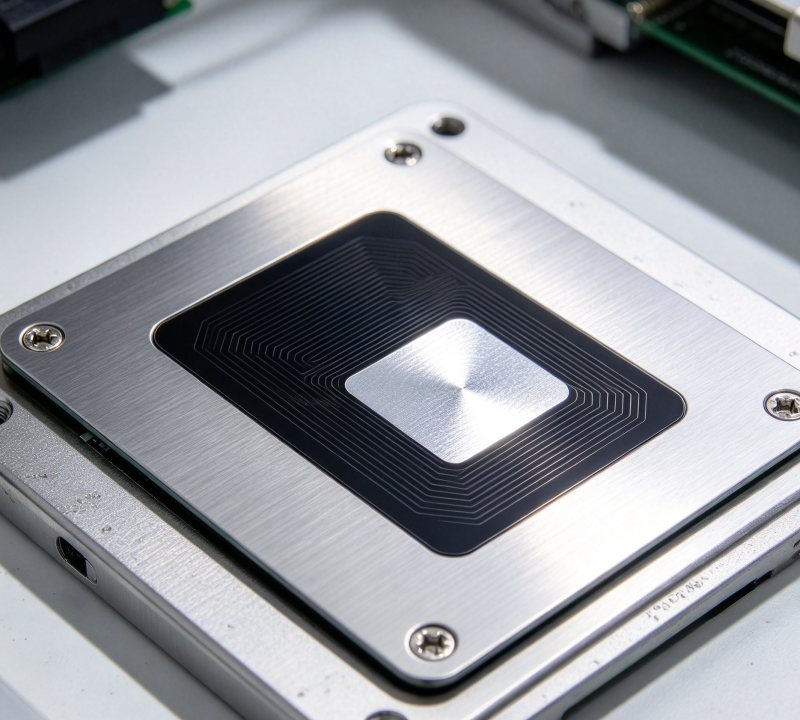
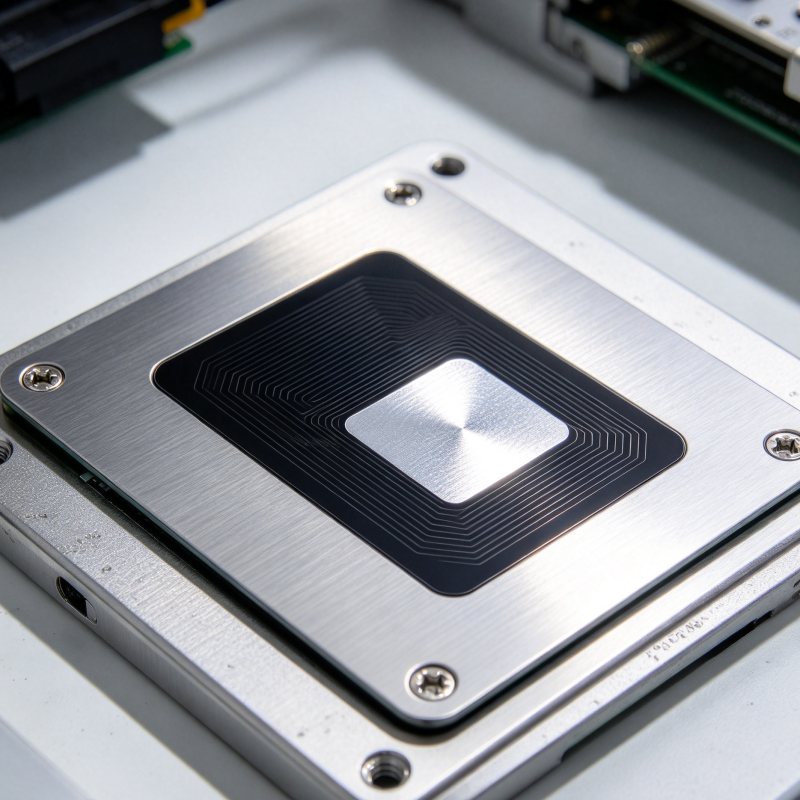
Our anti-metal tag isn’t just a standard label with a sticker. It’s a precision-engineered solution featuring a high-permittivity dielectric spacer between the RFID inlay and the metal surface. This spacer acts as a buffer, forcing the antenna’s electromagnetic field away from the metal, allowing it to radiate efficiently. The result? Consistent, reliable performance where other tags simply cannot function.
Advantages
- Mounted on a metal surface for stable operation;
- 100% tested by the European Union’s label compliance test system;
- 100% passed the memory write test;
- Material and design are tested for reliability;
- Widely verified and used by well-known domestic and international customers
Specifications
| Model | |
| Protocol | EPC Class1 Gen2; ISO18000-6C |
| frequency | 860-960MHz |
| Chip | Impinj M4QT or R6 |
| memory | Impinj M4QT:EPC96bits TID 96bits User 512bits R6:EPC 96bits TID 96bits |
| Work | Read and Writer |
| memory lead time | 50 years |
| Warranty | 1year |
| Material | FR4 |
| Color | black |
| Size | 85m*20*11mm |
| Temperature | -25℃~ +85℃ |
| Storage temperature | -30℃~ +110℃ |
| Save humidity | 5%~95% |
| Adhesive | 3M 300LSE |
| weight | 1g |
| package | 500pcs/bag |
| Alcohol test | 95%Concentration alcohol test passed |
| High and low temperature alternating test | -40℃ to +150℃ 7 times high and low temperature alternating cycle, a total of 2 consecutive days passed the test |
| RoHS | yes |
| IP degree | IP65 |
| Handheld reader on metal surface | 0-20M |
| Polarization direction | Linear Polarization |
| Text | 100% tested it before we send out |
Application
- Tool management;
- IT facility chassis management;
- Metal container management;
- Management of office equipment and facilities with metal casings indoors and outdoors;
- Personnel inspection management;
- Fixed asset management
Proven Best Practices: How to Install Your Anti-Metal Tag for Maximum Performance
Simply sticking an anti-metal tag onto a surface isn’t enough to guarantee peak performance. Our field engineers have identified that over 60% of subpar read-range issues stem from improper installation. Follow these expert-backed steps to ensure your deployment is a success from day one.
1. Surface Preparation is Non-Negotiable
Before applying the tag, the metal surface must be clean, dry, and free of oil, grease, or loose paint. Use a lint-free cloth dampened with isopropyl alcohol (IPA) to wipe the area thoroughly. Any contamination creates a barrier that prevents the industrial-grade 3M™ 300LSE adhesive from forming a molecular bond with the metal, leading to premature detachment in harsh environments.
2. Master the Art of Orientation
Our tags use a linearly polarized antenna design, which means their performance is highly dependent on alignment with the reader’s antenna. For maximum read range:
- Fixed Portal/Gate Applications: Align the long axis of the tag parallel to the long axis of the reader antenna.
- Handheld Reader Applications: Since the reader’s orientation is variable, consider using a circularly polarized reader antenna for more consistent results, albeit with a slight trade-off in maximum range.
3. Avoid These Critical Installation Zones
Never mount a tag directly on:
- Metal Edges or Corners: The sharp geometry distorts the RF field.
- Weld Seams or Rivets: These create uneven surfaces that prevent full contact and can cause signal nulls.
- Curved Surfaces with a Radius < 50mm: While our FR4 substrate has some flexibility, extreme curves can stress the internal components. For such applications, consider a flexible anti-metal tag variant.
By adhering to these best practices, you transform a simple component into a reliable data source, ensuring your asset tracking system delivers the ROI you expect.
5 Costly Mistakes in Metal Asset RFID Projects (And How to Avoid Them)
Even with the right hardware, RFID projects on metal assets can fail if common pitfalls are overlooked. Drawing from our experience supporting hundreds of global deployments, here are the top five mistakes and how to sidestep them.
Mistake #1: Assuming All Metals Are Equal
Aluminum, stainless steel, and cast iron interact with RF signals differently. A tag that performs flawlessly on a server rack may struggle on an aluminum pallet. Solution: Always conduct a Proof-of-Concept (POC) test with your actual assets in your real environment before full-scale rollout.
Mistake #2: Ignoring the Long-Term Adhesion Challenge
Many projects succeed initially but fail months later when cheap adhesives degrade under thermal cycling or chemical exposure. Solution: Insist on tags with proven industrial adhesives like 3M™ 300LSE, which is specifically engineered for low-surface-energy materials like metals and withstands extreme conditions.
Mistake #3: Overlooking System Integration
An RFID tag is just a data point. Its true value is unlocked when integrated with your existing ERP, WMS, or CMMS software. Solution: Plan your middleware strategy early. Ensure your chosen tag’s memory structure (e.g., the 512 bits of user memory on the Monza 4QT) can support the data fields your business logic requires.
Mistake #4: Choosing Price Over Total Cost of Ownership (TCO)
A slightly cheaper tag that fails 10% of the time will cost far more in labor, rework, and lost productivity than a premium, reliable solution. Solution: Calculate your TCO based on reliability, lifespan, and support, not just the unit price.
Mistake #5: Skipping Environmental Validation
Your factory floor in summer is not the same as your warehouse in winter. Solution: Verify that your chosen tag meets the IP65 rating and temperature specifications (-25°C to +85°C) for your specific use case. Don’t assume.
Why FR4 is the Superior Choice Over Ceramic for Industrial Anti-Metal Tags
When evaluating anti-metal tags, you’ll often see two primary material options: FR4 and ceramic. While both can work, FR4 offers a compelling set of advantages for the vast majority of industrial applications.
| Feature | FR4-Based Tag | Ceramic-Based Tag |
|---|---|---|
| Cost | Lower. FR4 is a standard, mass-produced PCB material, making it highly cost-effective for large-scale deployments. | Higher. Ceramic requires specialized, high-temperature sintering processes, driving up unit costs significantly. |
| Durability | Superior Impact Resistance. FR4 is a composite laminate that is tough and can withstand drops, vibrations, and mechanical stress common in factories and warehouses. | Brittle. Ceramic is prone to cracking or shattering upon impact, which can lead to field failures. |
| Weight | Lighter. This is crucial for applications where adding weight to an asset (e.g., aerospace components, handheld tools) is a concern. | Heavier. The dense ceramic material adds unnecessary mass. |
| Design Flexibility | High. FR4 allows for complex, multi-layer antenna designs that can be finely tuned for optimal performance on various metal types and thicknesses. | Limited. The manufacturing process for ceramic restricts design complexity. |
| Ideal Use Case | General Industrial, IT, Logistics, Automotive – anywhere robustness, cost, and performance are balanced. | Extreme High-Temperature Environments (>200°C), such as inside certain industrial ovens or engine components, where FR4 would degrade. |
For 95% of asset tracking scenarios—from data center servers to factory tooling—the FR4-based anti-metal tag provides the optimal blend of performance, ruggedness, and value, making it the smart, future-proof choice for your business.
Anti-Metal vs. On-Metal Tags: Clearing Up the Confusion
A common point of confusion in the market is the difference between “anti-metal” and “on-metal” RFID tags. While the terms are often used interchangeably, understanding the subtle distinction can help you make a more informed choice.
- On-Metal Tags: This is a broad category that refers to any RFID tag designed to function when placed directly on a metal surface. It’s a functional description.
- Anti-Metal Tags: This term typically implies a specific design approach within the on-metal category. True anti-metal tags, like ours, incorporate a specialized dielectric or ferrite layer that actively isolates the antenna from the metal’s disruptive eddy currents. This isn’t just about working on metal; it’s about being engineered to counteract the metal’s negative effects.
In essence, all high-performance anti-metal tags are on-metal tags, but not all on-metal tags are true anti-metal solutions. Some cheaper alternatives might simply use a thicker foam spacer, which offers limited performance and poor long-term reliability. Our FR4-based design with its integrated high-permittivity layer represents the gold standard in true anti-metal technology, ensuring consistent, long-range performance across diverse metal types and harsh industrial conditions.
Your Pre-Deployment Checklist: How to Test Tag Performance Like a Pro
Don’t gamble on your asset tracking project. A simple, controlled Proof-of-Concept (POC) test before full-scale deployment can save you significant time, money, and frustration. Here’s a step-by-step guide:
- Gather Your Real-World Assets: Collect a representative sample of the actual metal items you intend to track (e.g., different server models, various tool types, or container materials).
- Prepare Your Environment: Conduct the test in the actual location where the system will be used. This includes the same lighting, ambient RF noise, and typical reader positions (handheld or fixed portal).
- Define Your Success Metrics: What read range do you need? Is 99% read accuracy acceptable, or do you require 99.9%? Be specific.
- Run Controlled Tests:
- Static Read Range: Place a tagged asset at increasing distances from the reader until reads become unreliable. Note the maximum reliable distance.
- Orientation Test: Rotate the tagged asset through 360 degrees to see if performance varies significantly with angle.
- Multi-Tag Read Test: Place multiple tagged assets close together (simulating a rack or bin) and perform a bulk read to test for collision issues.
- Environmental Stress Test: If applicable, expose a tagged asset to expected conditions (e.g., wipe with cleaning solvent, place in a cold room) and re-test performance.
- Document Everything: Keep a log of your test results. This data is invaluable for final vendor selection and for setting realistic expectations with your team.
By following this checklist, you move from speculation to data-driven confidence, ensuring your chosen solution will deliver the performance you need from day one.
Why Choose D.O RFID Group? Trust Built on Proven Results
Our anti-metal tag isn’t just another product on a shelf. It’s the culmination of years of R&D and validation by some of the world’s most demanding customers. Here’s what sets us apart:
- Field-Proven Reliability: Deployed globally by Fortune 500 companies and government agencies who demand zero-failure performance.
- End-to-End Quality Control: From chip selection to final packaging, we control every step of the manufacturing process in our ISO-certified facilities.
- Future-Proof Investment: With Gen2v2 support, your investment is protected against future technological shifts, including integration with AI-driven analytics platforms.
Conclusion: Transform Your Asset Visibility Today
The 860–960 MHz UHF anti-metal RFID tag is more than a tracking device; it’s a strategic asset that delivers immediate and long-term operational benefits. By choosing a solution engineered for the toughest environments and backed by a commitment to quality, you gain unparalleled visibility, reduce costs, and build a foundation for smarter, data-driven decision-making.
Ready to eliminate lost assets and manual audits? Contact D.O RFID Group today for a personalized consultation and sample evaluation.