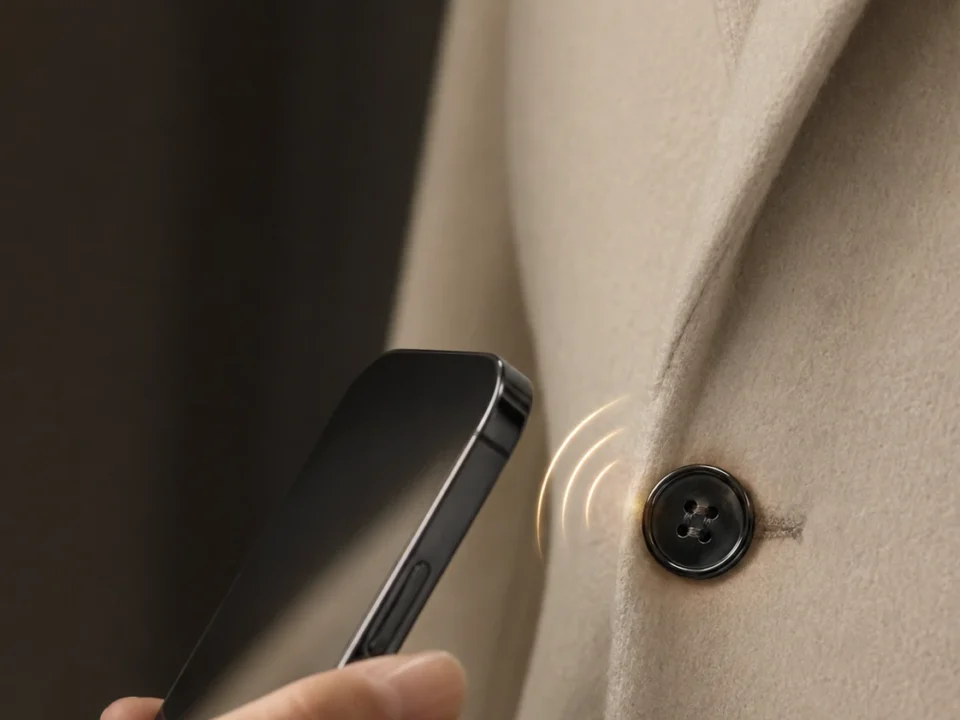
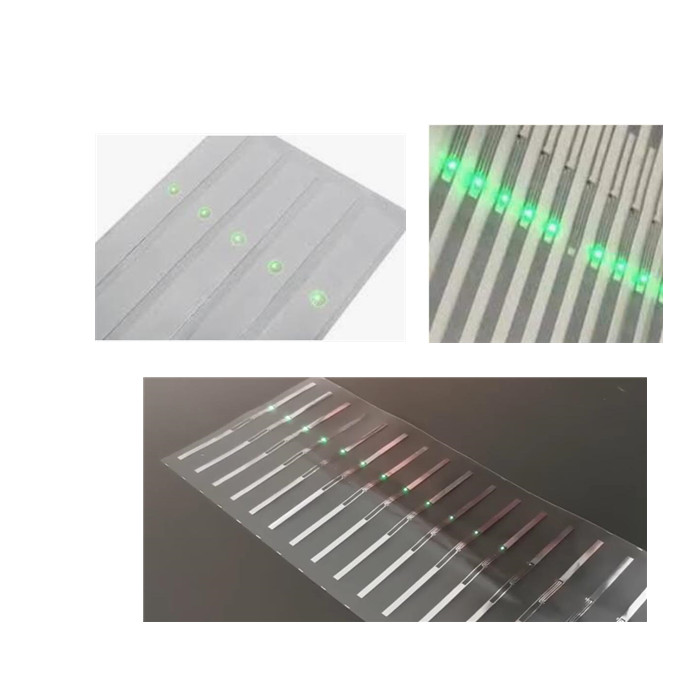
Blank NFC stickers
A starting point for projects that handle their own data writing or label finishing. Choose a suitable face material and outline for the application.
Consider: dimensions, face material and how the label will be applied.

CUSTOM NFC LABELS · NTAG216
NFC stickers for packaging, product information and identification. Choose a label size and finish, then decide whether you need blank tags or pre-encoded delivery.

START WITH THE LABEL
Custom NTAG216 labels combine a particular NFC chip with a physical label. The label format determines how it looks, where it fits and how it is applied.
A starting point for projects that handle their own data writing or label finishing. Choose a suitable face material and outline for the application.
Consider: dimensions, face material and how the label will be applied.
Carry a logo, tap instruction, QR code or product reference on the label. Visible artwork and the NFC record can be coordinated for the intended interaction.
Consider: artwork space, finish and printed-to-encoded data matching.
Clear inlay, epoxy-finished and on-metal options address different physical requirements. Select a construction for the intended space and surface.
These are configuration choices, rather than one fixed specification shared by every label.
Outline illustrations show size choices listed on this page; they are not product photographs, scale drawings or antenna designs. Custom dimensions are also available.
Listed materials include paper, PET and PVC, with applicable epoxy finishes. Printing methods include digital, offset and screen printing. Match the size, material and finish to the selected label construction.
FROM A LABEL TO A USEFUL TAP
The detailed content stays online, so it can be maintained without replacing each physical label.
A tap point on a suitable equipment surface can open the relevant service or identification record. The project combines the physical label, encoded identifier and destination system.
Choose an appropriate on-metal construction for a metal surface. This is tap-based access to records, rather than an independent real-time location beacon.
Other listed uses include digital contact profiles, branded tap points and event interactions. The chosen software and destination determine what happens after the tag is read.
| Item | Details |
|---|---|
| Chip | NXP NTAG216, also written as NTAG 216 |
| Frequency and interface | 13.56 MHz; ISO/IEC 14443 Type A; NFC Forum Type 2 Tag |
| User memory | 888 bytes; NDEF formatting uses part of the available space |
| Data delivery | Blank for customer encoding or supplied with the agreed NFC data |
| Appearance | Listed round, square and rectangular formats; custom dimensions, artwork and applicable finishes |
| Reference read distance | Approximately 1–10 cm as listed; actual distance depends on the antenna, reading device, alignment and installation |
| Reference operating range | -25°C to +70°C as listed; suitability of the complete adhesive label depends on its materials and exposure |
Chip specifications and finished-label performance are different. Water resistance, abrasion and adhesive life relate to the selected construction and conditions. See NXP’s NTAG21x information for the IC family.
An NTAG216 NFC tag can hold an NDEF message such as a URL, contact record or product reference. A larger user-memory area is useful when the actual message exceeds a smaller tag’s capacity, or when the application already specifies NTAG216.
A video, manual or catalogue normally stays online. The tag stores the address leading to it, rather than the whole file. Updating that online content is different from changing the address stored in the tag; rewriting the tag requires writable memory and suitable access.
A suitable starting point for many compact URL payloads, where the application accepts this chip.
An intermediate memory option, or the required choice when software specifies NTAG215.
View NTAG215 label informationFor a larger encoded message or a project that specifies NTAG216. Confirm the actual NDEF payload as part of selection.
All three are 13.56 MHz Type 2 ICs. More memory does not by itself mean a longer read distance or stronger authentication.
A logo or QR code is visible artwork; the NFC record is written separately. For variable labels, each printed value and encoded record should follow the intended correspondence.
Blank tags support in-house writing; pre-encoding can prepare the agreed destination before delivery. Matte, gloss, printed codes and other finishes depend on the label construction.
Check a sample on the intended surface and with representative phones or readers. Antenna size, alignment, nearby liquid and metal can affect reading.
Ordinary adhesive labels are intended for suitable non-metal installations. Direct metal use requires an appropriate on-metal construction; surface protection alone does not establish an outdoor or waterproof rating.
For roll-supplied projects, specify the layout and application requirements against the actual printer or applicator. For data writing steps, use our NFC programming guide.
Yes, while the relevant memory remains writable and you have the required access. Irreversible locking prevents later changes to the locked area, so the encoding and locking policy should suit the intended application.
A correctly encoded Type 2 tag can be read when the phone’s hardware, operating system and software support the intended interaction. Test the selected label in its final position rather than assuming identical behaviour on every device.
Yes. The visible QR artwork and encoded NFC record can be planned for the same destination. They remain separate items to check, especially where each label has different data.
No. It is a passive NFC tag IC powered by the compatible reader’s near field during communication.
It can link to a verification service, but a normal NTAG216 with a static identifier or URL does not independently provide cryptographic authentication. Password protection and memory locking are different from AES-based dynamic authentication. Security-focused projects need an appropriate chip and verification system.
For that separate direction, see our NTAG424 DNA label.
Tell us where the label will be attached and what you want a tap to open. If you already have a size, artwork or encoded message, share it; if not, start with the application.
We can discuss the label format, printing, encoding and sample testing. You do not need to have every technical choice settled before contacting us.
Compare the intermediate-memory product direction.
Follow the existing guide for the data-writing steps.