September 14, 2026
The MIFARE 1K S50 RFID inlay is a 13.56 MHz high-frequency contactless inlay designed for integration into PVC cards, smart cards, access cards, membership cards and other RFID-enabled products. It combines a MIFARE 1K S50 chip with a tuned RFID antenna to provide contactless data communication when used with a compatible reader.
The inlay can be supplied for PVC card manufacturing and customized according to card dimensions, antenna structure, material, thickness and production layout. Standard and custom layouts are available, making the inlay suitable for both prototype development and volume card production.
For projects that require a different RFID technology, other HF, LF and UHF chip options can also be considered. This allows the antenna and chip configuration to be matched to the reader system and application requirements.
What Is a MIFARE 1K S50 RFID Inlay?
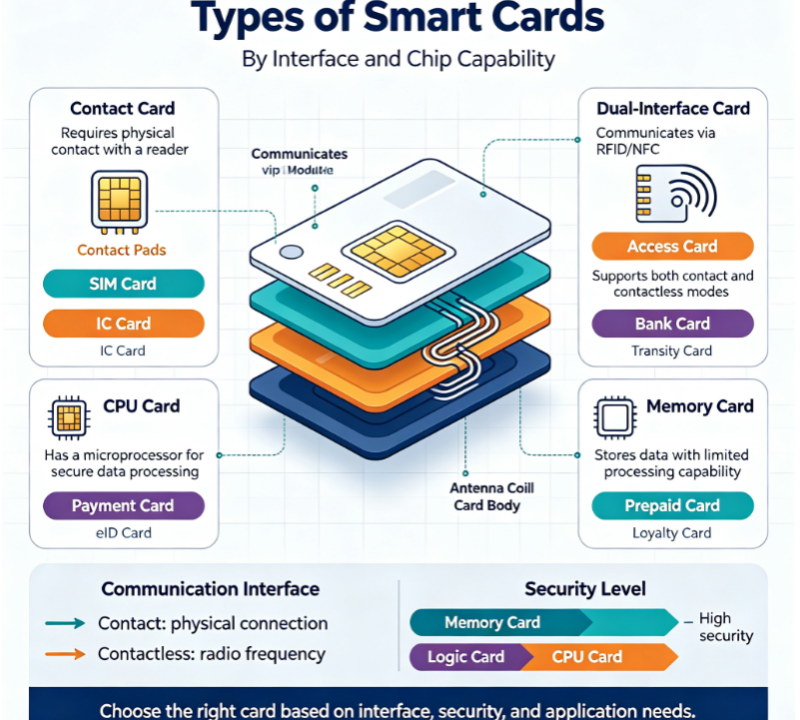
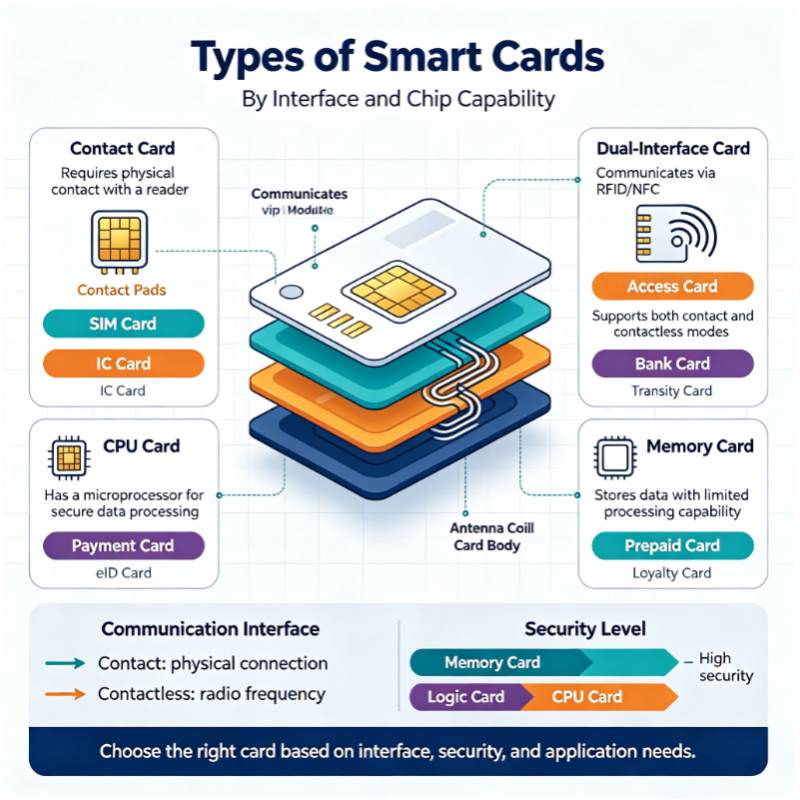
A MIFARE 1K S50 RFID inlay is the internal RFID component used to add contactless functionality to a card or other finished product. It normally consists of an RFID chip connected to an antenna. During card manufacturing, the inlay can be laminated between PVC layers to create a finished contactless card.
The MIFARE 1K S50 operates at 13.56 MHz and belongs to the MIFARE Classic family. The NXP MIFARE Classic EV1 1K uses the ISO/IEC 14443 Type A radio interface and provides 1 KB of EEPROM memory. It also supports anti-collision and mutual authentication functions.
For manufacturers, using an inlay instead of assembling the chip and antenna separately can simplify the card production process. The inlay is supplied as a pre-integrated RFID component that can be incorporated into the card construction.
Key Product Features
This MIFARE 1K S50 RFID inlay is designed with flexibility in mind. Different materials, antenna technologies, dimensions and production layouts can be specified according to the finished card design.
Key features include:
- 13.56 MHz HF contactless RFID operation
- MIFARE 1K S50 chip option
- ISO/IEC 14443A-compatible configuration
- Copper coil or aluminum antenna options for HF applications
- PVC, ABS, PET and other material options
- Multiple inlay sheet dimensions
- Multiple production layouts
- Custom antenna and unit sizes available
- HF thickness options starting from approximately 0.3 mm
- Silk-screen printing available
- Suitable for PVC card lamination
- Support for customized production requirements
- Typical production lead time of 5–7 days, subject to order specifications
The current product specification also lists additional RFID technologies and chip families, allowing the inlay configuration to be adjusted for different card and RFID projects.
MIFARE 1K S50 Technical Specifications
SGS approved
Lead time is 5~7 days
Over 15 years manufacture experience .
| Item | Specification |
| Operating Frequency | HF 13.56MHz, UHF GLOBAL 860MHz-960MHz |
| Standard | ISO14443,ISO15693,ISO 18000-6C |
| Material | PVC,ABS, PET,PEG |
| Dimension | 310mm x 468mm,400*505mm, 490*650mm etc |
| Layout | 2*5,4*5,5*5,4*6,4*7,4*8,3*6,3*7,3*8,6*8,4*10or any Customization of CR80 card or any unit antenna size |
| Thickness | HF normal:0.3mm, 0.35mm,0.4mm0.45mm,0.5mm,( min.0.3mm ) |
| LF normal : 0.5mm0.55mm,6mm | |
| UHF 0.6mm, 0.5mm | |
| Antenna | HF: Copper coil, Aluminium foil |
| LF: Copper Coli | |
| UHF: Aluminium foil | |
| Printing | Silk screen |
Available Chips:
LF125Khz: EM4200,em4305,em4405,T5577 ,HID
HF13.56Mhz ISO14443A Protocol:
NXP Mifare Ultralight EV1, Mifare Ultralight C, NXP Mifare 4k S70, NXP Mifare 1k S50, Compatible Mifare 1k,
Ntag213 ,Ntag215,Ntag216 ,NXP Desfire EV1 D21 ,D41,D81 (D21 is 2 K Byte ,D41 is 4 K Byte ,D81 is 8K Byte)
Popular NFC Chips :Mifare Ultralight ev1 (64 Byte) ,Ntag213 (144Byte),Ntag215 (504byte ),Ntag216 (888 Byte ),Topaz512
HF13.56Mhz ISO15693 Protocol:NXP ICODE SLIX 1K Byte, ICODE SLIX-S 2Kbyte ,Tag-it 2K Byte
UHF860~960MHZ ISO18000-6C:Alien H3, Impinj Monza 4D,Monza 4E, Monza 4QT,NXP UCODE G2XM etc.
How Does the MIFARE 1K S50 Work?
A contactless MIFARE card does not require a conventional electrical connection to the RFID reader. The reader generates a 13.56 MHz electromagnetic field, and the antenna in the card couples with that field.
The RFID chip receives power through the contactless interface and communicates with the reader using the supported RFID protocol. This makes the technology suitable for cards that need to be presented to a reader without inserting the card into a slot.
The MIFARE Classic EV1 1K specification includes a 13.56 MHz RF interface, anti-collision, data integrity mechanisms and sector-based memory organization. NXP specifies an operating distance of up to 100 mm depending on antenna geometry and other conditions. Actual performance of a finished RFID card can vary according to antenna design, reader power, card construction and the operating environment.
MIFARE 1K S50 vs Other RFID Chip Options
Different RFID applications require different memory capacities, communication protocols and operating frequencies. The MIFARE 1K S50 is primarily an HF contactless card solution.
The following comparison can help when selecting an appropriate chip family:
| Chip / Technology | Frequency | Typical Protocol | Memory / Capacity | Common Use |
|---|---|---|---|---|
| MIFARE 1K S50 | 13.56 MHz | ISO/IEC 14443A | 1 KB | Access, membership, identification |
| MIFARE 4K S70 | 13.56 MHz | ISO/IEC 14443A | 4 KB | Applications requiring more memory |
| NTAG213 | 13.56 MHz | NFC / ISO/IEC 14443A | 144 bytes | NFC tags, links, marketing |
| NTAG215 | 13.56 MHz | NFC / ISO/IEC 14443A | 504 bytes | NFC applications with more memory |
| NTAG216 | 13.56 MHz | NFC / ISO/IEC 14443A | 888 bytes | NFC data storage |
| MIFARE DESFire | 13.56 MHz | ISO/IEC 14443 family | Multiple options | More advanced secure applications |
| UHF RFID | 860–960 MHz | ISO/IEC 18000-6C | Chip dependent | Long-range identification |
| LF RFID | 125 kHz | Chip dependent | Chip dependent | Low-frequency identification |
The choice should be based on the reader already used in the project. A 13.56 MHz MIFARE inlay is not interchangeable with a 125 kHz LF or 860–960 MHz UHF inlay simply because all of them are RFID products.
MIFARE 1K S50 Inlay vs UHF RFID Inlay
One of the most important decisions in RFID card production is choosing the correct frequency.
MIFARE 1K S50 is an HF technology operating at 13.56 MHz. It is generally associated with short-range contactless card applications where a user presents a card to a reader.
UHF RFID operates at a much higher frequency and is commonly selected for applications requiring longer read distances, such as item identification, logistics and inventory tracking.
| Feature | MIFARE 1K S50 Inlay | UHF RFID Inlay |
|---|---|---|
| Frequency | 13.56 MHz | 860–960 MHz |
| Typical Interaction | Tap / present card | Longer-range reading |
| Common Form | Smart card / NFC-style products | Labels, tags, cards and asset tags |
| Typical Application | Access and identification | Inventory and logistics |
| Reader Compatibility | HF/MIFARE reader | UHF RFID reader |
| Antenna Type | Coil or HF antenna | UHF dipole-style antenna |
| Best Starting Point | Contactless card systems | Long-range RFID systems |
Selecting the wrong frequency can result in an inlay that does not work with the existing reader. Always confirm the reader model and supported protocol before ordering.
PVC RFID Inlay for Card Manufacturing
PVC is widely used for plastic card construction because it can be processed into layered card structures and supports printing and lamination.
A PVC RFID inlay is normally placed between card layers so that the antenna and chip are protected inside the finished card. The final card thickness, surface design and manufacturing process can be customized according to the requirements of the card issuer.
For standard CR80 card production, the inlay layout can be designed around the required card dimensions. Other unit antenna sizes can also be considered for non-standard products.
Before mass production, it is recommended to test the complete laminated card with the customer’s actual RFID reader. This helps verify antenna tuning, communication reliability, card thickness and practical reading performance.
Available Materials and Antenna Options
The product specification lists PVC, ABS, PET and PEG among the available material options. Material selection can depend on the finished product, lamination process and required flexibility.
For HF applications, copper coil and aluminum foil antenna options are available. Each antenna construction can be selected according to production requirements and the desired card design.
| Component | Available Options | Consideration |
|---|---|---|
| Inlay Material | PVC, ABS, PET, PEG | Depends on card structure |
| HF Antenna | Copper coil | Suitable for contactless card construction |
| HF Antenna | Aluminum foil | Suitable for high-volume inlay production |
| Printing | Silk screen | Available for customized requirements |
| Card Layout | Standard or custom | Based on sheet utilization and card size |
The antenna is an important part of RFID performance. Even when the same chip is used, changing antenna dimensions or card materials can affect resonance and reading performance.
Custom RFID Inlay Dimensions and Layouts
Different card manufacturers use different production sheet sizes and nesting patterns. For this reason, RFID inlays can be supplied in several sheet dimensions and layouts.
Listed layout options include:
- 2 × 5
- 4 × 5
- 5 × 5
- 4 × 6
- 4 × 7
- 4 × 8
- 3 × 6
- 3 × 7
- 3 × 8
- 6 × 8
- 4 × 10
Custom layouts can also be developed according to the finished card dimensions and manufacturing equipment.
A customized layout can help manufacturers optimize material usage and match the inlay sheet to their existing production process.
HF RFID Inlay Thickness Options
The standard HF inlay thickness options listed for this product are approximately 0.30 mm, 0.35 mm, 0.40 mm, 0.45 mm and 0.50 mm, with a minimum listed thickness of approximately 0.30 mm.
The correct thickness depends on the card construction. A thinner inlay may be useful where the final card needs to maintain a particular thickness, while a different construction may be preferred for manufacturing or durability requirements.
The final specification should be confirmed together with the PVC layer thickness, printing process, lamination temperature and card manufacturing method.
Applications of MIFARE 1K S50 RFID Inlays
MIFARE 1K S50 inlays can be integrated into various contactless card products.
Common applications may include:
Access Control Cards
The inlay can be embedded into plastic cards used with compatible access control readers. The card can then be presented to the reader for identification or authentication.
Membership Cards
Clubs, gyms, associations and other organizations can integrate RFID into membership cards to provide contactless identification.
Employee Identification Cards
Organizations can use contactless cards as part of employee identification and access systems when the selected reader and software support the MIFARE technology.
Smart Cards
The inlay can be laminated into PVC smart cards and customized with printed graphics, logos, numbers and other visual information.
Ticketing and Identification
MIFARE technology has historically been used in contactless ticketing and identification applications. NXP describes MIFARE Classic as a contactless smart card technology used in applications including public transportation.
For security-sensitive or new system designs, the chip selection should be evaluated carefully rather than assuming that MIFARE Classic is appropriate for every application.
MIFARE 1K S50 Inlay Production Process
A typical RFID card production process includes several stages:
- Chip and antenna selection
Select the required MIFARE chip and antenna configuration. - Antenna manufacturing
The HF antenna is produced using the selected copper or aluminum construction. - Chip assembly
The RFID chip is connected to the antenna to create the functional inlay. - Electrical and RFID testing
The inlay is checked for basic functionality and communication performance. - Sheet layout and cutting
Inlays are arranged according to the selected sheet layout and dimensions. - PVC lamination
The inlay is incorporated between card layers during the card manufacturing process. - Finished card testing
The completed card should be tested with the intended RFID reader before shipment or deployment.
This process can be adjusted according to the card manufacturer’s equipment and production requirements.
Why Choose a Customized RFID Inlay?
A standard RFID inlay may work for a general application, but a customized design can provide better compatibility with the finished product.
Customization can cover:
- Chip selection
- Antenna type
- Antenna dimensions
- Inlay thickness
- Sheet dimensions
- Card layout
- Material
- Printing
- CR80 card configuration
- Special unit antenna dimensions
This is particularly useful for manufacturers that already have established PVC card production lines and need the RFID inlay to fit their existing process.
MIFARE 1K S50 vs Compatible MIFARE 1K
The product specification lists both NXP MIFARE 1K S50 and compatible MIFARE 1K as possible chip options.
These should not be treated as identical without confirmation.
| Item | NXP MIFARE 1K S50 | Compatible MIFARE 1K |
|---|---|---|
| Chip Brand | NXP | Compatible manufacturer |
| Frequency | 13.56 MHz | Typically 13.56 MHz |
| Protocol | MIFARE / ISO/IEC 14443A | Depends on chip |
| Memory | 1 KB class | Depends on chip |
| Reader Compatibility | Depends on reader implementation | Must be tested |
| Recommended for Replacement Projects | Confirm with existing system | Test before volume order |
| Documentation | Manufacturer datasheet available | Request supplier datasheet |
If you are replacing an existing MIFARE 1K card, confirm the exact chip type, UID behavior, memory organization, authentication requirements and reader compatibility before switching to a compatible alternative.
Quality and Manufacturing Support
The product page states SGS approval and more than 15 years of manufacturing experience. The listed standard production lead time is 5–7 days.
For a production order, customers should confirm the exact chip, antenna construction, dimensions, thickness, layout, quantity and testing requirements before production starts.
For new card projects, samples are recommended before placing a large-volume order. Testing the actual finished card can reveal differences caused by lamination materials, printing, antenna tuning and the customer’s RFID reader.
How to Select the Right MIFARE RFID Inlay
Before requesting a quotation, prepare the following information:
| Requirement | Information to Provide |
|---|---|
| Chip | MIFARE 1K S50 or specified alternative |
| Frequency | 13.56 MHz |
| Protocol | ISO/IEC 14443A or required protocol |
| Card Size | CR80 or custom size |
| Inlay Size | Required sheet or unit dimensions |
| Antenna | Copper or aluminum |
| Thickness | Required HF inlay thickness |
| Material | PVC, PET, ABS or other |
| Layout | Existing layout or custom nesting |
| Printing | Required or not required |
| Quantity | Sample and production quantity |
| Reader | Reader model used for testing |
| Application | Access, membership, identification, etc. |
Providing these details helps the manufacturer recommend a suitable configuration and reduces unnecessary sample revisions.
Frequently Asked Questions
What frequency does a MIFARE 1K S50 RFID inlay use?
The MIFARE 1K S50 is a 13.56 MHz HF contactless RFID technology. NXP’s MIFARE Classic EV1 1K uses an ISO/IEC 14443 Type A RF interface.
Can the MIFARE 1K S50 inlay be used in PVC cards?
Yes. The inlay is designed for integration into PVC card structures, and the available material, thickness and layout options can be customized according to the card manufacturing process.
What is the difference between an RFID inlay and a finished RFID card?
An RFID inlay is the internal chip-and-antenna component. A finished RFID card adds the inlay between card layers and normally includes printing, lamination, finishing and card personalization.
Can the antenna size be customized?
Yes. The product specification supports custom layouts and unit antenna sizes. The final antenna design should be tested with the target card material and reader.
Is MIFARE 1K the same as NTAG213?
No. Both are 13.56 MHz technologies, but they belong to different chip families and are intended for different application requirements. MIFARE Classic 1K uses its own memory and authentication architecture, while NTAG213 is commonly used for NFC applications.
Can this inlay be used for UHF RFID?
The MIFARE 1K S50 version is an HF 13.56 MHz product and should be used with a compatible HF reader. The manufacturer also lists separate UHF RFID chip options operating in the 860–960 MHz range. These require a different antenna and reader technology.
What is the minimum HF inlay thickness?
The product specification lists approximately 0.30 mm as the minimum HF thickness, with additional options around 0.35 mm, 0.40 mm, 0.45 mm and 0.50 mm.
Should I test samples before mass production?
Yes. Sample testing is recommended, especially when the inlay will be laminated into a new PVC card structure or used with a specific RFID reader. Testing the finished card provides a more meaningful result than evaluating the bare inlay alone.
Request a Customized MIFARE 1K S50 RFID Inlay
Whether you need a standard MIFARE 1K S50 RFID inlay for PVC cards or a customized HF inlay for a specific card construction, the configuration can be developed around your chip, antenna, dimensions, thickness and production layout requirements.
Send us your card size, required chip, antenna preference, inlay thickness, layout and estimated quantity. We can then confirm the available configuration, production requirements and sample options for your project.
For new RFID card projects, providing the reader model or existing card specification is also recommended. This allows the inlay configuration to be evaluated against the actual system rather than relying only on general RFID specifications.