October 21, 2026
Our UHF RFID anti-metal tag is designed for reliable identification and tracking of metal assets in warehouses, industrial facilities, IT rooms, logistics centers, and infrastructure environments. With a compact, elongated ABS housing, a metal-compatible RFID design, and flexible mounting options, this tag helps businesses improve inventory visibility and simplify asset management.
Operating across the 860–960 MHz UHF frequency range and supporting the ISO 18000-6C protocol, our tag can be integrated into compatible RFID identification and inventory systems. Its 155 × 32 × 10 mm dimensions make it suitable for applications that require a narrow RFID tag mounted on equipment, cabinets, racks, and other metal surfaces.
We offer multiple chip options and mounting methods to support different asset identification requirements. Whether you are developing an RFID warehouse management system, organizing IT equipment, or tracking industrial tools and infrastructure assets, our UHF anti-metal tag provides a practical solution for automated identification.

UHF RFID tags can work in a high-temperature environment, have stable performance, very suitable for IT assets requiring narrow RFID metal tags, such as computer host, switch, server chassis, aluminum strip, and shelf identification, vehicle( logistic), and other asset management.
Technical Specification
– Material: ABS
– Dimension: 155mm (L) *32mm (W)* 10mm (Th)
– Protective Rating: IP67
– Frequency: ISO18000-6C 860-960MHZ
– Chips available: Alien H3 or NXP U Code G2, Impinj M4 ( Other chips available on request)
Features
| ● Robust ● waterproof / dust-proof | ● mounted on metal available |
| ● multi-mounting options (screwing / 3M adhesive layer) | ● RFIchips + ferrite material |
Our industrial RFID tag combines metal-surface compatibility, a durable enclosure, and flexible installation in one compact product.
- Designed for metal surfaces: Suitable for identifying metal equipment, cabinets, racks, and industrial assets.
- UHF frequency range: Supports 860–960 MHz operation for compatible UHF RFID systems.
- ISO 18000-6C protocol: Works with compatible EPC Gen2 RFID infrastructure.
- Durable ABS housing: Provides a robust enclosure for routine industrial and warehouse use.
- IP67-rated protection: Supports applications requiring protection against dust and water ingress.
- Flexible mounting: Choose screw mounting or 3M adhesive mounting according to the installation surface and application.
- Multiple chip options: Select from Alien H3, NXP UCODE G2, and Impinj M4 options, with other chips available on request.
- Narrow, elongated format: Fits equipment and assets where a slim identification tag is preferred.
These features help businesses label metal assets consistently and incorporate RFID identification into existing inventory workflows.
Applications
● IT Asset Management ● logistics management ● power patrol inspection management
● Housing building service ● managing construction sites
When you’re mounting RFID tags on metal surfaces or metal products, you should be aware that if you use non metal mount RFID tags, your system will not function as desired as the metal will detune any passive RFID tag that is not designed to be placed on metal. Using tags that are specifically calibrated to the materials you need to track makes reading, tracking, and inventorying them easier and provides for greater read range.
Metal mount RFID tags are typically rugged, difficult to damage, and easy to weld, screw or otherwise attach.
Why Choose an Anti-Metal RFID Tag?
Metal surfaces can affect the radio-frequency performance of conventional passive RFID tags. When an ordinary tag is attached directly to metal, the metal can detune the antenna and reduce reading consistency.
An anti-metal RFID tag is designed specifically for this type of installation. Its structure and RF design help isolate the tag antenna from the effects of the mounting surface, making it more suitable for identifying metal objects.
Our UHF RFID anti-metal tag is designed for applications such as server identification, metal shelving, industrial equipment tracking, and warehouse asset inventory. By choosing a tag intended for metal mounting, businesses can create a more practical identification solution without relying on conventional labels that are not designed for direct metal installation.
Anti-Metal RFID Tag vs. Standard RFID Tag
| Comparison | UHF Anti-Metal RFID Tag | Standard RFID Tag |
|---|---|---|
| Direct mounting on metal | Designed for metal surfaces | May experience significant performance changes |
| Antenna design | Adapted for metal-mount applications | Generally designed for non-metal surfaces |
| Typical mounting | Screws or adhesive, depending on the model | Adhesive or other application-specific methods |
| Common applications | Metal assets, equipment, racks, machinery | Cartons, paper labels, plastic packaging |
| Housing options | Often available in durable industrial formats | Varies by tag type |
| Selection priority | Metal compatibility and installation conditions | Substrate compatibility and label format |
For applications involving metal assets, we recommend choosing the tag according to the actual mounting material and reading environment rather than selecting a tag based on frequency alone.
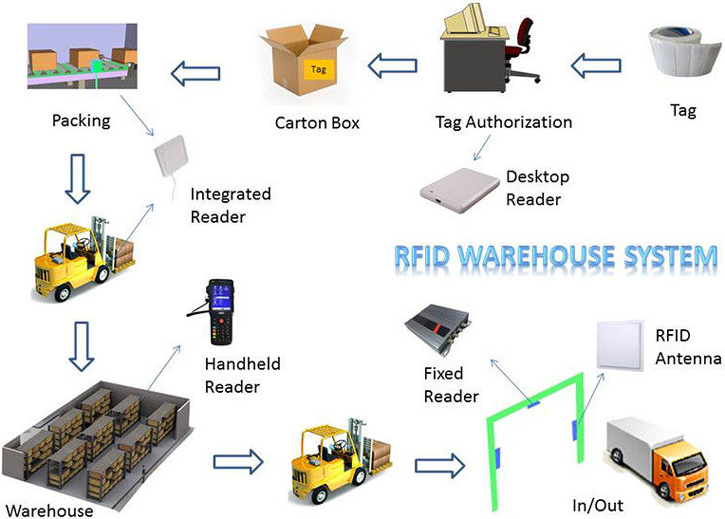
Designed for RFID Warehouse Management Systems
Our UHF RFID anti-metal tag supports warehouse operations where metal equipment and storage infrastructure need consistent identification. Each tagged asset can be associated with a unique record in an RFID inventory management system, helping staff identify equipment and maintain organized asset information.
When integrated with compatible UHF RFID readers, antennas, and management software, the tag can support workflows such as receiving, asset registration, inventory checks, location updates, and maintenance tracking.
A typical RFID warehouse management workflow includes:
- Asset registration: Assign an RFID tag to a piece of equipment or an inventory asset.
- Data association: Link the tag identifier to the relevant asset record in the management system.
- RFID identification: Use a compatible reader to capture tag data.
- Inventory reconciliation: Compare captured identifiers with the system’s asset records.
- Ongoing tracking: Update asset status and location information as part of routine operations.
The tag provides the identification component of the solution. Reader placement, antenna configuration, software integration, and warehouse layout determine how the complete RFID system performs.
Flexible Installation Options
Correct installation helps maintain tag stability and supports consistent RFID identification. Our tag supports screw mounting and 3M adhesive mounting, allowing users to select an approach that suits the asset design and installation requirements.
Screw Mounting
Screw mounting provides a mechanical attachment for suitable equipment and mounting points. It is a practical option for assets that require a more permanent installation or are subject to frequent handling.
Before installation, identify an appropriate mounting location and ensure that the fixing method suits the equipment structure. The tag should be positioned to avoid unnecessary obstruction from nearby metal components or other objects that may affect RF performance.
3M Adhesive Mounting
Adhesive mounting offers a convenient option when drilling is undesirable or the asset surface is suitable for adhesive attachment. It can simplify installation across large numbers of cabinets, equipment housings, and warehouse assets.
For best results, clean and prepare the mounting surface according to the adhesive requirements, then apply the tag firmly. Surface condition, temperature, moisture, and operational exposure should be considered when selecting the mounting method.
Installation Method Comparison
| Factor | Screw Mounting | 3M Adhesive Mounting |
|---|---|---|
| Installation approach | Mechanical fastening | Adhesive attachment |
| Drilling requirement | Usually required at the fixing point | Usually not required |
| Suitable use | Permanent equipment installation | Smooth, suitable mounting surfaces |
| Installation priority | Secure mechanical attachment | Surface preparation and adhesion |
| Common examples | Equipment frames and cabinets | Enclosures and suitable flat surfaces |
The best method depends on the asset material, mounting geometry, maintenance requirements, and expected operating conditions.
Chip Options and RFID System Compatibility
We offer several chip options to support different UHF RFID project requirements. Chip selection should take into account reader compatibility, tag identification needs, data handling, and the overall system architecture.
| Chip Option | Selection Consideration | Typical Project Requirement |
|---|---|---|
| Alien H3 | Suitable for compatible UHF RFID systems | General asset identification |
| NXP UCODE G2 | Select according to the required chip variant and system compatibility | RFID inventory applications |
| Impinj M4 | Select according to the specific chip variant and reader environment | Industrial identification projects |
| Other chips | Available on request | Application-specific requirements |
The listed chip families include different variants with different capabilities. When planning a project, we recommend confirming the specific chip model and matching it with the intended RFID reader and software platform.
Our tags support the ISO 18000-6C protocol across the stated 860–960 MHz frequency range. Regional frequency allocations and reader configurations should be considered when deploying a UHF RFID system internationally.
How to Choose the Right UHF Anti-Metal RFID Tag
Choosing the right tag starts with the asset, its environment, and the intended reading workflow. We help customers evaluate the following factors when selecting a tag for an industrial RFID project.
1. Identify the mounting surface. Determine whether the tag will be installed on steel, aluminum, a painted enclosure, or another material. Surface geometry and nearby metal structures can influence antenna performance.
2. Define the reading objective. Decide whether staff will scan assets at close range, read multiple tags during inventory, or identify equipment at a designated checkpoint. These use cases may require different reader and antenna arrangements.
3. Select the chip option. Match the chip to the required protocol, identification data, and reader environment.
4. Choose the mounting method. Consider the surface condition, available fixing points, installation time, and expected handling.
5. Evaluate the operating environment. Review exposure to dust, moisture, temperature variation, vibration, and routine cleaning.
6. Test the complete system. Evaluate the tag with the intended reader, antenna, mounting surface, and representative assets. This helps establish suitable reader settings and tag placement.
Selection Checklist
| Requirement | What to Define |
|---|---|
| Asset type | Server, rack, cabinet, machinery, tool, or logistics asset |
| Mounting surface | Metal type, shape, and available space |
| Identification workflow | Manual inventory, mobile scanning, or fixed-reader operation |
| Chip selection | Compatible chip model and data requirements |
| Installation method | Screws or 3M adhesive |
| Environmental conditions | Dust, moisture, temperature, and handling |
| System integration | Reader, antenna, software, and asset database |
Improving RFID Inventory Efficiency
RFID technology helps organizations move from manual visual identification toward a more structured, data-driven inventory process. When tags are installed on assets and connected to a suitable management system, businesses can simplify recurring checks and maintain more consistent asset records.
Our UHF anti-metal tag supports this approach by providing an identifier designed for metal equipment. Depending on the system configuration, RFID infrastructure can help organizations:
- Reduce dependence on manual asset-by-asset identification.
- Speed up routine inventory and reconciliation workflows.
- Maintain structured records for equipment and storage assets.
- Support asset movement and location updates.
- Improve traceability across departments and operational areas.
- Establish a consistent identification approach across multiple facilities.
The greatest benefit comes from combining appropriate tags with a well-designed reader layout, reliable data association, and clear inventory procedures.
Customization and Project Support
Different RFID projects have different installation, identification, and integration requirements. We offer chip selection options and can discuss other chip choices according to project needs.
When contacting us, share the asset type, mounting surface, expected reading method, operating environment, and preferred installation method. If you already use a UHF RFID reader, include its model and operating frequency so we can help assess a suitable configuration.
For larger deployments, defining the tag specification and installation approach early helps create a repeatable process across equipment groups and warehouse locations.
Frequently Asked Questions
1. What is a UHF RFID anti-metal tag?
A UHF RFID anti-metal tag is an RFID tag designed for installation on metal surfaces. Its RF structure is adapted to reduce the performance problems that conventional tags can experience when mounted directly on metal. It is commonly used for industrial equipment, IT assets, warehouse infrastructure, and logistics assets.
2. Can this RFID tag be mounted directly on metal?
Yes. Our tag is designed for metal-mount applications, including metal equipment, server chassis, switches, cabinets, and warehouse shelving. The final mounting position should be selected according to the asset shape and the intended reader configuration.
3. What frequency does this tag support?
Our tag operates across the 860–960 MHz UHF frequency range and supports the ISO 18000-6C protocol. Select compatible readers and regional frequency settings for your deployment.
4. Which RFID chips are available?
We offer Alien H3, NXP UCODE G2, and Impinj M4 chip options. Other chips can be discussed according to project requirements. The appropriate choice depends on the specific chip variant, reader compatibility, and application.
5. What is the size of the tag?
The tag measures 155 × 32 × 10 mm. Its elongated shape is suitable for applications where a narrow identification tag is preferred, including equipment housings and metal cabinets.
6. Is the tag suitable for warehouse management?
Yes. It can be used to identify metal assets in warehouse environments and integrated into compatible RFID inventory workflows. Common applications include equipment registration, asset inventory, storage infrastructure identification, and movement recording.
7. How can the tag be installed?
The tag supports screw mounting and 3M adhesive mounting. Choose the method according to the asset structure, surface condition, installation requirements, and expected operating environment.
8. Can I use the tag with my existing RFID reader?
The tag supports ISO 18000-6C UHF RFID systems operating within the stated frequency range. Reader compatibility also depends on regional frequency settings, antenna configuration, and the selected chip. Share your reader model and application details to help identify a suitable setup.
9. What is the protective rating?
The tag has an IP67 protective rating. This makes it suitable for applications that require protection against dust and water ingress when used within the conditions associated with the rating.
10. How do I select the right tag for my project?
Start by identifying the asset material, available mounting space, reading workflow, reader model, and environmental conditions. Then select the chip and mounting method that suit your application. Testing the complete setup on representative assets helps establish an effective installation plan.
Request a Quote for Our UHF RFID Anti-Metal Tag
Looking for an RFID tag for warehouse management, IT asset identification, or industrial metal asset tracking? We can help you select a suitable chip option and mounting method for your project.
Contact our team with your target application, estimated quantity, preferred chip, mounting requirements, and RFID reader information. We will work with you to identify an appropriate tag configuration for your asset management system.
Contact us today to discuss your UHF RFID anti-metal tag requirements and request a quotation.