October 21, 2026
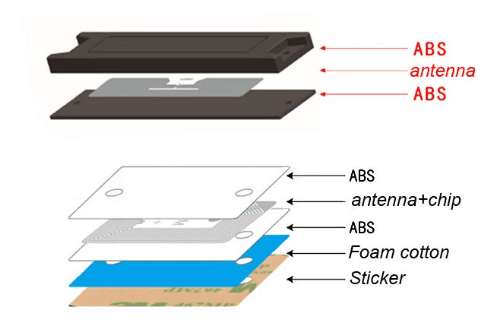
Our Long Range UHF on-metal RFID tag combines a rugged ABS enclosure with an RFID inlay designed for metal-surface applications. Its elongated structure makes it especially useful for assets that require a narrow identification label without occupying excessive mounting space.
Unlike conventional RFID labels intended for non-metallic surfaces, our on-metal tag incorporates a specialized design to support RFID communication when attached to metal equipment. This helps businesses establish consistent asset identification across industrial facilities, IT rooms, warehouses, and logistics operations.
Key product advantages include:
A slim, elongated form factor for space-conscious applications.
On-metal mounting design for metal equipment and infrastructure.
UHF frequency coverage from 860 to 960 MHz.
EPC Gen 2 / ISO 18000-6C compatibility.
Multiple RFID chip options for different project requirements.
Durable ABS housing with IP67-rated protection.
Screw mounting and 3M adhesive installation options.
UHF RFID tags can work in high-temperature environments, have stable performance, very suitable for IT assets requiring narrow RFID metal tags, such as computer host, switch, server chassis, aluminum strip, shelf identification, vehicle( logistic), and other asset management.
Technical Specification
– Material: ABS
– Dimension: 155mm (L) *32mm (W)* 10mm (Th)
– Protective Rating: IP67
– Frequency: ISO18000-6C 860-960MHZ
– Chips available: Alien H3 or NXP U Code G2, Impinj M4 ( Other chips available on request)
Features
| ● Robust ● waterproof / dust-proof | ● mounted on metal available |
| ● multi-mounting options (screwing / 3M adhesive layer) | ● RFIchips + ferrite material |
Applications
● IT Asset Management ● logistics management ● power patrol inspection management
● Housing building service ● managing construction sites
When you’re mounting RFID tags on metal surfaces or metal products, you should be aware that if you use nonmetal mount RFID tags, your system will not function as desired as the metal will detune any passive RFID tag that is not designed to be placed on metal. Using tags that are specifically calibrated to the materials you need to track makes reading, tracking, and inventorying them easier and provides for a greater read range.
Metal mount RFID tags are typically rugged, difficult to damage, and easy to weld, screw, or otherwise attach.
Long Range UHF RFID Performance
Long-range RFID identification enables operators to read tagged assets without scanning each item individually at close range. Our UHF on-metal RFID tag is designed for applications where convenient identification, faster inventory checks, and improved asset visibility are important.
Actual reading performance depends on the RFID reader, antenna configuration, transmitted power, tag orientation, mounting surface, and surrounding environment. Selecting a compatible reader and optimizing the installation position helps achieve consistent results.
For large-scale asset tracking, UHF RFID can support handheld inventory inspections as well as fixed-reader identification points. Businesses can use the same tagging strategy to simplify routine audits, locate equipment, and update inventory records.
Factors That Influence Read Range
| Factor | Effect on RFID Performance |
|---|---|
| Reader output power | Influences the available RF energy |
| Reader antenna | Affects coverage, direction, and polarization |
| Tag orientation | Influences coupling between the reader and tag |
| Metal mounting surface | Requires a tag designed for on-metal use |
| Nearby materials | Can affect RF propagation and antenna performance |
| Installation position | Influences reading consistency and coverage |
We recommend evaluating the tag with the intended reader and mounting configuration to optimize the overall RFID system.
Why Choose an On-Metal RFID Tag?
Metal surfaces can alter an RFID antenna’s electrical characteristics and interfere with the communication between a tag and a reader. A conventional label designed for cardboard, plastic, or other non-metallic surfaces may experience reduced performance when attached directly to metal.
Our on-metal RFID tag uses a specialized antenna and tag construction to support operation on metallic assets. This makes it suitable for identifying equipment that cannot conveniently accommodate a standard RFID label.
On-Metal RFID Tag vs. Standard RFID Label
| Feature | Our On-Metal RFID Tag | Standard RFID Label |
|---|---|---|
| Intended mounting surface | Metal assets and equipment | Primarily non-metallic surfaces |
| Antenna design | Adapted for metal mounting | Generally optimized for ordinary surfaces |
| Housing | Rigid ABS enclosure | Commonly paper or flexible film |
| Installation | Screws or adhesive | Usually adhesive |
| Typical applications | Machinery, servers, metal shelves | Cartons, packages, plastic containers |
| Environmental protection | IP67-rated enclosure | Depends on label construction |
Choosing the appropriate tag type helps reduce installation problems and supports more reliable RFID identification across different asset categories.
Alien H3 RFID Chip Technology
The Alien H3 chip is an established option for EPC Gen 2 UHF RFID applications. In our on-metal RFID tag, it provides the electronic identification component used to store and communicate tag data through a compatible RFID reader.
The chip works with the tag antenna and the reader’s RF field to support contactless identification. This makes it suitable for asset management programs where operators need to associate physical equipment with digital inventory records.
Alien H3-based tags can be integrated into RFID workflows for asset registration, equipment inspections, inventory counting, and location-based identification processes.
Available RFID Chip Options
We offer multiple chip configurations to support different system architectures and procurement requirements.
| Chip Option | Suitable Considerations | Typical Selection Priority |
|---|---|---|
| Alien H3 | Existing systems designed around Alien H3 tags | Compatibility with deployed equipment |
| NXP UCODE G2 | Projects specifying a compatible NXP UHF chip | Chip-family requirements |
| Impinj M4 | Projects specifying a compatible Impinj M4 chip | Existing system and inlay requirements |
| Other compatible chips | Customized RFID projects | Project-specific requirements |
Chip selection should account for memory requirements, reader compatibility, data encoding, inventory workflow, and the specifications of the complete RFID inlay.
Durable ABS Housing with IP67 Protection
Industrial RFID tags must withstand the handling conditions associated with everyday asset management. Our tag features a rigid ABS enclosure designed to protect the internal RFID components while providing a practical mounting structure.
The IP67-rated housing supports applications where protection against dust and temporary immersion in water is important. This makes the tag suitable for many indoor and outdoor asset identification environments when installed and used appropriately.
The elongated housing also provides a convenient surface for mounting on equipment frames, metal enclosures, and other industrial assets.
Housing and Protection Benefits
- Rigid ABS construction: Supports a durable tag structure for equipment identification.
- IP67-rated enclosure: Provides protection against dust ingress and temporary immersion under the conditions defined by the IP67 rating.
- Compact mounting profile: Helps accommodate narrow installation areas.
- Flexible attachment: Supports screw-based or adhesive mounting.
- Asset identification: Enables RFID tagging of equipment with limited space for labels.
For demanding installations, selecting the right attachment method and mounting location helps maintain tag stability throughout routine asset handling.
Flexible Installation Options
Our on-metal RFID tag supports two practical installation methods: mechanical fastening and adhesive mounting. The most suitable option depends on the asset’s surface, operating environment, maintenance requirements, and expected service conditions.
Screw Mounting
Screw mounting is suitable for equipment that requires a mechanically secured tag. It can be useful for server enclosures, industrial machinery, metal frames, and fixed infrastructure where long-term attachment is a priority.
Before installation, select an appropriate fastening position and ensure that drilling or fastening will not damage internal components, cables, or critical equipment structures.
3M Adhesive Mounting
The adhesive option supports installations where drilling is undesirable or impractical. It is useful for smooth, accessible surfaces such as equipment panels, metal cabinets, and selected warehouse fixtures.
For the best result, clean and dry the mounting surface, remove dust and grease, and apply the tag according to the adhesive’s installation requirements.
Installation Method Comparison
| Consideration | Screw Mounting | 3M Adhesive Mounting |
|---|---|---|
| Mechanical attachment | Fastener-based | Adhesive-based |
| Drilling requirements | Usually required | Not normally required |
| Installation speed | Depends on fastening access | Convenient on prepared surfaces |
| Surface suitability | Compatible surfaces that accept fasteners | Clean, smooth surfaces suitable for bonding |
| Maintenance | Fasteners can be inspected | Adhesion can be inspected |
| Common applications | Machinery, frames, fixed equipment | Cabinets, panels, smooth metal surfaces |
We help customers choose an installation method based on the equipment design and operating conditions.
IT Asset Management
IT equipment is frequently housed in metal enclosures, making on-metal RFID tags a practical choice for equipment identification. Our narrow UHF RFID tag can be installed on computer hosts, server chassis, network switches, and related infrastructure.
Each tag can be associated with an asset record containing information such as the equipment ID, department, installation location, purchase date, maintenance history, and inventory status.
With compatible RFID readers and asset management software, IT teams can streamline inventory checks, support equipment audits, and improve visibility across server rooms and office facilities.
Typical IT Asset Workflows
- Registering servers and network equipment.
- Performing periodic asset inventories.
- Identifying equipment during maintenance.
- Tracking equipment transfers between rooms or departments.
- Associating physical assets with digital maintenance records.
The result is a more organized approach to managing large numbers of distributed IT assets.
Warehouse and Logistics Management
Warehouse operators manage a wide variety of equipment, including metal shelving, carts, containers, handling equipment, and logistics infrastructure. Our on-metal RFID tag supports the identification of suitable metal assets throughout warehouse operations.
When integrated with compatible RFID readers, tags can help automate inventory checks at designated reading points or support mobile scanning by warehouse personnel.
RFID-based identification can reduce dependence on manual label reading and provide a consistent identifier for each tagged item.
Common Warehouse Applications
| Asset Type | RFID Application |
|---|---|
| Metal shelving | Shelf and location identification |
| Logistics equipment | Equipment registration and tracking |
| Reusable containers | Asset identification and inventory |
| Handling equipment | Inspection and maintenance records |
| Metal storage structures | Infrastructure identification |
| Warehouse tools | Tool assignment and inventory control |
By associating each tag with a unique asset record, businesses can improve inventory organization and simplify routine operational checks.

Power Inspection and Industrial Asset Tracking
Power facilities and industrial sites often contain metal cabinets, equipment housings, structural components, and other assets that require routine inspection. Our on-metal RFID tag can provide a consistent identification point for suitable equipment.
Maintenance teams can use compatible handheld readers to identify tagged assets during scheduled inspections. Each tag can be linked to inspection schedules, maintenance instructions, service records, or asset location data.
This approach supports structured maintenance workflows and helps teams identify the correct equipment when performing inspections or updating service records.
Typical applications include electrical equipment identification, industrial machinery management, building services, facility maintenance, and construction site asset tracking.
Building Facilities and Construction Sites
Building maintenance teams are responsible for many different assets, from mechanical equipment and electrical cabinets to service infrastructure and maintenance tools. On-metal RFID tags provide a practical way to identify assets with metal mounting surfaces.
At construction sites, RFID identification can support equipment registration, tool inventory, and the organization of reusable assets across designated work areas.
The tag’s rigid housing and flexible mounting options help accommodate different installation requirements across facility and construction environments.
Potential applications include:
- Building service equipment identification.
- Electrical and mechanical asset registration.
- Construction tool inventory.
- Equipment allocation between work areas.
- Maintenance and inspection record management.
- Identification of selected metal fixtures and infrastructure.
A consistent RFID identification system can make it easier to maintain accurate asset records as equipment moves between locations.
EPC Gen 2 and ISO 18000-6C Compatibility
Our UHF RFID tag supports the EPC Class 1 Gen 2 air interface, standardized internationally as ISO 18000-6C. This protocol is widely used in passive UHF RFID systems for electronic identification and reader-to-tag communication.
Compatible readers can communicate with the tag according to the supported protocol and chip capabilities. In an asset management system, the tag’s electronic identifier can be associated with a corresponding record in inventory or maintenance software.
A typical deployment includes RFID tags, compatible readers, reader antennas where required, data processing software, and an asset database.
Basic RFID System Components
| Component | Function |
|---|---|
| On-metal RFID tag | Stores and transmits tag identification data |
| UHF RFID reader | Sends RF signals and receives tag responses |
| Reader antenna | Establishes the RF coverage area |
| RFID software | Processes identification events |
| Asset database | Connects tag identifiers with equipment records |
We recommend selecting readers and antennas that support the required regional UHF frequency range and the intended reading environment.
How to Select the Right On-Metal RFID Tag
Selecting a suitable RFID tag involves more than comparing dimensions or chip names. The mounting surface, reading distance, reader type, installation method, and data requirements all influence system performance.
We help customers evaluate these factors before choosing a tag configuration for a new deployment or an existing RFID project.
Selection Checklist
1. Identify the mounting surface. Determine whether the tag will be attached to steel, aluminum, a metal enclosure, or another material.
2. Define the reading workflow. Decide whether the system will use handheld readers, fixed readers, or both.
3. Determine the required reading range. Consider the distance between the reader and tag, the reading direction, and the number of tags in the area.
4. Choose the chip configuration. Match the chip option to the reader system, memory requirements, and data management workflow.
5. Select the mounting method. Evaluate screw mounting and adhesive mounting according to the equipment structure and surface condition.
6. Consider environmental conditions. Review exposure to dust, moisture, temperature changes, vibration, and routine handling.
7. Plan a practical installation test. Evaluate reading performance on representative equipment before large-scale deployment.
Following these steps helps establish a consistent tagging strategy across different asset categories.
Customization and OEM/ODM Support
Different RFID projects have different technical and operational requirements. We support project-based discussions for customers who need to align the tag configuration with their equipment, reader platform, and asset management process.
Our available chip options provide flexibility for projects built around Alien H3, NXP UCODE G2, or Impinj M4. Additional chip options can also be discussed according to project requirements.
Customization discussions may cover chip selection, mounting arrangements, labeling requirements, identification workflows, and integration with existing RFID equipment.
Information to Include in Your Inquiry
| Project Requirement | Recommended Information |
|---|---|
| Application | IT assets, logistics, industrial equipment, or another use |
| Mounting surface | Steel, aluminum, or another material |
| Reader system | Reader brand, model, and supported frequency |
| Required reading range | Target distance and reading environment |
| Chip preference | Alien H3, NXP UCODE G2, Impinj M4, or another option |
| Mounting method | Screws or adhesive |
| Order requirements | Estimated quantity and delivery destination |
Providing these details allows us to recommend a more suitable configuration for your application.
Frequently Asked Questions
Q1. What is a long range on-metal RFID tag?
A long range on-metal RFID tag is a passive UHF RFID tag designed to support identification when mounted on metal surfaces. It communicates with compatible RFID readers and can be used for inventory management, equipment identification, and asset tracking.
Q2. Can this RFID tag be mounted directly on metal?
Yes. Our tag is designed for on-metal applications, including metal equipment housings, server chassis, industrial machinery, and suitable metal shelving.
Q3. What frequency does the tag support?
Our tag supports the 860–960 MHz UHF frequency range, with operation configured for the applicable regional RFID requirements.
Q4. Which RFID chips are available?
We offer Alien H3, NXP UCODE G2, and Impinj M4 chip options. Other chip configurations can be discussed for specific projects.
Q5. Is the tag waterproof?
The tag features an IP67-rated enclosure, which provides dust protection and protection against temporary immersion under the conditions defined by the rating.
Q6. How can the tag be installed?
The tag supports screw mounting and 3M adhesive mounting. The appropriate method depends on the mounting surface, equipment structure, and operating environment.
Q7. Can I use the tag with a handheld RFID reader?
Yes, the tag can be used with a compatible UHF RFID handheld reader that supports the relevant protocol and frequency range. Reading performance depends on the reader, antenna, tag orientation, and installation conditions.
Q8. What affects the reading distance?
Reader power, antenna characteristics, tag orientation, metal mounting conditions, nearby materials, and the surrounding RF environment all influence reading distance.
Q9. Can the tag be used for server and network equipment tracking?
Yes. Its elongated form factor and on-metal design make it suitable for identifying server chassis, computer hosts, network switches, and other compatible IT assets.
Q10. Can I request a customized RFID tag solution?
Yes. Contact us with your application, preferred chip, reader model, mounting requirements, estimated quantity, and target reading range. We can discuss a configuration suited to your project.
Request a Quote for Our Long Range UHF RFID Tag
Looking for a reliable on-metal RFID tag for IT asset management, warehouse inventory, industrial equipment, or logistics tracking? Our EPC Gen 2 UHF RFID tag combines a narrow ABS enclosure, flexible mounting options, multiple chip choices, and an IP67-rated design in one practical asset identification solution.
We work with businesses, system integrators, RFID solution providers, and equipment manufacturers to support their RFID tagging requirements.
Contact our team to discuss your application and receive product recommendations based on your reader system, mounting surface, chip preference, and order quantity.