October 21, 2026
What is an NTAG216 Smart NFC Card?
An NTAG216 smart NFC card is a physical card—typically the size of a standard credit card (85.5 x 54mm)—embedded with an NXP Semiconductors NTAG216 integrated circuit (IC). This IC is part of the NTAG21x family, which is built on the ISO/IEC 14443 Type A standard, ensuring broad compatibility with virtually all modern smartphones and NFC-enabled devices.
Unlike more complex and expensive smart cards that require cryptographic authentication for every interaction (like MIFARE DESFire), the NTAG216 is designed for simplicity and cost-effectiveness. It functions primarily as a passive data storage device. When an NFC reader (like your phone) comes within a few centimeters, it powers the chip via electromagnetic induction and can read or write data to its memory.
The key differentiator of the NTAG216 within its family is its memory capacity. With a total of 924 bytes of memory, it offers 888 bytes of user-programmable memory, the largest in the NTAG21x series. This generous space makes it ideal for storing not just simple URLs, but also vCards (digital business cards), small text files, Wi-Fi credentials, and even basic application data.
Custom ntag 216 smart card
2. Available Chips:NXP NTAG213, NTAG215 and NTAG216, NXP MIFARE Ultralight® EV1,etc
3. Support with all nfc device
Specification
Product Name | NTAG® 216 smart Card |
Material | PVC,ABS,PET etc |
Chip Model | NTAG® 216 |
Memory | 888 byte |
Protocol | ISO14443A |
Dimension | 85.5 x 54mm |
Thickness | 0.9mm,0.8mm,0.84mm |
Crafts | Barcode, Scratch Off Panel, Signature Panel, Spray Number, Laser Number, Embossing, etc. |
Printing | Offset Printing, Silk-Screen Printing |
Card Surface | Glossy Surafce (If need Matte and Frosted surface can contact the sales directly) |
ID Number Printing | DOD Printing/ Thermal printing/ Laser Engrave/embossing/digital printing |
Free Samples | Free samples are available at any time |
NFC/RFID Chip Specifications
Ntag216 chip card is equipped with the Ntag216 chip, powerful and convenient. Among the Ntag21Xseries, the Ntag216 chip has the largest capacity. There are 888 bytes of user-programmable read/write memory.

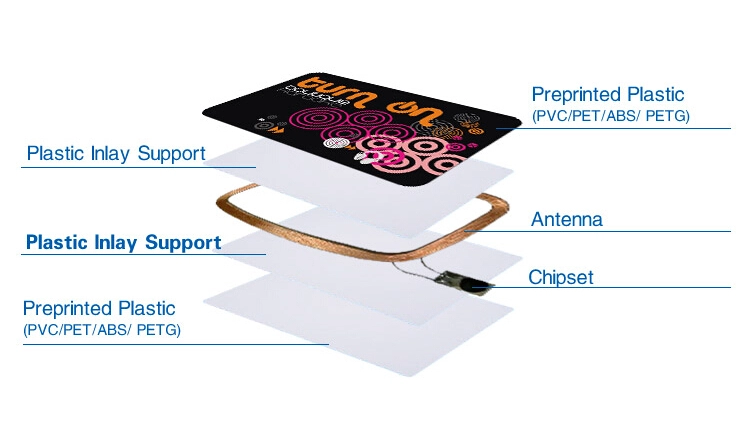
Cross-sectional illustration of a custom-printed NTAG216 smart card, showing layered construction: top/bottom preprinted plastic (PVC/PET/ABS/PETG), embedded copper antenna coil, chipset (e.g., NTAG216), and plastic inlay support layers—ensuring durability, flexibility, and optimal RF performance.
Top 7 Use Cases for Custom NTAG216 Cards
The versatility of the NTAG216 makes it suitable for a wide array of industries and personal projects.
- Smart Business Cards: Revolutionize your networking. Instead of a static piece of paper, hand out an NTAG216 card that, when tapped, instantly saves your entire contact information to the recipient’s phone, opens your LinkedIn profile, or directs them to your portfolio website.
- Interactive Marketing & Advertising: Embed cards in posters, product packaging, or brochures. A tap can lead customers to a promotional video, a special discount page, a product registration form, or a social media contest, creating a measurable and engaging customer journey.
- Event Management: Use them as digital tickets or badges for conferences, concerts, or festivals. They can grant access to specific areas, provide attendees with schedules, maps, and speaker information, and even facilitate cashless payments at the venue.
- Smart Home & IoT Automation: Program a card to act as a physical trigger for your smart home. Place one by your front door to turn on lights and adjust the thermostat when you arrive home, or another by your bed to activate “Do Not Disturb” mode and turn off all lights.
- Product Authentication & Brand Protection: Integrate a unique, encrypted code on each NTAG216 embedded in your product or packaging. Customers can tap to verify the product’s authenticity on your official website, combating counterfeiting and building brand trust.
- Wi-Fi Onboarding: Simplify guest access to your network. A visitor simply taps their phone on your NTAG216 card, and their device is automatically connected to your Wi-Fi without needing to type a complex password.
- Personal Automation & Convenience: Create your own shortcuts. A card on your desk could open your daily work playlist and calendar, while one in your gym bag could start your workout tracking app and display your fitness plan.

Six real-world use cases demonstrating the versatility of NFC cards: Loyalty Programme (retail engagement), Bank Card (contactless payment), Hotel Card (keyless entry), Access Control (secure facility entry), Public Transport (tap-to-ride transit cards), and Highway Toll (automated ETC systems).

Four-stage packaging workflow ensuring product integrity and traceability: (1) Hot shrinkable film for individual card protection; (2) White inner boxes with barcode-labeled IC/30 image cards; (3) High-quality outer cartons for bulk shipment; (4) Customized outer packaging with reinforced strapping for export-ready delivery.

State-of-the-art automated production line featuring: (top-left) RFID inlay lamination & personalization stations; (top-right) high-speed chip embedding and bonding machines; (middle-left) digital printing & surface finishing units; (middle-right) precision die-cutting & embossing equipment; (bottom) multi-lane encoding, testing, and final packaging systems—ensuring ISO-compliant quality and high-volume output.
Deep Dive: Technical Specifications of the NTAG216 Chip
Understanding the technical backbone of the NTAG216 is crucial for evaluating its suitability for your needs.
- Memory: As mentioned, the headline feature is its 888-byte user memory. To put this in perspective:
- NTAG213: 144 bytes
- NTAG215: 504 bytes
- NTAG216: 888 bytes This extra space allows for much richer content without the need for complex data compression or external links.
- Protocol & Compatibility: The chip adheres to the ISO/IEC 14443 Type A protocol. This is the same standard used by many contactless payment and transit cards, guaranteeing that it will work flawlessly with any NFC-capable Android, iOS (iPhone 7 and later), or other NFC reader device. There are no proprietary barriers to entry.
- Data Transfer Rate: It supports a communication speed of 106 kbit/s, which is standard for this class of NFC tag and provides a quick, responsive user experience.
- Security Features: While not a high-security chip like its DESFire cousins, the NTAG216 does offer some basic security mechanisms:
- Password Protection: A 32-bit password can be set to lock the memory, preventing unauthorized writing or re-writing of the data. This is useful for protecting a campaign URL from being changed.
- Originality Signature: An integrated originality signature function helps to prevent mass counterfeiting of the chips themselves, adding a layer of trust for brand protection applications.
- Operating Distance: The typical read/write distance ranges from 1 cm to 5 cm, depending on the power of the reader and the design of the card’s antenna.
Why Choose a Custom NTAG216 Card Over Other Options?
With various NFC chips available, why is the NTAG216 such a popular choice? The answer lies in its perfect balance of three critical factors: Capacity, Cost, and Compatibility.
- Optimal Capacity for Most Use Cases: For applications that require more than a simple web link but don’t need the advanced file systems or cryptographic security of a DESFire chip, the NTAG216 hits the sweet spot. Storing a full vCard with a name, company, multiple phone numbers, email addresses, a website, and even a short note fits comfortably within its 888 bytes.
- Cost-Effectiveness: It is significantly more affordable than secure smart cards while offering far more utility than its smaller siblings (NTAG213/215). This makes it an excellent choice for large-scale deployments where budget is a primary concern.
- Universal Compatibility: Its adherence to the open ISO14443A standard means you never have to worry about whether a user’s device will be able to interact with your card. This universality is a massive advantage for public-facing applications.
Your Complete Guide to Customizing Your NTAG216 Card
A blank white card is functional, but a custom-designed card is a powerful branding and user experience tool. Here’s a breakdown of the key customization options available from professional manufacturers.
1. Material Selection
The card’s base material impacts its durability, feel, and environmental footprint.
- PVC (Polyvinyl Chloride): The industry standard. It’s durable, cost-effective, and offers excellent print quality for vibrant, full-color designs.
- PET (Polyethylene Terephthalate): A more eco-friendly alternative to PVC. It’s recyclable, highly durable, and resistant to chemicals and high temperatures.
- ABS (Acrylonitrile Butadiene Styrene): Known for its toughness and impact resistance, making it suitable for cards that will see heavy daily use.
- PETG (Glycol-modified PET): Combines the clarity and strength of PET with easier processing, offering a good balance of properties.
2. Printing & Surface Finishes
This is where your brand identity comes to life.
- Printing Methods:
- Offset Printing: Ideal for large orders, providing the highest quality, sharpness, and color consistency for complex, full-bleed designs.
- Silk-Screen Printing: Excellent for bold, solid colors and is very durable, often used for simpler logos or text.
- Surface Finishes:
- Glossy: Provides a shiny, vibrant, and eye-catching finish that enhances colors.
- Matte/Frosted: Offers a sophisticated, non-reflective, and premium feel that is also more resistant to fingerprints and scratches. (Note: This is often a custom request).
3. Value-Added Features & Craftsmanship
Enhance functionality and security with these optional features.
- Visual Elements:
- Barcode/QR Code: Add a scannable code for users without NFC or as a backup.
- Signature Panel: A designated area for a handwritten signature, common for membership or loyalty cards.
- Scratch-Off Panel: Perfect for promotions, contests, or hiding PINs and unique codes.
- Tactile & Security Elements:
- Embossing/Debossing: Raises or lowers parts of the design to create a tactile, premium feel.
- Holograms: Adds a high level of visual security to deter counterfeiting.
- Numbering & Personalization:
- Laser Engraving: Burns the number into the card surface for a permanent, tamper-proof mark.
- Digital Printing: Allows for variable data printing, so each card in a batch can have a unique serial number, name, or code.
- Thermal/DOD Printing: Common methods for adding sequential numbering.
4. Physical Specifications
- Dimensions: The standard is 85.5 x 54 mm (ISO/IEC 7810 ID-1), the same as a credit card. Custom shapes and sizes are possible but may affect performance and cost.
- Thickness: Common options are 0.8mm, 0.84mm, and 0.9mm. The standard credit card thickness is 0.76mm, but the added chip and antenna usually make NFC cards slightly thicker for durability.
How to Get Started: Your Action Plan
Now that you understand the power and potential of the NTAG216, here’s how to move forward with your project.
- Define Your Goal: What is the primary purpose of your card? (e.g., lead generation, event access, product authentication). This will dictate your memory needs and feature requirements.
- Determine Your Specifications: Based on your goal, decide on the material, quantity, printing style, and any special features (like a scratch-off panel or unique numbering).
- Prepare Your Artwork: Work with your designer to create print-ready artwork that meets your manufacturer’s guidelines (usually CMYK, 300 DPI, with bleed and safety margins).
- Request a Quote & Samples: Please contact us and provide us with your detailed specifications. Always request a physical sample before committing to a large order to verify the quality, print, and NFC functionality.
- Encode Your Data: You can choose to receive blank, unprogrammed cards and encode them yourself using an NFC writer, or you can have your manufacturer pre-encode them with your specific data—a huge time-saver for large batches.
Conclusion: Unlock a World of Possibilities
The custom NTAG216 smart NFC card is far more than just a piece of plastic. It’s a versatile, affordable, and powerful bridge between the physical and digital worlds. Its generous memory, universal compatibility, and extensive customization options make it an ideal solution for businesses and individuals looking to innovate, streamline processes, and create memorable interactive experiences.
Whether you’re a marketer seeking to boost engagement, an event planner aiming for seamless logistics, or a tech enthusiast wanting to automate your home, the NTAG216 offers a robust and accessible platform. By leveraging the customization options outlined in this guide, you can create a card that not only performs its function perfectly but also serves as a tangible extension of your brand’s identity and values. The future is interactive—start building it with your custom NTAG216 card today.