October 21, 2026
Custom Printing Tamper Proof Anti Counterfeit NTAG 424 DNA NFC tags
NTAG®-424 DNA TT provides the most advanced security and privacy protection functions.
A new SUN authentication mechanism is provided every time the old location is read, as
well as protection for sensitive data with encrypted security access rights.
Product information | |
Product name | NTAG424 DNA Disposable RFID Label Anti Counterfeiting Tamper Proof NFC Tag |
Material | PVC, ABS, PP, PET, Transparent, Laser, Paper, Metal, wood, etc |
Size | 85.5*54mm;/ customized size/ non standard size |
Printing | Offset /Digital printing, Silk screen printing, and Customized |
Surface Effect | Glossy/Matte/Frosted Finish |
Crafts | Gold/Silver sprinkle, UV , Embossing, |
Coding | Laser, hot stamping, UV Embossing, series number, QR code, Bar code etc. |
Application | Corporations, Hotel, School, advertisement, Health care, Travel, Access Control & Security, Bank, Supermarket, TimeAttendance,Parking and Payment, Club/SPA Membership Management etc. |
Sample | Free sample is available |
| Chip Options | |
| ISO14443A | MIFARE Classic® 1K, MIFARE Classic ® 4K |
| MIFARE® Mini | |
| MIFARE Ultralight ®, MIFARE Ultralight ® EV1, MIFARE Ultralight® C | |
| NTAG213 / NTAG215 / NTAG216 | |
| MIFARE ® DESFire ® EV1 (2K/4K/8K) | |
| MIFARE ® DESFire® EV2 (2K/4K/8K) | |
| MIFARE Plus® (2K/4K) | |
| Topaz 512 | |
Remark:
MIFARE and MIFARE Classic are trademarks of NXP B.V.
MIFARE DESFire are registered trademarks of NXP B.V. and are used under license.
MIFARE and MIFARE Plus are registered trademarks of NXP B.V. and are used under license.
MIFARE and MIFARE Ultralight are registered trademarks of NXP B.V. and are used under license.

Clear Transparent NTAG213 NFC Sticker is very popular with high-security performance and good compatibility.


In an era where counterfeiting costs the global economy over $1.2 trillion annually, protecting products, documents, and assets requires more than a simple QR code or standard RFID tag. Enter the NTAG 424 DNA from NXP Semiconductors – a high‑end NFC tag that combines cryptographic security, tamper detection, and memory protection. When enhanced with custom printing and tamper‑proof construction, these tags become virtually unforgeable weapons against fraud. This comprehensive guide explores every facet of custom‑printed, tamper‑evident, anti‑counterfeit NTAG 424 DNA NFC tags – from the chip’s security architecture and printing options to real‑world applications and deployment best practices.
1. What Is the NTAG 424 DNA?
The NTAG 424 DNA is a member of NXP’s NTAG 4xx family, specifically designed for high‑security authentication and brand protection. The “DNA” stands for Dynamic NFC Authentication – a proprietary mechanism that generates a unique, one‑time cryptographic signature for every read operation. Unlike standard NFC tags that simply output a static UID or URL, the NTAG 424 DNA performs mutual authentication using AES‑128 encryption and produces unpredictable responses that cannot be cloned, replayed, or emulated.
Key features of the NTAG 424 DNA:
AES‑128 cryptographic engine – Hardware‑implemented, with 128‑bit keys stored in a protected memory zone.
Secure unique NFC (SUN) message – Dynamically generated encrypted message containing a true random number, the tag’s UID, and a configurable NDEF message (e.g., a product URL). The message changes each time, making replay attacks useless.
Tamper‑evident memory – Once a memory page is locked or a “tamper” bit is set, it cannot be altered.
Fully compliant with ISO/IEC 14443‑A – Works with all standard NFC smartphones (Android and iOS) and ISO 14443 readers.
User memory – 1,444 bytes (expandable to 4,464 bytes), organized in 16‑byte pages with configurable access rights.
NFC Forum Type 4 Tag – Supports NDEF formatting for easy integration.
When combined with custom printing and a tamper‑proof adhesive substrate, the NTAG 424 DNA becomes a physical security seal that cannot be removed intact and cannot be cryptographically copied.
2. Why Standard NFC Tags Fail for Anti‑Counterfeit
Standard NFC tags (e.g., NTAG 213/215/216, Mifare Ultralight) have significant vulnerabilities:
Static UID – Can be cloned by reading the UID once and programming it into a blank tag.
No encryption – Memory can be read by any NFC phone without authentication.
No replay protection – A legitimate tag’s communication can be recorded and played back.
Removable – A tag can be peeled off a genuine product and stuck onto a counterfeit.
The NTAG 424 DNA eliminates all of these flaws through crypto‑strong authentication and optional tamper‑proof physical construction.
3. Cryptographic Security: How It Works
3.1 Mutual Authentication
Before any sensitive operation (reading encrypted memory, writing, or verifying authenticity), the NFC reader and the NTAG 424 DNA perform a mutual authentication handshake using AES‑128. Both sides share a secret 128‑bit key (provisioned during personalization). The tag proves it knows the key by encrypting a reader challenge; the reader verifies the response. This prevents unauthorized readers from accessing the tag’s secure data.
3.2 SUN (Secure Unique NFC) Message
For brand protection, the most powerful feature is the SUN message – a cryptographically signed message that changes on every read. The tag combines:
A true random number (generated by the tag’s internal TRNG).
The tag’s 7‑byte UID (cannot be changed).
An optional user‑configured NDEF message (e.g., a product serial number or URL).
A message authentication code (MAC) computed over the entire block using the AES key.
The resulting 32‑byte (or longer) message is returned to the reader. A cloud‑side or app‑side verifier checks the MAC and randomness. Because the random number is never repeated, even an attacker who records a genuine SUN message cannot reuse it.
3.3 Encrypted NDEF
For products requiring confidentiality (e.g., medical devices, luxury goods), the tag can store an encrypted NDEF message. Only an authenticated reader that knows the decryption key can turn the ciphertext into a meaningful URL or product code.
4. Tamper‑Proof Physical Construction
A high‑security label must resist physical removal or transfer. Custom NTAG 424 DNA tags are manufactured with tamper‑evident materials:
4.1 Tamper‑Evident Adhesives
Destructible PET or paper – The tag substrate shatters or tears into tiny pieces when someone attempts to peel it off.
Void pattern – A hidden checkerboard or text (“VOID”) appears on the product surface after lifting.
Acrylic + frangible bond – The tag separates into layers, leaving some parts on the product and others on the lifted label.
4.2 Over‑lamination and Serialization
A clear, tamper‑resistant laminate protects the printed artwork and chip from physical abrasion. Many tags include laser‑engraved or inkjet serial numbers that match the tag’s UID or a custom ID, creating a visual‑to‑digital link.
4.3 “Tamper” Bit in Memory
The NTAG 424 DNA includes a tamper status bit that can be set when a physical tamper event is detected (e.g., by a break‑wire loop – though not common in labels) or permanently set to “locked” after personalization. Once locked, certain memory pages become read‑only, proving that the tag has not been reprogrammed.
5. Custom Printing Options
To align with your brand and product design, NTAG 424 DNA tags can be fully customized in appearance.
5.1 Face Printing
Full‑color offset or digital printing – Your logo, product name, instructions, or decorative patterns.
Serialization – Unique human‑readable numbers or QR codes printed on each tag.
Security graphics – Guilloche patterns, microtext, or holographic foils that are difficult to replicate by counterfeiters.
5.2 Substrate and Shape
Paper or PET – Paper is less expensive and more easily damaged; PET is more durable for outdoor use.
Custom die‑cut shapes – Circles, rectangles, or brand logos (subject to minimum antenna size).
White or clear – Clear labels allow product surface to show through.
5.3 Variable Data Printing
Using RFID printer‑encoders (e.g., Zebra, SATO), you can simultaneously encode the NTAG 424 DNA’s AES keys and SUN configuration while printing unique serial numbers, barcodes, or QR codes on the label surface. This “print and encode” process ensures each label is physically and digitally unique.
6. Applications of Custom Tamper‑Proof NTAG 424 DNA Tags
6.1 Luxury Goods and Fashion
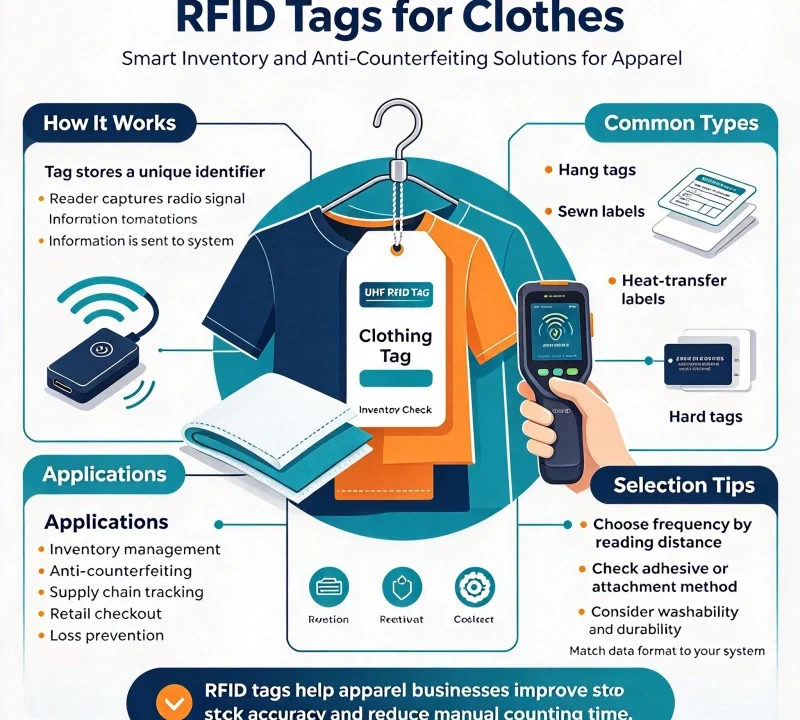
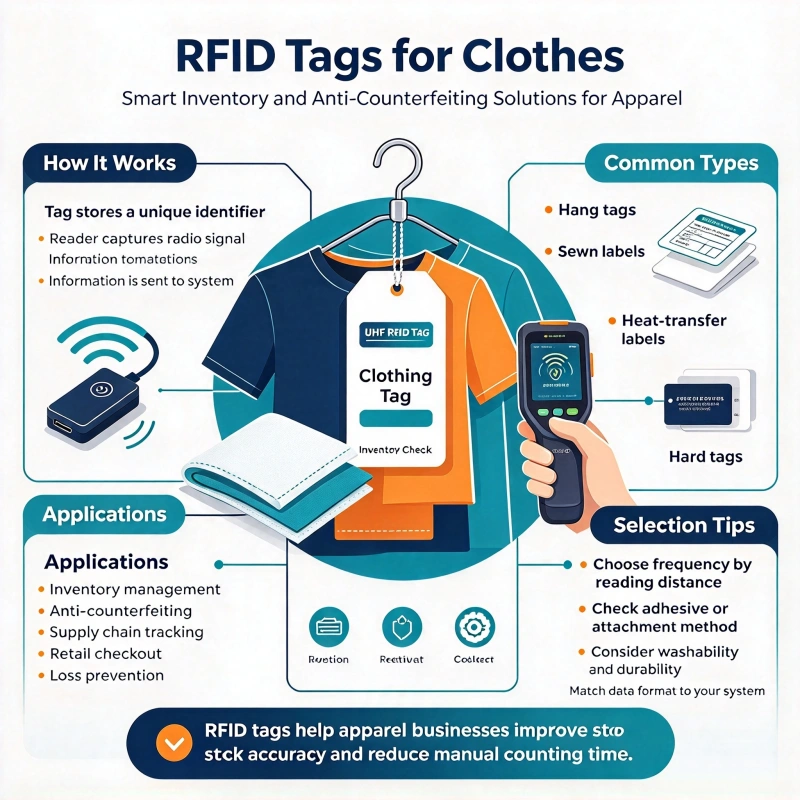
Handbags, watches, footwear, and apparel are heavily counterfeited. A tamper‑proof NTAG 424 DNA tag hidden inside a handbag lining or attached to a garment care label allows a customer to tap with their smartphone and instantly receive an authenticated product page, a digital certificate of authenticity, and even warranty registration. The tamper‑proof construction prevents removal and re‑application to a counterfeit bag.
6.2 Pharmaceuticals and Medical Devices
Counterfeit drugs kill hundreds of thousands of people annually. A tamper‑evident NTAG 424 DNA tag on a prescription bottle can be scanned at the pharmacy and by the patient. The SUN message ensures the tag has not been cloned, and the encrypted memory can store batch numbers, expiration dates, and a pointer to the manufacturer’s verification server. If someone attempts to peel off the tag, the label destroys itself – clear evidence of tampering.
6.3 Electronic Components and Semiconductors
High‑value chips, modules, and circuit boards are vulnerable to gray market substitution. A small NTAG 424 DNA tag attached to the PCB or component packaging provides a cryptographic chain of custody. Distributors can scan incoming goods to verify authenticity before stocking.
6.4 Documents and Certificates
Diplomas, degree certificates, legal documents, and ownership titles can be secured with a tamper‑proof NFC sticker. The sticker is applied over the document’s signature or seal. Scanning with a dedicated app verifies document authenticity and shows whether the sticker was lifted (destroyed) or remains intact. This is increasingly used by universities and government registries.
6.5 Premium Spirits and Wine
Bottles of high‑end wine or whisky are counterfeited by refilling genuine bottles with cheaper liquid. A tamper‑proof NTAG 424 DNA tag applied over the bottle cap or as a shrink‑band ensures that any attempt to open or remove the tag is visible. The cryptographic SUN authentication proves the bottle is genuine at every point in the supply chain.
6.6 Automotive and Aerospace Parts
Counterfeit brake pads, filters, and aircraft components present safety risks. OEMs attach tamper‑proof NTAG 424 DNA tags to parts during production. Mechanics and inspectors scan the tag before installation; the system verifies the part’s authenticity and service history.
7. Integration and Verification Workflow
A typical anti‑counterfeit system using custom NTAG 424 DNA tags follows these steps:
Personalization – The manufacturer (or brand owner) uses a secure encoder to write a unique AES‑128 key into each tag’s protected memory. The key is also stored in a secure cloud database or the brand’s HSM (hardware security module).
Printing and Encoding – Variable data (serial number, QR code) is printed on the tag’s face. The tag’s SUN NDEF message is configured (e.g., a URL pointing to
https://verify.brand.com/tag?id=1234).Application – The tamper‑proof label is affixed to the product or document. Attempts to remove it cause visible destruction.
Verification by Consumer – The end user taps their NFC‑enabled smartphone against the tag. A mobile app (or the phone’s built‑in NFC reader) sends a challenge to the tag. The tag returns a SUN message. The app forwards the message to a cloud verification service. The service uses the stored AES key to compute the expected MAC and validate the random number. If valid, the app displays “Authentic Product,” along with additional information (e.g., production date, serial number). If invalid, the app warns of possible counterfeiting.
Audit Trail – Each verification event can be logged with timestamp and geolocation, giving the brand real‑time intelligence on where their products are being scanned.
8. Custom Printing and Encoding Best Practices
Use a professional RFID encoder that supports NTAG 424 DNA’s AES key provisioning. Consumer NFC apps cannot write the secure zone.
Protect the master keys – Store them in a hardware security module or a secure cloud key management service. Never expose keys in plaintext in end‑user apps.
Add a visual layer – Combine the NFC tag with a hologram or color‑shifting ink for multi‑factor authentication (something a smartphone scans + something a human visually verifies).
Test tamper performance – Order sample tags and attempt to remove them from your product surface. Ensure the destructiveness works with your adhesive and substrate material.
Serialization matching – Print the same UID or serial number on the tag face as is encoded in the tag’s memory. This allows manual entry if a phone lacks NFC.
9. Limitations and Considerations
| Consideration | Implication |
|---|---|
| Smartphone compatibility | Almost all modern Android phones support ISO 14443‑A, but iPhones require iOS 13+ and may need a specific app to read SUN‑type tags. |
| Cloud dependency | Verification requires internet connectivity (to check the MAC with the server). Offline authentication is possible with a local key cache but less secure. |
| Cost | NTAG 424 DNA tags are more expensive than standard NTAG 213 – typically $0.50–$1.20 per tag in volume (10k+), compared to $0.10–$0.30. |
| Key management complexity | Securely provisioning thousands of unique AES keys is non‑trivial. Many brands outsource to a trusted service provider. |
| Physical durability | Tamper‑proof materials are often less rugged than standard labels. For outdoor or industrial use, select a suitable laminate. |
10. Market Outlook and Future Trends
The global anti‑counterfeit packaging market is projected to reach $380 billion by 2027, with NFC and RFID security tags growing at over 12% CAGR. NTAG 424 DNA is already being adopted by major brands in luxury goods, pharmaceuticals, and consumer electronics. Future enhancements may include:
Integration with blockchain – Each SUN verification event recorded on an immutable ledger for full supply chain transparency.
Biometric binding – The tag’s key could be linked to a user’s fingerprint (via smartphone) for personalized ownership.
Active tamper detection – Tags with conductive loops that break when opened, setting the internal tamper bit.
11. Conclusion
Custom printing tamper‑proof anti‑counterfeit NTAG 424 DNA NFC tags represent the gold standard for product and document security. By combining hardware‑accelerated AES‑128 cryptography, unique dynamic authentication (SUN), and physically destructible adhesives, these tags defeat the most common counterfeiting techniques – cloning, replaying, and label transfer. The ability to fully customize the tag’s appearance with logos, serial numbers, and security graphics ensures that your brand’s authentication solution is both secure and on‑brand.
When deploying NTAG 424 DNA tags, work with an experienced RFID label converter who understands secure key provisioning, tamper‑evident materials, and integration with your verification backend. While the per‑tag cost is higher than standard NFC labels, the reduction in lost revenue from counterfeiting, the protection of brand reputation, and the enhanced consumer trust make it a compelling investment for any high‑value product.
From luxury handbags to life‑saving medicines, the NTAG 424 DNA – printed, personalized, and tamper‑proof – is closing the door on counterfeiters. Implement it wisely, and your customers will tap with confidence.