October 21, 2026
As RFID and NFC technologies continue transforming asset management, industrial automation, smart marketing, and access control systems, one challenge remains particularly important: reliable tag performance on metal surfaces.
Standard NFC and RFID tags often experience severe signal interference when attached directly to metal objects. To solve this problem, manufacturers have developed Custom Waterproof Hard PVC PET RFID Sticker on Metal NFC Coin Tags, specifically engineered for use on metallic assets, machinery, tools, equipment, and electronic devices.
Combining anti-metal technology, waterproof construction, durable PVC or PET materials, and NFC functionality, these tags enable reliable identification and data exchange even in demanding industrial environments.
This guide provides a comprehensive overview of anti-metal NFC coin tags, including specifications, working principles, applications, advantages, and competitive comparisons.
What Is a Custom Waterproof Hard PVC PET RFID Sticker on Metal NFC Coin Tag?
A Waterproof Anti-Metal NFC Coin Tag is a specially designed RFID or NFC tag that can operate effectively when mounted directly on metal surfaces.
Unlike conventional NFC labels, these tags include a ferrite shielding layer or an anti-metal isolation structure that prevents the metal substrate from interfering with radio frequency communication.
The tag typically consists of:
- NFC chip
- Copper or aluminum antenna
- Ferrite anti-metal layer
- PET substrate
- Hard PVC housing
- Waterproof protective coating
- Adhesive backing
The coin-shaped design makes installation simple while maintaining excellent durability.
These tags are widely used for:
- Asset tracking
- Tool management
- Equipment identification
- Industrial maintenance
- Smart manufacturing
- Access control
- Product authentication
- IT asset management
Why Standard NFC Tags Fail on Metal
To understand the importance of anti-metal NFC tags, it is essential to understand the challenges created by metal surfaces.
Electromagnetic Interference
Standard NFC tags rely on magnetic coupling between the reader and tag antenna.
When attached to metal:
- Radio waves are reflected.
- Magnetic fields become distorted.
- Signal strength decreases significantly.
As a result:
- Reading distance drops dramatically.
- Communication becomes unreliable.
- In some cases, tags become unreadable.
Detuning Effect
Metal changes the antenna’s resonant frequency.
This phenomenon is known as antenna detuning.
Consequences include:
- Reduced efficiency
- Weak signal transmission
- Communication failure
Anti-metal NFC tags are specifically designed to eliminate these issues.
Technical Specifications
Typical specifications include:
| Specification | Details |
|---|---|
| Frequency | 13.56 MHz |
| Standard | ISO14443A |
| NFC Forum | Type 2 |
| Read Distance | 1–8 cm |
| Material | Hard PVC + PET |
| Protection | Waterproof |
| Operating Mode | Passive |
| Data Retention | 10 Years |
| Write Cycles | 100,000+ |
| Mounting Surface | Metal & Non-Metal |
Popular Chip Options
Common NFC chips include:
NTAG213
- 144 Bytes User Memory
- Cost-effective
- Smartphone compatible
NTAG215
- 504 Bytes User Memory
- Enhanced storage capacity
NTAG216
- 888 Bytes User Memory
- Ideal for advanced applications
MIFARE Classic
- Access control systems
- Secure identification
MIFARE DESFire EV2
- High-security enterprise applications
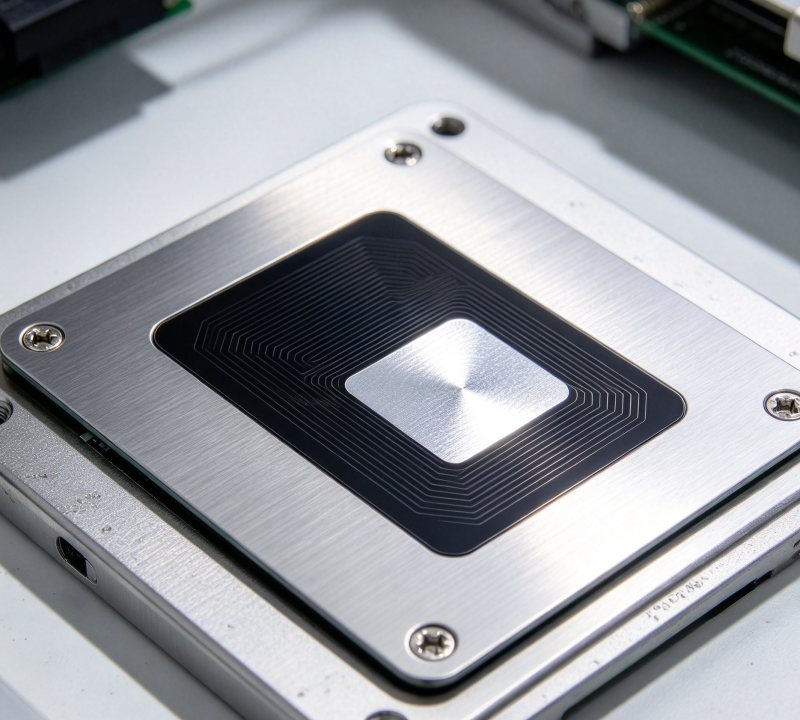
Structure of an Anti-Metal NFC Coin Tag
NFC Chip
The integrated circuit stores information and manages communication.
Antenna
The antenna transmits and receives radio frequency signals.
Ferrite Shielding Layer
This is the most important component.
Functions include:
- Isolating the antenna from metal surfaces
- Preventing signal absorption
- Maintaining antenna tuning
PET Layer
Provides flexibility and environmental resistance.
Hard PVC Housing
Protects the internal components from:
- Water
- Dust
- Chemicals
- Physical impact
Adhesive Layer
Industrial-grade adhesive ensures reliable attachment to metal surfaces.
How Anti-Metal NFC Coin Tags Work
Step 1: NFC Reader Generates RF Field
The smartphone or NFC reader emits a 13.56 MHz electromagnetic field.
Step 2: Ferrite Layer Isolates the Metal Surface
The ferrite shielding material prevents the metal object from interfering with the radio signal.
Step 3: NFC Chip Receives Energy
The antenna captures energy from the reader.
Because the tag is passive, no battery is required.
Step 4: Chip Activation
The chip powers up and accesses stored data.
Step 5: Data Exchange
Information is transmitted back to the reader.
Typical data includes:
- Asset IDs
- URLs
- Equipment records
- Product authentication data
Step 6: Software Processing
The reader transfers data to:
- ERP systems
- Asset management software
- Maintenance databases
- Mobile applications
The entire process occurs in less than one second.
Major Advantages of Waterproof Anti-Metal NFC Tags
Reliable Performance on Metal
This is the primary advantage.
The ferrite isolation layer enables stable operation on:
- Steel
- Aluminum
- Iron
- Stainless steel
Waterproof Construction
Waterproof protection enables deployment in:
- Outdoor environments
- Factories
- Warehouses
- Construction sites
Long Service Life
Most tags provide:
- More than 10 years data retention
- 100,000+ rewrite cycles
Battery-Free Operation
No maintenance or charging is required.
Smartphone Compatibility
Many anti-metal NFC tags can be read directly by:
- Android phones
- iPhones
- NFC tablets
High Durability
Hard PVC construction resists:
- Scratches
- Impacts
- Chemicals
- UV exposure
Applications of Anti-Metal NFC Coin Tags
Industrial Asset Management
Manufacturers use NFC tags to identify:
- Machines
- Production equipment
- Factory tools
Tool Tracking
Maintenance departments can track:
- Power tools
- Calibration equipment
- Inspection devices
IT Asset Management
Companies manage:
- Servers
- Network equipment
- Computers
- Data center assets
Smart Manufacturing
Industry 4.0 systems use NFC tags for:
- Production monitoring
- Process traceability
- Equipment maintenance
Facility Management
Building operators use NFC tags for:
- HVAC systems
- Elevators
- Electrical panels
Medical Equipment Tracking
Hospitals identify:
- Diagnostic devices
- Laboratory equipment
- Surgical instruments
Product Authentication
Luxury manufacturers and electronics brands verify authenticity using unique NFC identifiers.
Access Control
NFC coin tags are integrated into:
- Secure access systems
- Employee identification
- Equipment authorization
Anti-Metal NFC Tags vs Standard NFC Stickers
| Feature | Anti-Metal NFC Tag | Standard NFC Sticker |
| Works on Metal | Yes | Poor |
| Read Reliability | Excellent | Limited |
| Waterproof | Usually Yes | Optional |
| Durability | High | Moderate |
| Industrial Use | Excellent | Limited |
Winner
For metal surfaces, anti-metal NFC tags are clearly superior.
Anti-Metal NFC Tags vs QR Code Labels
Many businesses compare NFC technology with QR codes.
| Feature | NFC Coin Tag | QR Code |
| Contactless Tap | Yes | No |
| Smartphone Experience | Better | Moderate |
| Security | Higher | Lower |
| Counterfeit Resistance | Better | Limited |
| Rewrite Capability | Yes | No |
Winner
NFC tags provide a more professional and secure user experience.
Anti-Metal NFC Tags vs UHF Anti-Metal RFID Tags
Both technologies serve different purposes.
| Feature | NFC Anti-Metal | UHF Anti-Metal RFID |
| Frequency | 13.56 MHz | 860–960 MHz |
| Read Distance | 1–8 cm | Up to 15 m |
| Smartphone Compatibility | Excellent | Limited |
| Consumer Interaction | Excellent | Poor |
| Inventory Automation | Moderate | Excellent |
Winner
- Consumer interaction: NFC
- Large-scale asset inventory: UHF RFID
NTAG213 vs NTAG215 vs NTAG216
NTAG213
Advantages:
- Lower cost
- Sufficient for most applications
NTAG215
Advantages:
- More storage
- Enhanced marketing applications
NTAG216
Advantages:
- Highest memory capacity
- Advanced product authentication
| Feature | NTAG213 | NTAG215 | NTAG216 |
| User Memory | 144 Bytes | 504 Bytes | 888 Bytes |
| Cost | Lowest | Moderate | Highest |
| Marketing Content | Good | Better | Best |
Customization Options
Manufacturers typically offer:
Logo Printing
Custom branding for corporate applications.
Variable Data Printing
Examples include:
- Serial numbers
- QR codes
- Barcodes
Color Printing
Full-color graphics improve product appearance.
Custom Shapes
Available shapes include:
- Coin
- Round
- Square
- Rectangle
- Custom die-cut
Adhesive Options
Industrial adhesives support:
- Permanent mounting
- High-temperature environments
- Outdoor use
Future Trends of Anti-Metal NFC Technology
Demand continues growing due to:
Industry 4.0
Smart factories increasingly require digital asset identification.
Digital Product Passports
Governments and manufacturers are implementing product traceability systems.
Smart Maintenance
Technicians access maintenance records through NFC tags.
Connected Assets
Industrial IoT systems rely on NFC-enabled identification.
Mobile Asset Management
Smartphones are replacing dedicated handheld terminals in many environments.
How to Choose the Best Anti-Metal NFC Coin Tag
Before purchasing, consider:
Metal Surface Type
Different metals may affect performance differently.
Environmental Conditions
Evaluate:
- Temperature
- Humidity
- UV exposure
- Chemical contact
Chip Selection
Choose based on:
- Data requirements
- Security needs
- Budget
Waterproof Requirements
Outdoor projects should prioritize IP67 or IP68 protection.
Reader Compatibility
Verify compatibility with:
- Smartphones
- NFC readers
- Existing software platforms
Conclusion
Custom Waterproof Hard PVC PET RFID Sticker on Metal NFC Coin Tags provide an ideal solution for reliable NFC communication on metal surfaces. By combining ferrite shielding technology, waterproof construction, durable PVC and PET materials, and advanced NFC chips such as NTAG213, NTAG215, and NTAG216, these tags overcome the limitations of conventional NFC labels while delivering exceptional durability and performance.
Whether used for industrial asset management, smart manufacturing, IT equipment tracking, facility maintenance, product authentication, or access control, anti-metal NFC coin tags offer a powerful combination of reliability, security, and convenience. Compared with standard NFC stickers, QR code labels, and traditional identification methods, they provide superior functionality for modern businesses seeking intelligent and connected asset management solutions.