September 14, 2026
Introduction to ISO15693 RFID Laundry Coin Tag
The ISO15693 RFID Laundry Coin Tag is a high-performance washable RFID tag designed for industrial laundry management, textile tracking, and reusable asset identification. Built with a durable PPS (Polyphenylene Sulfide) housing, this compact RFID coin tag can withstand repeated washing, drying, chemical exposure, and high-temperature industrial laundry processes.
Unlike traditional barcode labels, RFID laundry tags allow automatic identification without direct visual contact. Each tag provides a unique digital identity for garments, linens, uniforms, towels, and other textile assets, helping businesses improve inventory accuracy, reduce losses, and optimize laundry workflows.
The ISO15693 RFID Laundry Coin Tag operates at 13.56MHz HF frequency and follows the ISO15693 communication protocol. It is commonly integrated into hotel linen management systems, hospital textile tracking solutions, commercial laundry facilities, and uniform rental services.
What Is an ISO15693 RFID Laundry Coin Tag?
An ISO15693 RFID Laundry Coin Tag is a passive RFID transponder specifically engineered for harsh textile environments. The tag consists of an RFID chip, antenna, and protective PPS shell that prevents damage caused by water, heat, pressure, and industrial chemicals.
The tag does not require a battery. When an RFID reader generates a 13.56MHz electromagnetic field, the tag receives energy and transmits stored information, including its unique identification number and programmed data.
Basic Working Process
| Step | Process |
|---|---|
| 1 | RFID tag is attached to textile products |
| 2 | RFID reader sends a 13.56MHz signal |
| 3 | Tag receives energy from the reader |
| 4 | Stored identification data is transmitted |
| 5 | Software records textile movement and status |
This enables automatic tracking throughout the complete textile lifecycle:
Collection → Sorting → Washing → Drying → Quality Inspection → Delivery → Return
Technical Specifications
ISO15693 RFID Laundry Coin Tag
| Material | PPS |
| Diameter | 15/18/20/22mm/23.5mm,25 mm ,30mm or customized |
| Thickness | 2.2mm ,2.5mm,2.75mm,3MM etc |
| Chips | ISO15693 NXP I CODE SLI,ICODE SLIX 1K bits , ICODE SLI S 2K bits |
| Color | Black, grey, blue etc.(customized color if >5000pcs) |
| Options | Laser serial number on the surfaceEncoding the dataColorful printing on the surfaceCustomized products as request |
| Storage temperature | Storage temperature |
| Working temperature | -20℃~220℃ |
| Washing times | More than 150times |
| Applications | Textile rental & Dry cleaning/Track & Manage Inventory/Logistic Tracking, etc. |
| Product features | This product is made of high temperature PPS material and used double-sided PPS packaging technology, with waterproof, shockproof, moisture, high temperature and other advantages. It is easy to mosaic or sewn in clothing products. The surface can be directly silk screen, transfer, inkjet or carved number. |

With the increasing upgrading of RFID technology, RFID tags are widely used in various laundry scenes,
and the traditional manual laundry process has been transformed into a fully automatic processing and recording process.
Moreover, sewing RFID tags on washing products allows users to use the globally unique code of the RFID tag
to automatically identify and track the washing process, and to obtain data,
so that users can specify higher quality decisions later.

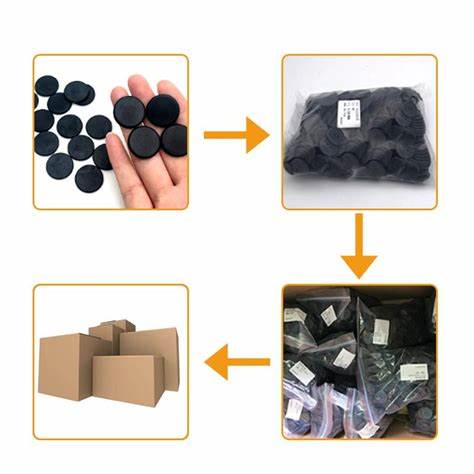
The Package of RFID PPS Laundry Tag,100pcs per bag ,1000pcs/carton.
For the other hot selling RFID PPS Laundry Tag products

Key Features of ISO15693 RFID Laundry Coin Tag
1. High Temperature and Chemical Resistance
Industrial laundry environments are extremely demanding. Textile products may experience hot water washing, strong detergents, bleaching agents, pressure, and repeated drying cycles.
The PPS housing protects the internal RFID components and ensures stable performance during long-term use.
Key advantages include:
- High-temperature resistance
- Waterproof protection
- Chemical resistance
- Mechanical durability
- Long service life
PPS RFID laundry tags are widely selected for applications where standard RFID labels cannot survive repeated washing cycles.
2. Compact Coin Design for Textile Integration
The RFID laundry coin tag features a small circular structure that allows easy installation inside different textile products.
Common installation methods include:
- Sewing into fabric edges
- Installing inside a hidden pocket
- Fixing through mounting holes
- Embedding into textile structures
The compact design keeps the tag discreet while maintaining reliable RFID communication.
3. Passive RFID Technology Without Batteries
The ISO15693 laundry tag uses passive RFID technology, meaning:
- No battery replacement required
- Maintenance-free operation
- Lightweight construction
- Long operating lifespan
Compared with active tracking devices, passive RFID tags provide a cost-effective solution for managing thousands or millions of textile items.
ISO15693 RFID Tag vs Traditional Barcode Label
Many laundry companies still use barcode systems. However, RFID technology provides significant advantages for large-scale textile management.
| Comparison | RFID Laundry Tag | Barcode Label |
|---|---|---|
| Reading Method | Wireless scanning | Optical scanning |
| Line of Sight Required | No | Yes |
| Multiple Item Reading | Yes | Usually one by one |
| Water Resistance | Excellent | Limited |
| Heat Resistance | High | Low to medium |
| Data Storage | Programmable memory | Limited |
| Automation Capability | High | Medium |
| Long-Term Tracking | Excellent | Moderate |
For commercial laundry operations handling thousands of textile items daily, RFID significantly reduces manual scanning workload and improves operational efficiency.
ISO15693 RFID Laundry Tag vs UHF RFID Laundry Tag
Both HF ISO15693 and UHF RFID technologies are used in textile tracking systems. The best choice depends on the application requirements.
| Feature | ISO15693 RFID Laundry Tag | UHF RFID Laundry Tag |
|---|---|---|
| Frequency | 13.56MHz | 860-960MHz |
| Reading Distance | Short range | Long range |
| Protocol | ISO15693 | EPC Gen2 / ISO18000-6C |
| Typical Distance | Several centimeters | Several meters |
| Best Application | Item identification | Bulk inventory counting |
| Mobile Compatibility | Better support in some systems | Requires UHF readers |
| Accuracy | High near-field accuracy | Fast bulk reading |
ISO15693 RFID laundry tags are ideal for controlled identification points, while UHF laundry tags are often preferred for high-volume automatic counting applications.
Why Choose PPS Material for Laundry RFID Tags?
PPS is a high-performance engineering plastic commonly used in industrial environments.
Compared with ordinary plastic materials, PPS provides:
| Property | Benefit |
|---|---|
| Heat Resistance | Survives high-temperature washing and drying |
| Chemical Stability | Resistant to detergents and cleaning agents |
| Mechanical Strength | Protects RFID chips from physical impact |
| Water Resistance | Prevents moisture damage |
| Long-Term Stability | Suitable for repeated industrial cycles |
This makes PPS one of the preferred materials for washable RFID laundry tags.
Applications of ISO15693 RFID Laundry Coin Tag
Hotel Linen Management
Hotels process thousands of textile items every day, including:
- Bed sheets
- Towels
- Pillow covers
- Blankets
- Bathrobes
RFID laundry tags help hotels monitor:
- Textile inventory
- Washing frequency
- Loss prevention
- Replacement schedules
Example workflow:
| Process | RFID Function |
|---|---|
| Linen Collection | Automatic identification |
| Laundry Processing | Track washing history |
| Storage | Inventory management |
| Room Delivery | Usage tracking |
Hospital Textile Tracking
Hospitals require strict control of reusable textile products.
Applications include:
- Patient gowns
- Surgical fabrics
- Medical uniforms
- Bedding materials
RFID tracking helps hospitals improve:
- Hygiene management
- Textile availability
- Sterilization records
- Asset control
Industrial Uniform Management
Companies with large numbers of employees often manage thousands of uniforms.
RFID laundry tags enable:
- Employee uniform assignment
- Return tracking
- Washing records
- Replacement planning
Industries using RFID uniform management include:
- Manufacturing
- Food processing
- Aviation
- Security services
Commercial Laundry Services
Professional laundry companies need accurate tracking between customers and processing centers.
RFID technology helps manage:
- Customer ownership
- Sorting accuracy
- Processing status
- Delivery records
How to Install an ISO15693 RFID Laundry Coin Tag
Proper installation is important to ensure stable RFID performance and long-term durability. The RFID laundry coin tag is designed to be integrated directly into textile products without affecting normal washing, drying, or usage processes.
Common installation methods include:
| Installation Method | Description | Recommended Applications |
|---|---|---|
| Sewing into Fabric | Tag is stitched inside textile edges or seams | Hotel linen, uniforms, towels |
| Fabric Pocket Installation | Tag is placed inside a dedicated pocket | Medical textiles, rental clothing |
| Embedded Installation | Tag is integrated during textile production | Large-scale textile manufacturers |
| Button Hole Mounting | Coin-style tag is fixed through holes | Garments and workwear |
For most commercial laundry applications, sewing is the preferred method because it provides strong mechanical stability while keeping the RFID tag hidden from users.
RFID Laundry Management System Using ISO15693 Tags
An ISO15693 RFID Laundry Coin Tag works as part of a complete textile tracking system. The tag itself stores the unique identification information, while RFID readers and software manage the data throughout the textile lifecycle.
A complete RFID laundry management solution usually includes:
| System Component | Function |
|---|---|
| RFID Laundry Tag | Provides unique textile identification |
| RFID Reader | Captures tag information wirelessly |
| Antenna System | Creates RFID reading zones |
| Management Software | Stores and analyzes textile data |
| Database Platform | Maintains inventory records |
The system allows companies to monitor every textile item from delivery to washing, storage, and final replacement.
Complete RFID Laundry Tracking Workflow
A typical industrial laundry process using RFID technology includes:
1. Tag Registration
Before entering service, each textile item receives an RFID tag.
Information can include:
- Product ID
- Textile category
- Customer information
- Purchase date
- Initial condition
Example:
| RFID ID | Textile Type | Status |
|---|---|---|
| RFID001258 | Hotel Towel | Active |
| RFID001259 | Bed Sheet | Active |
| RFID001260 | Medical Uniform | Active |
2. Textile Collection
When used textiles arrive at a laundry facility, RFID readers automatically identify incoming items.
Benefits:
- Faster receiving process
- Reduced manual counting
- Improved accuracy
- Better customer separation
3. Washing and Processing
During washing, RFID data helps record:
- Number of wash cycles
- Processing history
- Maintenance records
- Quality status
This allows companies to identify when a textile item needs replacement.
4. Inventory and Delivery Management
After cleaning, RFID systems confirm:
- Correct quantities
- Correct customer allocation
- Delivery status
This reduces textile loss and improves operational efficiency.
Benefits of Using ISO15693 RFID Laundry Coin Tags
1. Improved Textile Inventory Accuracy
Traditional manual counting methods are time-consuming and often result in errors.
RFID technology enables automatic identification and provides real-time inventory visibility.
Businesses can quickly answer:
- How many items are available?
- Where is each textile located?
- How many times has it been washed?
- Which items require replacement?
2. Reduced Textile Loss
Hotels, hospitals, and rental companies often lose significant amounts of textiles every year.
RFID tracking helps identify:
- Missing items
- Incorrect deliveries
- Unreturned uniforms
- Customer ownership
This improves asset protection and reduces replacement costs.
3. Better Laundry Process Control
RFID data provides valuable information about textile usage.
Companies can analyze:
- Washing frequency
- Average lifespan
- Damage rate
- Customer usage patterns
This supports better purchasing and maintenance decisions.
4. Increased Labor Efficiency
Manual barcode scanning requires workers to individually locate and scan each item.
RFID systems simplify operations by allowing automatic identification.
| Operation | Traditional Method | RFID Method |
|---|---|---|
| Counting textiles | Manual counting | Automatic reading |
| Item identification | Barcode scanning | Wireless identification |
| Data recording | Manual entry | Automatic database update |
| Tracking history | Limited | Complete lifecycle records |
Customization Options for ISO15693 RFID Laundry Coin Tag
Different industries have different requirements. RFID laundry tags can be customized according to project needs.
Available customization options include:
| Custom Option | Description |
|---|---|
| RFID Chip Selection | Different memory capacities and performance levels |
| Size Customization | Various diameters and thickness options |
| UID Encoding | Pre-programmed identification numbers |
| Laser Marking | Serial numbers or product codes |
| Logo Printing | Brand identification |
| Packaging Options | Customized delivery solutions |
Chip selection may include ISO15693-compatible IC options such as NXP ICODE series products, depending on system requirements.
How Long Can an RFID Laundry Tag Last?
The lifespan of a washable RFID laundry tag depends on:
- Tag structure
- Washing temperature
- Chemical environment
- Installation method
- Laundry frequency
High-quality PPS RFID laundry tags are designed for repeated industrial washing cycles and are commonly used in demanding environments such as commercial laundries, hospitals, and hotels.
Factors affecting service life:
| Factor | Impact |
|---|---|
| High temperature | Requires heat-resistant housing |
| Strong detergent | Requires chemical-resistant material |
| Mechanical pressure | Requires durable encapsulation |
| Frequent washing | Requires reliable antenna protection |
ISO15693 RFID Laundry Coin Tag Selection Guide
Choosing the correct RFID tag depends on the application environment.
| Requirement | Recommended Solution |
|---|---|
| Hotel linen tracking | HF ISO15693 PPS RFID tag |
| Hospital textile management | Durable washable RFID tag |
| Large laundry factory | HF or UHF RFID solution depending on workflow |
| Employee uniform tracking | Compact PPS RFID coin tag |
| Long-distance inventory counting | UHF RFID laundry tag |
For applications requiring controlled identification points and reliable close-range scanning, ISO15693 HF RFID technology is an effective solution.
Why Choose Our ISO15693 RFID Laundry Coin Tag?
Our ISO15693 RFID Laundry Coin Tag provides a reliable combination of durability, compact design, and industrial RFID performance.
Main advantages:
- ISO15693 13.56MHz RFID technology
- Strong PPS protective housing
- Designed for repeated washing environments
- Small coin-style structure
- Easy textile integration
- Custom chip and size options
- Suitable for global laundry management systems
Whether managing hotel linen, medical textiles, industrial uniforms, or commercial laundry operations, RFID technology provides a smarter way to track valuable textile assets.
Frequently Asked Questions (FAQ)
What is an ISO15693 RFID Laundry Coin Tag?
An ISO15693 RFID Laundry Coin Tag is a washable RFID transponder designed for textile tracking applications. It uses 13.56MHz HF RFID technology and a durable protective housing to survive industrial laundry environments.
Can RFID laundry tags survive washing machines?
Yes. Industrial RFID laundry tags are specifically designed for repeated washing, drying, and chemical exposure. PPS housing protects the RFID chip and antenna during harsh laundry processes.
What is the reading distance of an ISO15693 laundry tag?
The reading distance depends on:
- RFID reader power
- Antenna design
- Tag size
- Installation environment
Generally, ISO15693 tags are designed for short-range industrial identification.
Can the RFID tag data be rewritten?
Many ISO15693 RFID chips support read/write functions. The available memory and rewriting capability depend on the selected chip model.
Can the tag be customized with company information?
Yes. Options may include:
- UID programming
- Serial number printing
- Logo customization
- Chip selection
- Packaging customization
What is the difference between RFID laundry tags and NFC tags?
Both operate at 13.56MHz, but they are designed for different purposes.
| Feature | RFID Laundry Tag | NFC Tag |
|---|---|---|
| Main Purpose | Industrial tracking | Consumer interaction |
| Environment | Harsh washing conditions | Normal environments |
| Housing | PPS / industrial protection | Usually flexible labels |
| Application | Hotels, hospitals, laundries | Mobile communication |
Conclusion
The ISO15693 RFID Laundry Coin Tag is an efficient and durable solution for modern textile management. With washable construction, industrial-grade protection, and reliable RFID identification, it helps organizations improve inventory accuracy, reduce textile losses, and automate laundry operations.
From hotel linen tracking to hospital textile management and industrial uniform control, RFID laundry technology provides a foundation for smarter, more efficient asset management.
By integrating ISO15693 RFID tags into existing laundry workflows, businesses can achieve better visibility, lower operating costs, and improved service quality.
Get a Reliable ISO15693 RFID Laundry Coin Tag Solution Today. Contact Us for Custom Sizes, Chip Options, and RFID Textile Tracking Solutions.