October 21, 2026
In today’s fast-evolving industries—logistics, manufacturing, retail, and transportation—businesses demand accurate, automated, and scalable identification systems. Traditional barcode systems and short-range RFID solutions often struggle with speed, range, and efficiency in real-world operations.
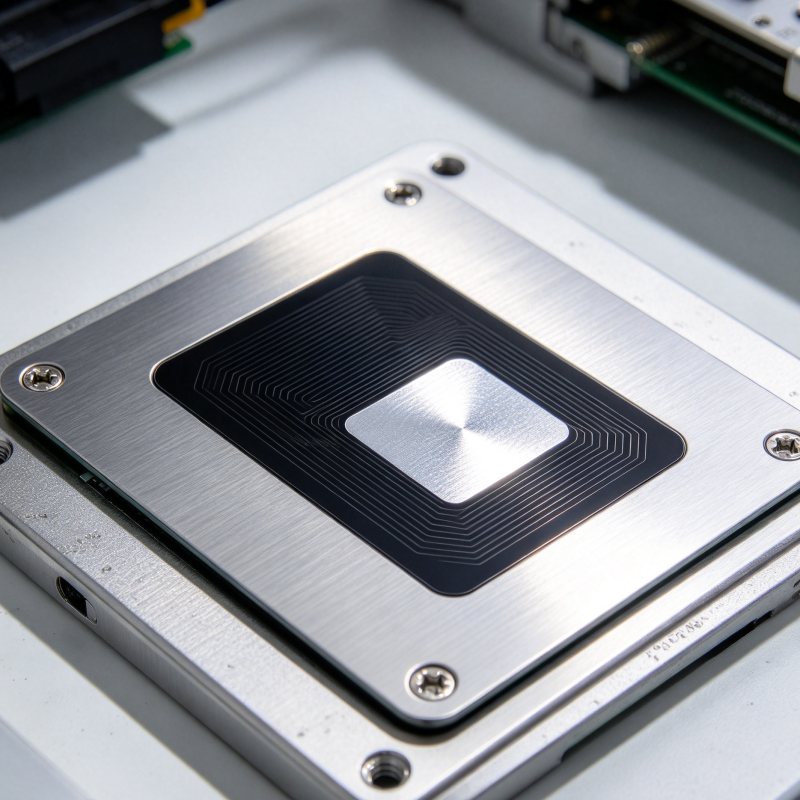
The Middle Range Reader 6M ISO-18000-6C is designed to bridge the gap between short-range precision and long-range coverage. With a stable 6-meter reading distance, high-speed multi-tag processing, and industrial-grade reliability, this RFID reader is an ideal solution for modern automated environments.
This comprehensive SEO article explores the product in depth, including technical specifications, competitive analysis, application scenarios, and the key pain points it solves, helping you fully understand why this device is a top choice for RFID deployment.
What Is a Middle Range Reader 6M ISO-18000-6C?
A Middle Range Reader 6M ISO-18000-6C is a fixed UHF RFID reader operating in the 860–960 MHz frequency band, compliant with the global ISO18000-6C (EPC Gen2) standard.
This type of reader is designed for medium-distance identification (typically up to 6 meters), offering a balance between:
- Read accuracy
- Coverage area
- System cost
👉 It is widely used in industrial automation, warehouse management, and access control systems.
Understanding ISO18000-6C Standard
The ISO18000-6C (EPC Gen2) protocol is the global standard for UHF RFID systems, ensuring compatibility between tags and readers across different manufacturers.
Key Advantages of ISO18000-6C
- Global interoperability
- High-speed data transmission
- Multi-tag anti-collision capability
- Long and medium-range reading
👉 This standard is the backbone of modern RFID supply chain systems.
Application
1.Intelligent traffic such as ETC;
2. Customs border-crossing;
3. Parking lot ;
4. Automatic weighting;
5. Container management,pallet management ;
6. Asset management ;
7. Ticketing& access control;
8. Pharmaceuticals such as medical waste management.
Specification
| Item No | |
| DO-8280C | RS232,RS485,Wiegand |
| Performance parameters | |
| Working Frequency | 902~928 MHz or 865~868MHz |
| Protocol | ISO18000-6C(EPC C1 GEN2) |
| Radio frequency power | 0dBm~30dBm(Adjustable) |
| Software & SDK | DEMO and C#,VC,VB,Java,DELPHI, etc., |
| Encryption | Can be directly encrypted, copy prevention. |
| Reading range | stable reading range 6M(Depends on tag&environment) |
| Industrial lightning protection | 6000V industrial lightning protection |
| Low temperature protection | Northeast,Northwest extremely cold region,low temperature protection |
| Frequency modulation way | Broad spectrum frequency hopping or fixed frequency |
| Input/output port | Two-way relay output(customized), one-way trigger input |
| Antenna gain | 8dBi circular polarization |
| Working way | Buzzer |
| Power | 12V/3A Adaptor |
| Physical parameters: | |
| Item size | 220x220x50mm |
| Package size | 430x320x140mm |
| Net weight | 3KG |
| Shell material | ABS |
| Working temperature | -20℃~+65℃ |
| Storage temperature | -45℃~+95℃ |

Competitive Analysis
1. 6M Middle Range vs Short Range RFID Reader
| Feature | 6M Middle Range | Short Range |
|---|---|---|
| Range | Medium (0–6m) | Very short (0–30cm) |
| Accuracy | High | Very high |
| Use Case | Warehouse, automation | Production line |
👉 Middle range provides better coverage with good accuracy.
2. 6M Middle Range vs Long Range RFID Reader
| Feature | 6M Reader | Long Range (10–30m) |
|---|---|---|
| Accuracy | High | Moderate |
| Interference | Low | Higher risk |
| Deployment | Flexible | Complex |
👉 6M readers are ideal for controlled environments, while long-range readers are used for large-scale tracking.
3. 6M Reader vs Barcode Systems
| Feature | RFID | Barcode |
|---|---|---|
| Line of Sight | Not required | Required |
| Speed | High | Low |
| Automation | Full | Limited |
| Multi-Read | Yes | No |
👉 RFID significantly improves efficiency and automation.
4. Chip-Level Comparison (R2000 vs M100)
| Feature | R2000 Reader | M100 Reader |
|---|---|---|
| Performance | High-end | Mid-range |
| Speed | Faster | Moderate |
| Cost | Higher | Lower |
👉 Choose based on budget vs performance requirements.
Application Scenarios
1. Warehouse Management
- Inventory tracking
- Pallet identification
- Automated stock counting
👉 Improves inventory accuracy and efficiency.
2. Logistics and Supply Chain
- Shipment tracking
- Sorting systems
- Goods verification
👉 Enables real-time supply chain visibility.
3. Industrial Automation
- Work-in-progress tracking
- Assembly line monitoring
- Equipment identification
4. Parking and Vehicle Management
- Parking systems
- Toll collection
- Vehicle access control
👉 Supports contactless identification systems.
5. Access Control Systems
- Personnel identification
- Secure entry systems
6. Asset Management
- Equipment tracking
- Tool management
- IT asset monitoring
Pain Points Solved by 6M RFID Readers
Problem 1: Inefficient Manual Processes
Traditional tracking requires manual scanning.
✔ Solution:
Automated RFID scanning eliminates manual work
Problem 2: Limited Read Range
Short-range systems cannot cover operational areas.
✔ Solution:
6M range provides optimal coverage for most facilities
Problem 3: Tag Collision in Bulk Environments
Multiple tags cause reading errors.
✔ Solution:
Advanced anti-collision ensures accurate multi-tag reading
Problem 4: High Operational Costs
Manual labor increases expenses.
✔ Solution:
RFID reduces labor and improves efficiency
Problem 5: Data Inaccuracy
Human errors lead to incorrect tracking.
✔ Solution:
RFID provides real-time, reliable data
ROI Benefits for Businesses
Implementing a 6M middle range RFID reader can:
- Increase efficiency by 30–50%
- Improve inventory accuracy to 99%+
- Reduce labor costs
- Enable real-time tracking
Integration with Enterprise Systems
6M RFID readers can integrate with:
- ERP systems
- Warehouse Management Systems (WMS)
- Manufacturing Execution Systems (MES)
- IoT platforms
👉 Enables end-to-end digital transformation.
Installation Best Practices
- Mount at optimal height and angle
- Avoid metal interference
- Adjust power output for environment
- Conduct real-world testing
Common Mistakes to Avoid
- Choosing incorrect read range
- Poor antenna placement
- Ignoring environmental interference
- Skipping system testing
Future Trends in Middle Range RFID Technology
- Smart factories (Industry 4.0)
- AI-powered tracking systems
- IoT integration
- Real-time analytics
FAQ
1. What is the typical read range?
Up to 6 meters depending on environment.
2. Can it read multiple tags?
Yes, hundreds of tags simultaneously.
3. Is it suitable for outdoor use?
Yes, with industrial-grade protection.
4. What protocol does it support?
ISO18000-6C (EPC Gen2).
5. Can it integrate with existing systems?
Yes, via multiple communication interfaces.
Conclusion
The Middle Range Reader 6M ISO-18000-6C is a highly efficient and versatile RFID solution that delivers balanced performance, reliable accuracy, and scalable integration. Positioned between short-range and long-range systems, it offers the perfect combination of coverage, cost-efficiency, and precision.
For businesses seeking to improve automation, reduce operational costs, and gain real-time visibility, this RFID reader is an essential component of modern smart systems.