September 14, 2026
A portable POS machine combines payment processing, Android computing, wireless communication, barcode scanning, and receipt printing in one compact device. This Android POS system is designed for businesses that need a flexible mobile payment terminal for retail, restaurants, delivery services, field sales, transportation, and other environments where traditional fixed POS equipment is not practical.
With a 5.5-inch capacitive touchscreen, 4G connectivity, Wi-Fi, Bluetooth, built-in thermal printer, front and rear cameras, and support for magnetic stripe, IC, and contactless cards, this portable POS terminal provides the essential hardware for mobile transaction applications.
The device can also support customized software and business applications, making it suitable for OEM and ODM projects where companies need a branded Android POS machine for a specific payment, retail, or service workflow.

Technical Specifications
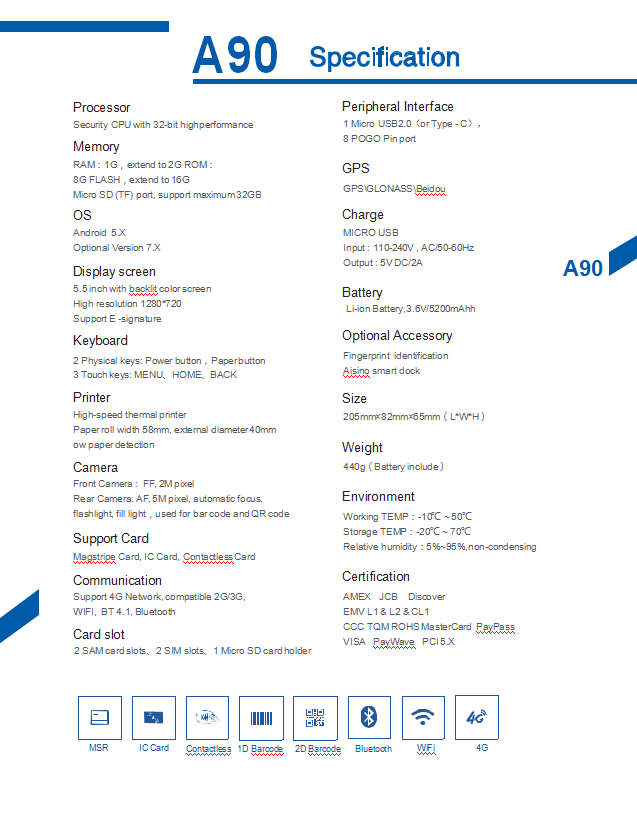
| After-sales Service Provided | Video technical support, Online support |
| Warranty | 1 YEAR |
| Operation System | Android 7.X |
| CPU | 32bit Quad-Core application high performance secure processor |
| Touch Screen Type | Capacitive Screen |
| Hard Disk Capacity | RAM: 1GB / 2GB; ROM: 2GB / 16GB; Flash: 32GB |
| Color | Personalizado / Customized |
| Display screen | 5.5 inch with backlit color screenHigh resolution 1280*720Support E -signature |
| Keyboard | 2 Physical keys: Power button, Paper button3 Touch keys: MENU, HOME, BACK |
| Printer | High-speed thermal printerPaper roll width 58mm, external diameter 40mm ow paper detection |
| Camera | Front Camera : FF, 2M pixelRear Camera: AF, 5M pixel, automatic focus, flashlight, fill light, used for bar code and QR code |
| Support Card | Magstripe Card, IC Card, Contactless Card |
| Communication | Support 4G Network, compatible 2G/3G, WIFI, BT 4.1, Bluetooth |
| Card slot | 2 SAM card slots, 2 SIM slots, 1 Micro SD card holder |
| GPS | GPSGLONASSBeidou |
| Charge | Type-CInput : 110-240V, AC/50-60HzOutput : 5V DC/2A |
| Battery | Li-ion Battery, 3.6V/5200mAhh |
| Optional Accessory | Fingerprint identificationAisino smart dock |
| Size | 205mm×82mm×65mm (L*W*H) |
| Weight | 440g |
| Certification | AMEX JCB Discover EMV L1 & L2 & CL1 CCC TQM ROHS MasterCard PayPass VISA PayWave PCI 5.X |
One Device for Mobile Payment and POS Operations
A traditional checkout system often requires several separate devices, including a computer or tablet, card reader, receipt printer, and wireless communication equipment. A portable POS machine integrates many of these functions into one handheld terminal.
This configuration can simplify the hardware setup and make payment operations easier to move around a business location.
For example, restaurant staff can use a mobile POS terminal at the table instead of sending customers to a fixed checkout counter. Delivery personnel can use the terminal at the point of delivery. Retail staff can accept payments away from the main cashier area during busy periods or promotional events.
The built-in thermal printer also allows receipts to be printed immediately without connecting to a separate printer.
Portable Android POS Machine for Flexible Business Applications
The Android operating system gives businesses a familiar software environment for developing or deploying POS applications. Depending on the final software configuration and project requirements, the terminal can be used as part of a customized retail, payment, ordering, delivery, or field-service solution.
The 5.5-inch display provides enough space for common POS interfaces while keeping the device relatively compact. The capacitive touchscreen supports straightforward interaction, while the physical power and paper buttons provide dedicated controls for basic terminal operations.
For businesses developing their own application, hardware integration should be evaluated according to the required payment SDK, printer interface, card reader interface, security architecture, and acquiring platform.
Built-In 58mm Thermal Printer
A built-in printer is one of the main advantages of this portable POS system.
The terminal uses a high-speed thermal printer designed for 58mm paper rolls. Thermal printing does not require traditional ink cartridges, making it practical for frequent receipt printing in retail and service environments.
The printer supports a paper roll with a width of 58mm and an external diameter of approximately 40mm. A paper detection function is also listed in the product specifications.
Why Choose a POS Terminal with a Built-In Printer?
| Requirement | Portable POS with Built-In Printer | Separate POS + Printer |
|---|---|---|
| Hardware setup | Integrated | Multiple devices |
| Mobility | High | Limited |
| Receipt printing | Directly from terminal | Requires separate printer |
| Counter space | Minimal | More space required |
| Cabling | Reduced | More cables and connections |
| Field operations | Suitable | Less convenient |
| Deployment | Simple hardware configuration | More components to manage |
For mobile commerce and field payment scenarios, integrating the printer into the terminal can reduce the number of devices operators need to carry.
Support for Multiple Card Payment Technologies
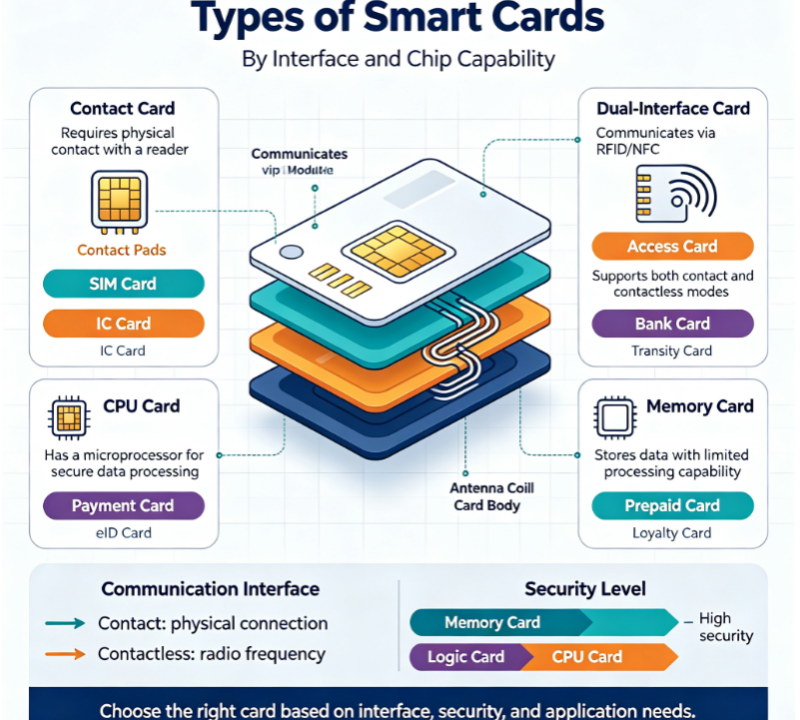
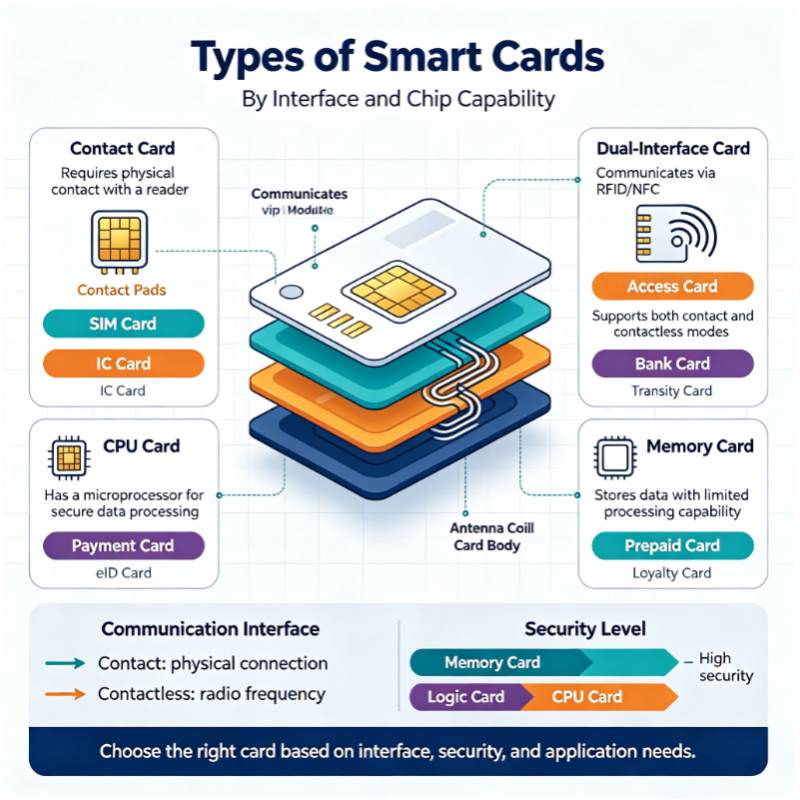
The portable POS machine is specified to support three major card interfaces: magnetic stripe cards, IC cards, and contactless cards.
This combination gives payment solution providers a flexible hardware platform for applications that need to accommodate different card technologies.
| Card Technology | Typical Use | Supported by This Terminal |
|---|---|---|
| Magnetic Stripe | Legacy card transactions | Yes |
| IC Card | Chip-based card transactions | Yes |
| Contactless Card | Tap-based transactions | Yes |
The product page also lists EMV-related certifications and payment technology names including AMEX, JCB, Discover, MasterCard PayPass, and Visa payWave.
However, payment acceptance is not determined by hardware alone. A complete deployment normally requires compatible payment software, acquiring services, payment application certification, security configuration, and approval for the target market.
For this reason, businesses should confirm the required payment certifications and acquiring compatibility before placing a large production order.
4G, Wi-Fi, and Bluetooth Connectivity
Reliable communication is essential for a mobile POS system. This terminal supports 4G mobile connectivity and is also compatible with 2G/3G networks according to the listed specifications. Wi-Fi and Bluetooth 4.1 provide additional connectivity options.
4G connectivity can be useful for businesses that need to process transactions away from a fixed network connection. Wi-Fi can be used in stores, restaurants, offices, and other locations with an available wireless network.
Bluetooth can provide an additional communication option for compatible peripherals or business applications.
The terminal includes two SIM card slots and two SAM card slots, providing additional flexibility for payment and network configurations.
Built for Mobile Retail and Service Environments
The 205 × 82 × 65mm enclosure and 440g weight make the device suitable for applications where portability is important.
Unlike a countertop POS system, a handheld Android POS machine can move with the operator. This makes it useful for businesses where payment may happen at different locations.
Common application scenarios include:
- Retail stores
- Restaurants and cafes
- Food delivery
- Mobile sales
- Field service
- Transportation
- Events and exhibitions
- Hospitality
- Ticketing
- Pop-up stores
- On-site payment collection
- Membership and service businesses
The exact application depends on the software and payment infrastructure integrated into the terminal.
POS Terminal with Barcode and QR Code Camera
The device includes a front 2MP camera and a rear 5MP autofocus camera with flashlight and fill light. The rear camera is specified for barcode and QR code applications.
A camera-equipped POS terminal can combine payment operations with product or service identification. For example, a retail application can use the camera to identify a product before displaying its price or inventory information.
QR code scanning can also be useful in ordering, customer identification, ticketing, membership, and other application workflows.
The camera does not replace a dedicated industrial barcode scanner in every environment. Businesses with high-volume scanning requirements should evaluate barcode type, scanning distance, scan speed, lighting conditions, and software compatibility before finalizing the hardware configuration.
Long-Use Battery for Mobile POS Operations
The terminal uses a 3.6V / 5200mAh Li-ion battery. Battery capacity is an important consideration for mobile POS applications because operators may need to complete transactions away from a charging station.
Actual operating time depends on network usage, screen brightness, printer frequency, camera usage, application workload, and environmental conditions. Therefore, battery capacity should be considered together with the expected transaction volume and operating schedule.
The device uses a Type-C charging interface, with the listed power input specification supporting 110–240V AC, 50/60Hz through the supplied power solution.
POS Hardware Designed for OEM and ODM Projects
For payment companies, distributors, system integrators, and POS solution providers, the hardware can serve as a platform for customized projects.
The product page lists color customization and optional accessories including fingerprint identification and an Aisino smart dock.
Potential customization areas may include:
| Customization Area | Possible Project Requirement |
|---|---|
| Housing color | Brand-specific appearance |
| Android application | Customized POS or payment software |
| Logo and branding | OEM product identification |
| Connectivity | Market-specific SIM and network configuration |
| Payment solution | Integration with selected acquiring platform |
| Fingerprint | User authentication applications |
| Smart dock | Stationary or charging scenarios |
| Storage | Application-specific configuration |
Customization availability should be confirmed with the manufacturer before production because hardware, software, certification, and minimum-order requirements can vary by project.
Portable POS Machine vs. Traditional Countertop POS
Choosing between a mobile POS terminal and a fixed POS system depends mainly on how and where transactions take place.
| Factor | Portable Android POS | Traditional Countertop POS |
|---|---|---|
| Mobility | Excellent | Limited |
| Built-In Printer | Yes | Usually separate or integrated |
| 4G Connectivity | Yes | Often network-dependent |
| Touchscreen | Yes | Depends on configuration |
| Mobile Payment | Well suited | Less flexible |
| Table-Side Ordering | Suitable | Requires additional hardware |
| Field Sales | Suitable | Not practical |
| Countertop Checkout | Suitable | Excellent |
| Hardware Footprint | Compact | Usually larger |
A fixed POS system can be preferable for high-volume checkout counters, while a portable POS machine can be more suitable when employees need to move between customers or locations.
Portable POS Machine vs. Smartphone-Based Payment
Smartphones are convenient, but a dedicated Android POS terminal provides hardware specifically designed around business transactions.
| Feature | Dedicated Android POS | Smartphone |
|---|---|---|
| Receipt Printer | Built in | Usually external |
| Payment Card Interfaces | Dedicated hardware | Depends on solution |
| Business Buttons | Physical controls available | Touchscreen only |
| Battery | 5200mAh listed | Varies |
| SIM Support | 2 SIM slots listed | Model dependent |
| SAM Slots | 2 listed | Usually unavailable |
| POS Form Factor | Purpose-built | General-purpose |
| Business Deployment | Designed for POS workflows | Requires additional accessories |
For businesses that need receipt printing, dedicated card interfaces, SIM/SAM support, and a purpose-built POS workflow, a dedicated terminal can offer a more complete hardware platform than a standard smartphone.
Security and Certification Information
Payment terminals require a higher level of security consideration than ordinary Android devices.
The product page lists EMV L1, EMV L2, CL1, PCI 5.X, CCC, TQM, RoHS, and payment-brand-related certifications or technologies including AMEX, JCB, Discover, MasterCard PayPass, and Visa payWave.
These specifications can be important when evaluating a POS terminal for payment projects. However, certification requirements depend on the complete payment solution, software, payment application, acquiring bank, processor, and target country.
Businesses should therefore request current certificates and documentation from the manufacturer and verify that the proposed configuration is appropriate for the intended deployment.
Who Should Consider This Android POS System?
This portable POS machine is particularly relevant to companies that need a combination of payment processing hardware, Android applications, receipt printing, and wireless connectivity.
It can be considered by:
Retailers: Accept payments and manage product-related applications away from a fixed checkout counter.
Restaurants: Bring payment and receipt printing directly to tables or service areas.
Delivery companies: Equip delivery personnel with a mobile terminal for on-site transaction workflows.
System integrators: Use the hardware as a foundation for customized POS applications.
Payment solution providers: Evaluate the terminal for integration with their acquiring and payment infrastructure.
POS distributors: Offer a compact mobile POS solution to customers requiring integrated printing and card acceptance.
What to Check Before Ordering
A POS terminal should be evaluated as part of a complete business solution rather than by hardware specifications alone.
Before ordering, confirm the following:
- Payment compatibility: Verify the card schemes, acquiring bank, processor, and payment application required for your market.
- Certification: Request the latest certificates and confirm their scope and validity for the intended configuration.
- Android compatibility: Check whether the Android version meets the requirements of your application.
- SDK and API: Confirm how your software will communicate with the printer, card reader, camera, and other hardware components.
- Network bands: Verify 4G frequency compatibility with the target country or carrier.
- Printer requirements: Confirm paper size, print speed, receipt format, and paper availability.
- Battery performance: Evaluate expected working time based on your transaction volume.
- Customization: Discuss logo, housing color, application installation, accessories, and other OEM requirements.
- Production requirements: Confirm MOQ, lead time, sample availability, packaging, and warranty terms.
Why Choose a Portable POS System?
A portable POS system is valuable when payment needs to happen where the customer is rather than at a fixed checkout counter.
By combining Android computing, payment card interfaces, wireless communication, a thermal printer, camera functions, and a rechargeable battery, this terminal provides a compact hardware foundation for mobile transaction applications.
Its combination of 4G, Wi-Fi, Bluetooth, multiple card slots, contactless payment support, and built-in printing makes it suitable for a broad range of customized POS projects.
For businesses developing a dedicated payment or retail solution, the next step is to match the hardware configuration with the required software, payment certification, network environment, and business workflow.
Frequently Asked Questions
What is a portable POS machine?
A portable POS machine is a mobile point-of-sale terminal designed to process transactions away from a fixed checkout counter. It can combine payment card interfaces, wireless communication, touchscreen controls, business applications, and receipt printing in one device.
Does this POS machine support contactless cards?
Yes. The listed specifications include support for contactless cards, as well as magnetic stripe and IC cards.
Does the Android POS terminal have a built-in printer?
Yes. It includes a high-speed thermal printer designed for 58mm paper rolls.
Can this POS machine connect to a 4G network?
Yes. The specifications list 4G connectivity with compatibility with 2G/3G networks, as well as Wi-Fi and Bluetooth 4.1.
Can the POS machine scan QR codes?
The rear 5MP autofocus camera is specified for barcode and QR code applications. Actual scanning performance depends on the software and QR/barcode requirements.
How much does the portable POS terminal weigh?
The listed weight is approximately 440g.
What battery does the POS machine use?
The terminal uses a 3.6V / 5200mAh Li-ion battery according to the product specifications.
Can the Android POS machine be customized?
The product page lists customized color as an option and also identifies optional accessories such as fingerprint identification and an Aisino smart dock. Additional OEM or ODM customization should be confirmed with the manufacturer.
Is this POS terminal suitable for international payment projects?
The product specifications list several payment-related certifications and technologies. However, suitability for a specific country depends on the complete payment solution, local regulations, acquiring infrastructure, software, certification scope, and network compatibility. Buyers should confirm these requirements before deployment.
What support is provided?
The listed after-sales services include video technical support and online support. The product page also specifies a one-year warranty.
Request a Customized Portable POS Machine
If you are looking for an Android POS system for retail, restaurants, mobile payment, delivery, field service, or a customized payment project, this portable terminal provides a combination of card acceptance, Android applications, wireless communication, camera functions, and built-in receipt printing.
For OEM and ODM projects, provide your target market, required payment methods, network requirements, software needs, branding requirements, and estimated order quantity. The manufacturer can then confirm the appropriate hardware configuration, available customization options, certification documentation, sample availability, and production requirements. Feel free to leave us a message.