October 21, 2026
The RFID Pet Implantable Animal Microchip is a compact electronic identification solution designed for pets, livestock, and other animals requiring reliable individual identification. Operating at the widely used 134.2kHz LF frequency, the microchip can be supplied with animal identification protocols such as ISO 11784/11785 and FDX-B, making it suitable for use with compatible animal RFID readers.
The microchip is enclosed in biocompatible glass and protected with a Parylene coating. It can be supplied preloaded in a sterile polypropylene syringe for convenient implantation by qualified veterinary professionals.
Whether used for pet identification, livestock management, veterinary records, breeding programs, or animal traceability, this implantable RFID tag provides a practical way to associate an animal with a unique electronic identification number.
Features:
1). Unique identity for every livestock and pet.
2). Import and export control.
3). Lost pet can be easily traced back to it’s owner.
4). Veterinarians are able to keep the animal’s heath record.
5). Easily implanted and no impact on the animal.
6). Suitable for use in extreme conditions.
7). Coupled with software, the RFID tag is a must inmanagement of animals, either livestock or household pet.
Specifications
| Frequency | Standard: 134.2KHz, Optional: LF 125KHz, HF 13.56MHz/NFC |
| Material: | Bioglass with Parylene coating |
| Size | Standard: 2.12*12mm, 1.25*7mm, 1.4*8mm, Optional: 2.12*8mm, 3*15mm, 4*32mm |
| Chip | EM4305 |
| Protocol | ISO11784/11785, FDX-B, FDX-A, HDX, NFC HF ISO14443A are available for option |
| Work tem | -20 ℃~50℃ |
| Store Tem. | -40 ℃~70℃ |
| Read and write times | >100000 |
| Sryinge material | Polypropylene |
| Sryinge color | Green, White, Blue, Red for selection |
| Packing material | 1 syringe with 1 pre-loaded microchip, then packed in 1 Medical-grade sterilization pouch Microchip with needle or microchip without syringe or needle are for option too. |
| Application | animal pet Identification |


How Does an Implantable Animal RFID Microchip Work?
An implantable RFID microchip contains an RFID integrated circuit and antenna enclosed inside a small glass capsule. Unlike a battery-powered tracking device, the passive RFID microchip does not require an internal battery.
When a compatible RFID reader generates an electromagnetic field, the microchip responds by transmitting its stored identification information back to the reader. The reader then displays or transfers the identification number to connected software.
A typical identification process is:
RFID Reader → Microchip → Unique ID → Animal Database → Animal Information
The RFID number itself does not automatically contain the owner’s contact information, veterinary history, or other database records. Instead, the unique identification number can be associated with those records in an animal management system.
This structure allows organizations to maintain animal records while keeping the implanted device small and passive.
134.2kHz FDX-B vs. Other Animal RFID Options
Selecting the correct frequency and protocol is important because RFID readers and animal microchips must use compatible technologies.
| Technology | Frequency | Typical Application | Main Consideration |
|---|---|---|---|
| LF Animal RFID | 134.2kHz | Pet and livestock identification | Widely used for animal identification |
| LF RFID | 125kHz | General low-frequency identification | Compatibility with animal standards should be verified |
| HF RFID | 13.56MHz | NFC and short-range applications | Different reader and protocol requirements |
| NFC | 13.56MHz | Smartphone-compatible applications | Not equivalent to standard LF animal microchips |
| UHF RFID | 860–960MHz | Logistics and inventory | Generally different from implantable animal identification |
For animal identification applications where ISO 11784/11785 and FDX-B compatibility is required, a 134.2kHz configuration is generally the appropriate option.
FDX-B Animal Identification
FDX-B is one of the RFID technologies used in animal identification systems. The 134.2kHz configuration offered for this product is intended for applications requiring compatible animal RFID readers.
For a complete system, the microchip, RFID reader, antenna, communication interface, and software should be selected as a compatible combination.
When purchasing in volume, buyers should confirm the exact protocol implementation, data format, identification code structure, and reader compatibility with the supplier.
Glass Tube Construction
The microchip is enclosed in bioglass, forming a small cylindrical capsule suitable for implantable animal identification applications. A Parylene coating is used as an additional protective layer around the glass capsule.
The compact structure helps reduce the physical size of the implanted identification device while protecting the electronic components from the surrounding environment.
Different dimensions can be selected according to the target animal and application requirements.
| Size | Possible Application Consideration |
|---|---|
| 1.25 × 7mm | Small-format identification applications |
| 1.4 × 8mm | Compact animal identification |
| 2.12 × 8mm | Compact standard option |
| 2.12 × 12mm | Common general-purpose configuration |
| 3 × 15mm | Larger animal applications |
| 4 × 32mm | Larger-format applications |
The appropriate size should be selected according to animal type, implantation procedure, local regulations, and veterinary requirements.
Preloaded Sterile Syringe Option
For convenient deployment, the RFID microchip can be supplied preloaded inside a polypropylene syringe. The standard package contains one syringe with one preloaded microchip, packaged in a medical-grade sterilization pouch.
This configuration can simplify handling, storage, and identification procedures for professional users.
Available syringe colors include:
- Green
- White
- Blue
- Red
The product can also be supplied in alternative configurations, including the microchip with needle or the microchip without a syringe and needle.
Packaging and sterilization specifications should be confirmed according to the intended market and application.
Applications
The implantable animal RFID microchip can be used in a variety of animal identification and management programs.
Pet Identification
The microchip can provide an electronic identity for dogs, cats, and other household pets. When the animal’s RFID number is registered in an appropriate database, the number can be associated with owner and veterinary information.
This can help shelters, veterinary clinics, breeders, and animal organizations identify registered animals.
Livestock Management
For livestock operations, RFID identification can help assign a unique electronic identity to individual animals.
Depending on the management system, identification records may be associated with:
- Animal ID
- Breed
- Birth date
- Parentage
- Vaccination records
- Veterinary records
- Breeding information
- Farm or facility information
- Movement records
The exact data available depends on the software and database used by the customer.
Veterinary Clinics
Veterinary professionals can use compatible RFID readers to retrieve an animal’s identification number and match it with records in their practice management system.
This can reduce reliance on manually entered identification numbers and help associate medical records with the correct animal.
Animal Shelters and Rescue Organizations
Shelters and rescue organizations can use electronic identification to help manage animals entering and leaving their facilities.
A registered microchip number can provide a consistent identification reference even if the animal is transferred between facilities.
Breeding Programs
Breeders and animal management organizations can associate electronic IDs with breeding records, parentage, health information, and other relevant data.
This can improve record organization when a large number of animals need to be individually identified.
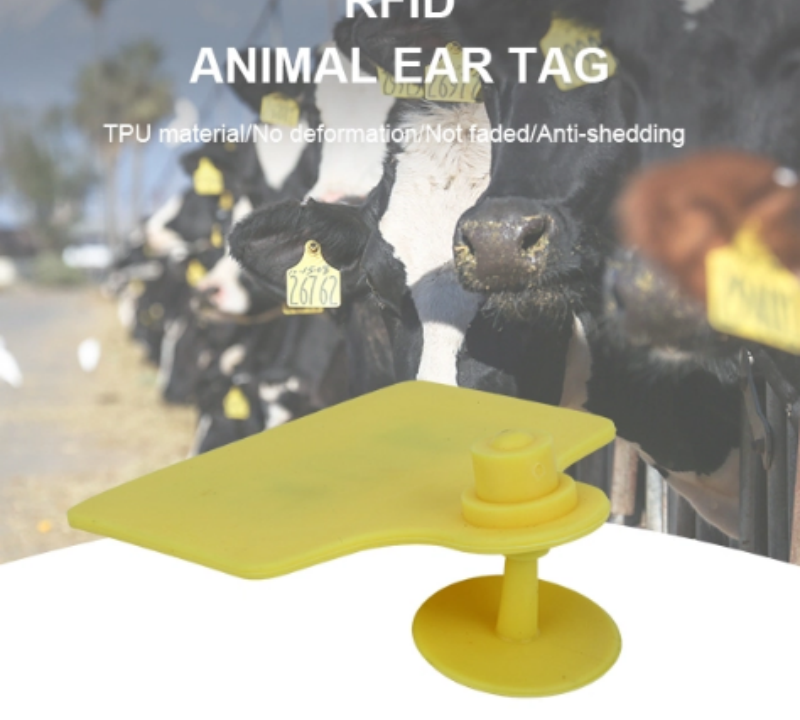
Implantable Microchip vs. External RFID Tags
Different animal identification applications may require different tag formats.
| Feature | Implantable Microchip | External RFID Tag |
|---|---|---|
| Attachment | Implanted under the skin | Attached externally |
| Battery | Passive | Usually passive |
| Risk of tag loss | Low after implantation | Can be lost or damaged |
| Visual identification | Not directly visible | May be visible |
| Reading | Requires compatible RFID reader | Requires compatible RFID reader |
| Maintenance | Minimal after implantation | May require replacement |
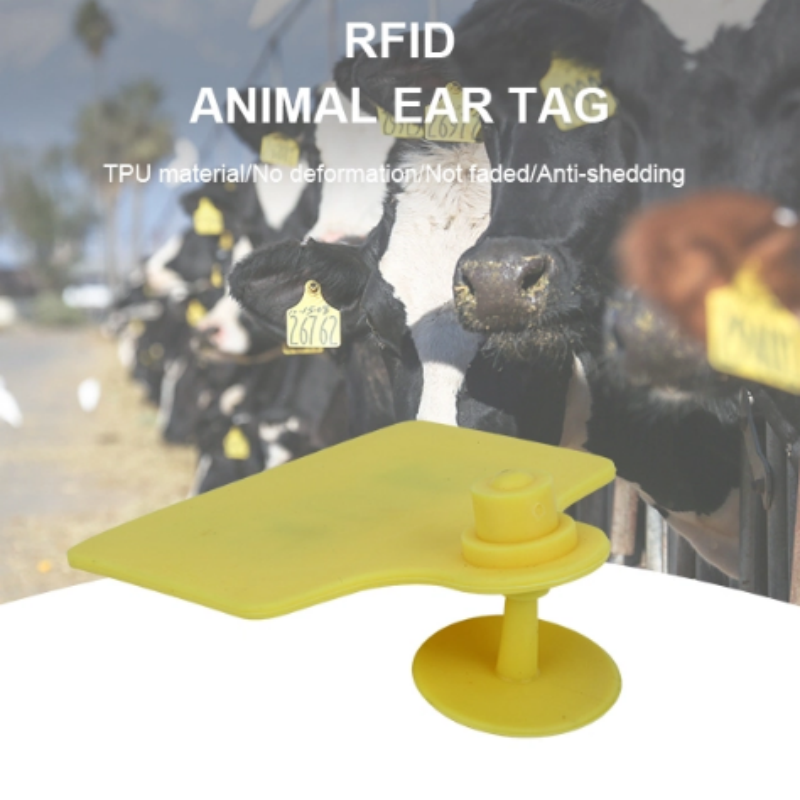
| Typical Use | Pet and individual animal identification | Livestock and visible identification |
| Animal Management | Electronic ID linked to database | Electronic ID linked to database |
An implantable microchip is particularly useful when a permanent electronic identification reference is preferred. External RFID tags may be more suitable when visual identification or easy physical replacement is important.
Passive RFID Identification Without a Battery
This animal microchip is a passive RFID device. It does not require a built-in battery for normal identification.
The RFID reader supplies the electromagnetic energy needed to activate the microchip during the reading process. The microchip then responds with its stored identification data.
This battery-free architecture makes passive RFID suitable for applications where a small physical size and long service life are important.
It is important to distinguish an RFID identification microchip from a GPS tracker. An RFID microchip provides identification when scanned by a compatible reader; it does not independently transmit its location over a cellular or satellite network.
RFID Microchip and Animal Tracking Systems
The microchip can be an important identification component within a larger animal management system.
However, the microchip itself should not be described as a real-time location tracking device.
For example:
Microchip: Provides animal identification.
RFID Reader: Reads the microchip ID.
Database: Stores animal-related information.
Management Software: Allows authorized users to search, update, and manage records.
Optional Network Services: Can connect animal records between clinics, shelters, farms, registration organizations, or other facilities.
This distinction is important when designing a complete animal identification solution.
Choosing the Right Microchip Size
Animal size and implantation requirements should be considered when selecting the microchip dimensions.
Smaller microchips may be appropriate for smaller animals where minimizing physical dimensions is a priority. Larger formats may be selected for larger animals or applications with specific implantation requirements.
| Animal/Application | Size Selection Approach |
|---|---|
| Small pets | Consider compact 1.25 × 7mm or 1.4 × 8mm options |
| Dogs and cats | 2.12 × 8mm or 2.12 × 12mm may be considered |
| Livestock | Larger formats may be appropriate |
| Large animals | 3 × 15mm or 4 × 32mm may be considered |
Final selection should always be based on the applicable veterinary procedure, animal size, local regulations, and customer requirements.
Why Choose a 134.2kHz Animal RFID Microchip?
A 134.2kHz configuration offers several advantages for animal identification projects:
Standardized identification: Compatible configurations can support established animal RFID standards.
Compact form factor: The glass tube design allows the RFID electronics to be enclosed in a small capsule.
Passive operation: No internal battery is required.
Database integration: The unique ID can be linked to animal records in software.
Multiple configurations: Different sizes, protocols, and packaging options are available.
Professional deployment: Preloaded syringe packaging can simplify the handling process for qualified veterinary personnel.
Product Configuration Options
Customers can select different configurations according to their project requirements.
| Configuration | Available Options |
|---|---|
| Frequency | 134.2kHz / 125kHz / 13.56MHz |
| Protocol | FDX-B / FDX-A / HDX / NFC ISO14443A |
| Microchip Size | Multiple sizes |
| Syringe | With preloaded microchip |
| Needle | With or without needle |
| Packaging | Sterile pouch or chip-only configuration |
| Syringe Color | Green / white / blue / red |
| Application | Pets / livestock / animal identification |
Not every frequency, chip, protocol, and size combination is necessarily available as a standard production configuration. Please provide your required specifications for confirmation.
Compatibility With RFID Readers
A compatible reader is required to retrieve the identification number from the implanted microchip.
For a 134.2kHz FDX-B animal identification project, the reader should support the corresponding frequency and protocol. Reader selection should also consider antenna design, reading distance, communication interface, data output format, and operating environment.
Before purchasing microchips and readers in bulk, it is recommended to conduct a compatibility test using actual samples.
A practical test should verify:
- Microchip activation
- Identification number reading
- Reading stability
- Reading distance
- Multiple-reader compatibility
- Data output
- Software integration
This helps reduce compatibility issues during large-scale deployment.
Animal RFID Identification Workflow
A typical animal identification system can follow a simple workflow:
Step 1 — Implantation
A qualified veterinary professional implants the microchip according to the applicable procedure.
Step 2 — Registration
The unique microchip ID is registered in an animal management database.
Step 3 — RFID Scanning
An authorized user scans the animal with a compatible RFID reader.
Step 4 — ID Verification
The reader displays the electronic identification number.
Step 5 — Database Lookup
The ID is matched with the corresponding animal record.
Step 6 — Record Management
Authorized users can update relevant ownership, veterinary, breeding, or management information.
Quality and Reliability Considerations
For implantable animal identification products, quality should be evaluated beyond RFID performance alone.
Buyers should consider the glass enclosure, coating, chip reliability, sterilization process, packaging integrity, dimensional consistency, and protocol compliance.
For commercial or regulated applications, suppliers should be able to provide appropriate technical documentation and test reports where applicable.
Recommended documents may include:
- Product specification sheet
- Chip datasheet
- Protocol compatibility information
- Sterilization documentation
- Biocompatibility information
- Quality inspection records
- Batch or lot information
- Packaging specifications
- Relevant compliance documentation
Documentation requirements can vary by country and intended application.
Frequently Asked Questions
What frequency does this animal microchip use?
The standard configuration operates at 134.2kHz. Other frequency options, including 125kHz and 13.56MHz/NFC, are available depending on the required configuration.
Does the microchip use a battery?
No. The standard RFID identification microchip is a passive device and does not require an internal battery for normal RFID reading.
Is 134.2kHz the same as NFC?
No. 134.2kHz is a low-frequency RFID technology used in animal identification applications, while NFC normally operates at 13.56MHz. They require different readers and protocols.
Does the microchip provide GPS tracking?
No. An implantable RFID microchip is primarily an identification device. It does not provide independent GPS or cellular location tracking.
Can the microchip store an animal’s medical records?
The microchip primarily provides identification data. Veterinary, ownership, and other records are normally stored in an external database and associated with the microchip ID.
Can the chip be supplied in a syringe?
Yes. The standard packaging option includes one preloaded microchip inside a polypropylene syringe and a medical-grade sterilization pouch.
What animals can use the microchip?
The product is intended for animal identification applications, including pets and livestock. The appropriate size and configuration should be selected according to the animal and the applicable veterinary requirements.
Can you provide different sizes?
Yes. Multiple dimensions are available, including 1.25 × 7mm, 1.4 × 8mm, 2.12 × 8mm, 2.12 × 12mm, 3 × 15mm, and 4 × 32mm configurations.
Is the RFID microchip compatible with every animal RFID reader?
Not necessarily. The reader must support the relevant frequency and protocol. For example, a 134.2kHz FDX-B microchip requires a compatible animal RFID reader.
Request a Customized Animal RFID Microchip
If you are sourcing implantable RFID microchips for pets, livestock, veterinary clinics, animal shelters, breeders, or an animal identification program, the product can be configured according to your technical requirements.
Welcome to contact us and please provide:
- Required frequency
- RFID protocol
- Microchip dimensions
- Required chip model
- Syringe and needle requirements
- Sterilization requirements
- Packaging requirements
- Estimated order quantity
- Target market or country
The 134.2kHz implantable animal RFID microchip is a practical solution for organizations that need a compact electronic identification method and a reliable way to connect individual animals with digital records. With multiple sizes, protocols, and packaging options, it can be adapted to different pet and livestock identification projects.