November 5, 2026
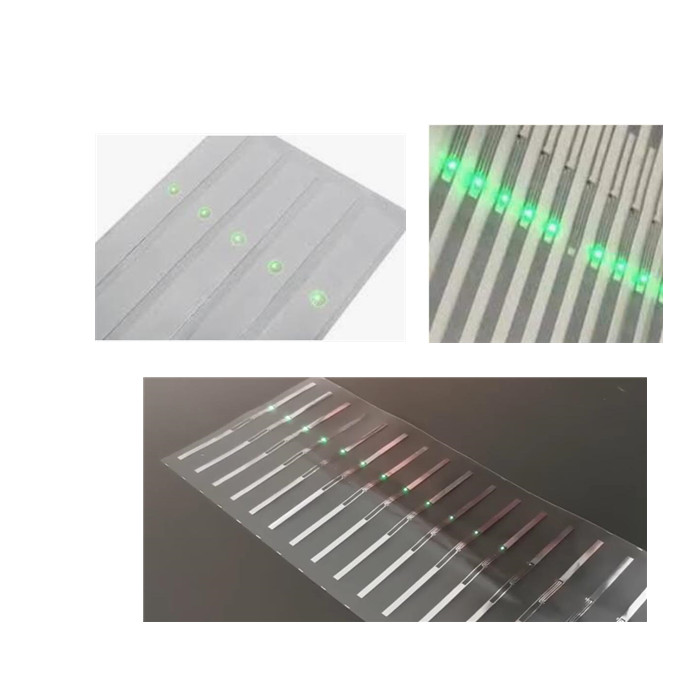
Our UHF RFID washable laundry tag is designed to help hotels, hospitals, commercial laundries, uniform rental companies, and textile service providers manage reusable fabrics more efficiently. Combining long-range identification with a compact, lightweight design, this RFID textile tag supports automated inventory counting, laundry tracking, and textile lifecycle management.
With a slim 70 × 15 × 1.5 mm profile, a weight of just 0.7 g, and support for repeated industrial laundry processes, our washable RFID tag can be integrated into a wide range of textile products. We offer sew-in and heat-press installation options to meet different fabric constructions and operational requirements.
Whether you manage thousands of hotel towels or a large fleet of work uniforms, our UHF RFID laundry tag helps you improve item visibility, streamline handovers, and build a more efficient textile management system.

Advantages of Washable Laundry Tag
1. Accelerate the turnover of cloth and reduce the amount of inventory, reducing the loss.
2 . Quantify the washing process and monitor the number of washing, improve customer satisfaction
3, quantify the quality of cloth, more targeted selection of cloth producers
4, simplify the handover, and inventory process, improve staff efficiency
Specification
| Working Frequency | 902-928MHz or 865~866MHz |
| Feature | R/W |
| Size | 70mm x 15mm x 1.5mm or customized |
| Chip Type | UHF Code 7M, or UHF Code 8 |
| Storage | EPC 96bits User 32bits |
| Warranty | 2years or 200 times laundry |
| Working Temperature | -25~ +110 ° C |
| Storage Temperature | -40 ~ +85 ° C |
| High Temperature Resistance | 1) Washing: 90 degrees, 15 minutes, 200 times 2) Converter pre-drying: 180 degrees, 30 minutes, 200 times 3) Ironing: 180 degrees, 10 seconds, 200 times 4) High temperature sterilization: 135 degrees, 20 minutes Storage humidity 5% ~ 95% |
| Storage humidity | 5% ~ 95% |
| Installation method | 10-Laundry7015:Sew in the hem or install in the woven jacket 10-Laundry7015H: 215 ℃ @ 15 seconds and 4 bars (0.4MPa) pressure Force hot stamping, or suture installation (please contact the original factory before installation See the detailed installation method), or install in the woven jacket |
| Product weight | 0.7 g / piece |
| Packaging | carton packing |
| Surface | color white |
| Pressure | Withstands 60 bars |
| Chemically resistant | resistant to all chemicals used in normal industrial washing processes |
| Reading distance | Fixed: more than 5.5 meters (ERP = 2W) Handheld: more than 2 meters (using ATID AT880 handheld) |
| Polarization mode | Linear polarization |
Key Features of Our UHF RFID Laundry Tag
- Washable design: Designed for repeated industrial washing, drying, and ironing processes.
- Long-range identification: Fixed-reader read range of more than 5.5 meters under specified conditions.
- Compact construction: Slim dimensions of 70 × 15 × 1.5 mm and a weight of only 0.7 g.
- Flexible installation: Available in sew-in and heat-press versions.
- UHF RFID technology: Supports fast identification and automated textile inventory workflows.
- Industrial durability: Designed to withstand high temperatures, mechanical pressure, and chemicals used in normal industrial laundry processes.
- Lifecycle tracking: Helps operators monitor laundry cycles, usage history, and textile circulation.
- Customizable options: Customized dimensions and configurations are available for different textile applications.
How Our UHF RFID Textile Tag Works
Our washable RFID tag uses ultra-high-frequency radio frequency identification technology to identify individual textile items without requiring direct visual contact.
Each tag carries an electronic identifier that can be associated with a textile record in your inventory or laundry management software. When a compatible RFID reader detects the tag, the system can retrieve the associated item information and update the relevant workflow.
A typical RFID laundry tracking process includes four steps:
- Tag registration: Assign an RFID identifier to each towel, bedsheet, garment, or uniform.
- Item identification: Use fixed readers, handheld readers, or RFID-enabled collection points to identify tagged textiles.
- Movement recording: Associate each read event with a process such as collection, washing, sorting, storage, or delivery.
- Inventory management: Use the collected data to track stock, review circulation, and manage textile usage.
This process reduces dependence on manual counting and supports more accurate, data-driven laundry operations.


High-Temperature and Industrial Laundry Resistance
Industrial textiles experience repeated exposure to water, heat, detergents, mechanical pressure, and finishing equipment. Our UHF RFID laundry tag is designed for demanding reusable-textile environments.
| Process or condition | Specified performance |
|---|---|
| Industrial washing | 90°C for 15 minutes, up to 200 cycles |
| Converter pre-drying | 180°C for 30 minutes, up to 200 cycles |
| Ironing | 180°C for 10 seconds, up to 200 cycles |
| High-temperature sterilization | 135°C for 20 minutes |
| Operating temperature | −25°C to +110°C |
| Storage temperature | −40°C to +85°C |
| Pressure resistance | Up to 60 bar |
| Chemical resistance | Chemicals used in normal industrial washing processes |
These characteristics support the use of RFID identification in textile operations where tags must remain attached and readable through demanding processing stages.
For laundry operators, durable identification helps maintain item records throughout repeated service cycles and provides useful data for textile replacement planning.
Sew-In vs. Heat-Press RFID Laundry Tags
We provide different installation options to accommodate textile construction, production methods, and maintenance requirements.
| Comparison | Sew-In Version | Heat-Press Version |
|---|---|---|
| Model | 10-Laundry7015 | 10-Laundry7015H |
| Installation method | Sew into a hem or woven jacket | Heat press or sew-in installation |
| Specified heat-press conditions | Not applicable as the primary method | 215°C for 15 seconds at 4 bar (0.4 MPa) |
| Suitable integration | Garment hems, textile seams, and fabric pockets | Compatible textile surfaces and designated bonding areas |
| Main advantage | Mechanical attachment | Heat-based attachment without relying solely on stitching |
| Typical selection priority | Permanent sewn installation | Production processes that support thermal bonding |
Sew-In RFID Laundry Tags
Our sew-in version is suitable for textile manufacturers and laundry operators who prefer to integrate the RFID tag into a seam, hem, or woven protective jacket. The tag can be incorporated during garment production or textile preparation.
This method is useful for uniforms, towels, sheets, and other reusable fabrics that require a secure attachment throughout regular handling and washing.
Heat-Press RFID Laundry Tags
Our heat-press version supports thermal attachment using a specified process of 215°C for 15 seconds at 4 bar (0.4 MPa). It is an option for manufacturers seeking to incorporate RFID identification into compatible textile production workflows.
The most suitable installation method depends on the fabric, garment construction, bonding area, and production equipment.
Why Choose Our Washable RFID Laundry Tags?
1. Improve Textile Inventory Accuracy
Manual counting becomes increasingly time-consuming as textile inventories grow. RFID identification allows operators to scan multiple tagged items within a reader’s field, helping accelerate stocktaking and improve inventory visibility.
By associating each tag with a unique textile record, operators can identify missing items, reconcile stock, and review inventory movement more efficiently.
2. Reduce Textile Loss
Textiles often move between storage rooms, customer sites, laundry facilities, and distribution areas. Item-level RFID records help businesses understand where inventory is processed and when it moves through different stages.
Better visibility supports more structured handovers and helps identify discrepancies before they become recurring inventory problems.
3. Track Washing Cycles
Our RFID laundry tags enable businesses to associate each textile identifier with washing and service records. When integrated with suitable software, these records can be used to estimate the number of completed laundry cycles and support textile replacement schedules.
This helps operators manage reusable textiles according to actual usage rather than relying exclusively on manual records or estimated service life.
4. Streamline Laundry Sorting
RFID readers can identify tagged items without requiring staff to read individual printed labels. This supports automated or semi-automated sorting workflows and can reduce repetitive manual identification tasks.
For high-volume laundry operations, improved identification helps organize textiles by customer, department, item type, or processing destination.
5. Improve Handover Efficiency
Hotels, hospitals, and rental laundry businesses frequently exchange large quantities of textiles. RFID-based counting helps standardize the recording of incoming and outgoing items.
Digital handover records make it easier to compare quantities, review discrepancies, and maintain clearer communication between departments and business partners.
6. Support Textile Lifecycle Management
Combining RFID identifiers with inventory software provides a practical foundation for lifecycle tracking. Businesses can use the collected records to analyze circulation frequency, washing history, and replacement requirements.
These insights can help improve purchasing plans, inventory allocation, and the utilization of reusable textiles.
Applications of UHF RFID Washable Textile Tags
Our washable UHF RFID tags are suitable for a variety of commercial and institutional textile management applications.
| Industry | Typical tagged items | Main application |
|---|---|---|
| Hotels and resorts | Bedsheets, pillowcases, towels, bathrobes | Linen inventory and room-service replenishment |
| Hospitals and healthcare facilities | Patient gowns, uniforms, sheets, towels | Textile circulation and departmental inventory |
| Commercial laundries | Customer linen, uniforms, reusable fabrics | Sorting, counting, and order reconciliation |
| Uniform rental services | Workwear, staff uniforms, protective garments | Rental tracking and return management |
| Spas and wellness centers | Towels, robes, treatment linens | Stock control and laundry circulation |
| Restaurants and catering | Tablecloths, napkins, kitchen uniforms | Linen counting and replacement planning |
| Industrial facilities | Workwear and reusable textile products | Uniform allocation and usage records |
Hotel Linen Management
Hotels process large volumes of sheets, towels, pillowcases, and bathrobes every day. RFID-enabled linen tracking helps staff count items, monitor movement between departments, and maintain appropriate stock levels.
Hospital Textile Management
Healthcare facilities need organized processes for distributing and collecting reusable textiles. RFID tags support item identification and digital circulation records across laundry rooms, storage areas, and hospital departments.
Commercial Laundry Operations
Laundry service providers manage textiles belonging to multiple customers. RFID identification helps distinguish customer inventories, automate counting activities, and support more efficient sorting and order reconciliation.
Uniform Rental and Workwear Tracking
Uniform rental companies can associate RFID tags with individual garments, customers, employees, and service records. This helps improve garment allocation, return management, and lifecycle planning.
Fixed RFID Readers vs. Handheld RFID Readers
Our washable laundry tags support identification using compatible fixed and handheld UHF RFID readers. The appropriate reader depends on the size of your operation and where identification takes place.
| Feature | Fixed RFID Reader | Handheld RFID Reader |
|---|---|---|
| Specified read range | More than 5.5 m at ERP = 2 W | More than 2 m using ATID AT880 |
| Typical deployment | Conveyors, portals, workstations, collection points | Stocktaking, spot checks, mobile inspections |
| Operation | Automated or station-based identification | Operator-controlled scanning |
| Main benefit | Consistent reading at designated checkpoints | Flexible identification across different locations |
| Best suited for | High-volume, repeatable workflows | Mobile inventory and exception handling |
Fixed readers are useful when textiles pass through established checkpoints. Handheld readers are more suitable for mobile stocktaking, investigating inventory discrepancies, and identifying individual items in storage areas.
Both approaches can be incorporated into a wider RFID laundry management system.
RFID Laundry Tags vs. Barcode Labels
RFID and barcode technologies offer different approaches to textile identification. The best choice depends on the required workflow, reading environment, and automation objectives.
| Feature | UHF RFID Laundry Tag | Barcode Label |
|---|---|---|
| Reading method | Radio frequency | Optical scanning |
| Line of sight | Not generally required | Usually required |
| Multiple-item identification | Supported within the reader’s field | Typically scanned individually |
| Reading distance | Can extend beyond several meters under suitable conditions | Depends on scanner and label |
| Textile integration | Sew-in or heat-press options | Printed label or attached barcode |
| Data association | Electronic identifier linked to software records | Printed code linked to software records |
| Typical advantage | Faster bulk identification and automated workflows | Simple, economical identification for individual items |
For operations that handle large volumes of reusable textiles, UHF RFID can reduce the need to locate and scan every label individually. Barcode systems remain useful where item-by-item scanning is sufficient.
Customization and Integration Options
We offer flexible product options to help customers align RFID laundry tags with their textile management requirements.
Customized Tag Dimensions
The standard tag measures 70 × 15 × 1.5 mm. Customized dimensions can be considered for different garment designs, sewing positions, and textile integration requirements.
Frequency Selection
We offer operating frequency options of 902–928 MHz and 865–866 MHz. The appropriate option depends on the target market, local radio regulations, and the RFID equipment used in the application.
Chip and Data Configuration
Our tags use UHF Code 7M or UHF Code 8 chip options, with 96-bit EPC memory and 32-bit user memory as specified. The tag identifier can be associated with inventory records and application data through compatible RFID software.
Installation Selection
Customers can choose a sew-in or heat-press configuration according to textile material, production equipment, and attachment preferences.
RFID System Integration
Our UHF RFID laundry tags can form part of a complete system incorporating RFID readers, antennas, middleware, and laundry management software. The system can be designed around inventory counting, sorting, handover recording, and textile lifecycle tracking.
How to Select the Right Washable RFID Laundry Tag
Selecting the right tag begins with understanding the textile, washing process, and reading environment.
| Selection factor | What to consider |
|---|---|
| Textile material | Fabric thickness, seam structure, and available attachment space |
| Installation method | Sewing, heat pressing, or integration into a woven jacket |
| Laundry conditions | Washing temperature, drying, ironing, and sterilization requirements |
| Reading environment | Fixed portals, conveyors, storage areas, or handheld scanning |
| Reading distance | Required distance between the tag and RFID reader |
| Regional frequency | Compatibility with the frequency band permitted in the target market |
| Software requirements | Item identification, cycle counting, inventory records, and reporting |
| Deployment scale | Number of tagged items, daily throughput, and future expansion |
For large-scale projects, testing representative textiles with the intended reader configuration helps determine tag placement, reading performance, and workflow design.
Frequently Asked Questions
1. What is a UHF RFID washable laundry tag?
A UHF RFID washable laundry tag is an electronic identification tag designed for reusable textiles. It uses ultra-high-frequency radio technology to identify items such as towels, sheets, uniforms, and garments during inventory and laundry processes.
2. How many washing cycles can the tag support?
Our product specifications list a warranty of 2 years or 200 laundry cycles. The stated industrial washing condition is 90°C for 15 minutes, with up to 200 cycles specified for that process.
3. What is the reading distance of the RFID laundry tag?
The specified fixed-reader range is more than 5.5 meters at ERP = 2 W. With an ATID AT880 handheld reader, the specified range is more than 2 meters. Actual reading performance depends on the reader, antenna, tag orientation, textile placement, and surrounding environment.
4. Can the RFID tag withstand high temperatures?
The product specifications include washing at 90°C, converter pre-drying at 180°C, ironing at 180°C, and high-temperature sterilization at 135°C. The listed operating temperature range is −25°C to +110°C.
5. How is the RFID laundry tag attached to fabric?
The 10-Laundry7015 model is designed for sew-in installation, including placement in a hem or woven jacket. The 10-Laundry7015H model supports heat pressing at 215°C for 15 seconds and 4 bar (0.4 MPa), as well as sewing-based installation.
6. Can the tag be used in hospitals and hotels?
Yes. The tag is designed for reusable textile applications, including hotel linen, towels, uniforms, and institutional laundry. It can support item identification, inventory counting, circulation records, and laundry workflow management.
7. Does the tag support customized sizes?
Yes. The standard size is 70 × 15 × 1.5 mm, and customized dimensions are available to accommodate different textile constructions and installation requirements.
8. Which frequency should I choose?
We offer 902–928 MHz and 865–866 MHz options. Select the frequency compatible with your region’s radio regulations and the UHF RFID readers used in your facility.
9. Can the tag record washing history?
The tag provides an electronic identifier that can be associated with washing records in compatible software. The laundry management system records each relevant event when the item is identified during the workflow.
10. How can I request a quotation?
Contact our team with your intended application, estimated quantity, preferred installation method, operating frequency, and laundry process. We can help you select a suitable configuration for your textile tracking project.
Request a Quote for UHF RFID Washable Laundry Tags
Looking for a reliable RFID solution for hotel linen, hospital textiles, commercial laundry, or uniform rental management?
We provide UHF RFID washable laundry tags with sew-in and heat-press options to support different textile applications. Share your project requirements with us, including tag quantity, fabric type, washing conditions, and reader configuration.