October 21, 2026
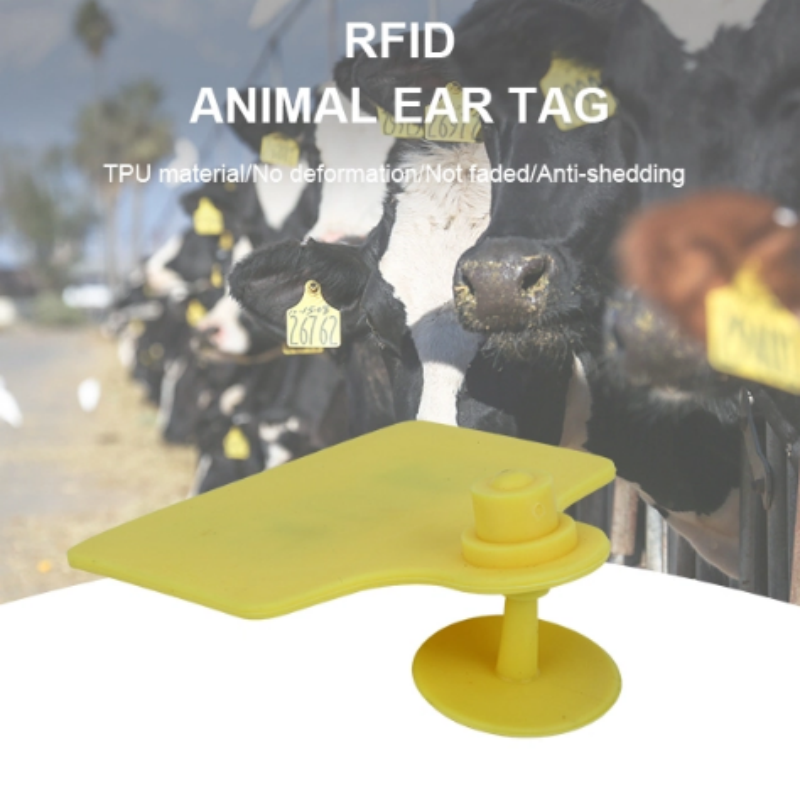
With RFID technology, an animal identification and traceability system has been developed, primarily for monitoring animal breeding, transportation, and slaughter. When the outbreak, can be back to animal breeding process. The health sector can use the system for possible infectious diseases with traces of animals, to determine its ownership and historical traces. At the same time, a system to slaughter animals from birth to provide instant, detailed, and reliable data.
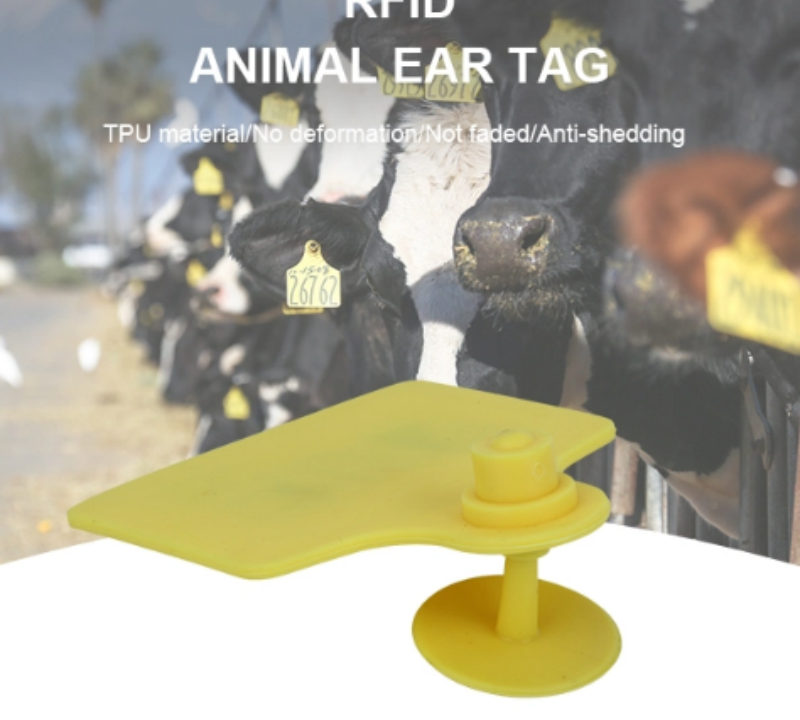
Specification of RFID Ear Tag | |
Item | |
Material | TPU |
Size | Dia20mm, Dia30mm, 70*80mm, 51*17mm,72*52mm, 70*90mm etc |
Printing | Laser printing ( ID number, logo etc) |
Chip | EM4305/213/216/F08, Alien H3 etc |
Protocol | ISO11784/5.,ISO14443A, ISO18000-6C |
Frequency | 13.56mhz |
Operating Temperature | -25 to 85 (Centigrade) |
Storage Temperature | 25 to 120 (Centigrade) |
Fit for animal species | Sheep, pig, cow, rabbit, etc |
Remark | reusable ear tag: with open hole Not reusable: with closing
|
Customization | 1. chip type 2. logo or number printing 3. ID encoding |
The livestock industry is rapidly evolving from traditional manual management to data-driven smart farming. As sheep farms become larger and more complex, farmers face increasing challenges related to animal identification, health monitoring, breeding management, traceability, disease control, and labor efficiency. Traditional visual identification methods and manual recordkeeping are no longer sufficient to meet the demands of modern livestock operations.
One of the most effective technologies transforming sheep farming today is the UHF Sheep Animal RFID Ear Tag.
Designed specifically for livestock identification and management, UHF RFID ear tags enable farmers to automatically identify, track, and manage individual animals throughout their entire lifecycle. By combining RFID technology, cloud-based management systems, and automated data collection, these smart ear tags help farms improve productivity, reduce costs, enhance animal welfare, and comply with traceability regulations.
This comprehensive guide explains what UHF sheep RFID ear tags are, how they work, what problems they solve, real-world application scenarios, comparisons between traditional and modern livestock identification systems, and how they compare with competing technologies.
What Is a UHF Sheep Animal RFID Ear Tag?
A UHF Sheep Animal RFID Ear Tag is an electronic identification device attached to a sheep’s ear that contains a unique RFID chip and antenna. The tag stores identification information that can be wirelessly read using UHF RFID readers.
Each tag acts as a digital identity card for an individual animal.
Unlike traditional visual tags, RFID ear tags enable automated data collection without requiring direct contact or manual recording.
Typical components include:
- RFID microchip
- UHF antenna
- TPU or plastic housing
- Laser-engraved identification number
- Anti-counterfeiting markings
- Tamper-resistant locking mechanism
These tags are widely used in:
- Sheep farms
- Goat farms
- Breeding operations
- Livestock research centers
- Veterinary management systems
- Government traceability programs
- Export-oriented livestock businesses
The technology enables each animal to be uniquely identified and monitored throughout its life.
Understanding UHF RFID Technology
RFID stands for Radio Frequency Identification.
UHF stands for Ultra High Frequency, typically operating between 860 MHz and 960 MHz, depending on regional regulations.
Unlike barcodes, RFID tags do not require line-of-sight scanning.
Multiple animals can be identified simultaneously from several meters away.
Main Components of an RFID System
A complete RFID livestock management system consists of:
RFID Ear Tag
Attached to the sheep and contains unique identification data.
RFID Reader
Handheld or fixed devices used to read tag information.
RFID Antenna
Transmits radio signals between the reader and the tag.
Management Software
Stores and analyzes animal data.
Cloud Database
Enables centralized access to livestock information.
Together, these components create a fully automated livestock tracking ecosystem.
How Does a UHF RFID Sheep Ear Tag Work?
The operating principle is relatively simple.
Step 1: Tag Installation
The RFID ear tag is attached to the sheep’s ear using a specialized tagging tool.
Each tag contains a globally unique identification number.
Step 2: Reader Signal Transmission
The RFID reader emits UHF radio frequency signals.
Step 3: Tag Activation
When the ear tag enters the reader’s electromagnetic field, the RFID chip becomes energized.
Step 4: Data Transmission
The chip transmits its stored identification information back to the reader.
Step 5: Database Update
The management software automatically updates records such as:
- Animal ID
- Breed
- Birth date
- Weight
- Vaccination records
- Health status
- Reproductive history
- Ownership information
This entire process occurs within milliseconds.
Technical Specifications of UHF Sheep RFID Ear Tags
Typical specifications may include:
| Parameter | Specification |
|---|---|
| Frequency | 860-960 MHz |
| Protocol | EPC Gen2 / ISO 18000-6C |
| Reading Distance | 1-10 meters |
| Material | TPU / Plastic |
| Chip Type | Alien, Impinj, NXP |
| Memory | EPC + User Memory |
| Waterproof Rating | IP67/IP68 |
| Operating Temperature | -40°C to +85°C |
| Data Retention | 10+ Years |
| Read/Write Cycles | 100,000+ Times |
These specifications make UHF RFID tags suitable for harsh agricultural environments.
Problems Solved by UHF RFID Sheep Ear Tags
Modern sheep farms face numerous operational challenges.
RFID technology addresses many of these issues.
Problem 1: Manual Identification Errors
Traditional ear numbers can be:
- Misread
- Forgotten
- Recorded incorrectly
RFID provides automatic identification with high accuracy.
Problem 2: Labor-Intensive Data Collection
Manually recording animal information requires significant labor.
RFID systems automate data capture and reduce human workload.
Problem 3: Difficulty Tracking Large Herds
As flock sizes grow, monitoring individual animals becomes increasingly difficult.
RFID enables rapid identification of thousands of animals.
Problem 4: Disease Traceability Challenges
When disease outbreaks occur, farms must quickly identify affected animals.
RFID systems provide complete traceability records.
Problem 5: Breeding Management Complexity
Tracking breeding cycles, genetics, and offspring can become overwhelming.
RFID systems maintain comprehensive breeding records.
Problem 6: Regulatory Compliance
Many countries require livestock traceability for:
- Food safety
- Disease control
- Export certification
RFID technology helps farms meet these requirements efficiently.
Real Application Scenarios
Sheep Breeding Farms
Breeding farms use RFID tags to track:
- Parentage
- Genetic performance
- Reproductive history
- Lambing records
This improves breeding efficiency and genetic selection.
Commercial Meat Production
Large-scale sheep producers use RFID systems to monitor:
- Growth rates
- Feed conversion
- Weight gain
- Market readiness
This supports more profitable production decisions.
Veterinary Health Management
Veterinarians can instantly access:
- Vaccination records
- Medical treatments
- Disease history
- Health assessments
This improves healthcare quality and response speed.
Government Livestock Programs
National livestock traceability systems often require RFID identification for disease prevention and food safety monitoring.
Livestock Auctions
RFID technology enables rapid animal identification and transaction recording.
Export Livestock Operations
Export markets increasingly require complete animal traceability.
RFID systems simplify compliance and documentation.
RFID Ear Tags vs Traditional Visual Ear Tags
Traditional visual tags have been used for decades.
However, RFID technology offers significant advantages.
| Feature | RFID Ear Tag | Visual Ear Tag |
| Automatic Reading | Yes | No |
| Reading Distance | Several Meters | Manual |
| Data Storage | Digital | Limited |
| Batch Identification | Yes | No |
| Accuracy | High | Moderate |
| Traceability | Excellent | Limited |
| Labor Requirement | Low | High |
For large-scale farms, RFID delivers substantial efficiency improvements.
RFID Ear Tags vs Barcode Identification
Barcodes are another livestock identification option.
Barcode Limitations
- Requires line-of-sight scanning
- Easily damaged
- Difficult to scan at distance
- Single-item scanning
RFID Advantages
- Contactless reading
- Multiple tag reading
- Greater durability
- Faster operation
RFID is generally considered the superior solution for modern livestock management.
RFID Ear Tags vs GPS Livestock Tracking
Some farms use GPS tracking devices.
GPS Advantages
- Real-time location tracking
- Useful for extensive grazing systems
RFID Advantages
- Lower cost
- Longer lifespan
- No battery requirements
- Easier deployment
Many farms combine GPS and RFID for comprehensive management.
RFID Ear Tags vs LF and HF Animal Tags
Animal RFID systems operate at different frequencies.
LF RFID (Low Frequency)
Frequency:
- 125 kHz
- 134.2 kHz
Advantages:
- Strong penetration
- International livestock standard
Limitations:
- Short reading distance
HF RFID
Frequency:
- 13.56 MHz
Advantages:
- Moderate performance
Limitations:
- Limited livestock adoption
UHF RFID
Frequency:
- 860-960 MHz
Advantages:
- Long reading distance
- Fast bulk reading
- Excellent automation capability
For large-scale sheep farms, UHF RFID is increasingly becoming the preferred solution.
New Generation UHF RFID Tags vs Older RFID Models
RFID technology has advanced significantly.
Older RFID Ear Tags
Characteristics:
- Shorter read ranges
- Limited memory
- Lower durability
- Basic identification functions
New Generation UHF RFID Ear Tags
Modern tags provide:
- Longer reading distances
- Better anti-collision performance
- Enhanced waterproofing
- Improved durability
- Cloud integration
- Mobile app compatibility
These advancements make smart livestock management more efficient than ever.
Benefits of Smart Sheep Farm Management
Increased Productivity
Automated identification reduces manual labor and administrative workload.
Improved Animal Health
Better monitoring enables earlier disease detection and intervention.
Enhanced Breeding Decisions
Accurate data supports superior genetic selection programs.
Better Traceability
Complete lifecycle records improve food safety compliance.
Reduced Labor Costs
Automation minimizes repetitive manual tasks.
Data-Driven Management
Farmers can make informed decisions using real-time information.
RFID Integration with Farm Management Software
Modern RFID systems integrate with digital farm platforms.
Capabilities include:
- Cloud databases
- Mobile applications
- Health management modules
- Breeding analysis tools
- Feed management systems
- Inventory control
- Financial reporting
The combination of RFID and software transforms traditional farming into precision agriculture.
RFID Ear Tags and Disease Prevention
Disease outbreaks can cause devastating losses.
RFID systems help by providing:
- Rapid identification of affected animals
- Contact tracing
- Vaccination tracking
- Quarantine management
- Regulatory reporting
This capability is particularly important for diseases that threaten national livestock industries.
Environmental Durability
Livestock ear tags must withstand harsh conditions.
Quality UHF RFID ear tags are designed to resist:
- UV exposure
- Rain
- Snow
- Mud
- Chemicals
- Physical impact
High-quality TPU materials improve flexibility and reduce breakage risks.
Choosing the Right UHF Sheep RFID Ear Tag
When selecting an RFID solution, consider:
Reading Distance
Ensure compatibility with farm infrastructure.
Chip Performance
Choose reliable chips from reputable manufacturers.
Material Quality
Durable TPU housing improves longevity.
Waterproof Protection
IP67 or IP68 ratings are recommended.
Compliance Standards
Verify compatibility with local regulations.
Software Compatibility
Integration with management platforms is essential.
Anti-Loss Design
Secure locking mechanisms reduce tag loss.
Future Trends in Smart Livestock Management
Several innovations are shaping the next generation of animal identification systems.
IoT Integration
RFID tags increasingly connect with Internet of Things platforms.
Artificial Intelligence
AI-powered analytics help optimize herd management.
Cloud-Based Traceability
Centralized databases improve data accessibility.
Smart Farming Ecosystems
RFID integrates with:
- Automated feeders
- Electronic weighing systems
- Environmental sensors
- Livestock monitoring platforms
Blockchain Traceability
Blockchain technology provides transparent farm-to-table records.
These innovations will continue to transform livestock production worldwide.
Why Farms Are Investing in UHF RFID Technology
The livestock industry is under increasing pressure to improve efficiency, sustainability, animal welfare, and traceability.
UHF RFID technology helps farms:
- Reduce labor costs
- Improve operational efficiency
- Enhance compliance
- Increase profitability
- Strengthen disease control
- Support precision farming
As labor shortages and regulatory requirements continue to grow, RFID adoption is becoming a strategic necessity rather than an optional upgrade.
Conclusion
UHF Sheep Animal RFID Ear Tags are revolutionizing modern livestock management by providing accurate, automated, and scalable animal identification solutions. By leveraging UHF RFID technology, farms can efficiently track individual animals, improve health monitoring, optimize breeding programs, strengthen disease prevention measures, and meet increasingly demanding traceability requirements.
Compared with traditional visual tags, barcode systems, and older RFID technologies, modern UHF RFID ear tags offer superior reading distance, faster data collection, better automation capabilities, and seamless integration with smart farming platforms. Whether used on commercial sheep farms, breeding operations, veterinary systems, government traceability programs, or export-oriented livestock businesses, these tags deliver measurable improvements in productivity and management efficiency.
As digital agriculture continues to evolve, UHF RFID ear tags will remain a foundational technology for intelligent livestock management, helping farmers build more efficient, profitable, and sustainable farming operations for the future.