
The RC522 RFID module is a low-cost, widely used RFID reader/writer based on the NXP MFRC522 chip. It operates at 13.56 MHz and supports ISO/IEC 14443A contactless cards such as MIFARE Classic and NTAG tags. Typical specifications include SPI communication, a reading distance of up to 50 mm, low power consumption, and onboard antenna design. The RC522 RFID module solves problems in access control, identification, attendance systems, and embedded projects, providing an easy and reliable way to add short-range RFID functionality to microcontroller-based systems.

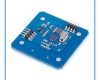

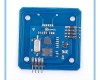

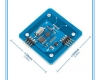
RC522 RFID Module
The MFRC522 RFID module is a highly integrated reader/writer IC for contactless communication at 13.56 MHzFeatures
- Supports ISO/IEC 14443 A/MIFARE and NTAG
- Typical operating distance in Read/Write mode up to 50 mm depending on the antenna size and tuning
- Supports MF1xxS20, MF1xxS70 and MF1xxS50 encryption in Read/Write mode
- Supports ISO/IEC 14443 A higher transfer speed communication up to 848 kBd
Description
The MFRC522 RFID module is a highly integrated reader/writer IC for contactless communication at 13.56 MHz.
The original Philips RC522 RFID Module design circuit card reader is easy to use and low cost, and applies to the user equipment development, the reader and the development of advanced applications, and the need for the user RF card terminal design/production. This RC522 RFID Module can be directly loaded into various reader modules. It utilizes a voltage of 3.3V, through the SPI interface with simply a few wires. Directly connected with a CPU motherboard, the module can work in a stable and reliable manner as a distance card reader.
RC522 RFID Module Feature:
- Highly integrated analog circuitry to demodulate and decode responses
- Buffered output drivers for connecting an antenna with the minimum number of external components
- Supports ISO/IEC 14443 A/MIFARE and NTAG
- Typical operating distance in Read/Write mode up to 50 mm depending on the antenna size and tuning
- Supports MF1xxS20, MF1xxS70 and MF1xxS50 encryption in Read/Write mode
- Supports ISO/IEC 14443 A higher transfer speed communication up to 848 kBd
- Supports MFIN/MFOUT
- Additional internal power supply to the smart card IC connected via MFIN/MFOUT
- Supported host interfaces
- SPI up to 10 Mbit/s
- 2C-bus interface up to 400 kBd in Fast mode, up to 3400 kBd in High-speed mode
- RS232 Serial UART up to 1228.8 kBd, with voltage levels dependant on pin voltage supply
- FIFO buffer handles 64 byte send and receive
- Flexible interrupt modes
- Hard reset with low power function
- Power-down by software mode
- Programmable timer
- Internal oscillator for connection to 27.12 MHz quartz crystal
- 2.5 V to 3.3 V power supply
- CRC coprocessor
- Programmable I/O pins
- Internal self-test
Specification
| Device Size: | 50cm*50cm |
|---|---|
| Frequency: | ISO 14443A |
| Read & write distance: | 0~45mm |
| Data transfer rate | Maximum10Mbit/s |
| Storage time: | > 20 years |
| Communication interface: | UART TTL |
| Operating temperature: | -10°C~50 °C |
| Storage temperature: | -20 °C~80 °C |
RC522 RFID module Arduino
| RC522 RFID MODULE | UNO | MEGA |
|---|---|---|
| SCK | D13 | D52 |
| SDA(SS) | D10 | D53 |
| MISO | D12 | D50 |
| MOSI | D11 | D51 |
| PQ | Not Connected | |
| RST | GND | GND |
| GND | D9 | D9 |
| 3.3V | 3.3V | 3.3V |
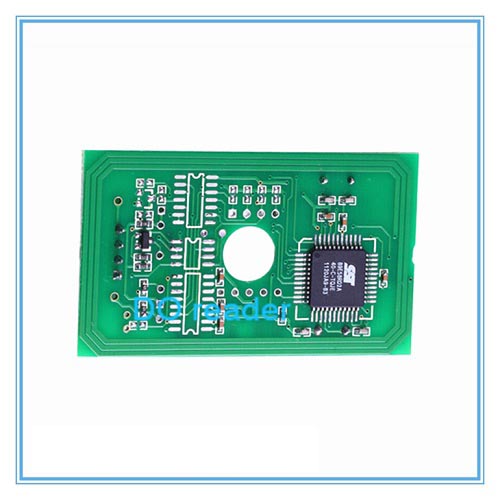
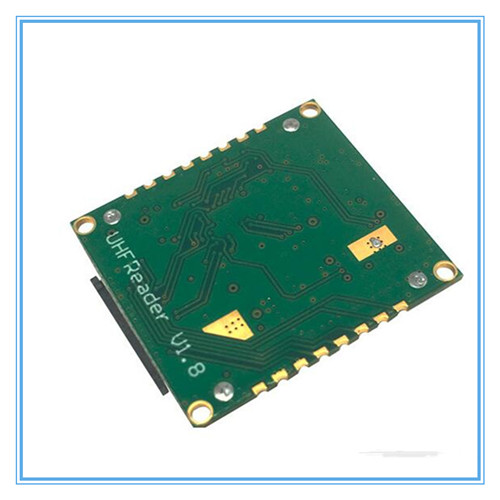
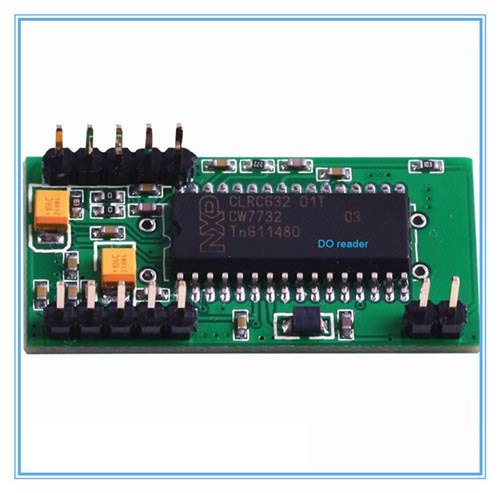
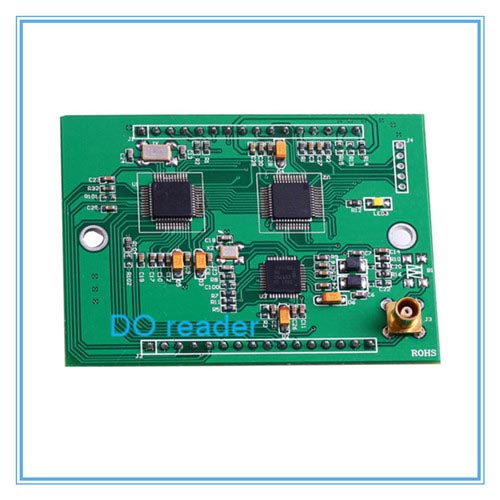
What Is the RC522 RFID Module?
The RC522 RFID module is a high-frequency contactless reader/writer device designed for reading and writing RFID cards and tags operating under ISO 14443A protocol. It enables secure data exchange between a host controller and RFID cards using electromagnetic coupling within a short distance.
This module is frequently integrated into systems requiring reliable identification, authentication, or data storage without physical contact.
Device Size and Compact Design
- Device Size: 50 mm × 50 mm
The compact square design allows the RC522 RFID module to be easily embedded into small electronic enclosures, terminals, or control panels. Its balanced size provides enough antenna area for stable communication while remaining suitable for space-constrained applications.
Frequency and RFID Standard
- Operating Standard: ISO 14443A
The ISO 14443A standard is the global benchmark for proximity contactless smart cards. It ensures compatibility with a wide range of RFID cards and NFC-based tags commonly used in access control, transportation, and identification systems.
Read and Write Distance
- Read & Write Distance: 0–45 mm
The effective reading and writing distance depends on factors such as antenna design, card type, and environmental conditions. A short operating range enhances security by minimizing unintended reads and ensuring intentional card placement during authentication.
Data Transfer Performance
- Maximum Data Transfer Rate: 10 Mbit/s
The high data transfer rate allows fast card detection and quick data exchange, making the RC522 RFID module suitable for systems that require rapid response times, such as turnstiles, attendance machines, and automated terminals.
Storage Time and Data Reliability
- Data Storage Time: More than 20 years
The RC522 RFID module supports long-term data retention on compatible RFID cards. This makes it ideal for applications where card information must remain stable over extended periods without frequent rewriting or maintenance.
Communication Interface
- Interface Type: UART TTL
The UART TTL interface enables easy communication with microcontrollers, embedded processors, and control boards. This interface is widely supported, simple to implement, and suitable for both prototyping and mass production environments.
Operating and Storage Temperature Range
- Operating Temperature: -10°C to 50°C
- Storage Temperature: -20°C to 80°C
These temperature ranges ensure stable operation in typical indoor and light outdoor environments. The module maintains performance in varying conditions, making it suitable for offices, factories, campuses, and controlled industrial settings.
Key Features of the RC522 RFID Module
The RC522 RFID module offers several practical advantages:
- Stable ISO 14443A protocol support
- Compact 50 × 50 mm form factor
- Short-range operation for improved security
- Fast data transmission up to 10 Mbit/s
- Long data storage life exceeding 20 years
- Easy UART TTL integration
- Wide operating temperature tolerance
These features make the module reliable for both commercial systems and development projects.
Common Applications
The RC522 RFID module is widely used across multiple industries:
- Access Control Systems: Doors, gates, and security checkpoints
- Attendance and Time Recording: Employee or student check-in systems
- Smart Card Identification: User authentication and authorization
- IoT and Embedded Systems: RFID-based device interaction
- Educational Projects: Learning platforms for RFID and embedded development
- Asset Tracking: Short-range identification of items or equipment
Its versatility allows it to be deployed in both low-cost prototypes and mature commercial solutions.
How the RC522 RFID Module Works
The RC522 RFID module generates a high-frequency electromagnetic field compliant with ISO 14443A. When a compatible RFID card enters the field, it is powered by induction and transmits stored data back to the reader. The module processes this data and sends it to the host system via the UART TTL interface for further logic processing.
This contactless mechanism ensures fast operation, reduced wear, and improved system longevity.
Advantages for System Integrators and Developers
For developers and system integrators, the RC522 RFID module offers:
- Simple hardware integration
- High compatibility with common RFID cards
- Reliable long-term operation
- Cost-effective deployment
- Consistent performance in controlled environments
These advantages make it a dependable component for scalable RFID solutions.
Conclusion
The RC522 RFID Module is a compact, efficient, and reliable solution for short-range RFID communication. With ISO 14443A compliance, a read/write distance of up to 45 mm, fast data transfer rates, long data retention, and a simple UART TTL interface, it is well suited for access control, identification, and embedded system applications. Its stable performance across a wide temperature range further ensures dependable operation in real-world environments, making it a proven choice for modern RFID-based systems.