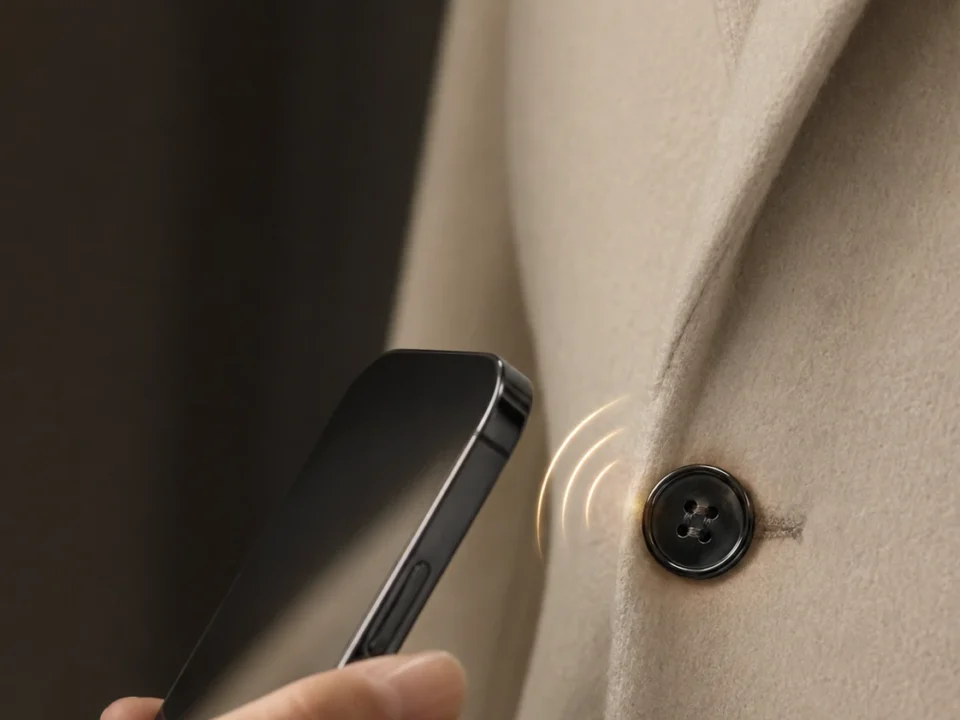
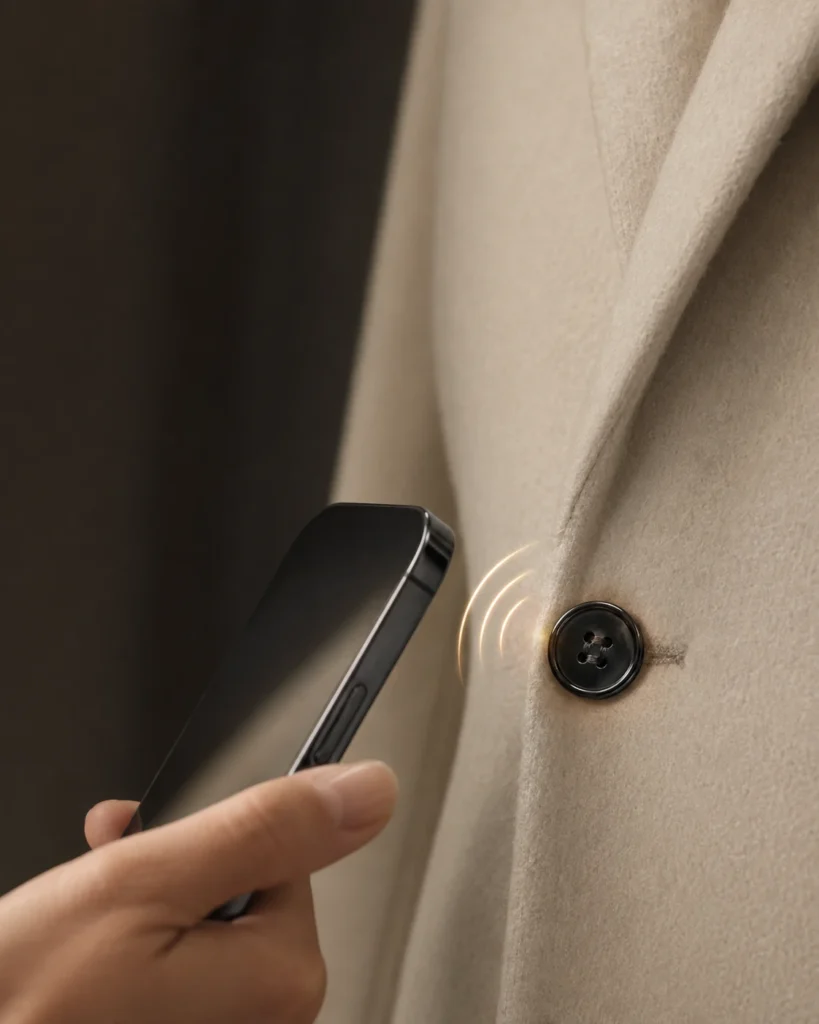
Start with a blank face
Use an unprinted label where it will sit behind packaging, inside a suitable product area, or within your own finishing process. A blank face and an unencoded chip are separate requirements.

BLANK NFC LABELS · ROLL FORMAT
Adhesive NFC labels supplied on a release liner in rolls. Use a small, round tap point for packaging, item records and other tap-to-open applications, with blank-face and encoding options matched to your process.

The product described here is a 25 mm round NTAG213 NFC sticker supplied on a roll. Its adhesive backing provides a way to attach the tag to a suitable item; the NFC chip holds the data a compatible phone or reader obtains.
Use an unprinted label where it will sit behind packaging, inside a suitable product area, or within your own finishing process. A blank face and an unencoded chip are separate requirements.
Discuss labels for in-house writing or an agreed pre-encoded message. One link can be shared across a run, or each item can have a separate application identifier or destination.
If the label itself needs a logo, tap instruction or QR code, use our custom printed NFC sticker options to discuss the artwork and finished label.
FROM THE LABEL TO A USEFUL TAP
Apply the label in a position customers can find and read. A suitably encoded web link can open instructions, registration or product information. The detailed page stays online rather than being stored in the sticker.
Use a tap point to open the relevant item record, maintenance guide or service page. The label identifies the destination; your software supplies the record and any access control.
Other uses include digital contact profiles, campaign links and interactive displays. The intended phone, application and online destination determine what happens after a tap. This passive NFC product is not an independent live-location transmitter.
| Item | Product detail |
|---|---|
| Product format | Blank, round adhesive NFC label supplied in rolls |
| Label diameter | 25 mm; liner width and label spacing are separate dimensions |
| Chip | NXP NTAG213 |
| Frequency / tag type | 13.56 MHz; NFC Forum Type 2; ISO/IEC 14443 Type A |
| User memory | 144 bytes; the NDEF message format uses part of this space |
| Identifier | Factory-programmed 7-byte UID, separate from the application data |
| Power | Passive operation; no battery in the label |
| Listed construction reference | PET inlay with aluminum antenna; face material and adhesive follow the selected construction |
| Operating conditions | Select the label construction and adhesive for the intended temperature, moisture and handling exposure |
| Reading performance | Close-range NFC; distance depends on the antenna, phone/reader, alignment and mounting surface |
The table identifies this specific roll-label format. Other dimensions, face materials or chip choices are different configurations, not automatically the same product.
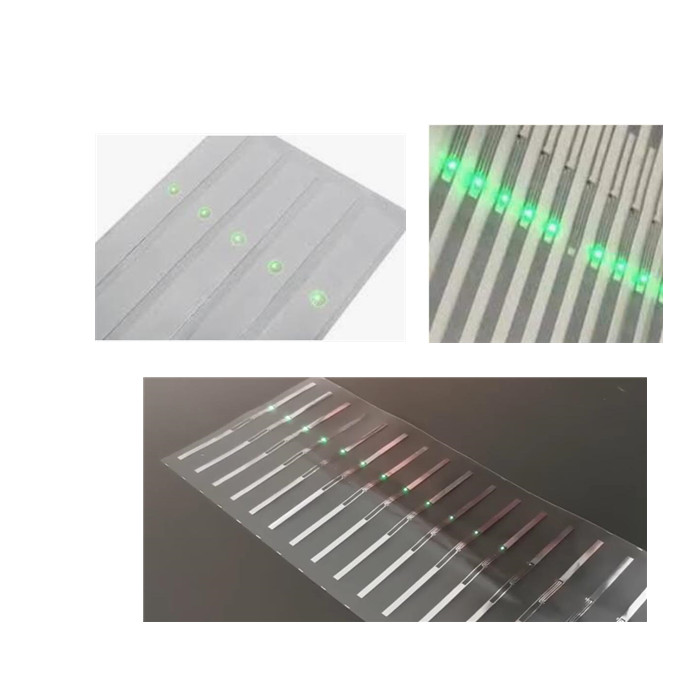
A 25 mm label diameter does not define the whole roll. Labels can be peeled from their liner for placement; a printer, dispenser or automatic applicator also needs a compatible roll layout and material.
Layout illustration, not a manufacturing drawing. No liner, pitch, gap or roll-core dimensions are specified by this diagram.
Match liner width, label pitch, core size and outer diameter to the handling equipment. These details, alongside the 25 mm label outline, determine how the roll fits your process.
Consider the label orientation and whether labels face inward or outward. If you will print the blank face, the face material and printing method must suit your equipment; “blank” does not mean compatible with every printer.
You can start by sending a machine requirement, a roll photo or the application you have in mind. The roll configuration can then be discussed without requiring every dimension to be settled before the first enquiry.
NTAG213 provides 144 bytes of user memory. A short web address is often a practical choice for opening richer online content; a full video, manual or catalogue would normally remain on the destination website.
The chip’s factory-programmed UID identifies the IC. For an item number, customer reference or item-specific URL, plan the application data you want written. The factory UID remains unchanged; customer serial numbers and item-specific links are written as application data.
Memory can remain rewritable or be restricted according to the encoding and locking arrangement. Permanent locking changes what can be edited later, so decide that with the intended use. Ordinary NTAG213 password protection and locking do not by themselves provide a complete cryptographic product-authentication system.
See our NFC programming guide for writing steps. If the message or application needs another chip, use the NTAG213 and NTAG215 comparison or the NTAG216 NFC sticker product. Chip facts are available from NXP’s NTAG21x documentation.
Choose the adhesive and face construction for the intended item, handling, cleaning and moisture exposure. An ordinary label is not an on-metal label; direct metal installation needs an appropriate construction.
A supported phone or NFC reader can read a suitably encoded Type 2 tag. Test with representative devices after attaching it to the item. Nearby metal or liquid, antenna size and reader alignment can affect the result.
For a small sample, check both the stored message and the action it opens, then assess peeling and placement in the intended process. Sample arrangements and the agreed checks can be discussed for the selected order.
Those are separate choices. A label can have a blank face yet contain an NFC record. Tell us whether you want an unprinted face, labels for your own writing, or an agreed pre-encoded message.
It is the circular label diameter stated for this product. The antenna geometry, liner width and label spacing are separate details; do not use the label diameter as a substitute for a complete roll layout.
Yes, with suitable NFC-writing hardware/software and writable memory. Check that the intended NDEF message fits and that the resulting interaction works on your target devices. A custom data format may need a corresponding app.
The stored record can be rewritten while the relevant memory remains writable and any required access is available. You can also maintain the web content behind an unchanged link without rewriting the physical label.
That depends on the roll dimensions, orientation, face material and machine requirements. Share the equipment specification so the format can be matched; roll delivery alone does not establish compatibility.
Discuss pre-encoding for the intended data, or use our custom printed NFC label offering when artwork, QR codes or visible identifiers are required.
Start with the label quantity and the process you plan to use. Roll quantities, sample arrangements and timing can then be confirmed for that configuration; this listing does not define one fixed count for every roll.
START WITH YOUR APPLICATION
Tell us what the label will be attached to, what a tap should open and the quantity you have in mind. If you have a printer or applicator requirement, include it; otherwise we can start with the intended use.