September 14, 2026
The rapid adoption of digital transformation, smart packaging, contactless marketing, and Industrial IoT has made Roll Blank NFC Tag Circle NTAG213 Dia 25 mm NFC Stickers one of the fastest-growing RFID products in the global market. Their low cost, high compatibility, and easy integration allow manufacturers, brand owners, and system integrators to deploy NFC technology at scale without expensive infrastructure.
For factory procurement managers, OEM brands, RFID distributors, packaging companies, and solution providers, selecting the right NFC sticker supplier is critical to ensuring product quality, reading performance, and long-term supply stability.
This comprehensive guide explains what a Roll Blank NFC Tag Circle NTAG213 Dia 25 mm NFC Sticker is, how it works, its applications, manufacturing process, purchasing considerations, competitive analysis, international standards, and frequently asked questions.
What Is a Roll Blank NFC Tag Circle NTAG213 Dia 25 mm NFC Sticker?
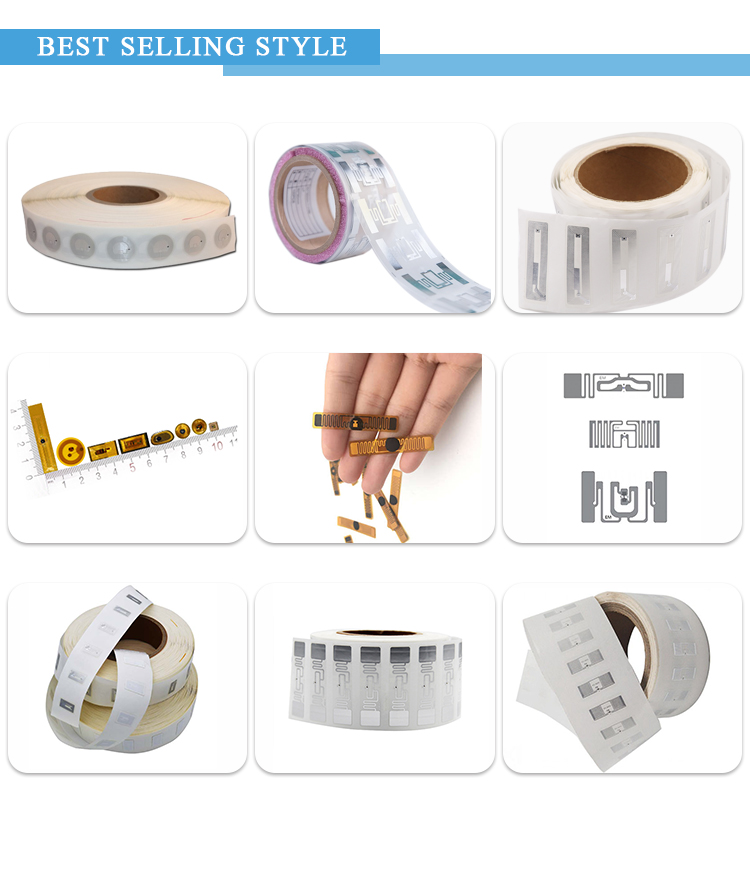
A Roll Blank NFC Tag Circle NTAG213 Dia 25 mm NFC Sticker is a passive NFC label manufactured in a round 25 mm diameter format and supplied in roll packaging for automatic labeling equipment.
The sticker integrates:
- NTAG213 NFC chip
- Aluminum or copper antenna
- PET substrate
- Pressure-sensitive adhesive
- Protective face material
- Release liner
- Roll packaging for high-speed dispensing
The label operates at 13.56 MHz and complies with NFC Forum standards, allowing it to be read by most Android smartphones and modern iPhones.
Unlike printed QR codes, NFC stickers enable secure, contactless data exchange with a simple tap, providing a more seamless user experience.
Product Specifications
Typical specifications include:
| Item | Specification |
|---|---|
| Chip | NTAG213 |
| Frequency | 13.56 MHz |
| Diameter | 25 mm |
| Material | PET + Aluminum Antenna |
| Memory | 144 Bytes User Memory |
| UID | 7-byte Unique Identifier |
| Reading Distance | 2–8 cm |
| Operating Temperature | -25°C to +70°C |
| Data Retention | Up to 10 years |
| Write Cycles | Up to 100,000 times |
| Packaging | Roll Format |
| Adhesive | Permanent or Removable (Optional) |
Specifications may vary depending on customer requirements and chip selection.
How Does an NTAG213 NFC Sticker Work?
The Roll Blank NFC Sticker is a passive RFID tag, meaning it requires no internal battery.
Its operation involves three core components:
NTAG213 NFC Chip
The NTAG213 integrated circuit stores:
- Unique UID
- URL
- Product information
- Authentication data
- Digital business card
- Product serial number
The chip supports password protection and lock functions for enhanced security.
NFC Antenna
A precision-etched aluminum or copper antenna captures electromagnetic energy transmitted by an NFC-enabled smartphone or reader.
The antenna powers the chip wirelessly and transfers stored data.
NFC Reader or Smartphone
When a smartphone or NFC reader is brought within approximately 2–8 cm:
- The reader emits a 13.56 MHz RF field.
- The antenna harvests energy.
- The NTAG213 chip activates.
- Stored information is transmitted.
- The smartphone automatically opens a URL, displays contact information, launches an app, or exchanges data.
The entire process typically takes less than one second.
Roll blank nfc tag Circle NTAG213 dia25 mm NFC Sticker
| Material | PVC, Paper, Epoxy, PET, or customized |
| Printing | Digital printing or offset printing,silk pritning ect |
| Craft | Bar code/QR Code, Glossy/Matting/frosting ect |
| Dimension | 30mm, 25mm, 40*25mm, 45*45mm or customized |
| Frequency | 13.56Mhz |
| Read range | 1- 10 cm, depending on the reader and reading environment |
| Application | Activities, product labels, etc |
| Lead time | Generally about 7-8 working days; it depends on quantity and your request |
| Payment way | Western Union, TT, Trade assurance or PayPal, etc |
| Sample | Available, about 3-7days after confirming all sample details |

| Chip Options | |
| ISO14443A | MIFARE Classic® 1K, MIFARE Classic ® 4K |
| MIFARE® Mini | |
| MIFARE Ultralight ®, MIFARE Ultralight ® EV1, MIFARE Ultralight® C | |
| NTAG213 / NTAG215 / NTAG216 | |
| MIFARE ® DESFire ® EV1 (2K/4K/8K) | |
| MIFARE ® DESFire® EV2 (2K/4K/8K) | |
| MIFARE Plus® (2K/4K) | |
| Topaz 512 | |
Remark:
MIFARE and MIFARE Classic are trademarks of NXP B.V.
MIFARE DESFire are registered trademarks of NXP B.V. and are used under license.
MIFARE and MIFARE Plus are registered trademarks of NXP B.V. and are used under license.
MIFARE and MIFARE Ultralight are registered trademarks of NXP B.V. and are used under license.

Key Features
Roll Blank NFC NTAG213 Stickers provide numerous advantages for industrial and commercial applications:
- Passive battery-free operation
- Universal smartphone compatibility
- High-speed roll dispensing
- Fast NFC reading
- Rewritable memory
- Password protection
- Waterproof options available
- Thin and flexible construction
- Excellent adhesive strength
- Long service life
- Stable RF performance
- OEM printing support
- Variable UID encoding
- Bulk production capability
Manufacturing Process
Professional NFC factories follow a strict production workflow:
Step 1 – PET Film Preparation
High-quality PET material is prepared for antenna integration.
Step 2 – Antenna Etching
Aluminum or copper antennas are chemically etched or printed with precision.
Step 3 – Chip Bonding
The NTAG213 chip is bonded to the antenna using automated flip-chip technology.
Step 4 – Lamination
Protective layers are laminated over the inlay to improve durability.
Step 5 – Adhesive Coating
Industrial-grade adhesive is applied to the back of the label.
Step 6 – Die Cutting
The labels are cut into a 25 mm circular shape with tight dimensional tolerances.
Step 7 – Roll Packaging
Finished stickers are wound onto rolls compatible with automatic labeling machines.
Step 8 – RFID Encoding
Customer-specific URLs, serial numbers, or encrypted data are programmed into the tags.
Step 9 – Quality Inspection
Each label undergoes RF performance testing, visual inspection, and adhesion verification.
Common Applications
Smart Product Packaging
Brands embed NFC stickers into packaging for:
- Product authentication
- Warranty registration
- Customer engagement
- Anti-counterfeiting
Digital Business Cards
Professionals can share:
- Contact information
- Company websites
- LinkedIn profiles
- Portfolio links
with a simple smartphone tap.
Retail and Marketing
Retailers use NFC stickers for:
- Interactive promotions
- Loyalty programs
- Product information
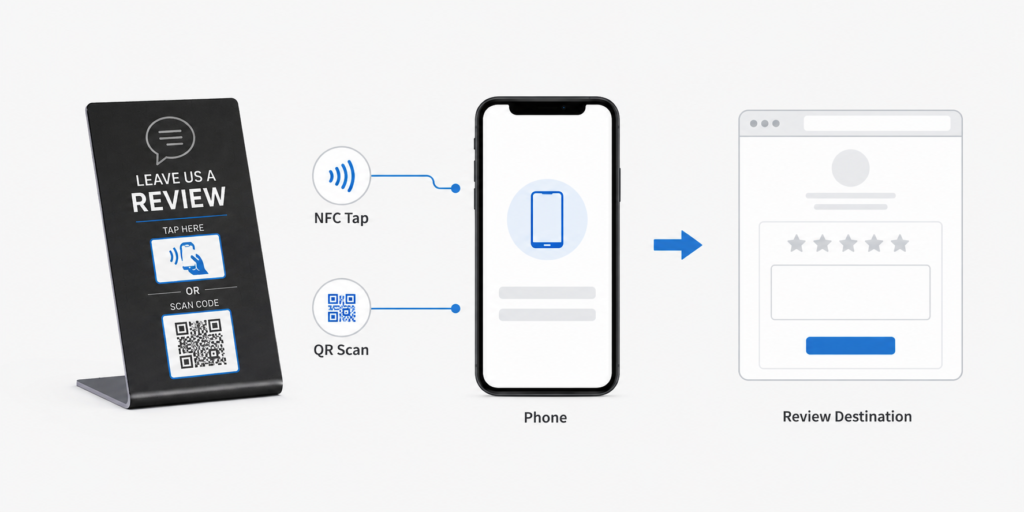
- Customer feedback
- Coupon distribution
Asset Management
Factories attach NFC labels to:
- Equipment
- Production tools
- Testing instruments
- Office assets
Maintenance records can be accessed instantly.
Library and Document Management
Organizations use NFC stickers for:
- File tracking
- Book management
- Equipment checkout
- Archive identification
Healthcare
Hospitals identify:
- Medical equipment
- Patient assets
- Maintenance schedules
- Pharmaceutical packaging
Smart Home and Automation
Consumers automate:
- Wi-Fi setup
- Smart lighting
- Device pairing
- Home automation routines
using NFC stickers.
Pain Points Solved for Factory Buyers
Traditional labeling methods present several operational challenges.
| Traditional Challenge | NTAG213 NFC Sticker Solution |
|---|---|
| Manual data entry | One-tap automatic identification |
| Easily copied QR codes | Unique NFC chip UID |
| Limited customer interaction | Instant smartphone engagement |
| Paper manuals | Digital product information |
| Barcode wear | Contactless RFID reading |
| Manual inventory | Digital asset management |
| Counterfeit products | NFC authentication |
| Complex setup | Smartphone-compatible NFC |
These benefits improve operational efficiency while enhancing customer experience and product traceability.
Competitive Analysis
The NFC label market continues to grow rapidly as industries adopt digital transformation strategies. Compared with conventional printed labels, NFC stickers provide greater functionality by enabling secure data storage, authentication, and interactive communication without requiring users to manually scan visible codes.
For manufacturers and procurement teams, sourcing directly from an OEM factory offers advantages such as lower production costs, customized encoding, private-label services, and consistent quality control. As smartphone NFC support becomes nearly universal, NTAG213 stickers remain one of the most cost-effective solutions for large-scale deployments.
Competitor Comparison
| Product | Advantages | Limitations | Best Applications |
|---|---|---|---|
| NTAG213 Dia 25 mm NFC Sticker | Low cost, smartphone compatible, fast deployment | Short read range | Marketing, packaging, asset tracking |
| NTAG215 Sticker | Larger memory capacity | Slightly higher cost | Gaming, multimedia, advanced data storage |
| NTAG216 Sticker | Highest memory among NTAG series | Higher price | Rich digital content, product manuals |
| QR Code Label | Lowest production cost | Requires camera and line of sight | Basic marketing |
| Barcode Label | Mature technology | No digital interaction | Inventory control |
| RFID UHF Label | Long reading distance | Requires dedicated UHF readers | Warehouse and logistics |
OEM Customization Options
Manufacturers typically offer:
- Full-color printing
- Blank labels
- Variable QR codes
- UID encoding
- URL pre-programming
- Serial numbering
- Custom chip selection
- Custom antenna design
- Different adhesive types
- Waterproof lamination
- Roll core size customization
- Private-label packaging
These options allow OEM brands and distributors to tailor products to specific applications and customer requirements.
International Standards
Reliable suppliers should manufacture NFC stickers in accordance with internationally recognized standards, including:
- ISO/IEC 14443 Type A – Contactless smart card communication
- NFC Forum Type 2 Tag – NTAG213 compatibility
- ISO/IEC 18092 – NFC interface protocol
- RoHS – Restriction of hazardous substances
- REACH – Chemical safety compliance
- CE – European conformity requirements
- FCC – Electromagnetic compliance for applicable markets
- ISO 9001 – Quality management system
- IEC 60068 – Environmental testing (when applicable)
Factory buyers should request compliance certificates and RF performance reports before mass production.
How to Choose an OEM NFC Sticker Manufacturer
When evaluating suppliers, procurement professionals should consider:
- Experience in NFC and RFID manufacturing
- Automated chip bonding and testing equipment
- Stable chip sourcing from trusted semiconductor suppliers
- ISO-certified production facilities
- 100% RF functionality testing
- Flexible OEM/ODM customization
- Encoding and serialization services
- Competitive pricing for high-volume orders
- Fast production lead times
- Strong technical and after-sales support
Choosing a qualified NFC and RFID manufacturer ensures reliable product performance, consistent quality, and long-term supply security.
Conclusion
Roll Blank NFC Tag Circle NTAG213 Dia 25 mm NFC Stickers are an efficient, scalable, and cost-effective solution for smart packaging, digital marketing, asset management, authentication, and contactless information sharing. Their passive design, universal smartphone compatibility, and easy roll-based application make them ideal for high-volume industrial production and automated labeling systems.
For factory procurement managers and OEM buyers, partnering with an experienced NFC manufacturer provides access to customized encoding, private branding, strict quality control, and competitive factory pricing. As businesses continue embracing IoT and digital customer engagement, NTAG213 NFC stickers remain one of the most practical and versatile NFC products available.
Frequently Asked Questions (FAQ)
1. What is a Roll Blank NTAG213 Dia 25 mm NFC Sticker?
It is a passive NFC label supplied in roll format with a 25 mm circular shape and an embedded NTAG213 chip, designed for automated labeling, smart packaging, asset management, and interactive marketing.
2. Can these NFC stickers be customized?
Yes. OEM manufacturers can provide custom printing, UID encoding, QR codes, URL programming, serial numbers, waterproof lamination, adhesives, and private-label packaging.
3. Are NTAG213 NFC stickers compatible with smartphones?
Yes. They are compatible with most Android devices and NFC-enabled iPhones that support NFC Forum Type 2 Tags.
4. What is the reading distance of a 25 mm NTAG213 sticker?
Typical reading distance ranges from 2 to 8 cm, depending on the smartphone, NFC reader, antenna design, and installation surface.
5. Can NTAG213 stickers be rewritten?
Yes. The user memory can typically be rewritten up to 100,000 times unless it has been permanently locked for security purposes.
6. What industries use NTAG213 NFC stickers?
Common users include consumer brands, packaging companies, retailers, manufacturers, healthcare providers, libraries, logistics companies, and smart home solution providers.
7. Can NFC stickers be applied to metal surfaces?
Standard NTAG213 stickers experience reduced performance on metal. For metal applications, use anti-metal NFC stickers with a ferrite shielding layer.
8. What is the difference between NTAG213, NTAG215, and NTAG216?
NTAG213 offers the smallest user memory and lowest cost, NTAG215 provides increased storage for medium-capacity applications, while NTAG216 delivers the largest memory for rich digital content and advanced data storage.
9. What certifications should factory buyers request?
Request compliance with ISO/IEC 14443, NFC Forum Type 2, ISO/IEC 18092, RoHS, REACH, CE, FCC, and ISO 9001, along with RF performance test reports.
10. Why should buyers source directly from an OEM NFC factory?
Direct sourcing ensures competitive factory pricing, flexible customization, strict quality control, reliable production capacity, technical support, and stable long-term supply for large-volume procurement.