October 21, 2026
Introduction to 13.56MHz NFC Dry Inlay
A 13.56MHz NFC Dry Inlay is a key component used for manufacturing NFC tags, RFID labels, smart cards, and intelligent packaging solutions. This type of inlay combines an aluminum etched antenna with an RFID/NFC chip mounted on a PET substrate, providing a thin, lightweight, and cost-effective solution for high-volume tag production.
Unlike finished NFC stickers, a dry inlay is a semi-finished product designed for further converting processes, including lamination, printing, die-cutting, and label assembly. It is widely used by NFC tag manufacturers, packaging companies, and RFID solution providers that require reliable performance and flexible customization.
The aluminum antenna NFC dry inlay operates at the HF RFID frequency of 13.56MHz and supports international communication standards such as ISO14443A, making it compatible with most NFC-enabled smartphones and RFID readers.
Round 13.56mhz aluminum antenna nfc dry inlay
Specification
1. Chip Model: All chips are available
2. Frequency: 13.56MHz
3. Memory: depend on the chips
4. Protocol: ISO14443A
5. Base material: PET
6. Antenna material: Aluminium foil
7. Antenna size: 26*12mm, 22mm Dia, 32*32mm, 37*22mm, 45*45mm,76*45mm, or as request
8. Working temperature: -25°C ~ +60°C
9. Store Temperature: -40°Cto +70°C
10. Read/Write Endurance: >100,000 time
11. Reading Range: 3-10cm
12. Certificates: ISO9001:2000, SGS
Product picture of round 13.56mhz aluminum antenna nfc dry inlay
What is an NFC Inlay
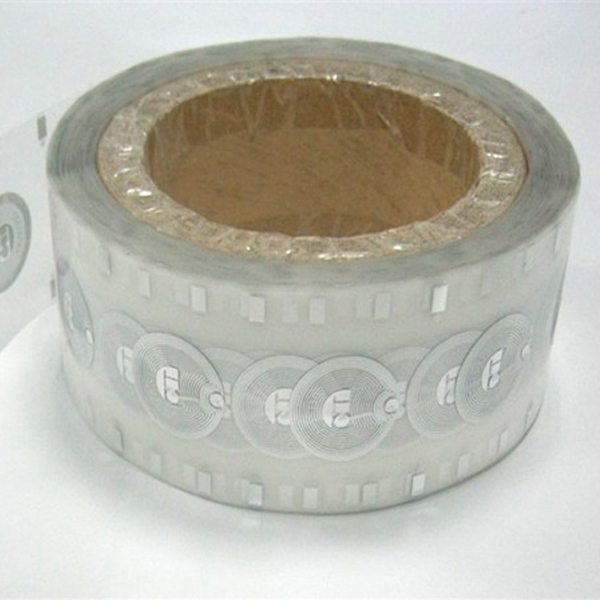
An NFC inlay is the most basic and cost-effective type of NFC tag. NFC inlays can be used alone or embedded and converted into other products by product manufacturers. The surface material of an NFC inlay is plastic, not paper, which makes them water resistant; however, they have no protective structure and are subject to damage due to bending or compression. Wet NFC inlays have adhesive backing like NFC stickers, but cannot be printed with color artwork like NFC stickers can. NFC inlays are delivered on a roll or in strips for small quantities. GoToTags designs NFC inlays for high performance and very large quantities of NFC inlays are kept in stock for short lead times.
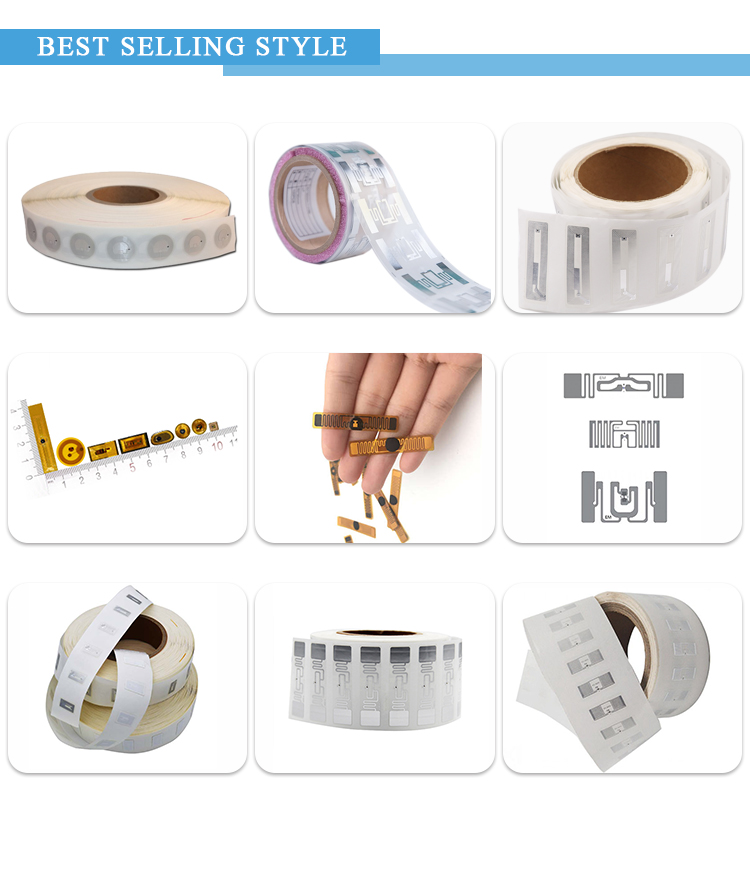
What Is a 13.56MHz Aluminum Antenna NFC Dry Inlay?
A 13.56MHz NFC Dry Inlay consists of three primary components:
| Component | Description |
|---|---|
| Aluminum Etched Antenna | A precisely designed aluminum coil responsible for wireless communication and energy harvesting |
| RFID/NFC Chip | Stores data and communicates with NFC readers or mobile devices |
| PET Substrate | Provides mechanical stability, flexibility, and durability |
The antenna receives electromagnetic energy from an NFC reader or smartphone. The chip uses this energy to activate and transmit stored information back to the reader.
Because the inlay does not include adhesive layers, it is called a “dry” inlay. Manufacturers can add their own adhesive materials depending on the final application.


Key Features of Aluminum Antenna NFC Dry Inlay
Thin and Flexible Design
The PET-based structure allows the NFC dry inlay to remain extremely thin while maintaining reliable performance. This makes it suitable for applications where space is limited, including product labels, cards, and smart packaging.
Cost-Effective Aluminum Antenna Technology
Aluminum etched antennas provide an excellent balance between performance and manufacturing cost. Compared with copper antennas, aluminum solutions offer lower material costs while maintaining sufficient performance for standard NFC applications.
High Compatibility
The 13.56MHz operating frequency follows global HF RFID standards. These inlays can work with:
- NFC smartphones
- RFID readers
- Smart card systems
- Access control equipment
- Inventory management systems
Customizable Options
Manufacturers can customize:
- Antenna size
- Chip type
- Memory capacity
- Shape and dimensions
- Packaging structure
This flexibility allows the same NFC inlay technology to be adapted for different industries.
Aluminum Antenna vs Copper Antenna NFC Inlay
Choosing the right antenna material is important for NFC tag performance. Aluminum and copper are the two most common antenna technologies.
| Feature | Aluminum Antenna Inlay | Copper Antenna Inlay |
|---|---|---|
| Material Cost | Lower | Higher |
| Manufacturing Process | Etching technology | Etching or wire embedding |
| Electrical Conductivity | Good | Excellent |
| Tag Thickness | Very thin | Thin |
| Production Volume | Ideal for mass production | Suitable for premium applications |
| Typical Applications | NFC labels, packaging, retail tags | High-performance RFID cards and special applications |
For most commercial NFC labeling projects, aluminum antenna inlays provide sufficient reading performance while significantly reducing production costs.
Dry Inlay vs Wet Inlay: What Is the Difference?
Many customers compare dry and wet NFC inlays before selecting materials for production.
| Feature | Dry NFC Inlay | Wet NFC Inlay |
|---|---|---|
| Adhesive Layer | No adhesive | Includes adhesive backing |
| Application Method | Requires lamination or converting | Can be directly attached |
| Manufacturing Flexibility | Higher | Lower |
| Production Cost | Lower | Slightly higher |
| Best For | Label manufacturers and converters | Ready-to-use NFC stickers |
A dry inlay is usually preferred by professional label manufacturers because it provides more flexibility during the converting process.
How Does a 13.56MHz NFC Dry Inlay Work?
A passive NFC dry inlay does not require an internal battery. Instead, it receives energy from an external NFC reader.
The communication process works as follows:
- A smartphone or RFID reader generates a 13.56MHz electromagnetic field.
- The antenna coil captures the energy from the magnetic field.
- The NFC chip becomes powered and processes stored data.
- The chip sends information back to the reader through electromagnetic communication.
This passive operating principle makes NFC dry inlays maintenance-free and suitable for long-term use.
Common Applications of NFC Dry Inlays
Smart Product Packaging
Brands use NFC labels to connect physical products with digital experiences. Customers can tap their smartphones to access:
- Product information
- Authentication pages
- User manuals
- Marketing content
Anti-Counterfeiting Solutions
NFC inlays help brands protect products by providing unique digital identities. Each tag can contain a unique identifier or encrypted information.
Retail and Consumer Engagement
NFC-enabled packaging allows companies to create interactive customer experiences without requiring dedicated hardware.
Asset Tracking
HF RFID inlays are commonly used for:
- Equipment identification
- Document management
- Inventory tracking
- Internal logistics
Benefits of Using NFC Dry Inlays
The main advantages include:
| Benefit | Explanation |
|---|---|
| Low Production Cost | Aluminum antenna technology supports economical mass production |
| Lightweight Structure | Thin PET construction fits various products |
| Easy Customization | Multiple chip and antenna options available |
| Long Service Life | Passive technology requires no battery replacement |
| Wide Compatibility | Works with NFC phones and RFID readers |
For manufacturers producing thousands or millions of NFC tags, dry inlays provide an efficient foundation for scalable production.
How to Choose the Right 13.56MHz NFC Dry Inlay
Selecting the correct NFC dry inlay depends on several factors, including application environment, reading distance requirements, chip functionality, and final label structure.
Before purchasing an aluminum antenna NFC inlay, manufacturers should evaluate the following aspects:
1. Chip Selection
The NFC chip determines data capacity, security functions, and compatibility. Different applications require different memory sizes and features.
| NFC Chip | User Memory | Main Features | Recommended Applications |
|---|---|---|---|
| NTAG213 | 144 bytes | Cost-effective NFC chip for basic data storage | Marketing tags, product labels, simple URL links |
| NTAG215 | 504 bytes | Medium memory capacity | Digital products, interactive packaging |
| NTAG216 | 888 bytes | Larger storage capacity | Premium packaging, detailed product information |
| MIFARE Series | Depends on model | Advanced security and access control functions | Smart cards, transportation, identification systems |
For simple consumer interaction applications, NTAG213 is usually sufficient. For authentication, access control, or advanced RFID systems, higher-performance chips may be required.
2. Antenna Size Selection
The antenna size directly affects communication performance. Larger antennas generally provide better coupling and longer reading distance.
| Antenna Size | Performance Characteristics | Typical Applications |
|---|---|---|
| Small Round Antenna | Compact design, shorter reading distance | Small products, cosmetic packaging |
| Medium Antenna | Balanced performance and size | Retail labels, smart packaging |
| Large Antenna | Better reading performance | Industrial applications, larger products |
The final reading distance also depends on the NFC reader, product material, and installation environment.
3. Application Environment
The surrounding material can influence NFC performance.
| Environment | Recommendation |
|---|---|
| Paper, cardboard, plastic | Standard NFC dry inlay works well |
| Glass or wood | Standard inlay is usually suitable |
| Metal surfaces | Use anti-metal NFC solutions with ferrite layers |
| Liquid-filled products | Test performance before mass production |
Metal objects can interfere with the magnetic field generated by NFC readers. For these applications, special shielding materials are recommended.
NFC Dry Inlay for Metal Surface Applications
Standard NFC inlays are designed for non-metallic environments. When attached directly to metal surfaces, the antenna performance may decrease significantly because metal absorbs and distorts the electromagnetic field.
For metal applications, manufacturers usually add a ferrite layer between the antenna and the metal surface.
Common applications include:
- Industrial equipment tracking
- Metal asset management
- Electronic device identification
- Tool management systems
The structure of an anti-metal NFC tag is usually:
| Layer | Function |
|---|---|
| Protective Layer | Protects the label from external damage |
| Printing Layer | Displays logos, text, or product information |
| NFC Inlay | Provides wireless identification |
| Ferrite Layer | Reduces metal interference |
| Adhesive Layer | Attaches the tag to the surface |
Manufacturing Process of Aluminum Antenna NFC Dry Inlay
The production of NFC dry inlays involves several precision manufacturing steps.
Step 1: PET Substrate Preparation
High-quality PET materials are selected to provide stability and flexibility during production.
Step 2: Aluminum Antenna Etching
An aluminum layer is processed to create the designed antenna pattern. The accuracy of the antenna structure directly affects NFC performance.
Step 3: Chip Attachment
The NFC chip is bonded to the antenna using specialized assembly technology.
Step 4: Electrical Testing
Each inlay is tested to ensure:
- Antenna continuity
- Chip communication
- Resonance performance
- Reading reliability
Step 5: Packaging and Delivery
Finished dry inlays are supplied in rolls or sheets depending on customer requirements and production equipment.
Quality Control of NFC Dry Inlays
Reliable NFC performance requires strict quality management throughout manufacturing.
Important inspection items include:
| Quality Test | Purpose |
|---|---|
| Antenna Inspection | Ensures antenna structure accuracy |
| Chip Testing | Confirms NFC communication ability |
| Reading Distance Test | Measures practical performance |
| Appearance Inspection | Checks surface defects |
| Temperature Testing | Verifies environmental durability |
Professional NFC inlay suppliers typically perform multiple quality checks before shipment to ensure stable performance during mass production.
Advantages of Choosing Aluminum Antenna NFC Inlays
Aluminum antenna technology has become popular in NFC manufacturing because it offers several important advantages.
Lower Manufacturing Cost
Aluminum requires fewer resources compared with some alternative antenna materials, making it suitable for large-scale production.
Excellent Production Efficiency
The etching process supports high-speed manufacturing and consistent antenna quality.
Lightweight and Thin Structure
The thin PET-based design allows integration into:
- Labels
- Cards
- Stickers
- Packaging materials
- Product inserts
Environmentally Friendly Potential
The lightweight structure reduces material consumption and supports efficient transportation compared with thicker RFID solutions.
NFC Dry Inlay Compared with Other RFID Technologies
NFC dry inlays belong to the HF RFID family. Different RFID frequencies serve different purposes.
| RFID Type | Frequency | Reading Distance | Common Applications |
|---|---|---|---|
| LF RFID | 125KHz | Short distance | Animal identification, access systems |
| HF RFID/NFC | 13.56MHz | Short to medium distance | NFC tags, smart cards, consumer products |
| UHF RFID | 860–960MHz | Several meters | Warehouse tracking, logistics |
Compared with UHF RFID, NFC technology focuses more on consumer interaction and secure short-range communication.
Why Choose 13.56MHz NFC Dry Inlay?
A 13.56MHz aluminum antenna NFC dry inlay is an ideal choice for companies that need a balance between cost, performance, and flexibility.
Key advantages include:
- Compatible with modern smartphones
- Suitable for mass production
- Flexible customization options
- Reliable communication performance
- Supports various NFC chip platforms
Whether used for smart packaging, product authentication, or digital marketing, NFC dry inlays provide an efficient bridge between physical products and digital information.
Frequently Asked Questions About NFC Dry Inlays
What is an NFC dry inlay?
An NFC dry inlay is a semi-finished RFID component containing an antenna and NFC chip mounted on a substrate. It requires further processing before becoming a finished NFC label or sticker.
Can NFC dry inlays be read by smartphones?
Yes. Most 13.56MHz NFC dry inlays using ISO14443A-compatible chips can be read by NFC-enabled Android smartphones and iPhones.
What is the reading distance of a 13.56MHz NFC inlay?
The typical reading distance is around 3–10cm. Actual performance depends on antenna size, chip type, reader power, and installation conditions.
Are aluminum antenna NFC inlays reusable?
Yes. NFC chips can usually be read and written thousands of times. The exact number depends on the selected chip model.
Can NFC dry inlays work on metal products?
Standard NFC dry inlays are not recommended for direct metal attachment. Anti-metal NFC designs with ferrite layers should be used for metal surfaces.
What is the difference between an NFC tag and an NFC dry inlay?
An NFC tag is a finished product that usually includes printing, adhesive, and protective layers. An NFC dry inlay is the internal electronic component used to manufacture NFC tags.
Conclusion
13.56MHz aluminum antenna NFC dry inlays provide a practical and economical solution for modern RFID and NFC applications. With a thin PET structure, reliable HF communication, and compatibility with multiple NFC chips, these inlays are widely used by manufacturers producing smart labels, intelligent packaging, authentication systems, and RFID solutions.
Compared with traditional RFID components, aluminum antenna NFC dry inlays offer an excellent combination of cost efficiency, customization flexibility, and production scalability. For businesses looking to develop NFC-enabled products, selecting the right antenna design, chip configuration, and manufacturing partner is essential for achieving stable performance and long-term reliability.
Looking for reliable NFC dry inlays for your next project? Request a quote today and get a customized solution from our RFID experts.