September 14, 2026
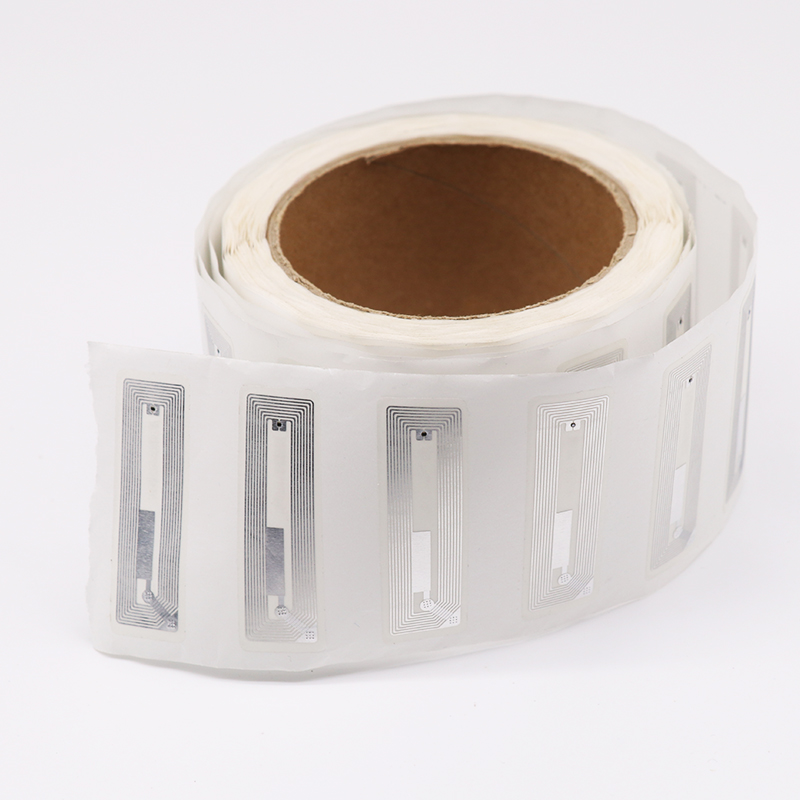
DO RFID manufactures custom 13.56 MHz MIFARE Ultralight EV1 NFC inlays for tickets, labels, smart packaging and high-volume contactless identification projects. The inlay combines an NXP MIFARE Ultralight EV1 IC with an aluminium antenna on a PET carrier and can be converted into a finished NFC label, ticket or other customer-specific format.
MIFARE Ultralight EV1 communicates according to ISO/IEC 14443 Type A and operates as an NFC Forum Type 2 Tag. It is designed for compact data storage and efficient contactless transactions, making it useful when a project needs a lightweight NFC credential rather than a multi-application smart card.


Select the correct Ultralight EV1 version
Ultralight EV1 is available in different memory versions. The original page identifies MF0UL1101 and MF0UL2101 options, commonly described with approximately 48 bytes and 128 bytes of user memory respectively. The correct version should be selected from the data payload, counter use, access configuration and reader or smartphone application.
The IC provides a 7-byte UID, configurable lock features, a 32-bit password-authentication mechanism, counters and an NXP originality signature. These are useful functional controls, but the password mechanism is not equivalent to the cryptographic mutual authentication of higher-security products such as MIFARE DESFire. Projects involving valuable credentials or adversarial cloning risk should choose the security architecture before selecting the inlay.
Inlay sizes and conversion options
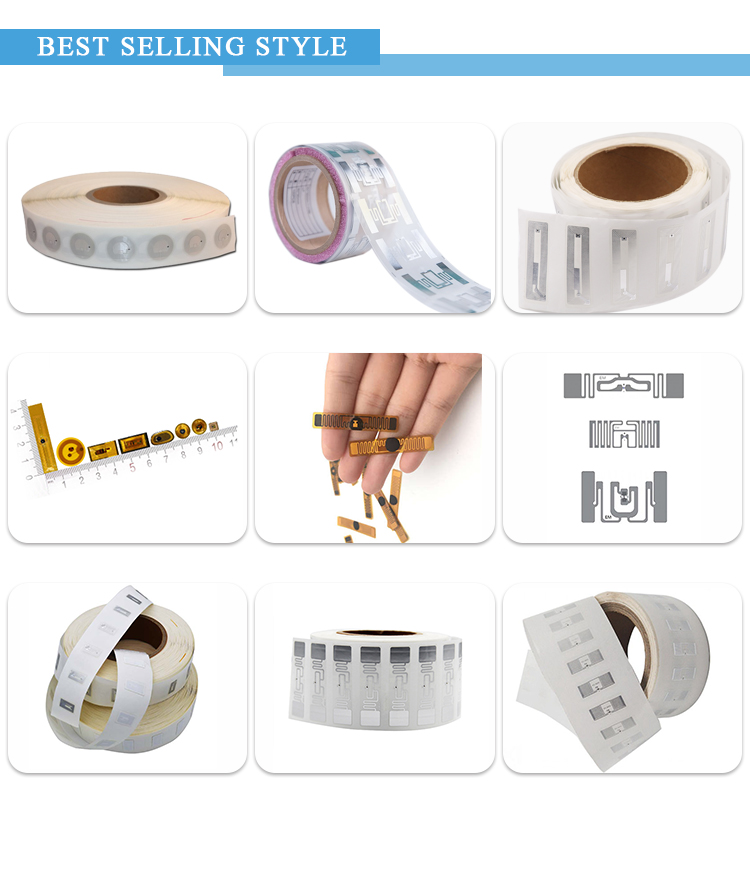
Existing page information lists antenna formats including 26 × 12 mm, 22 mm round, 32 × 32 mm, 37 × 22 mm, 45 × 45 mm and 76 × 45 mm, with custom formats available subject to project review. Antenna size affects the available label area and RF performance; the smallest antenna is not automatically the best choice for every phone, reader or package.
DO RFID can supply the inlay for further conversion or coordinate wet-inlay and finished-label requirements. Buyers should specify the face material, adhesive, release liner, final die-cut dimensions, print requirement, encoding data, roll direction, core size and packing format.
Typical original-page environmental figures are -25°C to +60°C operating and -40°C to +70°C storage. Final material and adhesive performance must be matched to the actual converting process and application surface. The page also states more than 100,000 write cycles and a typical 3–10 cm reading range; real reading performance depends on antenna format, reader or phone, placement, substrate and nearby metal or liquid.
Applications and reader compatibility
MIFARE Ultralight EV1 inlays are suited to event and transport tickets, loyalty tokens, product-information labels, smart packaging, controlled promotional interactions and other short-data NFC uses. NFC-enabled phones can interact with Type 2 Tag content when the phone hardware, operating system and application support the configured data. This should not be interpreted as universal compatibility with every handset or closed-loop ticketing system.
For a simple URL or consumer NFC experience, an NTAG-family product may offer a familiar choice and different memory options. For an established MIFARE ticketing environment or an application designed specifically around Ultralight EV1 functions, this inlay provides a focused option. For stronger credential security or multi-application requirements, consider a DESFire-family product instead.
Information needed for a quotation
Send the required chip version, antenna or finished-label size, target reading device, application surface, quantity, encoding data, artwork and roll or sheet format. If the inlay will be applied near metal, liquid, curved packaging or high-temperature processes, include those conditions so the antenna and material construction can be evaluated.
As an RFID and NFC inlay manufacturer, DO RFID supports B2B converters, label suppliers, ticketing solution providers and brand programs with custom formats, encoding and volume production. A sample using the intended reader and substrate is the best way to confirm the final configuration.