Overview of NXP MIFARE Ultralight EV1 NFC Inlay
The NXP MIFARE Ultralight EV1 NFC Inlay is a high-performance 13.56MHz contactless RFID inlay designed for secure identification, ticketing, authentication, and smart labeling applications. Built with the original NXP MIFARE Ultralight EV1 chip, this NFC inlay combines reliable wireless communication, low power operation, and flexible memory options in a compact form factor.
As an NFC Forum Type 2 Tag compliant product, the MIFARE Ultralight EV1 NFC Inlay supports ISO/IEC 14443 Type A communication standards and can be read by most NFC-enabled smartphones, NFC readers, and RFID systems. It is widely used in smart packaging, event tickets, transportation cards, loyalty programs, product authentication, and disposable access solutions.
Unlike basic NFC tags that only store simple information, the MIFARE Ultralight EV1 provides additional security features such as password protection, one-time programmable memory, originality signature verification, and integrated counters. These features make it suitable for applications where data integrity and counterfeit prevention are important.
Specification
NXP Mifare Ultralight ev1 NFC inlay
1. Chip Model: All chips are available
2. Frequency: 13.56MHz
3. Memory: depend on the chips
4. Protocol: ISO14443A
5. Base material: PET
6. Antenna material: Aluminium foil
7. Antenna size: 26*12mm, 22mm Dia, 32*32mm, 37*22mm, 45*45mm,76*45mm, or as request
8. Working temperature: -25°C ~ +60°C
9. Store Temperature: -40°Cto +70°C
10. Read/Write Endurance: >100,000 time
11. Reading Range: 3-10cm
12. Certificates: ISO9001:2000, SGS
Chip Option
| ISO14443A | MIFARE Classic® 1K, MIFARE Classic® 4K |
| MIFARE® Mini | |
| MIFARE Ultralight®, MIFARE Ultralight® EV1, MIFARE Ultralight® C | |
| NTAG213 / NTAG215 / NTAG216 | |
| MIFARE ® DESFire® EV1 (2K/4K/8K) | |
| MIFARE® DESFire® EV2 (2K/4K/8K) | |
| MIFARE Plus® (2K/4K) | |
| Topaz 512 | |
| ISO15693 | ICODE SLIX, ICODE SLI-S |
| EPC-G2 | Alien H3, Monza 4D, 4E, 4QT, Monza R6, etc |
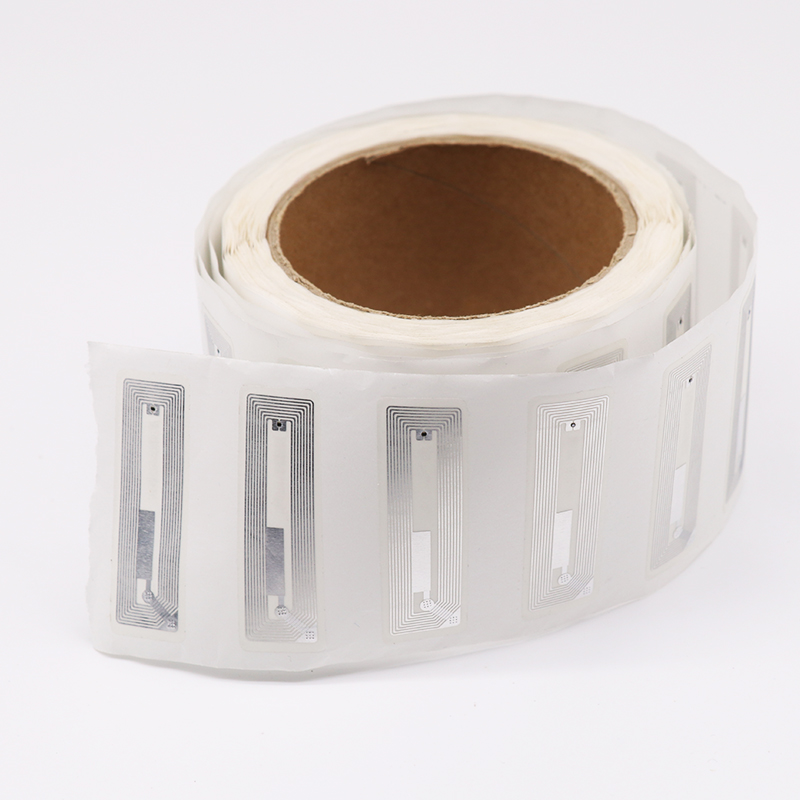
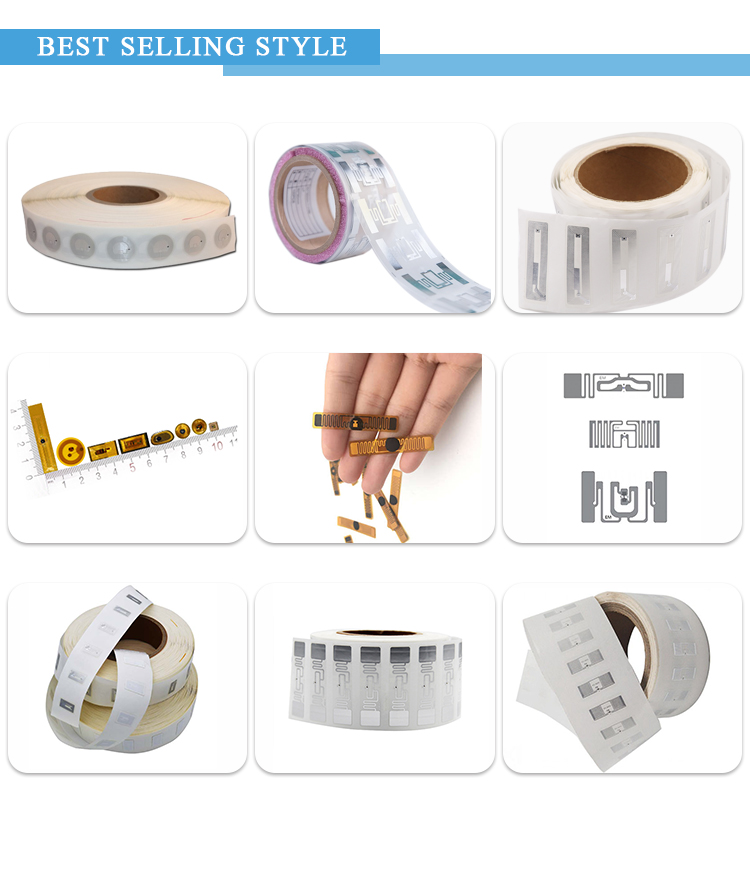
Product picture of 13.56mhz Mifare Ultralight ev1 RFID NFC inlay
RFID Wet Inlays are described as “wet” due to their adhesive backing, so they are essentially industrial RFID stickers. Passive RFID Tags are comprised of two parts: an integrated circuit for storing and processing information and an antenna for receiving and transmitting the signal. They have no internal power supply. RFID Wet Inlays are best for applications where a low-cost “peel-and-stick” tag is needed. Any RFID Wet Inlay can also be converted into a paper or synthetic face label.


Key Features of MIFARE Ultralight EV1 NFC Inlay
The MIFARE Ultralight EV1 NFC Inlay provides a balance between cost efficiency and security performance. Its compact design allows manufacturers to integrate NFC functionality into labels, cards, stickers, packaging, and wearable products.
Main product advantages include:
- 13.56MHz NFC technology
- ISO/IEC 14443 Type A compliant
- NFC Forum Type 2 Tag certified architecture
- Compatible with smartphones and NFC readers
- Available in multiple memory sizes
- Built-in password protection
- Three independent counters for transaction control
- Originality check for genuine NXP chips
- Low-cost solution for high-volume production
- Suitable for disposable and reusable NFC applications
Memory Options of MIFARE Ultralight EV1
The MIFARE Ultralight EV1 NFC Inlay is commonly available in two memory configurations. Choosing the correct memory size depends on the amount of data required and the application environment.
| Version | Total Memory | User Memory | Typical Applications |
|---|---|---|---|
| MF0UL1101 | 384 bits | Approximately 48 bytes | Basic identification, tickets, small data storage |
| MF0UL2101 | 1024 bits | Approximately 128 bytes | Authentication, smart labels, advanced applications |
The memory structure is organized into 4-byte pages, allowing flexible data management. Users can store information such as:
- URLs
- Product identification numbers
- Serial numbers
- Access permissions
- Digital certificates
- Application-specific data
How Does a MIFARE Ultralight EV1 NFC Inlay Work?
A MIFARE Ultralight EV1 NFC Inlay is a passive RFID device consisting of an NFC chip and antenna coil embedded into a thin substrate material.
The operating process is simple:
- An NFC reader or smartphone generates a 13.56MHz electromagnetic field.
- The NFC antenna inside the inlay receives energy from the reader.
- The MIFARE Ultralight EV1 chip becomes activated without a battery.
- Data stored inside the chip is transmitted wirelessly to the reader.
- The reader processes the information through an NFC application or system.
The passive design provides several benefits:
- No battery replacement required
- Long product lifetime
- Thin and lightweight structure
- Easy integration into different materials
MIFARE Ultralight EV1 NFC Inlay Memory Structure
The internal memory of the MIFARE Ultralight EV1 is organized into multiple pages. Each page contains 4 bytes of data, while specific areas are reserved for security functions.
Typical memory organization:
| Memory Area | Function |
|---|---|
| UID Area | Stores unique 7-byte chip identifier |
| Lock Bytes | Prevents unauthorized data modification |
| OTP Area | Stores one-time programmable information |
| User Memory | Stores application data |
| Configuration Area | Controls security settings |
| Password Area | Enables access protection |
This flexible memory architecture allows manufacturers to create customized NFC solutions for different industries.
Security Features of MIFARE Ultralight EV1 NFC Tag
Security is one of the main advantages of the MIFARE Ultralight EV1 compared with traditional low-cost NFC tags.
Password Protection
The chip supports 32-bit password authentication, which helps protect stored information from unauthorized modification.
This feature is useful for:
- Ticket validation systems
- Product authentication
- Controlled access applications
- Brand protection solutions
Integrated Counter Function
The MIFARE Ultralight EV1 includes three independent 24-bit counters. These counters are designed for applications where usage tracking is required.
Examples:
- Limited-use tickets
- Membership cards
- Promotional coupons
- Transportation passes
For example, a ticket system can record each usage event and prevent unauthorized repeated use.
Originality Signature Verification
The chip supports NXP originality check technology, which helps verify whether the NFC tag contains a genuine NXP semiconductor.
This feature improves protection against:
- Counterfeit NFC tags
- Unauthorized cloning
- Fake product labels
For brand owners, this provides an additional layer of trust in product authentication systems.
MIFARE Ultralight EV1 NFC Inlay Design Structure
An NFC inlay is the internal component used before converting it into a finished NFC product.
The structure normally includes:
| Component | Function |
|---|---|
| NFC IC | Stores and processes data |
| Antenna Coil | Enables wireless communication |
| PET Substrate | Provides mechanical support |
| Adhesive Layer | Allows integration into labels or products |
Typical structure:
Protective Layer
|
Antenna Coil
|
MIFARE Ultralight EV1 Chip
|
PET Substrate
|
Adhesive Layer
Because of its thin design, the inlay can be converted into:
- NFC stickers
- Smart labels
- Product tags
- Plastic cards
- Event wristbands
- Packaging labels
Advantages of Using MIFARE Ultralight EV1 NFC Inlay
Compared with traditional barcode labels or basic RFID tags, the MIFARE Ultralight EV1 provides additional digital interaction capabilities.
Contactless Operation
Users can access information by simply tapping an NFC-enabled smartphone near the tag.
No:
- Battery
- Physical contact
- Special scanning equipment
is required for basic applications.
Smartphone Compatibility
Most modern Android smartphones and many iPhone models support NFC communication, making MIFARE Ultralight EV1 suitable for consumer-facing applications.
Common smartphone applications include:
- Product verification
- Digital manuals
- Smart packaging interaction
- Marketing campaigns
- Customer loyalty programs
Cost-Effective Mass Production
The MIFARE Ultralight EV1 is designed for high-volume applications where manufacturers need reliable NFC functionality at a competitive cost.
It is commonly selected for:
- Millions of event tickets
- Disposable access cards
- Consumer product labels
- Promotional campaigns
Applications of MIFARE Ultralight EV1 NFC Inlay
The NXP MIFARE Ultralight EV1 NFC Inlay is designed for applications that require reliable identification, simple data storage, and enhanced security features. Its low cost and flexible integration options make it suitable for both consumer and industrial products.
Smart Packaging and Product Authentication
Brands increasingly use NFC-enabled packaging to provide customers with instant access to product information.
A MIFARE Ultralight EV1 NFC label can store or connect users to:
- Product details
- Manufacturing information
- Warranty registration pages
- Usage instructions
- Anti-counterfeit verification platforms
When customers tap the NFC label with a smartphone, they can verify product information and interact directly with the brand.
Event Tickets and Access Control
MIFARE Ultralight EV1 is widely used in ticketing systems because of its built-in counters and security functions.
Typical applications include:
- Concert tickets
- Exhibition passes
- Theme park tickets
- Conference badges
- Sports event access cards
The integrated counter function helps track ticket usage and reduces unauthorized reuse.
| Application | NFC Function | Benefit |
|---|---|---|
| Event ticket | Usage counting | Prevent repeated entry |
| Visitor badge | Digital identification | Fast access verification |
| Festival wristband | Contactless validation | Convenient user experience |
Transportation and Mobility Solutions
The MIFARE Ultralight EV1 NFC Inlay can be used for transportation-related applications requiring affordable contactless identification.
Examples include:
- Short-term travel passes
- Public transportation tickets
- Parking access systems
- Shared mobility services
Its lightweight design allows it to be integrated into disposable cards and wearable products.
Loyalty Cards and Membership Programs
Businesses can use NFC-enabled membership cards to improve customer engagement.
A MIFARE Ultralight EV1 NFC card can provide:
- Digital membership identification
- Customer rewards tracking
- Promotional campaigns
- Mobile interaction
Customers can simply tap their smartphone to access online services or membership information.
Healthcare and Pharmaceutical Labels
The security features of MIFARE Ultralight EV1 make it suitable for certain healthcare identification applications.
Possible uses include:
- Medicine authentication labels
- Medical equipment tracking
- Patient information access systems
- Laboratory sample identification
The NFC system can help improve traceability and reduce manual data entry.
MIFARE Ultralight EV1 vs NTAG Series NFC Tags
MIFARE Ultralight EV1 and NTAG products are both based on NFC Forum Type 2 Tag technology. However, they are optimized for different applications.
| Feature | MIFARE Ultralight EV1 | NTAG213 / NTAG215 / NTAG216 |
|---|---|---|
| Manufacturer | NXP | NXP |
| Frequency | 13.56 MHz | 13.56 MHz |
| NFC Standard | Type 2 Tag | Type 2 Tag |
| UID | 7 bytes | 7 bytes |
| Smartphone Support | Yes | Yes |
| Password Protection | Yes | Yes |
| Counter Function | 3 counters | Usually unavailable |
| Security Level | Higher for ticketing applications | General NFC applications |
| Main Purpose | Secure tickets and controlled usage | Marketing and smart labels |
| Typical Use | Access control, tickets, authentication | URLs, advertising, digital content |
Which One Should You Choose?
Choose MIFARE Ultralight EV1 NFC Inlay when you need:
- Usage counting
- Ticket validation
- Anti-counterfeit features
- More controlled data access
Choose NTAG series NFC tags when you need:
- Simple URL sharing
- Digital business cards
- Marketing campaigns
- Basic NFC interactions
MIFARE Ultralight EV1 vs Traditional RFID Tags
Although both NFC and RFID technologies use wireless communication, their application goals are different.
| Feature | MIFARE Ultralight EV1 NFC Inlay | Traditional RFID Tag |
|---|---|---|
| Frequency | 13.56 MHz | Usually LF, HF, or UHF |
| Communication Range | Short range | Short to long range depending on type |
| Smartphone Reading | Supported | Usually not supported |
| Data Interaction | Two-way communication | Mainly identification |
| Security Features | Password, counters, originality check | Depends on RFID type |
| User Experience | Tap with smartphone | Requires dedicated reader |
For consumer-facing applications, NFC provides a more interactive experience because users can directly access information using their mobile devices.
MIFARE Ultralight EV1 NFC Inlay Size and Customization Options
NFC inlays are available in different shapes and sizes depending on the final product design.
Common customization options include:
| Customization | Description |
|---|---|
| Antenna Size | Optimized for required reading distance |
| Shape | Round, rectangular, or customized designs |
| Substrate Material | PET, paper, or other materials |
| Adhesive Type | Permanent or removable adhesive |
| Printing | Logo, barcode, serial number, or artwork |
Manufacturers can integrate MIFARE Ultralight EV1 inlays into:
- Paper labels
- Plastic cards
- Packaging materials
- Wristbands
- Product stickers
How to Choose the Right MIFARE Ultralight EV1 NFC Inlay
Selecting the correct NFC inlay depends on several factors.
1. Required Memory Capacity
Choose the memory version according to your data requirements.
| Data Requirement | Recommended Version |
|---|---|
| Simple ID information | 384-bit version |
| Product data and authentication | 1024-bit version |
| More application information | Larger memory NFC products |
2. Reading Distance Requirements
The reading distance depends on:
- Antenna size
- Reader power
- Installation environment
- Material interference
Larger antennas generally provide better performance.
3. Security Requirements
For applications involving authentication or controlled access, consider:
- Password protection
- Counter functions
- Originality verification
These features provide stronger protection compared with basic NFC tags.
4. Final Product Environment
The installation environment affects NFC performance.
Consider:
- Metal surfaces
- Packaging materials
- Temperature conditions
- Required durability
For example, NFC labels attached to metal products may require special anti-metal designs.
Frequently Asked Questions About MIFARE Ultralight EV1 NFC Inlay
What is a MIFARE Ultralight EV1 NFC Inlay?
A MIFARE Ultralight EV1 NFC Inlay is a passive NFC RFID component containing an NXP MIFARE Ultralight EV1 chip and antenna. It enables wireless data communication with NFC smartphones and RFID readers.
Can iPhone and Android phones read MIFARE Ultralight EV1?
Yes. MIFARE Ultralight EV1 is compatible with most modern NFC-enabled smartphones, including Android devices and iPhone models that support NFC functions.
Does MIFARE Ultralight EV1 require a battery?
No. It is a passive NFC tag. The chip receives energy from the electromagnetic field generated by an NFC reader or smartphone.
How much data can MIFARE Ultralight EV1 store?
The available storage depends on the chip version:
- MF0UL1101: approximately 48 bytes of user memory
- MF0UL2101: approximately 128 bytes of user memory
The actual available space depends on system configuration and reserved memory areas.
Can MIFARE Ultralight EV1 prevent copying?
MIFARE Ultralight EV1 provides security features that make unauthorized duplication more difficult, including originality verification, password protection, and counters.
However, no RFID technology can guarantee absolute protection against all attack methods. Security should be designed together with backend verification systems.
What industries use MIFARE Ultralight EV1?
Common industries include:
- Transportation
- Entertainment
- Retail
- Smart packaging
- Manufacturing
- Healthcare
- Brand protection
Why Choose MIFARE Ultralight EV1 NFC Inlay?
The NXP MIFARE Ultralight EV1 NFC Inlay is a practical solution for companies looking to add secure and convenient NFC functionality to their products.
Its combination of:
- Affordable production cost
- Smartphone compatibility
- Reliable 13.56MHz communication
- Flexible memory options
- Built-in security functions
- Easy product integration
makes it suitable for a wide range of NFC applications.
Whether used for smart labels, product authentication, ticketing systems, or digital customer experiences, the MIFARE Ultralight EV1 provides a reliable foundation for modern connected products.
For businesses developing NFC-enabled solutions, selecting a high-quality MIFARE Ultralight EV1 NFC Inlay supplier ensures consistent performance, stable production, and long-term product reliability.
Ready to integrate secure NFC technology into your products? Contact us today for NXP MIFARE Ultralight EV1 NFC Inlays and get a customized solution for your application.