October 21, 2026
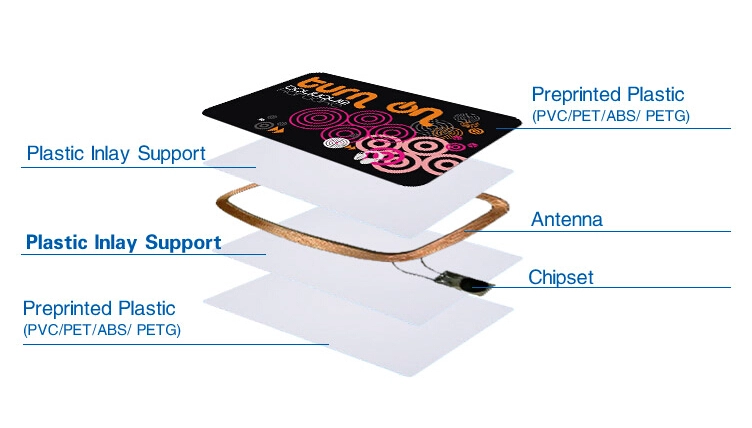
Our Custom NFC PVC ntag 215 card combines a durable PVC card body with an original NXP NTAG215 NFC chip, providing a practical solution for NFC business cards, membership cards, product information, marketing campaigns, smart cards, and other contactless applications.
With 504 bytes of user memory, NTAG215 offers more storage than NTAG213 while remaining more compact and cost-effective than higher-capacity NTAG216 for many everyday NFC projects. The chip supports NFC Forum Type 2 Tag specifications and ISO/IEC 14443 Type A, with a 13.56 MHz operating frequency and data transfer rate of up to 106 kbit/s.
The PVC card can be customized with your logo, artwork, colors, numbering, QR codes, and other printed elements. NFC data can also be encoded according to your application requirements.
Why Choose an NTAG215 NFC PVC Card?
An NFC card turns a traditional plastic card into an interactive digital tool. Instead of requiring a user to type a website address, scan a QR code, or install special hardware, an NFC-enabled smartphone can interact with the card by simply bringing it close to the NFC antenna.
NTAG215 is particularly useful when an application needs more memory than NTAG213 but does not require the larger memory capacity of NTAG216.
The chip provides 504 bytes of freely available user memory, while the complete NTAG215 memory structure contains 540 bytes.
This makes the card suitable for storing NDEF messages such as URLs, contact information, short text, application links, and other NFC-compatible data.
NTAG215 NFC Card Specifications
The NTAG215 Card is designed to fully comply with NFC Forum Type 2 Tag and ISO/IEC 14443 Type‑A specifications.
Based on the NTAG215 chip from NXP, NTAG215 delivers advanced security and anti‑cloning features, alongside a permanent lock function. As a result, user data can be permanently configured as read‑only.
| Material | PVC/ABS/PET(high temperature resistance ) etc |
| Frequency | 13.56Mhz |
| Size | 85.5*54mm or customized size |
| Thickness | 0.76mm,0.8mm,0.9mm etc |
| Chip Memory | 506 Byte |
| Encode | Available |
| Printing | Offset ,silkscreen Printing |
| Read range | 1-10cm (depend on the reader and reading environment) |
| Operation temperature | PVC:-10°C -~+50°C;PET: -10°C~+100°C |
| Application | Access Control, Payment, hotel key card, resident key card, attendance system ect |
NTAG215 NFC Card is one of original NTAG® card. Seamlessly working with NFC readers as well ascompatible with all NFC enabled devices and conform to ISO 14443. The 215 chip has a read-write lockfunction that makes the cards can be edited repeatedly or read-only.
Due to the excellent safety performance and better RF performance of Ntag215 chip, Ntag215 print card is widely used in financial management, communications telecommunications, social security, transportation tourism, health care, government administration, retail, storage and transportation, member management, access control attendance, identification, highways, hotels, entertainment, school management, etc.


NTAG213 vs NTAG215 vs NTAG216
Choosing the right NFC chip depends mainly on the amount of data your application needs.
NXP’s NTAG213, NTAG215, and NTAG216 family provides 144, 504, and 888 bytes of user memory respectively. The three chips share the same general NFC Forum Type 2 Tag and ISO/IEC 14443 Type A architecture.
| Feature | NTAG213 | NTAG215 | NTAG216 |
|---|---|---|---|
| User Memory | 144 bytes | 504 bytes | 888 bytes |
| NFC Forum Type | Type 2 | Type 2 | Type 2 |
| Frequency | 13.56 MHz | 13.56 MHz | 13.56 MHz |
| Data Rate | Up to 106 kbit/s | Up to 106 kbit/s | Up to 106 kbit/s |
| 7-Byte UID | Yes | Yes | Yes |
| Password Protection | 32-bit | 32-bit | 32-bit |
| Read-Only Locking | Yes | Yes | Yes |
| Typical Position | Basic NFC projects | Balanced capacity | Larger data requirements |
NTAG213 is a good choice when the NFC application only needs a relatively small amount of data, such as a simple URL.
NTAG215 offers a useful middle ground. Its 504-byte user memory provides substantially more space while avoiding the additional capacity of NTAG216 when it is not needed.
NTAG216 is appropriate when an application needs up to 888 bytes of user memory.
All three variants have a 100,000-cycle write endurance specification and 10-year data retention according to NXP’s product information.
What Can You Store on an NTAG215 Card?
The 504-byte user memory can be used for a variety of NFC applications. The exact amount of information that can be stored depends on the NDEF format and the type of data.
Common examples include:
- Website URLs
- Digital business card information
- Product landing pages
- Social media links
- Contact information
- Short text messages
- Wi-Fi or Bluetooth-related data
- Application links
- Campaign or promotional information
- Product identification data
For many commercial projects, it is not necessary to store all application data directly on the NFC chip. A common approach is to store a short URL on the card and host the larger content online.
For example:
NFC Card → Short URL → Your Website → Product Information
This approach makes it possible to update the online content without physically rewriting every NFC card.
Rewritable NFC Card for Flexible Applications
NTAG215 is a rewritable NFC IC, making it suitable for applications where NFC content may need to be changed.
For example, a company could initially program an NFC card with one campaign URL and later update the card with a different destination.
This flexibility is useful for:
- Marketing campaigns
- Event cards
- Temporary promotions
- Digital business cards
- Product launches
- Membership programs
- Internal testing
- NFC prototype development
The card can also be configured with read-only locking when the NFC data should no longer be changed. NXP specifies field-programmable read-only locking for the NTAG21x family.
Before locking a card, the final NFC content should be carefully verified because a locked memory area cannot be normally rewritten.
NFC Card with Password Protection
NTAG215 includes configurable 32-bit password protection for restricting access to protected memory areas. NXP describes this feature as a convenient way to prevent unauthorized memory operations.
Password protection can be useful when a project requires additional control over NFC memory.
However, password protection should not be confused with high-level cryptographic authentication. For applications requiring advanced security, such as high-security access control or secure authentication, a different NFC technology may be more appropriate.
NXP specifically notes that higher security requirements may require cryptographic methods at the application level.
Custom Printed NFC PVC Card
The PVC card provides a large printable surface for branding and visual identification.
Depending on your project requirements, the card can be customized with elements such as:
- Company logos
- Brand colors
- Product graphics
- QR codes
- Serial numbers
- Barcodes
- Text
- Website addresses
- Contact details
- Custom background designs
Combining printed information with NFC functionality gives users two ways to access your content.
For example, a QR code can provide a visible access method, while the embedded NFC chip enables contactless interaction for compatible smartphones.
This combination can be especially useful for business cards, promotional cards, membership cards, and product packaging.
Custom NFC Card Encoding
The NFC chip can be programmed with data before shipment according to the requirements of the project.
For a typical URL application, the card can contain an NDEF record pointing to your website or landing page.
A common workflow is:
- Prepare the NFC data.
- Encode the NTAG215 chip.
- Test the programmed card.
- Print and finish the PVC card.
- Perform quality inspection.
- Ship the finished cards.
For larger projects, NFC encoding can be combined with card numbering or other identification systems. The exact encoding and personalization process should be confirmed during order specification.
NFC Business Card
An NTAG215 PVC card can be used as a reusable NFC business card.
Instead of printing every contact detail permanently on the card, the NFC chip can direct users to a digital profile containing:
- Name
- Company
- Job title
- Phone number
- Email address
- Website
- LinkedIn profile
- Social media accounts
- Portfolio
- Company information
A major advantage is that the destination page can be updated without changing the physical card.
This can help businesses reduce the need to replace printed cards whenever contact information changes.
NFC Membership and Loyalty Cards
Custom NTAG215 cards can also be used for membership and loyalty programs.
The NFC chip can point to a member profile, loyalty page, registration page, or online account.
A typical system could work as follows:
Tap Card → Open Member Page → Identify Member → Display Account Information
The NFC card itself does not need to store an entire customer database. Instead, it can contain a unique URL or identifier while the actual customer information remains on a secure server.
This approach can make the physical NFC card simpler while allowing the associated digital system to scale.
NFC Product Information Cards
For manufacturers and brands, NFC cards can provide a convenient way to connect physical products with digital content.
An NFC card can direct customers to:
- Product specifications
- User manuals
- Warranty registration
- Installation instructions
- Product videos
- Brand stories
- Customer support
- Authenticity information
- Replacement parts
- After-sales service
The destination URL can also be changed when the digital content needs to be updated.
For product authentication projects, however, the complete security architecture should be evaluated separately. A standard NTAG215 card should not automatically be marketed as a secure anti-counterfeit solution without an appropriate verification system.
NFC Marketing and Advertising
NFC technology can simplify customer interaction with marketing materials.
Instead of asking customers to manually type a URL, an NFC-enabled card can provide a direct tap-to-open experience.
Possible applications include:
| Marketing Application | NFC Function |
|---|---|
| Business Card | Open digital contact profile |
| Promotional Card | Open campaign landing page |
| Product Card | Display product information |
| Event Card | Open registration or event page |
| Loyalty Card | Open customer account |
| Retail Display | Open product or promotional content |
| Printed Media | Connect physical content to digital media |
| Brand Promotion | Open company website or campaign |
NXP lists applications including smart advertising, product authentication, NFC shelf labels, mobile companion tags, Bluetooth or Wi-Fi pairing, and business cards for the NTAG213/215/216 family.
NFC PVC Card vs QR Code Card
NFC and QR codes can serve similar purposes, but they provide different user experiences.
| Feature | NFC Card | QR Code Card |
|---|---|---|
| User Action | Tap or bring phone close | Open camera and scan |
| Visible Code Required | No | Yes |
| Can Be Rewritten | Yes, depending on configuration | Printed code cannot be changed |
| Works with NFC Phone | Yes | Not required |
| Printing Required | Not for NFC function | Yes |
| Branding Surface | Large PVC surface | Large PVC surface |
| Best Use | Tap-to-connect experiences | Visible scan-to-connect experiences |
For many products, using both NFC and QR code provides the best overall experience.
Users can tap the NFC card when supported, while the QR code provides a visible alternative.
Durable PVC Construction for Everyday Use
PVC is widely used for plastic cards because it provides a practical balance between durability, printability, and cost.
A PVC NFC card can be used as a physical card for everyday applications while the embedded NFC chip provides contactless functionality.
The final durability of a card depends on card construction, thickness, printing method, surface finish, storage conditions, and how the card is used.
For demanding environments, customers should confirm the required material, thickness, finish, and environmental specifications before production.
Compatible NFC Devices
NTAG215 operates at 13.56 MHz and follows NFC Forum Type 2 Tag specifications and ISO/IEC 14443 Type A.
This makes it suitable for interaction with compatible NFC smartphones and NFC readers.
However, smartphone behavior can vary by operating system, device model, NFC settings, and application. Before placing a large production order, we recommend testing representative samples with the actual smartphones or readers that your customers will use.
Customization Options
Our custom NFC PVC cards can be developed around the requirements of your project.
| Customization | Available Options |
|---|---|
| Card Material | PVC and project-specific options |
| Card Design | Custom artwork |
| Printing | Custom color printing |
| Logo | Custom logo |
| QR Code | Available |
| Numbering | Available for project requirements |
| NFC Chip | NTAG215 |
| NFC Data | Custom NDEF data |
| Encoding | Pre-encoding available |
| Locking | Optional according to application |
| Packaging | Project-specific packaging options |
Custom specifications such as card thickness, exact dimensions, printing process, surface finish, antenna construction, packaging, MOQ, and encoding method should be confirmed before production.
How to Order Custom NTAG215 NFC Cards
The production process can be tailored to your project requirements.
1. Confirm the Application
Tell us how you plan to use the card, such as a business card, membership card, product card, marketing card, or another NFC application.
2. Confirm Card Specifications
Confirm the card material, dimensions, thickness, printing requirements, chip type, and quantity.
3. Provide NFC Data
Provide the URL, NDEF content, numbering system, or other information that needs to be programmed.
4. Approve the Artwork
Our team can prepare or review the card artwork before production.
5. Program and Test
The NFC chips can be programmed according to the agreed specifications and tested before shipment.
6. Mass Production
After confirmation of the final specifications and sample, production can proceed according to the agreed quantity and delivery requirements.
Frequently Asked Questions
What is an NTAG215 NFC card?
An NTAG215 NFC card is a physical card containing an NXP NTAG215 NFC chip. It provides 504 bytes of user memory and supports NFC Forum Type 2 Tag functionality.
How much data can an NTAG215 store?
NTAG215 provides 504 bytes of freely available user memory. The actual amount of useful NDEF content depends on the NDEF record structure and formatting overhead.
Can an NTAG215 card be rewritten?
Yes. NTAG215 supports rewritable user memory. Specific memory areas can also be configured for read-only operation using the chip’s locking functionality.
Can NTAG215 store a URL?
Yes. URLs are one of the most common applications for NTAG215 NFC cards. A URL can be stored as an NDEF record and opened by a compatible NFC device.
Does NTAG215 require a battery?
No. NTAG215 is a passive NFC tag IC. It receives the energy required for communication from the NFC field generated by a compatible reader or NFC device.
Can the NFC card be printed with a custom logo?
Yes. The PVC card surface can be customized for branding, including logos, graphics, text, QR codes, and other artwork. Final printing specifications should be confirmed for each project.
Is NTAG215 secure?
NTAG215 provides features such as a 7-byte UID, read-only locking, originality signature support, and configurable 32-bit password protection.
However, these features should not be treated as equivalent to advanced cryptographic authentication. For high-security applications, a more advanced NFC IC and security architecture may be required.
What is the difference between NTAG215 and NTAG216?
The main difference is memory capacity. NTAG215 provides 504 bytes of user memory, while NTAG216 provides 888 bytes. Both belong to the NTAG21x family and support NFC Forum Type 2 Tag functionality.
Can I use both NFC and a QR code on the same card?
Yes. Combining NFC with a printed QR code is a practical solution when you want to provide both tap-based and camera-based access to the same digital content.
Get a Custom NTAG215 NFC Card Quote
Whether you need custom NFC business cards, NFC membership cards, smart PVC cards, NFC marketing cards, or product information cards, NTAG215 provides a practical balance between memory capacity, compatibility, and cost.
Send us your card design, required quantity, NFC data, card specifications, and application requirements. We can help determine the appropriate card configuration and NFC encoding method for your project.
Custom NFC PVC NTAG215 Card — designed for reliable tap-to-connect experiences and scalable NFC applications.