
What Is an RFID Padlock Tag?
An RFID Padlock Tag is a smart locking device that integrates a mechanical padlock structure with an embedded RFID chip and antenna. It functions both as a physical security lock and a digital identification tag. Once locked, the tag cannot be removed without breaking or unlocking it, ensuring clear evidence of tampering.
Most RFID padlock tags operate in the UHF (860–960 MHz) frequency range and comply with EPC Class 1 Gen 2 / ISO 18000-6C standards, allowing long-range, non-contact reading. Some versions are designed for HF (13.56 MHz) applications where short-range verification is preferred.
The housing is typically made from ABS, nylon, or reinforced plastic, offering resistance to impact, moisture, dust, and temperature changes.


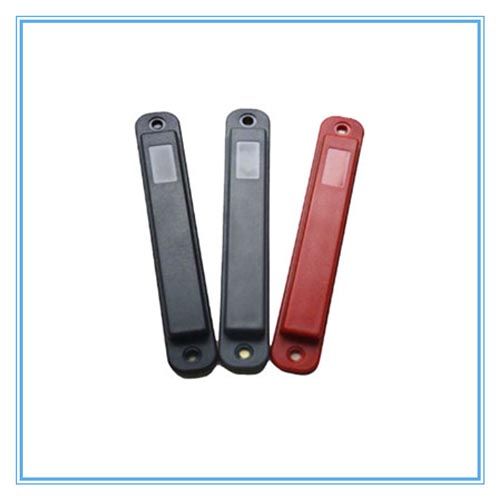
RFID padlock tag
RFID RFID padlock tags combine the mechanical security of traditional cable seal products together with the electronic security offered by the latest radio frequency-based automatic identification (RFID) techniques.Features
- Waterproof, Anti Collision, Corrosion, Durability
- Flip latch location, Cable tie tape insert will not exit, Excellent locking effect
- Chip in the label binding external position, Not affected by the strapped object, Stable reading
Description
This RFID padlock is a smart tag, highly secure, high-tech alternative to conventional padlocks that combines long-range RFID-reading performance for supply chain solutions. RFID padlock tag is RFID seal tag that combines long-range RFID reading performance for supply chain solutions. Available in UHF 860-960 MHz, 13.56 MHz, or 125 kHz, it is mainly used in the supply chain and asset management for disposable seal applications. When the wire is put into the keyhole, the RFID padlock seal is locked and the wire cannot be opened; it can only be cut or destroyed using other noticeable tampering methods. This RFID seal padlock tag has a unique identification number that can identify and track assets quickly.
RFID RFID padlock tags combine the mechanical security of traditional cable seal products together with the electronic security offered by the latest radio frequency-based automatic identification (RFID) techniques.
Primary Applications:
- Cable and wire identification
- Sealing commercial containers tracking
- Logistics
- Trucks tracking
- Bins identification
Specification
| Material | ABS Nylon |
|---|---|
| Dimension | 45CM (Customized size is available) |
| Slot Size/Flag Size: 90*28mm | |
| Bundle Length (Max): 35cm | |
| Color | Blue or customized |
| RF Protocol | ISO14443A, EPC/ISO18000-6C |
| Reading Distance | 2cm-5m |
| Break Strength | 800N |
| Humidity Environment | Suitable for indoor and outdoor use dirt, dust, and water resistant |
| Available crafts | Silkscreen printing, series number, barcode, laser engraving |
| Chip Available | HF/UHF |
| Applications | Warehouse, airport, logistic, bank, etc. |
| Lead time | 7-10 working days |
| Sample Availability | Free samples are available upon request |
| Certificates | CE, FCC, RoHS |
Our full inventory of highly durable RFID Marker ID Cable Ties makes quick and easy work of getting all of your heavy-duty wires and cables neat and organized and keeping them that way!
These high-quality RFID ID marker cable ties allow you to neatly bundle and store a wide variety of cables and other wiring components for a broad array of industrial and residential applications.
Each of these RFID Marker ID Cable Ties can support cable and wire bundles weighing 18 to 50 lbs. and with RFID transponder inside, you can store information in the chip, RFID making cable and wire identification in an extensive range of applications a fast and easy task every time!



The Core Pain Points RFID Padlock Tags Solve
1. Cargo Tampering and Theft
Pain Point:
Traditional seals can be cut, replaced, or bypassed without leaving reliable digital records. Manual inspection is slow and often ineffective.
How RFID Padlock Tags Solve It:
- Each padlock tag has a unique RFID ID that cannot be duplicated easily
- Once locked, unauthorized removal is immediately detectable
- RFID reading provides tamper status without opening cargo
- Any seal change creates a digital event record
This dramatically improves cargo security during transportation and storage.
2. Lack of Real-Time Visibility
Pain Point:
Manual logs and barcode systems do not provide real-time tracking. Companies often don’t know where assets are, who accessed them, or when.
How RFID Padlock Tags Solve It:
- RFID padlock tags can be read automatically at gates, checkpoints, and warehouses
- Data is transmitted to WMS, TMS, or IoT platforms
- Enables real-time monitoring of cargo movement and access events
This transforms static assets into trackable, data-generating objects.
3. High Labor Costs and Human Error
Pain Point:
Manual sealing, checking, and recording require significant labor and are prone to mistakes.
How RFID Padlock Tags Solve It:
- No line-of-sight scanning required
- Multiple padlock tags can be read simultaneously
- Automated verification replaces manual inspection
This reduces labor costs, speeds up operations, and eliminates common human errors.
4. Weak Audit Trails and Compliance Issues
Pain Point:
Many industries require strict documentation for audits, customs, or regulatory compliance. Manual records are incomplete or unreliable.
How RFID Padlock Tags Solve It:
- Each lock interaction creates a digital timestamped record
- Supports traceability for customs, bonded zones, and regulated goods
- Easy data retrieval for audits and investigations
This provides strong digital evidence for compliance and accountability.
How RFID Padlock Tags Work
Step 1: Locking and Encoding
Before deployment, the RFID padlock tag is encoded with relevant data such as:
- Shipment ID
- Container number
- Asset ID
- Destination or route data
The padlock is then physically locked onto the item.
Step 2: Automatic Identification
As the locked item moves through the supply chain:
- Fixed RFID readers or handheld devices read the tag
- Data is captured automatically without physical contact
- Multiple tags can be scanned at once
Step 3: Data Integration
Collected data is synchronized with:
- Warehouse Management Systems (WMS)
- Transportation Management Systems (TMS)
- ERP or IoT platforms
This creates a continuous digital trail from origin to destination.
Key Applications of RFID Padlock Tags
1. Logistics and Transportation
Used on:
- Containers
- Cargo trucks
- Pallets and crates
RFID padlock tags ensure secure transit and automated checkpoint verification.
2. Customs and Bonded Warehouses
In customs-controlled environments, RFID padlock tags:
- Prevent unauthorized access
- Provide digital access records
- Simplify inspections and clearance processes
3. Asset and Equipment Management
Ideal for securing:
- High-value tools
- Rental equipment
- Industrial assets
Ensures assets are locked, tracked, and accounted for at all times.
4. Utility and Infrastructure Management
Used in:
- Power cabinets
- Telecom boxes
- Outdoor equipment enclosures
The rugged design withstands harsh environments while enabling remote identification.
RFID Padlock Tags vs Traditional Seals
| Aspect | Traditional Seal | RFID Padlock Tag |
|---|---|---|
| Security | Easy to cut | Tamper-evident + digital |
| Identification | Manual | Automatic |
| Traceability | Paper-based | Digital, real-time |
| Labor | High | Low |
| Reusability | Single-use | Reusable options |
| Data Integration | None | Full system integration |
The difference is not incremental—it’s structural.
Why RFID Padlock Tags Are Ideal for IoT Systems
RFID padlock tags act as edge devices in IoT ecosystems. They:
- Bridge physical security and digital data
- Enable predictive analytics
- Support automation and AI-driven decision-making
By locking assets physically and identifying them digitally, they become a core building block of smart logistics.
Bulk Purchasing Tips for RFID Padlock Tags
When sourcing RFID padlock tags at scale, consider:
- Chip sensitivity and memory capacity
- Lock strength and material durability
- Read range stability
- Environmental resistance (water, dust, temperature)
- Factory ownership and quality control
Extremely low-priced products often compromise on antenna design or locking reliability, leading to higher long-term costs.
Cost vs Value: Why RFID Padlock Tags Are Worth It
While RFID padlock tags cost more than simple seals, they deliver value through:
- Reduced theft and loss
- Lower labor costs
- Faster inspections
- Strong compliance records
- Better operational visibility
In most logistics operations, ROI is achieved through loss prevention and efficiency gains alone.
The Strategic Importance of RFID Padlock Tags
RFID padlock tags are not just security tools—they are data carriers, compliance enablers, and automation triggers. They help companies move from reactive problem-solving to proactive, data-driven logistics management.
Conclusion
The RFID Padlock Tag directly addresses some of the most persistent pain points in logistics and asset management: security risks, lack of visibility, labor inefficiency, and weak traceability. By combining physical locking with RFID technology, it delivers a solution that is secure, scalable, and future-ready.
For companies aiming to build smart supply chains, compliant logistics systems, and IoT-enabled operations, RFID padlock tags are no longer optional—they are a strategic necessity.