November 5, 2026
PIT tag read range is usually quoted as an approximate working distance or range. It helps compare tag and reader options, while capsule design, supported protocol, antenna geometry, orientation and the surroundings affect the result in use.
The first question is therefore what you need to do: read a tag during handling, scan with a portable antenna, or record an animal passing a fixed detection point. Those tasks should not be compared using a single headline distance.

Start with the reading task
A capsule’s visible coil and dimensions are only part of the selection. Pair the tag with a compatible reader and antenna, then evaluate the positions or passages the project needs.
For handling, the operator can bring a scanner close to the tag. At a fixed passage, the system must detect and save the moving tag’s ID.
Approximate PIT tag read ranges
Our G-001–G-006 glass-tag catalog gives reference distances ranging from about 5 to 35 cm across the listed sizes. Use the figures below as a starting point for comparing configurations.
| Tag model | Nominal diameter × length | Approximate read distance |
|---|---|---|
| G-001 · FDX-B | Ø1.25 × 7 mm | Approx. 5 cm |
| G-002 · FDX-B | Ø1.4 × 8 mm | Approx. 7 cm |
| G-003 · FDX-B | Ø2.12 × 12 mm | Approx. 12 cm |
| G-004 · FDX-B | Ø3 × 13 mm | Approx. 15 cm |
| G-005 · FDX-B | Ø3 × 15 mm | Approx. 20 cm |
| G-006 · FDX-B | Ø4 × 32 mm | Approx. 35 cm |
Actual range varies with the reader, antenna, tag orientation and surroundings. The table follows model order and helps build a shortlist; it does not guarantee a detection distance or rank the models for every installation.
Three quantities that should not be confused
Read distance
Detection at a measured separation and orientation for a defined setup.
Does not establish: performance at every angle or position.
Antenna dimensions
The physical size or span of the installed loop.
Does not establish: a spherical reading radius of the same size.
Detection performance
Whether relevant tag passages are recorded under the test or study conditions.
Does not establish: the animal’s location outside the monitored area.
A wide loop can be arranged around a passage so that animals travel through its useful field. That does not mean it can read a tag from the same distance away in every direction. Similarly, holding a stationary tag at the best location until it reads is a different test from passing it through the area at a representative speed and orientation.
Choose a reader arrangement for the task
| Use case | First configuration to consider | What to establish |
|---|---|---|
| Manually check fish tags | A handheld PIT reader compatible with the tags | FDX-B/HDX support, display, ID representation and required data output |
| Detect fish at a fixed passage | Fixed reader + installed antenna, with power and logging | Channel dimensions, expected tag paths, operating period and event recording |
| Scan a defined area with an operator | A protocol-compatible portable reader and suitable probe or antenna | Antenna geometry, power, carrying/positioning method and saved output |
Our supply options include G-series glass transponders and W90A/W91A handheld readers. Our 2026 animal-reader catalog lists EMID, FDX-B and HDX support for these two handheld models. Match the selected tag format and recording workflow; a fixed or probe-based project also needs the corresponding antenna, power and data components in the quoted configuration.

A handheld check has a defined endpoint
Bring the supported tag into the reader’s working area, check the displayed ID, then verify how that ID reaches the project record.
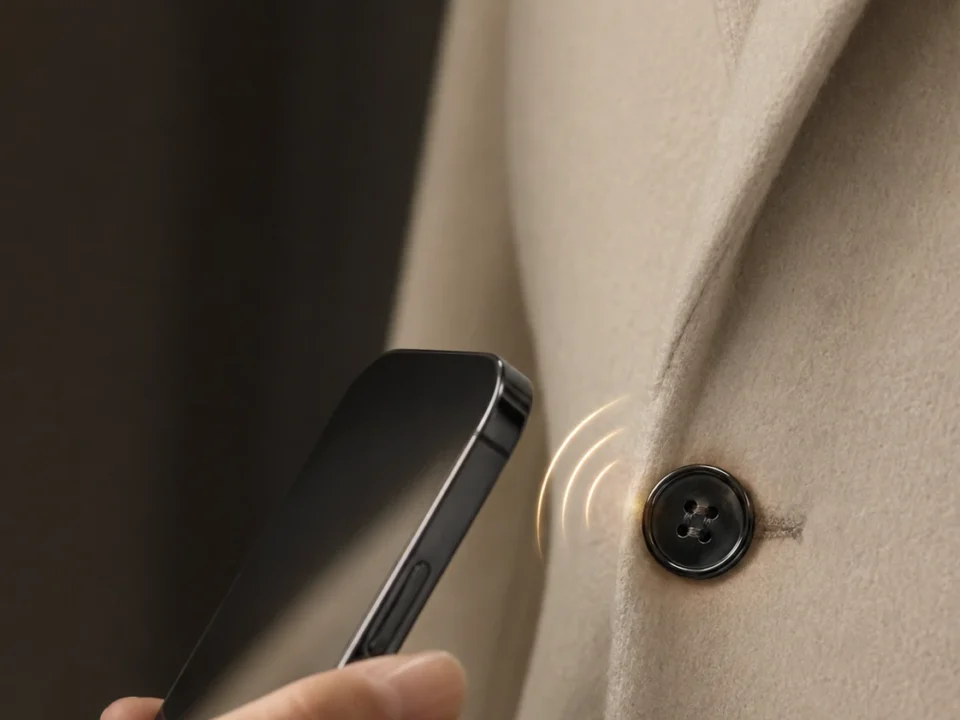
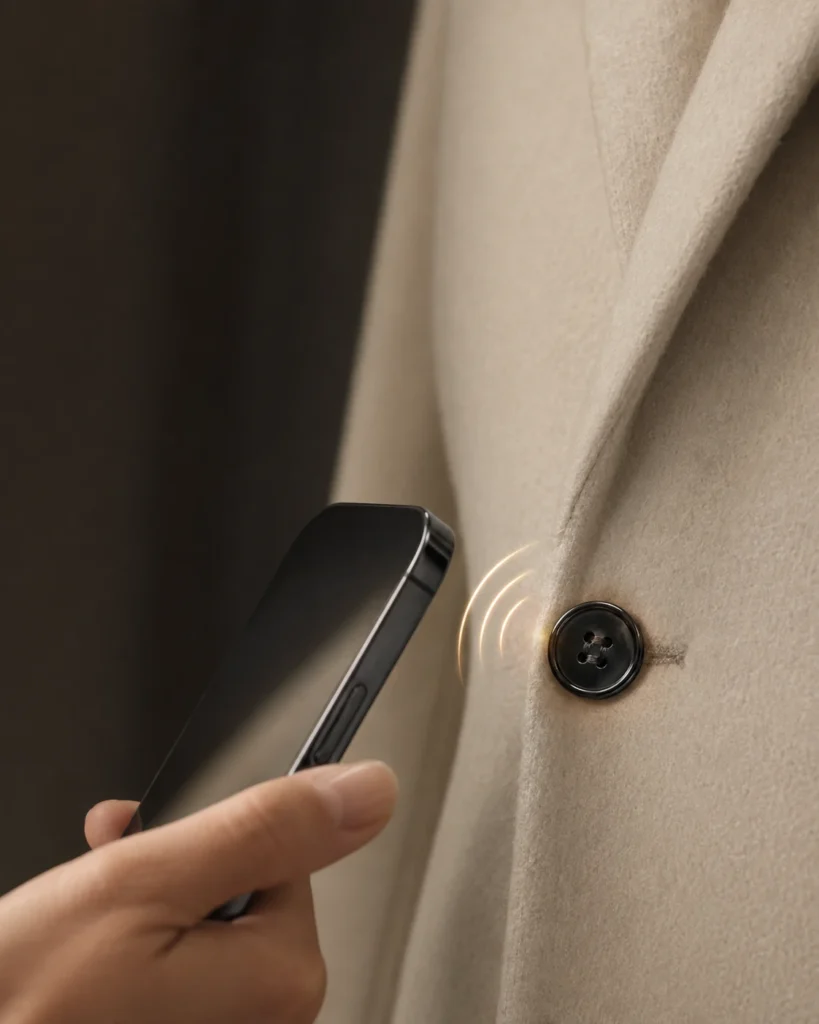
A successful display reading and a saved data record are separate checks. The photograph illustrates the handheld form; it does not identify the equipment used for the catalog distances above.
Handheld identification
Reader + built-in antennaTag brought into range
The operator can reposition the scanner and check the displayed identity.
Fixed passage detection
Reader + installed antennaTag passes through a monitored area
The installation must capture and save relevant passages throughout the observation period.
Oregon RFID’s proximity-versus-long-range explanation provides an external example of this equipment distinction.
Orientation: map weak reading positions
The tag’s coil couples with the local magnetic field, so alignment changes the energy received and the response. During a handheld check, move the scanner through the working positions the operator can realistically use. For fixed detection, pass the test tag through the likely paths at several documented orientations.
Sketch the tag’s axis relative to the antenna plane. Labels such as “parallel” or “perpendicular” are ambiguous without that reference. Record weak positions as well as the best one, then use that map to decide whether the reader can serve the task.
1. Change the tag axis
Keep the test position fixed. Rotate the tag through documented axes and record which orientations read.
2. Change the test path
Keep orientation and speed documented. Test different paths, including the positions most likely to be missed.
Size and protocol: shortlist compatible candidates
Capsule dimensions constrain the internal coil design; they also affect which configurations the fish project can consider. Start with complete tag models and the project’s physical requirements. The PIT tag size guide covers that selection.
FDX-B communicates while the energizing field is present; HDX separates energizing and response phases. Establish format support before comparing distances. A shared nominal frequency does not turn an unsupported format into a short-range result, and the protocol name alone is not a performance ranking.
Read a published distance with its stated test conditions
Oregon RFID’s nominal HDX range statement gives 45 cm for 12 mm tags, 60 cm for 23 mm tags and 90 cm for 32 mm tags. Its scope is explicit: that supplier’s long-range HDX readers, a noise-free environment and measurement along the Z axis at optimum orientation. These are external system references, separate from the DO RFID catalog entries above.
A useful test record follows the same discipline: tag model, reader model, antenna, orientation, measurement method and surroundings stay beside the result. In a quotation comparison, a supplier should identify which of those details its distance actually covers.
Installation: compare the final arrangement with the baseline
Oregon RFID’s range-factor guidance identifies antenna design, orientation, nearby metal and electrical noise. Turn those factors into specific checks:
| Installation factor | Practical comparison |
|---|---|
| Antenna geometry and tuning | Compare the documented baseline with the final loop, mounting and specified tuning arrangement. |
| Nearby metal | Include the intended frame, container and mounting hardware rather than testing only an empty bench. |
| Electrical noise | Compare conditions with relevant pumps and nearby electronics operating; preserve the equipment state in the log. |
| Water and final surroundings | Repeat the intended tag path in the actual container or channel arrangement. |
| Power and continued operation | Use the specified supply and record interruptions separately from unsuccessful reads. |
How to evaluate the reading task before committing
- Establish compatibility first. Use known tag configurations and confirm the intended reader supports their format. A protocol mismatch should not be diagnosed as merely “poor range.”
- Describe the task. State where the tag needs to be read and whether the tag, antenna or both will move.
- Map relevant positions. Record which parts of the intended path give readings, including less favorable positions and orientations.
- Repeat representative passages. For a passage task, compare recorded detections with known test passes at relevant speeds and orientations. A single successful static reading is insufficient.
- Include the installed surroundings. Repeat the comparison with the intended container, structure, powered equipment and operating conditions.
- Check the saved output. Confirm the right ID and event are retained or transferred, not simply that the reader gives an indication.
Initial compatibility and field checks can be performed with representative tags without using live animals. Any animal-based evaluation belongs within the project’s qualified procedures.
Interpret misses before changing hardware
| Observed symptom | First comparison | Useful next action |
|---|---|---|
| Neither the candidate nor a known reference reads | Power, reader state, settings and antenna connection | Restore the known reference result before comparing tag sizes. |
| The reference reads; one candidate does not | Protocol, model and orientation at the same position | Separate unsupported format from weak coupling. |
| A tag reads when stationary but is missed in passage | Path, speed, weak positions and repeated passes | Map useful coverage and repeat the intended movement. |
| The correct ID appears but no event is saved | Storage, duplicate settings and data transfer | Trace the record path; greater RF power will not repair a missing file entry. |
Worked example: 100 known test passages
- Known test passages
- 100
- Saved detections
- 92
- Passages without a saved detection
- 8
This hypothetical result is 92% recorded passage detection under the test conditions. It is not a measurement of animal survival or a universal acceptance threshold.
If most misses occur at one edge, improving that part of the coverage may matter more than extending the best static reading distance. Preserve the passage count, orientation, speed and system state with the result.
For a research deployment, distinguish a missed passage from an animal not entering the detection area at all. Both can produce no record, but they have different causes and implications. The reader has not answered that distinction merely by being switched on.
Provide these details for a configuration-specific quotation
For PIT tag supply or an animal RFID reader enquiry, send:
- Tag requirement: existing model or full diameter × length, and a sample specification if available.
- Compatibility: current reader model and the required FDX-B or HDX format; include the display or data-output task.
- Reading method: handheld identification, fixed passage detection or portable area scanning.
- Order details: tag quantity, preferred supply format and delivery country.
- Installation layout: for fixed antennas, provide channel or mounting dimensions and a sketch showing the intended tag path.
These details let the tag, reader and any additional antenna or logging requirements be discussed as defined items. The reader selection guide develops the equipment comparison further.
Frequently asked questions
How far can a PIT tag be read?
The useful distance depends on the tag, reader, antenna and conditions. Use a figure attached to a defined combination and test method rather than one generic maximum.
Does a wider antenna mean a greater reading radius?
No. Loop dimensions describe the physical antenna. The useful field and detection coverage must be evaluated for the tag path.
Does increasing reader power always improve performance?
No. Follow the equipment’s specified operating arrangement. Compatibility, antenna behavior, orientation and interference can remain limiting factors.
Does an unread tag mean the animal is absent?
No. The animal may not have entered a working detection area, or the tag may not have been detected. Study interpretation needs more context than a missing ID record.

Do RFID is a leading China-based manufacturer with over 15 years of experience. We specialize in customized RFID readers, tags, and cards, delivering high-quality, tailored solutions that meet your unique business needs and drive seamless, efficient identification.