October 21, 2026
NXP MIFARE Plus SE 1KB is a secure contactless smart card IC designed for organizations that want to move from legacy MIFARE Classic 1K systems toward stronger AES-based security without replacing the entire card infrastructure at once.
With 1 KB EEPROM, a memory structure compatible with MIFARE Classic 1K, AES-128 security capabilities, configurable access conditions, and support for both legacy and AES-based authentication, MIFARE Plus SE provides a practical migration path for access control, employee identification, campus cards, public transportation, parking, and other contactless applications.
As a professional RFID card manufacturer and supplier, we can provide MIFARE Plus SE 1KB cards in blank or customized formats, including PVC cards, printed cards, and cards prepared according to your project requirements.
What Is MIFARE Plus SE 1KB?
MIFARE Plus SE 1KB is an NXP MIFARE Plus family contactless smart card IC with 1 KB EEPROM. It was designed as an entry-level MIFARE Plus product for applications that need a migration path from MIFARE Classic 1K toward stronger security.
One of its key characteristics is its compatibility with the MIFARE Classic 1K memory concept. This allows existing applications to continue using familiar block and sector structures while organizations prepare their infrastructure for AES-based security.
Unlike a conventional MIFARE Classic 1K card, MIFARE Plus SE supports AES-128 functionality and provides a security-level concept that can be used during migration.
The card supports MIFARE Classic value-block operations and can store both legacy Crypto1 keys and AES keys. NXP also specifies support for an originality check, optional random IDs, configurable access conditions, and anti-tearing protection for AES key writing.
MIFARE Plus SE
The MIFARE Plus® SE contactless IC is the entry level version derived from the Common Criteria Certified MIFARE Plus product family. Being delivered at a comparable price range to the traditional MIFARE Classic with 1K memory, it provides all NXP customers with a seamless upgrade path to benchmark security within existing budgets.
It is available in:
- 1kB EEPROM only,
- including the value block commands for MIFARE Classic on top of the MIFARE Plus S feature set and
- an optional AES authenticate command in the “backward compatible mode” secures your investment against counterfeit products

Product Information
| Key card Types | LOCO or HICO magnetic stripe hotel key card |
| RFID hotel key card | |
| Encoded RFID hotel keycard for most of RFID hotel locking system | |
| Material | 100% new PVC,ABS, PET,PETG etc |
| Printing | Heidelberg offset printing / Pantone Screen printing: 100% match customer required color or sample |
Chip Options
| Chip Options | |
| ISO14443A | MIFARE Classic® 1K, MIFARE Classic ® 4K |
| MIFARE® Mini | |
| MIFARE Ultralight ®, MIFARE Ultralight ® EV1, MIFARE Ultralight® C | |
| Ntag213 / Ntag215 / Ntag216 | |
| MIFARE ® DESFire ® EV1 (2K/4K/8K) | |
| MIFARE ® DESFire® EV2 (2K/4K/8K) | |
| MIFARE Plus® (2K/4K) | |
| Topaz 512 | |
| ISO15693 | ICODE SLI-X, ICODE SLI-S |
| 125KHZ | TK4100, EM4200, T5577 |
| 860~960Mhz | Alien H3, Impinj M4/M5 |
Remark:
MIFARE and MIFARE Classic are trademarks of NXP B.V.
MIFARE DESFire are registered trademarks of NXP B.V. and are used under license.
MIFARE and MIFARE Plus are registered trademarks of NXP B.V. and are used under license.
MIFARE and MIFARE Ultralight are registered trademarks of NXP B.V. and are used under license.

Key Features of MIFARE Plus SE 1KB
MIFARE Plus SE 1KB combines legacy compatibility with a path toward AES security. Its main technical features include:
| Feature | MIFARE Plus SE 1KB |
|---|---|
| Manufacturer | NXP Semiconductors |
| Memory | 1 KB EEPROM |
| Contactless technology | 13.56 MHz |
| Interface | ISO/IEC 14443 Type A |
| Security | AES-128 and legacy Crypto1 functionality |
| Security levels | SL0, SL1 and SL3 |
| UID options | 4-byte NUID or 7-byte UID, depending on IC version |
| Data rate | Up to 848 kbit/s |
| Memory structure | Compatible with MIFARE Classic 1K |
| Value blocks | Supported |
| Access conditions | Freely configurable |
| AES keys | 2 × 128-bit AES keys per sector |
| Crypto1 keys | 2 × 48-bit keys per sector |
| Originality check | Supported |
| Random ID | Optional support |
| Anti-tearing | Supported for AES key writing |
| Typical write endurance | 200,000 single write operations |
| Data retention | 10 years |
Specifications can vary according to the exact NXP IC variant and card configuration. For a production order, the chip ordering code and UID configuration should be confirmed before manufacturing.


MIFARE Plus SE 1KB vs. MIFARE Classic 1K
One of the main reasons to choose MIFARE Plus SE is its migration capability. MIFARE Classic 1K remains widely used in legacy RFID systems, but organizations may need a stronger security architecture for new deployments or future upgrades.
MIFARE Plus SE was designed to retain compatibility with the MIFARE Classic 1K functional concept while adding AES-based security capabilities.
| Feature | MIFARE Classic 1K | MIFARE Plus SE 1KB |
|---|---|---|
| Memory | 1 KB | 1 KB |
| Memory organization | Sectors and blocks | Compatible block/sector structure |
| MIFARE Classic value blocks | Yes | Yes |
| Legacy Crypto1 | Yes | Supported |
| AES-128 | No | Yes |
| Security migration | Limited | Designed for migration |
| AES authentication | No | Available |
| Originality check | Depends on product/version | Supported |
| Random ID support | Product dependent | Optional |
| Typical application | Existing legacy systems | Legacy migration and security upgrade |
This compatibility can be useful when an organization wants to introduce new cards while minimizing changes to an existing MIFARE Classic-based environment.
Security Levels: SL0, SL1 and SL3
MIFARE Plus SE uses security levels to support a gradual transition from legacy authentication to AES-based operation.
Security Level 0 is the initial delivery and personalization configuration. During this stage, the card can be personalized with application data and security keys.
Security Level 1 provides backward functional compatibility with MIFARE Classic 1K. An optional AES authentication mechanism can also be used in this level to verify card authenticity without removing the legacy operating concept.
Security Level 3 provides AES-based authentication and secured data communication. According to NXP’s documentation, SL3 uses AES for authentication, data manipulation protection, and message authentication.
The migration direction is designed to move from a lower security level to a higher security level. A typical project can therefore introduce cards into an existing system first and upgrade the infrastructure and cards as the security architecture evolves.
| Security Level | Main Purpose | Typical Role |
|---|---|---|
| SL0 | Card personalization | Initial configuration |
| SL1 | MIFARE Classic compatibility | Existing infrastructure |
| SL3 | AES-based security | Upgraded secure infrastructure |
The exact security implementation depends on the reader, backend system, card personalization process, and application software. MIFARE Plus SE should therefore be evaluated as part of the complete RFID system rather than as an isolated card component.
AES-128 Security for Future-Ready RFID Applications
A major difference between MIFARE Plus SE and traditional MIFARE Classic 1K technology is the availability of AES-128 security.
In an SL3 implementation, AES can be used for authentication and secure communication between the card and the reader. This provides a stronger security foundation than relying only on the legacy Crypto1 mechanism.
MIFARE Plus SE can also store AES keys in addition to Crypto1 keys. This is particularly useful for organizations that need to operate a migration program instead of replacing an entire RFID system in a single project.
The security architecture should always be implemented using properly managed keys, secure reader firmware, controlled personalization procedures, and appropriate backend security. The card itself is only one part of the overall security design.
UID Options for MIFARE Plus SE 1KB
MIFARE Plus SE is available with different UID configurations depending on the specific NXP IC ordering code.
NXP documents support for ISO/IEC 14443-3 UID configurations including 4-byte NUID and 7-byte UID variants. Some versions may also support optional random ID functionality.
When ordering RFID cards, UID configuration should be specified clearly because the UID can affect reader compatibility, database integration, card identification, and system migration.
| UID Type | Typical Consideration |
|---|---|
| 4-byte NUID | Suitable for systems designed around legacy card identification |
| 7-byte UID | Suitable for systems designed for longer ISO/IEC 14443 identifiers |
| Random ID | Can provide an additional privacy/security feature where supported |
If your existing system requires a particular UID format, confirm the required NXP ordering code before placing a production order.
MIFARE Plus SE 1KB Card Memory Structure
The 1 KB EEPROM provides a familiar memory structure for applications migrating from MIFARE Classic 1K.
The memory is organized into sectors and blocks rather than using a general-purpose file system. This makes the card suitable for applications that already use MIFARE Classic-style data structures.
MIFARE Plus SE also supports MIFARE Classic value-block operations. These operations are commonly used in applications where a stored value needs to be increased, decreased, transferred, or restored under controlled access conditions.
The actual amount of memory available for application data depends on the selected access conditions and key configuration. System developers should therefore design the memory map based on the required sectors, keys, access rights, and application data.
Applications of MIFARE Plus SE 1KB Cards
MIFARE Plus SE 1KB can be used in many contactless identification and access applications.
Access Control
MIFARE Plus SE can be used for employee access cards, building entry, visitor identification, and other RFID access control systems. The security-level architecture makes it suitable for projects that need a path from legacy authentication toward AES-based security.
Employee ID Cards
Organizations can use contactless cards for employee identification, access permissions, attendance functions, and internal services. Card personalization can include printed employee information and electronically encoded credentials.
Campus and School Cards
Universities and schools can use RFID cards for access control, identification, campus services, and other applications requiring contactless credentials.
Public Transportation
MIFARE Plus technology is designed for mainstream contactless applications, including transportation environments. MIFARE Plus SE can be considered where compatibility with an existing MIFARE Classic-oriented infrastructure is important.
Parking Systems
RFID cards can be used for parking access, customer identification, membership, and stored-value applications. The value-block functionality can be useful in systems where card-based values are required.
Membership and Loyalty Cards
MIFARE Plus SE 1KB cards can also be customized for clubs, gyms, hotels, employee programs, and other membership applications where electronic identification is required.

Custom MIFARE Plus SE 1KB Cards
MIFARE Plus SE 1KB cards can be manufactured in different physical formats depending on the application.
Common options include:
| Customization | Available Options |
|---|---|
| Card material | PVC, PET, PETG, ABS and other project-specific materials |
| Card size | Standard CR80 or customized formats |
| Printing | Offset printing, screen printing and digital printing |
| Surface | Glossy, matte or customized finish |
| UID | According to selected IC variant and project requirements |
| Encoding | UID/data personalization according to project specifications |
| Packaging | Standard or customized packaging |
| Artwork | Customer-provided artwork or design support |
| Magnetic stripe | Available for selected applications |
| Signature panel | Available where required |
For high-volume orders, artwork, card specifications, chip ordering code, UID requirements, encoding requirements, packaging, and quality standards should be confirmed before mass production.
Blank MIFARE Plus SE 1KB Cards
For system integrators and RFID developers, blank cards can be supplied without printed personalization. This format is useful when card encoding or printing will be completed by the customer.
Blank cards can be used for:
- RFID system testing
- Reader development
- Software integration
- Pilot projects
- Internal card personalization
- Access control deployment
- High-volume credential issuance
If the cards will be encoded after delivery, the customer’s encoder, reader, software, and security key management process should be tested with samples before mass production.
Why Order MIFARE Plus SE Cards from a Professional RFID Manufacturer?
A reliable RFID card supply chain is important because the chip specification is only one part of the finished card.
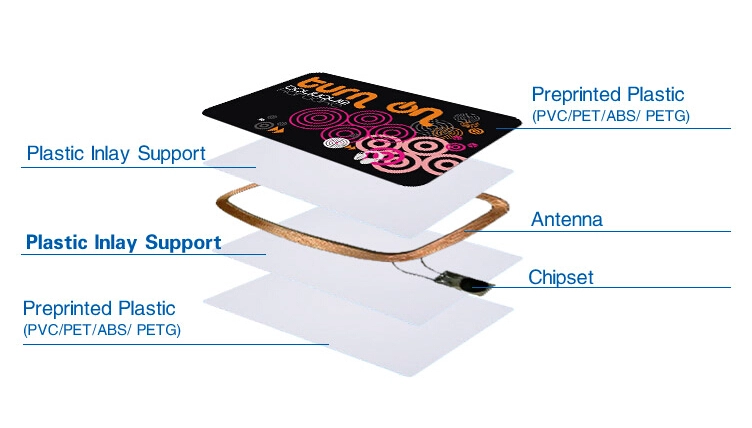
A professional card manufacturer can coordinate the IC, antenna, card body, printing, encoding, quality inspection, and packaging as one production process.
For MIFARE Plus SE 1KB projects, we recommend confirming the following before production:
- Exact NXP chip ordering code
- Memory capacity and card configuration
- UID format
- Required security level
- Encoding and personalization requirements
- Card material and thickness
- Printing artwork
- Sample approval
- Packaging requirements
- Quantity and delivery schedule
For projects that require genuine NXP ICs, buyers should also request appropriate supply-chain documentation or chip traceability from the card supplier.

Packing & Delivery
Normal package :
200pcs rfid cards into white box .
5 boxes /10boxes /15boxes into one carton.
Customized Package based on your request.
For example below package picture:

MIFARE Plus SE 1KB Quality Control
RFID card quality depends on both the IC and the physical card construction.
During production, quality control can cover antenna performance, card appearance, dimensions, printing quality, chip communication, and personalization accuracy.
For customized cards, sample approval is recommended before mass production. This allows the customer to verify card appearance and, more importantly, confirm compatibility with the actual RFID readers and software.
For security-sensitive projects, functional testing should be performed using the customer’s intended reader and application environment.
MIFARE Plus SE 1KB vs. Other MIFARE Cards
Different MIFARE products are designed for different application requirements. MIFARE Plus SE is particularly relevant when migration from MIFARE Classic 1K is an important consideration.
| Product | Memory | Main Security Technology | Typical Positioning |
|---|---|---|---|
| MIFARE Classic 1K | 1 KB | Crypto1 | Legacy applications |
| MIFARE Plus SE 1KB | 1 KB | Crypto1 + AES-128 | Migration from Classic 1K |
| MIFARE Plus EV2 | 2 KB / 4 KB | AES-128 + advanced security features | Higher-security applications |
| MIFARE DESFire EV2/EV3 | Multiple configurations | AES-based security | Advanced multi-application systems |
| MIFARE Ultralight | Small memory configurations | Application-dependent | Tickets and simple credentials |
The appropriate card depends on the existing infrastructure, required security architecture, memory requirements, reader compatibility, and application design.
MIFARE Plus SE should not automatically be treated as a replacement for every MIFARE product. For new high-security multi-application systems, other MIFARE families may provide features that are not required by a simple Classic migration project.
How to Choose the Right MIFARE Plus SE Card
Before ordering, consider four important areas.
First, check the existing infrastructure. If your readers and software were designed around MIFARE Classic 1K, compatibility should be verified before selecting the card.
Second, confirm the UID configuration. The required UID format should match your application architecture.
Third, define the security level. Determine whether the project will operate in SL1, use AES authentication during migration, or move to SL3.
Fourth, test samples. Even when two cards use the same IC family, the complete card should be tested with the customer’s reader and application.
A small sample order can help identify compatibility issues before large-scale production.
Frequently Asked Questions
Is MIFARE Plus SE 1KB compatible with MIFARE Classic 1K?
MIFARE Plus SE is designed with a memory structure and functionality compatible with MIFARE Classic 1K, particularly in Security Level 1. It supports MIFARE Classic value-block operations. However, complete system compatibility should always be tested with the specific reader and application.
Does MIFARE Plus SE 1KB support AES?
Yes. NXP specifies AES-128 capabilities for MIFARE Plus SE. AES functionality is particularly relevant to Security Level 3, while optional AES authentication can also be used in Security Level 1.
What is the memory capacity?
The MIFARE Plus SE product has 1 KB EEPROM.
Does MIFARE Plus SE support 7-byte UID?
NXP lists MIFARE Plus SE variants supporting ISO/IEC 14443-3 UIDs, including 4-byte NUID and 7-byte UID configurations. The exact UID should be confirmed from the selected IC ordering code.
Can MIFARE Plus SE cards be customized?
Yes. Depending on the production requirements, cards can be customized with different materials, printing designs, dimensions, surface finishes, encoding, and packaging.
Can you provide blank cards?
Yes. Blank cards are suitable for customers who want to complete card printing or encoding themselves. The required IC version and UID configuration should be specified before ordering.
What is the typical write endurance?
NXP specifies 200,000 typical single write operations for MIFARE Plus SE. Actual system performance depends on the application and operating conditions.
What applications use MIFARE Plus SE?
Typical applications include access management, employee identification, campus cards, public transportation, parking, and other contactless smart card applications.
Request MIFARE Plus SE 1KB Card Samples
If you are developing an RFID project based on MIFARE Classic 1K and need a migration path toward AES-based security, MIFARE Plus SE 1KB can be considered as one of the available card technologies.
To receive a quotation or sample recommendation, please provide the required card quantity, card material, UID type, printing requirements, encoding requirements, and target application.
For projects that require genuine NXP MIFARE Plus SE ICs, we recommend confirming the exact NXP ordering code and chip configuration before production. This helps ensure that the delivered cards match the reader, software, security architecture, and deployment requirements.