
CER0404 · Miniature on-metal identification
A 4 mm ceramic UHF tag for the space a larger label cannot use
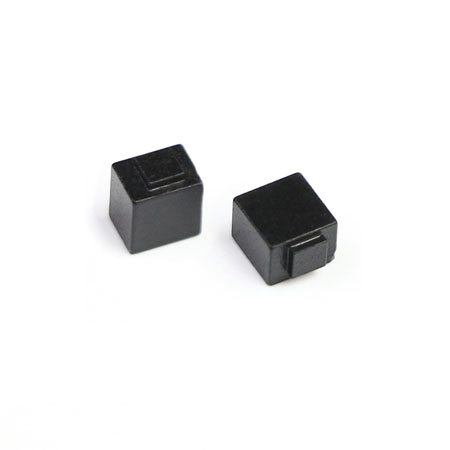
Our CER0404 is a 4mm ceramic UHF RFID tag for identifying small metal components, tools and equipment. Its 4 × 4 mm footprint keeps the identifier compact; the complete tag is 3 mm thick.
Use it when the part needs a readable identity but has little room for a conventional RFID label. The ceramic construction is designed for metal mounting and works with an EPC Gen2 UHF reader.
Where this model fits
Keep an identity on a small metal part
A machined component or small tool may have enough space for a 4 mm square identifier while offering little printable area. CER0404 gives your reader an item ID that software can associate with a part number, inspection record or maintenance history.
For example, attach a tag to a suitable area of a metal tool, associate its EPC with the tool record, then scan it during issue, return or inspection. The useful result is the connection between that physical item and its record—not a large amount of information printed on the part.
Start with these three checks
- Space: accommodate 4 × 4 × 3 mm plus the adhesive and any protective arrangement.
- Surface: choose a stable metal mounting area that does not interfere with the part’s working surfaces.
- Reader approach: leave a usable path between the UHF antenna and the tag in its normal position.
CER0404 product data
Specifications for the 4 × 4 × 3 mm format
| Model | CER0404 |
|---|---|
| Dimensions | 4 × 4 × 3 mm |
| Material / colour | Ceramic / black |
| Weight | 0.3 g |
| Mounting / surface | Adhesive / metal |
| Protocol | EPC Class 1 Gen 2 / ISO 18000-6C |
| Frequency options | US 902–928 MHz; EU 865–868 MHz |
| Chip | Alien Higgs-3 |
| Memory | EPC 96 bits · User 512 bits · TID 64 bits |
| Function | Read/write |
| Read range on metal | Fixed reader: up to 0.8 m Handheld reader: up to 0.4 m |
| Operating temperature | −40°C to +85°C |
| Storage temperature | −40°C to +150°C |
| Protection rating | IP68 |
| Write endurance | 100,000 cycles |
| Data retention | Up to 50 years |
Read distances are specified as up to values on metal for the stated reader type. Reader power, antenna, tag orientation and the actual metal part affect the result. Use a mounted sample to establish the working distance for your installation. The +150°C figure is a storage limit; the operating limit is +85°C.
Installation and reading
From a 4 mm tag to a working identification point
- Position and attach. The listed mounting method is adhesive. Prepare the metal surface for the selected adhesive and keep the ceramic body supported. A recess can protect the tag from contact, but its depth and surrounding metal must be evaluated with the reader.
- Use the right UHF equipment. Choose an EPC Gen2 / ISO 18000-6C handheld or fixed reader for the deployment region. A reader with an external antenna also needs a compatible antenna and cable. The US and EU band options should match the reader and installation location.
- Assign the item record. Read the tag, write the planned EPC if required, and read it back. Link the identifier to the matching record in your software. Keep each tag-to-item association consistent when the tagged parts are assembled or packed.
- Test the finished configuration. Check normal reader distance, approach angles and the actual part orientation after attachment. Repeat the test with nearby components and protective materials in place before moving to a batch.
CER0404 is a passive UHF tag; it does not need a battery. A phone’s ordinary NFC interface cannot read it directly. Identification takes place when the item enters a compatible UHF reader’s field.
Samples and model choice
Choose the small footprint with a workable read result
We supply CER0404 for projects where the mounting area is a key constraint. Bring the available space, metal part and intended reader into the same sample trial. This checks whether the 4 mm format fits both the drawing and the operator’s reading action.
If the part has room for a 5 × 5 × 3 mm tag, compare our CER0505 5mm ceramic UHF RFID tag. Its published on-metal range is different, but the larger footprint alone does not determine the outcome on every part. For other shapes and HF/NFC alternatives, return to our Micro RFID Tags selection.
CER0404 questions
Is this a 4 mm chip or a complete RFID tag?
4 × 4 × 3 mm describes the complete ceramic tag body, including its thickness. It is not a bare-chip dimension. Leave additional assembly space for attachment or protection.
Can I fit it inside a metal recess?
A recess is a possible installation design, rather than a guarantee for every pocket. Metal around or over the tag can change the read result. Evaluate the exact recess, tag position and reader orientation together; avoid covering the reader-facing area with metal.
Does IP68 mean it is suitable for every high-temperature process?
No. Ingress protection and temperature are separate specifications. This model lists IP68, −40°C to +85°C operation and −40°C to +150°C storage. Those figures do not define a sterilisation cycle, immersion duration or continuous operation at the storage maximum.
DO RFID TAG · CER0404
Put the 4 mm format into your sample assembly
Tell us the part material, available mounting space, reader region and intended reading action. We can discuss the CER0404 configuration and sample requirements for your project.