
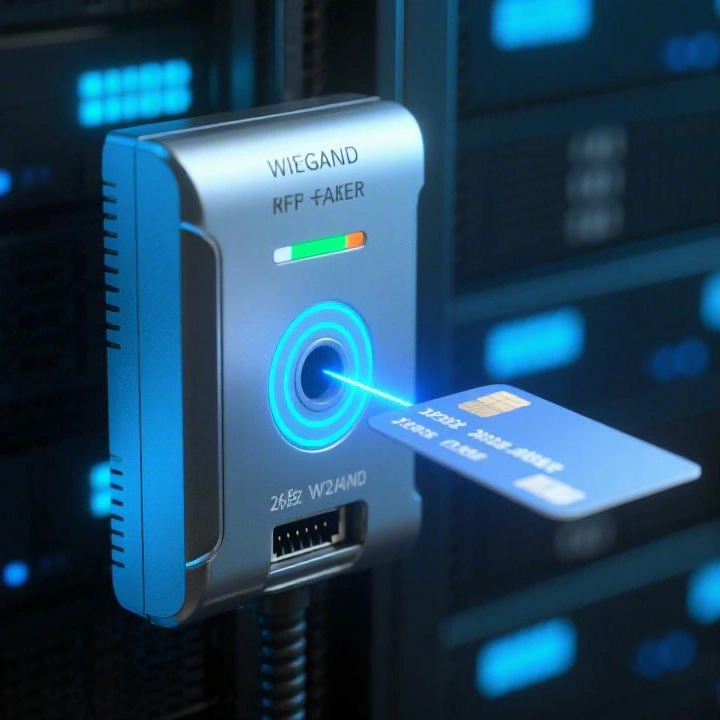
Reliable Access Control Integration | Stable Wiegand Output | Multi-Frequency RFID Support
In access control systems, reliability matters more than flashiness. Doors must open for authorized users. Logs must record accurately. Security must remain uncompromised. At the center of many professional access control infrastructures sits a quiet but powerful technology: the Wiegand RFID Reader.
If you are building or upgrading an access control system, understanding how a Wiegand RFID reader works — and why it remains widely used — will help you make a smarter deployment decision.
This comprehensive product introduction explains what a Wiegand RFID reader is, how it works, its technical features, integration advantages, and why it remains a core component of modern security systems.
What Is a Wiegand RFID Reader?
A Wiegand RFID reader is an RFID card reader that outputs card data using the Wiegand communication protocol, a long-established standard in access control systems.
Unlike USB readers used for desktop environments, a Wiegand reader is designed to connect directly to:
- Access control panels
- Door controllers
- Elevator control systems
- Turnstile systems
- Gate controllers
It reads an RFID card (LF, HF, or sometimes UHF depending on model) and sends the card number to a control panel via Wiegand output lines.
The panel then decides:
Access granted — or denied.
Simple. Stable. Proven.
Understanding the Wiegand Protocol
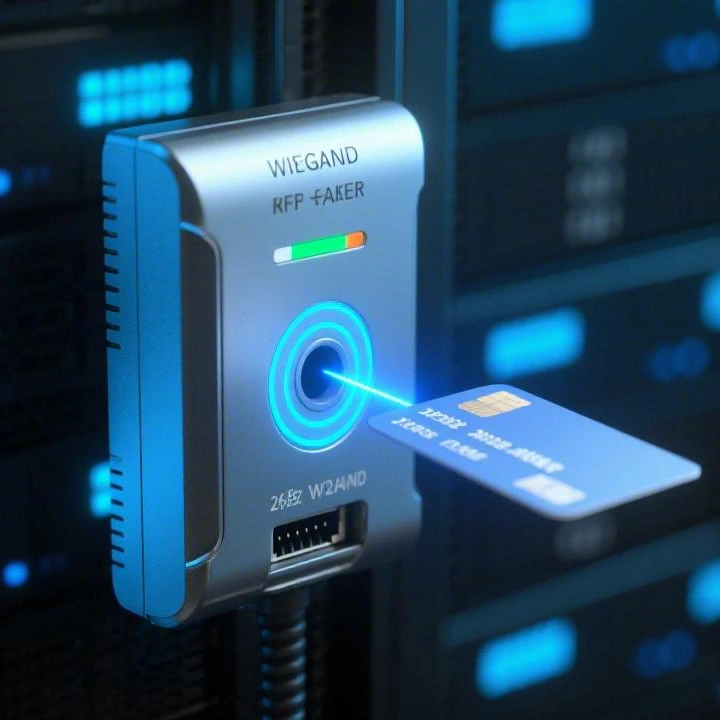
The Wiegand protocol is a wired communication method that uses two data lines:
- Data0
- Data1
When a card is read, the reader transmits binary pulses across these lines. The most common format is Wiegand 26-bit, though other formats like 34-bit, 37-bit, or customized bit lengths are also used.
Why is Wiegand still popular?
Because it is:
- Highly stable
- Easy to implement
- Compatible with most access control panels
- Cost-effective
- Proven in millions of installations worldwide
In security infrastructure, reliability beats novelty.
Core Functions of a Wiegand RFID Reader
A professional Wiegand RFID reader typically provides:
- RFID card reading capability
- Wiegand output (26/34-bit configurable)
- LED and buzzer indicators
- Waterproof or weather-resistant housing
- Anti-interference protection
- Low power consumption
Some models support:
- Multi-frequency card reading
- Keypad input
- Dual authentication (card + PIN)
Supported RFID Frequencies
Wiegand RFID readers are available in different frequency versions depending on system requirements.
125 kHz (Low Frequency)
Commonly supports:
- EM cards
- TK4100
- HID Prox (in compatible models)
Applications:
- Office access
- Time attendance
- Parking systems
LF is simple and reliable, though not highly encrypted.
13.56 MHz (High Frequency)
Supports:
- MIFARE 1K / 4K
- ISO14443A/B
- NFC (in certain models)
Applications:
- Campus cards
- Secure corporate access
- Public transportation
HF supports encryption and higher data capacity.
Dual-Frequency Options
Some advanced Wiegand RFID readers support both:
- 125 kHz + 13.56 MHz
This is ideal for systems migrating from legacy LF to more secure HF technology.
Technical Specifications (Typical Model)
While specifications vary, here is a general overview:
| Item | Parameter |
|---|---|
| Frequency | 125 kHz / 13.56 MHz / Dual |
| Output Format | Wiegand 26/34-bit (customizable) |
| Reading Distance | 3–10 cm (LF/HF dependent) |
| Power Supply | DC 9–12V |
| Operating Current | <100mA |
| Operating Temperature | -20°C to +70°C |
| Protection Level | IP65/IP67 optional |
| Communication | Wiegand Data0/Data1 |
| Housing Material | ABS or PC plastic |
| Installation | Wall-mounted |
Why Choose a Wiegand RFID Reader?
1. Seamless Access Control Integration
Most professional access control panels support Wiegand input by default.
Using a Wiegand reader means:
- No complex programming
- No special converters
- Direct compatibility
It plugs into existing infrastructure smoothly.
2. Stable Communication
Wiegand protocol uses simple pulse transmission.
It is less vulnerable to:
- Signal interference
- Network instability
- IP configuration errors
This is particularly important in:
- Industrial environments
- Outdoor gates
- Parking entrances
3. Low Deployment Cost
Compared to network-based readers (TCP/IP), Wiegand readers:
- Require no IP configuration
- Use simple wiring
- Reduce hardware complexity
Lower cost per door makes it ideal for large-scale projects.
4. Proven Security Infrastructure
Wiegand technology has been deployed globally for decades.
Millions of doors use it daily.
That kind of adoption does not happen by accident.
Installation Overview
A typical installation includes:
- Connect power supply (9–12V DC)
- Connect Data0 and Data1 lines
- Connect ground
- Mount the reader securely
- Configure bit format if required
The control panel receives card numbers and handles authorization.
Reader handles input. Panel handles logic.
Clear separation of responsibility.
Application Scenarios
Office Access Control
Wiegand RFID readers are widely used in:
- Corporate buildings
- Government offices
- Research facilities
Supports employee ID authentication.
Residential Communities
Apartment complexes and gated communities use Wiegand readers for:
- Main entrance control
- Parking gate access
- Elevator floor control
Weatherproof models ensure outdoor durability.
Industrial Facilities
Factories require reliable access control in:
- Production areas
- Warehouse entrances
- Restricted zones
Wiegand readers offer stable operation under harsh conditions.
Parking Systems
Vehicle entry systems integrate:
- RFID windshield tags
- Wiegand readers connected to gate controllers
Fast response improves traffic flow.
Turnstile and Gate Systems
Integrated with:
- Tripod turnstiles
- Swing barriers
- Sliding gates
Wiegand readers trigger access mechanisms instantly.
LED and Buzzer Feedback
Professional Wiegand RFID readers include:
- Red LED (standby)
- Green LED (access granted)
- Buzzer (confirmation sound)
Clear visual and audio signals improve user experience.
Weatherproof and Industrial Design
Many models support:
- IP65 waterproof rating
- Anti-UV housing
- Anti-vandal metal casing
Suitable for:
- Outdoor gates
- Parking lots
- Factory entrances
Durability reduces maintenance cost.
Security Considerations
Wiegand protocol itself does not encrypt data. However, system-level security is maintained by:
- Secure card encryption (e.g., MIFARE DESFire)
- Encrypted controller communication
- Controlled physical wiring
For higher security, some systems upgrade to:
- OSDP protocol (encrypted alternative)
However, Wiegand remains widely used due to compatibility and simplicity.
Customization Options
Available customization includes:
- Custom bit format (26/34/37-bit)
- OEM branding
- Housing color
- Embedded keypad integration
- Multi-frequency support
OEM and ODM support available for system integrators.
Why Purchase Wiegand RFID Reader From Us?
Competitive & Stable Manufacturing
With advanced production facilities, we provide:
- Strict quality control
- Bulk production capacity
- Stable supply chain
- Competitive pricing
Large-scale purchasing reduces cost advantages passed directly to customers.
Professional Technical Support
Our team assists with:
- System integration consultation
- Card compatibility matching
- Bit format customization
- Installation guidance
RFID and access control require correct configuration. We support your project at every stage.
Fast Global Shipping
We support worldwide delivery.
Sample orders ship quickly to:
- North America
- Europe
- Asia-Pacific
Fast turnaround supports project timelines.
Comparison: Wiegand vs TCP/IP Readers
| Feature | Wiegand | TCP/IP |
|---|---|---|
| Installation | Simple wiring | Network setup required |
| Cost | Lower | Higher |
| Stability | High | Dependent on network |
| Encryption | Limited | Supported |
| Compatibility | Very high | Controller dependent |
For many applications, Wiegand remains the practical choice.
Energy Efficiency
Low operating current ensures:
- Minimal power consumption
- Stable operation in low-voltage systems
- Reliable performance with backup power supplies
Efficient design supports long-term operation.
Maintenance and Reliability
Wiegand readers have:
- Minimal firmware complexity
- Simple communication structure
- High hardware reliability
Fewer components often mean fewer failures.
Future Upgrade Flexibility
Even as some systems transition to advanced encrypted protocols, Wiegand readers remain compatible with hybrid systems.
They are especially suitable for:
- Cost-sensitive projects
- Large multi-door installations
- Legacy system upgrades
Conclusion
The Wiegand RFID Reader remains one of the most reliable and widely deployed access control solutions in the security industry.
It provides:
- Stable Wiegand output
- Multi-frequency RFID compatibility
- Easy integration with access panels
- Low deployment cost
- Durable construction
- Fast and accurate reading performance
Whether used in offices, residential communities, industrial sites, parking systems, or secure facilities, Wiegand RFID readers continue to deliver consistent performance.
Access control should be simple, reliable, and secure.
The Wiegand RFID Reader achieves exactly that.
If your project demands stability, compatibility, and cost-effective scalability, this solution is ready for integration.