


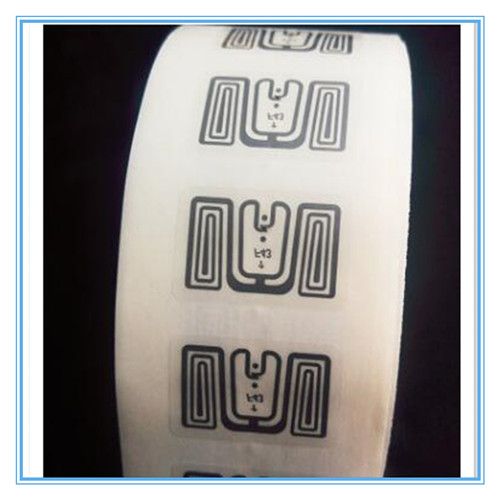


Long Distance RFID Tag
The long distance rfid tag is a paasive EPC tag in UHF frequency between 868-915 MHz. The maximum detection range of a tag corresponding to this frequency is about 3 to 10 meters.Features
- Long Read Range: average reading distance reach up to 10m
- Strong 3M adhesive
- Stable performance
- Waterproof surface material
Description
The long distance rfid tag is a paasive EPC tag in UHF frequency between 868-915 MHz. The maximum detection range of a tag corresponding to this frequency is about 3 to 10 meters.
Our long distance tag is cheaper than LF and HF tags for large volumes, adapted to applications requiring long reading distance and a large volume of RFID tags to be read very quickly and tags dedicated to constrained environments (metal, liquid, etc.)
Choosing a long range RFID tag normally depends on the applications. Do you need 0.1-0.5 meters or 1-10 meters ? The read distance will almost always be related to the reader/tag set up and the environmental factors that you are working with. For example, UHF tag orientation towards a reader can sometimes affect read distance, the smallest RFID tag usually with short read range,the big RFID tag and 3D antenna RFID tags with long read distance.
No matter what long range RFID tags and readers system you eventually choose to deploy, you need to consider when choosing the right UHF RFID tag and reader for your application,
Our UHF tags are passive, so they do not need batteries. they offer you reliable reads at the distance you need.Please note that when worn on the body or on the metal poject the read distance of UHF RFID passive tags drops substantially. so this must be tested with a reader to see what type of UHF RFID reads you can achieve.
The UHF RFID tag label means one products, you have to write some infroatmion into chip, so what data strorage will you need ? What distance do you need to write at ? Usually our UHF RFID tag label including Impinj, Alien,NXP Ucode with User memory:512bites EPC memory:96bites TID memory:64bitse
You can easily to choose a RFID tag for industrial applications in adance technology, compatitive price, high performance, great resistance (temperature, dust, etc.).
Primary Applications:
- Real Time Locating Systems
- High Value Item & Asset Tracking
- Theft Prevention Applications
- Pharmaceutical Delivery Management
- Truck Tracking & Yard Access Control
Choosing suitable RFID tags




A long distance RFID tag allows businesses to identify products, equipment, vehicles, and other assets without requiring direct contact or barcode scanning. Using radio frequency identification technology, compatible readers can detect tagged items from several meters away, making these tags valuable for warehouse automation, industrial asset tracking, logistics management, vehicle identification, and large-scale inventory control.
Unlike short-range HF or NFC tags, long-range RFID solutions generally use passive UHF technology or battery-powered active RFID systems. A passive UHF RFID tag can often operate without an internal battery and support reading distances of several meters. Active RFID tags use an internal power source to support longer-distance communication and additional monitoring functions.
However, choosing a long distance RFID tag is not simply a matter of selecting a product advertised with a 10-meter or 20-meter reading range. Chip sensitivity, antenna design, tag dimensions, reader output power, antenna installation, mounting surface, and surrounding environment all affect actual performance.
At D.O RFID Group, we manufacture and supply RFID tags, UHF readers, antennas, and customized RFID products for industrial and commercial applications. Our UHF RFID tag range includes customizable label and specialty tag constructions designed for different reading distances and installation conditions.
This guide explains how long distance RFID tags work, compares passive and active technologies, examines the factors affecting reading distance, and provides practical recommendations for B2B buyers planning RFID deployments.
What Is a Long Distance RFID Tag?
A long distance RFID tag is an identification device designed to communicate with a compatible RFID reader over a relatively extended distance.
It usually contains two primary electronic components:
- RFID chip: Stores a unique identifier and manages communication with the reader.
- Antenna: Receives radio-frequency energy and sends the tag’s response back to the reader.
These components are mounted on a substrate or enclosed in a protective housing, depending on the product design.
When the tag enters the reader’s effective communication zone, the reader can retrieve its identification data without requiring direct visual alignment.
Long distance RFID tags are commonly used for:
- Warehouse inventory management
- Pallet and carton identification
- Industrial equipment tracking
- Manufacturing process control
- Vehicle and fleet identification
- Logistics and transportation management
- Automated access control
- Large-scale asset management
For most battery-free, item-level long-distance identification applications, passive UHF RFID is the preferred starting point.
DO RFID provides different UHF RFID tags for logistics, industrial identification, asset management, and related applications.
How Far Can an RFID Tag Be Read?
RFID reading distance varies significantly by technology and installation.
A typical passive UHF RFID tag may be read from approximately 3–6 meters in many practical applications, while optimized configurations can achieve 10 meters or more. Active RFID systems can operate over substantially longer distances, depending on the system design.
The following table provides general reference ranges, not guaranteed product specifications.
| RFID Technology | Typical Reading Distance | Power Source | Common Applications |
|---|---|---|---|
| LF RFID (125 kHz) | Usually a few centimeters | Passive | Animal identification and proximity access |
| HF RFID (13.56 MHz) | Typically centimeters; selected systems can extend farther | Passive | Cards, ticketing, and NFC-related applications |
| Passive UHF RFID | Commonly 3–6 m; optimized systems can reach around 10 m or more | Reader-powered | Logistics, warehouse, and inventory |
| Battery-Assisted Passive RFID | Longer than comparable passive configurations, depending on design | Internal battery assists tag operation | Specialized industrial and asset applications |
| Active RFID | Tens to hundreds of meters in suitable systems | Internal battery | Large-area asset and vehicle tracking |
RFID Journal notes that passive UHF transponders typically operate at 10–20 feet (approximately 3–6 meters), although longer distances can be achieved with optimized tag antennas and reader configurations. Active RFID can support much longer communication distances.
Impinj describes a typical RAIN RFID reading distance of up to 10 meters, with actual performance depending on the chip, antenna, tagged object, reader, and surrounding environment.
Important: A tag’s advertised maximum read range is not the same as its guaranteed working distance. Buyers should evaluate performance under the actual operating conditions.
Passive UHF RFID vs. Active RFID: Which Is Better for Long-Distance Identification?
The first major purchasing decision is whether to use passive or battery-powered RFID technology.
Passive UHF RFID Tags
Passive UHF tags receive energy from the radio-frequency field generated by the reader. They do not require an internal battery for normal identification.
Their main advantages include:
- No battery replacement
- Compact and lightweight construction
- Lower maintenance requirements
- Suitable for high-volume tagging
- Support for multiple-tag identification
- Compatibility with many industrial RFID readers
Passive UHF tags are widely used in supply chains, distribution centers, manufacturing plants, and retail inventory systems.
Best for: Businesses that need to identify large numbers of products, pallets, equipment, or assets at designated reading points.
Active RFID Tags
Active RFID tags contain an internal battery and use their own power source to transmit signals.
Depending on the system, active tags can communicate over much longer distances than conventional passive UHF tags. They may also support additional functions such as sensor data collection, periodic beacon transmission, or location monitoring.
Their main disadvantages include:
- Higher unit cost
- Larger physical dimensions in many designs
- Battery replacement or charging
- More complex lifecycle management
- Additional system infrastructure
Best for: High-value assets, large outdoor sites, vehicle tracking, and applications requiring longer-distance or periodic location reporting.
Comparison for B2B Procurement
| Factor | Passive UHF RFID | Active RFID |
|---|---|---|
| Internal battery | No | Yes |
| Read distance | Several meters; optimized systems can reach 10 m or more | Tens to hundreds of meters, depending on technology |
| Unit cost | Generally lower | Generally higher |
| Maintenance | Low | Battery management required |
| Tag size | Available in very small label formats | Usually larger |
| Multiple-tag reading | Supported by anti-collision protocols | Depends on system architecture |
| Typical lifespan | No battery replacement required | Limited partly by battery life |
| Best use | Inventory and item-level identification | Large-area monitoring and high-value asset tracking |
For most warehouse and manufacturing projects, passive UHF RFID offers a practical balance between reading distance, tag cost, and maintenance.
Active RFID should be considered when the requirement extends beyond checkpoint identification to longer-distance monitoring or more continuous tracking.
How Does a Long Range UHF RFID Tag Work?
Passive UHF RFID communication involves two stages: transmitting energy from the reader to the tag and receiving the tag’s response.
1. The Reader Transmits an RF Signal
A fixed or handheld UHF RFID reader generates an electromagnetic field through its antenna.
The frequency depends on the regional operating configuration, commonly within the 860–960 MHz UHF range.
2. The Tag Antenna Receives Energy
When the RFID tag enters the reader’s effective field, its antenna captures part of the transmitted RF energy.
The energy activates the chip in a passive tag.
3. The Chip Processes the Identification Data
The chip retrieves its stored EPC or other supported information.
4. The Tag Sends a Response
The passive tag communicates using backscatter modulation. It changes the characteristics of the reflected RF signal so the reader can identify and decode its data.
5. The Reader Transfers the Data to Software
The reader sends the captured identification data to the connected application.
The software can then associate the tag ID with a product, pallet, warehouse location, vehicle, or industrial asset.
A complete RFID system therefore includes:
RFID tag + reader + antenna + software or middleware.
The tag itself does not independently provide location information. The system determines where and when a tag was detected based on the reader installation and recorded events.
For a more detailed explanation, see our guide: How Do RFID Readers Work?.
What Determines the Reading Distance of an RFID Tag?
Reading distance is not controlled by one specification. It results from the combined performance of the tag, reader, antenna, and operating environment.
1. RFID Chip Sensitivity
The chip’s sensitivity determines how much RF energy it needs to activate and communicate.
A more sensitive chip can improve reading performance when the antenna and overall tag construction are properly designed.
However, choosing a high-performance chip does not guarantee long reading distance if the antenna is poorly matched or the installation conditions are unsuitable.
2. Antenna Size and Design
The antenna collects energy from the reader and communicates the tag response.
For many passive UHF designs, antenna geometry and physical dimensions have a significant influence on performance.
Larger antennas can provide greater effective communication capability in suitable designs, although antenna efficiency, tuning, and mounting conditions are equally important.
The ideal antenna must balance:
- Required read distance
- Tag dimensions
- Installation surface
- Frequency configuration
- Antenna polarization
- Manufacturing cost
Impinj’s antenna design guidance explains that tag antenna construction is critical to achieving the required reading performance and must be evaluated in relation to the item on which the tag is installed.
3. RFID Reader Output Power
The reader transmits energy to activate passive tags.
Increasing reader output power may improve reading distance, but the actual performance depends on the antenna and tag as well.
Reader output power must also comply with applicable regional radio-frequency regulations.
4. Reader Antenna Gain and Polarization
The reader antenna controls the direction and coverage of the RF field.
A high-gain directional antenna can concentrate energy into a smaller reading zone, while a circularly polarized antenna may provide more consistent performance when tag orientation varies.
The right antenna depends on whether the application needs:
- A narrow doorway reading zone
- A wide warehouse coverage area
- A conveyor reading station
- A vehicle entrance
- A fixed asset-identification point
5. Tag Orientation
Tag orientation can significantly affect communication.
If the tag antenna is poorly aligned with the reader antenna, the system may experience a shorter reading distance or inconsistent responses.
For products moving in different directions, test several tag positions rather than assuming one mounting orientation will work universally.
6. Metal and Liquid Interference
Metal can detune an ordinary UHF tag antenna and alter the RF field. Liquid-rich materials can also absorb UHF energy.
For these applications, a specially designed tag may be required.
If you need to identify metal equipment, tools, or metal storage assets, consider our UHF RFID anti-metal tags.
7. Environmental Conditions
The performance of a long-distance RFID system can also be influenced by:
- Nearby metal structures
- Water and liquid products
- Dense product packaging
- Moving machinery
- Reflections and multipath effects
- Other radio-frequency devices
- Installation height and distance
A product that performs well in a laboratory may behave differently inside a busy warehouse.
DO RFID Long Distance RFID Tag Specifications
DO RFID’s published UHF RFID tag category provides general technical references for customized long-range tag projects.
| Specification | Published Product Information |
|---|---|
| Product Category | UHF RFID tags |
| Operating Frequency | 860–960 MHz |
| Antenna Material | Etched aluminum antenna |
| Base Material | PET with adhesive options |
| Chip Example | Alien H3 |
| Protocol | Confirm the exact UHF protocol for the selected chip and model |
| Published Reading Distance | 0.1–10 m, depending on reader, tag, and environment |
| Working Mode | Read-only or read-write, according to chip type |
| Read/Write Endurance | Over 100,000 times, as listed |
| Operating Temperature | -25°C to +85°C, as listed |
| Printing | Customized logo and text |
| Encoding | URL, text, numbers, and other supported data |
| Size and Shape | Customized |
| Packaging | 5,000 pieces per roll, with customized options listed |
These are general specifications published on the DO RFID UHF tag category page, not guaranteed specifications for every tag model. Confirm the individual chip, construction, protocol, operating conditions, and performance before ordering. Source: DO RFID – UHF RFID Tags.
Regional Frequency Selection
UHF frequency configuration must match the destination market and the reader.
| Region | Common UHF Configuration |
|---|---|
| Europe and many ETSI markets | 865–868 MHz |
| United States and FCC markets | 902–928 MHz |
| Other markets | Check local regulatory allocations |
The exact permitted channels and power limits depend on national regulations.
For international RFID deployments, do not assume that every reader and tag will automatically operate legally and efficiently in every country. Confirm the regional configuration before ordering.
Types of Long Distance RFID Tags
Different physical constructions serve different identification requirements.
1. UHF RFID Labels and Inlays
UHF RFID labels combine a chip and antenna on a flexible substrate.
They are suitable for:
- Carton identification
- Pallet tracking
- Product inventory
- Retail supply chains
- Warehouse management
- Distribution center automation
Their thin design makes them convenient for large-volume item-level tagging.
2. UHF RFID Hard Tags
Hard tags use protective housings to provide additional mechanical protection.
They are commonly used for industrial equipment, reusable containers, and selected outdoor applications.
The material, size, and mounting structure should be selected according to the operating environment.
3. On-Metal RFID Tags
On-metal RFID tags are designed to operate on conductive surfaces such as steel, aluminum, and other metal materials.
They use specialized antenna and material constructions to reduce the negative effects of metal.
Applications include machinery, tools, storage racks, IT equipment, and metal containers.
4. UHF RFID Cards
UHF RFID cards integrate a chip and antenna into a card-shaped body.
They can be used for long-distance vehicle identification, access management, logistics operations, and selected personnel identification systems.
The actual reading range depends on the card antenna, reader setup, and mounting or carrying conditions.
5. UHF RFID Wristbands
UHF wristbands are designed for wearable identification.
They can support event entry management, attendance recording, visitor identification, and selected personnel-tracking workflows.
Because the human body can affect UHF communication, a wristband antenna should be designed for wearable conditions rather than adapted from an ordinary flat label.
Long Distance RFID Tag Applications
1. Warehouse and Logistics Management
Long-distance RFID tags help warehouses identify products, cartons, pallets, and reusable transport units without requiring operators to scan each barcode individually.
Typical applications include:
- Receiving and dispatch
- Pallet identification
- Inventory counting
- Conveyor tracking
- Dock-door verification
- Shipping and distribution records
For example, an RFID portal at a warehouse entrance can identify tagged pallets as they pass through a designated reading zone.
The system can compare the collected EPC numbers with shipping records and help identify unexpected or missing items.
2. Industrial Asset Tracking
Manufacturing facilities often manage thousands of tools, fixtures, machines, and reusable components.
UHF RFID tags can connect physical assets with digital records, reducing reliance on manual inventory checks.
The system may record:
- Asset identification
- Equipment allocation
- Movement between departments
- Maintenance history
- Inspection records
- Tool usage
For metal equipment, consider a dedicated anti-metal RFID tag.
3. Vehicle and Fleet Identification
UHF RFID tags can be used for automated vehicle identification at controlled gates or parking entrances.
A reader installed near the entrance detects compatible tags and sends the identification data to the access control system.
Depending on the tag mounting position and vehicle design, the system can support:
- Authorized vehicle entry
- Fleet identification
- Vehicle movement records
- Parking management
- Logistics yard control
Vehicle windshield, license plate, and metal-mounted tag applications may require different tag constructions.
4. Retail and Supply Chain Tracking
Retailers and manufacturers can use UHF RFID to identify individual products across production, distribution, and store inventory.
The technology supports batch identification and reduces the need for direct barcode scanning.
For high-volume operations, EPC data can be linked to product records in ERP and warehouse management systems.
5. Sports and Event Management
Long-distance UHF RFID systems can support race timing, event access, and identification workflows.
Depending on the setup, tags can be embedded into wristbands, bibs, cards, or other wearable products.
DO RFID also offers a UHF RFID wristband for tracking systems for personnel, conference, and event management applications.
6. Agricultural and Livestock Management
RFID identification can be used to monitor livestock and connect individual animals with digital management records.
However, the frequency should be chosen according to the actual animal-identification standard and reading workflow. Many regulated livestock identification systems use LF or HF technology rather than long-range UHF.
Explore our RFID animal tags for related identification applications.
How to Choose the Right Long Distance RFID Tag
For B2B buyers, selecting a tag should begin with the application rather than the maximum advertised reading range.
Step 1: Define the Required Reading Distance
Determine the actual working distance needed.
For example:
| Application | Example Distance Requirement |
|---|---|
| Desktop inventory station | 0.3–1 m |
| Handheld warehouse scanning | 1–3 m |
| Warehouse doorway | 3–6 m |
| Fixed long-range inventory zone | 6–10 m |
| Specialized long-distance monitoring | Evaluate active or battery-assisted RFID |
These are initial planning ranges rather than guaranteed product specifications. The final distance must be tested with the actual reader, antenna, tag, and installation.
Step 2: Identify the Mounting Surface
Confirm whether the tag will be attached to:
- Cardboard
- Plastic
- Wood
- Glass
- Metal
- Liquid containers
- Clothing or fabric
A standard UHF label may work well on cardboard but fail when directly attached to metal.
Step 3: Select the Frequency and Protocol
For conventional passive long-distance RFID, UHF is generally the appropriate choice.
Confirm that the chip, reader, and software support the required air-interface protocol and regional operating band.
Step 4: Choose the Tag Form Factor
Compare labels, hard tags, on-metal tags, cards, and wristbands according to:
- Available mounting space
- Environmental conditions
- Mechanical protection
- Required reading distance
- Expected service life
Step 5: Confirm Chip Memory
For many asset-tracking projects, a unique EPC identifier is enough.
The backend software stores the detailed asset information and associates it with the identifier.
If additional data must be stored directly on the tag, compare EPC memory, user memory, TID information, and supported access functions.
Step 6: Select the Reader and Antenna
The tag cannot achieve its full performance without compatible reader equipment.
Consider whether the project needs fixed readers, handheld readers, integrated readers, or external antennas.
You can review our long-range RFID readers and UHF RFID reader modules for compatible system components.
Step 7: Request Samples and Conduct Field Tests
Test a representative sample using the intended reader and the actual tagged object.
Measure performance at different distances and orientations. Record successful reads, missed reads, and unwanted reads outside the intended zone.
Tag Read Range vs. Reader Read Range: An Important Difference
Some suppliers advertise a long-distance RFID reader capable of reading tags at 20 m, 30 m, or even 40 m.
This does not mean every RFID tag will work at those distances.
A complete RFID system is limited by the performance of both communication directions:
Forward link: The reader must transmit enough energy to activate the passive tag.
Reverse link: The tag must send a response that is strong enough for the reader to receive and decode.
A reader with a high-gain antenna may improve system performance, but it cannot guarantee that a small or poorly matched tag will respond at the same distance.
DO RFID publishes certain long-range reader configurations with distances of up to 40 m, depending on the reader and antenna arrangement. Those figures refer to the reader system under suitable conditions, not a universal specification for every passive tag. Source: DO RFID – Long Range RFID Reader.
This distinction is especially important when comparing quotations from different suppliers.
How to Test Long Distance RFID Tags Before Bulk Purchasing
A proper sample test helps determine whether the selected RFID tag is suitable for the actual project.
We recommend a controlled test with the following steps.
1. Prepare the Actual Tagged Object
Use the real carton, pallet, equipment, metal part, or vehicle where the tag will be installed.
A tag tested on a flat table may perform differently when attached to the final product.
2. Confirm the Reader Configuration
Record:
- Reader model
- Operating frequency
- Output power
- Antenna model
- Antenna gain
- Polarization
- Software settings
3. Test at Multiple Distances
Start with a short distance and gradually increase the separation.
For a 10-meter application, test at several points such as 1 m, 3 m, 5 m, 7 m, and 10 m.
Record whether the tag is detected consistently rather than relying on a single successful read.
4. Test Different Tag Orientations
Rotate the tagged object and repeat the test.
This is important when products move through portals or are stored in different directions.
5. Test Multiple Tags Simultaneously
For inventory applications, test multiple tags together.
Evaluate whether the reader can identify all intended tags within the available reading time.
6. Test Real Operating Conditions
Repeat the test with surrounding pallets, metal racks, packaging, machinery, and other relevant objects present.
7. Record the Results
Use a test report containing:
| Test Item | Information to Record |
|---|---|
| Tag model | Exact product model |
| Chip | Manufacturer and chip model |
| Frequency | Regional configuration |
| Reader | Reader model |
| Antenna | Antenna model and polarization |
| Output power | Configured transmission power |
| Mounting | Surface and position |
| Distance | Actual measured distance |
| Read rate | Successful reads under the agreed test method |
| Environment | Surrounding materials and physical conditions |
This test report can serve as the reference for approving samples and subsequent bulk orders.
Why Choose DO RFID for Long Distance RFID Tags?
At D.O RFID Group, we supply RFID tags, readers, cards, and customized identification products for logistics, industrial asset tracking, access management, and commercial applications.
Our published UHF RFID tag portfolio covers different constructions and frequency configurations for customers requiring long-distance identification.
Our available customization options include:
- UHF RFID chip selection
- Custom antenna design and tag dimensions
- PET-based RFID label constructions
- Selected anti-metal RFID structures
- Custom printing and encoding
- Read-only and read-write configurations, depending on chip
- Roll or other agreed packaging formats
- Compatible fixed and handheld reader solutions
For customers developing integrated RFID projects, we can also discuss the relationship between the tag, reader, antenna, and identification workflow.
Our goal is to help buyers select a tag based on the actual asset, environment, required reading distance, and deployment budget rather than simply choosing the model with the largest advertised range.
Visit our RFID Tags product category to explore available options.
OEM and ODM Custom Long Distance RFID Tag Manufacturing
Different industrial applications require different tag structures.
A warehouse may need a printable UHF label, while a factory tracking metal tools may require an anti-metal construction. A vehicle access project may need a specialized card or windshield tag.
DO RFID supports customized RFID tag projects according to product availability and technical feasibility.
Our Customization Process
Step 1: Application Consultation
Provide details about the tagged object, application environment, and required reading distance.
Step 2: Technology Selection
Determine whether passive UHF, active RFID, or another RFID technology is suitable.
Step 3: Chip and Antenna Configuration
Confirm the chip, frequency, antenna design, tag dimensions, and memory requirements.
Step 4: Material and Form-Factor Selection
Choose the appropriate label, hard tag, anti-metal tag, card, or wearable format.
Step 5: Sample Development
Prepare samples for reading-distance evaluation and installation testing.
Step 6: Technical Approval
Confirm the product drawing, chip information, protocol, operating frequency, and quality requirements.
Step 7: Mass Production
Manufacture according to the approved construction and specifications.
Step 8: Inspection and Export Packing
Check the agreed electrical, physical, and packaging requirements before shipment.
For repeat orders, we recommend retaining the approved sample, product model, chip configuration, and test results as a reference for production consistency.
What Determines the Price of Long Distance RFID Tags?
There is no single price for all long distance RFID tags. A standard passive UHF label and a specialized industrial tag can have very different costs.
The main price factors include:
- Chip type: Different chip models provide different sensitivity, memory, and data functions.
- Antenna design: Antenna dimensions, material, and performance requirements affect the construction.
- Tag size: Larger antennas and specialized structures may require more material.
- Base material: PET labels, hard housings, ceramic constructions, and anti-metal materials have different costs.
- Reading distance: Higher-performance requirements may involve additional design and testing.
- Environmental protection: Waterproofing, temperature resistance, and mechanical durability influence cost.
- Customization: Printing, encoding, special shapes, and OEM designs can add processing requirements.
- Quantity: Material procurement and production setup influence unit price.
- Packaging: Roll specifications, individual packaging, and export cartons affect the final quotation.
Information Needed for an Accurate Quotation
| RFQ Requirement | Details |
|---|---|
| Application | Warehouse, logistics, manufacturing, vehicle access, asset tracking |
| Frequency | Required UHF regional band |
| Protocol | EPC Gen2 / ISO/IEC 18000-6C or specified compatible protocol |
| Chip | Preferred chip model or required performance |
| Read range | Required working distance |
| Tag dimensions | Length, width, and thickness |
| Material | PET, hard plastic, ceramic, or anti-metal construction |
| Mounting surface | Cardboard, plastic, metal, wood, or other |
| Reader | Fixed reader, handheld reader, or integrated system |
| Antenna | Required antenna type or existing reader configuration |
| Encoding | EPC, serial number, or customized data |
| Quantity | Sample quantity and expected bulk order |
| Destination | Country and preferred shipping terms |
The most accurate quotation comes from a complete application specification rather than a simple request for a 10-meter RFID tag.
Frequently Asked Questions About Long Distance RFID Tags
What Is the Longest Reading Distance of a Passive RFID Tag?
There is no universal maximum for all passive RFID tags. Many conventional passive UHF products operate over several meters, while optimized systems can reach 10 meters or more. Exceptional configurations may achieve longer distances, depending on tag design, reader equipment, and legal transmission limits.
Which RFID Frequency Is Best for Long-Distance Reading?
UHF RFID is generally the most practical option for battery-free, item-level long-distance identification. LF and HF are typically used for closer-range applications.
Can a Passive RFID Tag Be Read at 10 Meters?
Yes. Suitable passive UHF tags can be read at 10 meters under appropriate conditions. However, the result depends on tag sensitivity, antenna design, reader output power, antenna installation, orientation, and surrounding environment.
Do Long Distance RFID Tags Need Batteries?
Most long-distance passive UHF tags do not need batteries. They receive energy from the reader’s RF field. Active RFID tags require batteries to support their own signal transmission.
Can Long Distance RFID Tags Work on Metal?
Standard UHF RFID labels are not automatically suitable for direct metal mounting. Use a dedicated anti-metal tag with a suitable antenna and material construction.
Can One RFID Reader Read Multiple Long Distance Tags?
Yes. Compatible UHF RFID systems support anti-collision protocols that allow multiple tags to be identified within a reading zone. Actual throughput depends on the reader, tag population, RF conditions, and software configuration.
What Is the Difference Between a Long Range RFID Tag and a Long Range RFID Reader?
A long range RFID tag is the identification device attached to an object. A long range RFID reader sends and receives RF signals to communicate with the tag. The reading distance depends on both components and the installation environment.
What Is a Good Read Range for Warehouse RFID?
For many warehouse applications, several meters may be sufficient. The required distance depends on aisle width, portal design, pallet size, tagged item orientation, and the required inventory speed.
Can I Customize Long Distance RFID Tags?
Yes. Depending on the product, customization may include dimensions, chip, frequency, antenna construction, material, printing, encoding, and packaging.
How Should I Select a Long Distance RFID Tag Supplier?
Check the supplier’s available tag models, chip options, technical documentation, sample-testing support, reader compatibility, customization capability, and repeat-order quality control.
Request a Quote for Long Distance RFID Tags from DO RFID
Choosing the right long distance RFID tag requires more than comparing maximum reading-distance figures.
The tag, reader, antenna, frequency, mounting surface, and software must work together to provide stable identification under actual operating conditions.
At D.O RFID Group, we provide UHF RFID tags and customized RFID products for warehouse automation, logistics, industrial asset tracking, and other commercial applications.
Whether you need a standard long-range UHF RFID label, a specialized anti-metal tag, or an integrated tag-and-reader solution, our team can review your project requirements and discuss a suitable configuration.
To request a quotation or samples, please provide your target reading distance, operating environment, tag dimensions, mounting surface, quantity, and existing RFID reader model.
Explore our UHF RFID tags or contact D.O RFID Group to discuss your project.
D.O RFID Group
Website: https://www.dorfidreader.com/
RFID Tags: https://www.dorfidreader.com/rfid-tags/
Long Range RFID Readers: https://www.dorfidreader.com/rfid-readers/long-range-rfid-reader/
RFID Reader Antennas: https://www.dorfidreader.com/rfid-readers/long-range-rfid-reader/uhf-rfid-reader-antenna/