October 21, 2026
Modern libraries need more than a barcode to manage thousands or even millions of books efficiently. RFID technology makes it possible to identify books automatically, speed up circulation, improve inventory accuracy, and support more efficient anti-theft systems. Our UHF ISO18000-6C Bookshelf Anti-Metal RFID Library Tag is designed for library books, shelves, inventory management, automatic borrowing and returning, and other RFID-based library applications.
With a compact ABS housing, 3M adhesive backing, passive UHF RFID technology, and support for ISO18000-6C communication, this RFID library tag provides a practical solution for organizations looking to introduce or upgrade RFID-based book management systems.
What Is a UHF RFID Library Tag?
A UHF RFID library tag is a passive electronic identification tag designed to be attached to a book or other library material. Unlike a conventional barcode, an RFID tag can be read wirelessly by an RFID reader without requiring direct line-of-sight alignment.
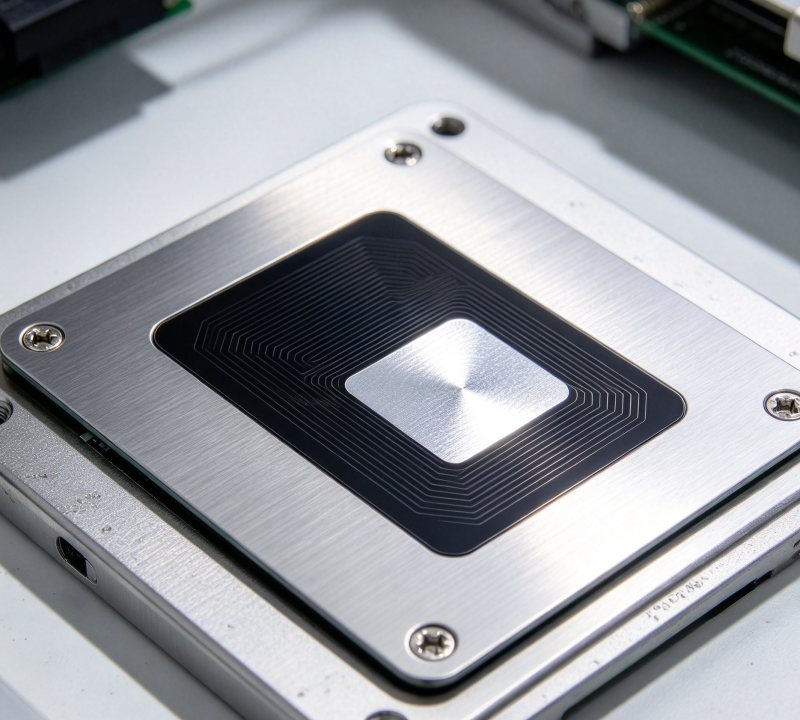
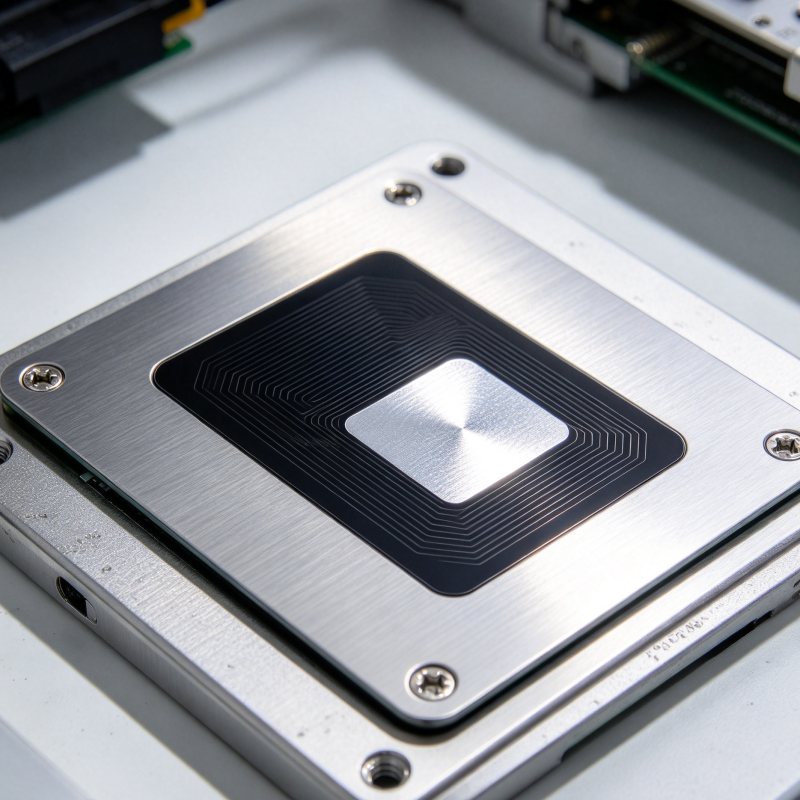
The tag contains an RFID chip and antenna inside a protective structure. When an RFID reader sends a radio-frequency signal, the passive tag receives energy from the reader and responds with its stored identification data.
For libraries, this enables multiple books to be identified quickly during inventory, circulation, sorting, security checks, and shelf management.
The UHF RFID library tag described on this page operates in the 816–960 MHz frequency range and uses the ISO18000-6C protocol. Its passive design means that no internal battery is required.
RFID Library Tag Specifications
UHF ISO18000-6C Bookshelf Anti-metal RFID Library Tag
| Item Name | RFID Library Tag |
| Material | ABS+glue+3M sticker |
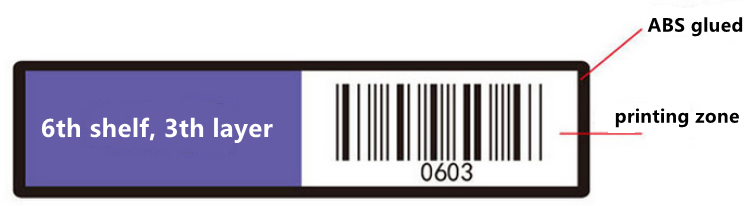
| Size | 85*22*6mm or customized |
| Compliant Standard | ISO/IEC 15693 or ISO18000-6C |
| Manufacturer/Chip | NXP ICODE SLI-X or Alien H3 chips etc |
| Protocol | ISO18000-6C |
| Frequency | 816~960MHz |
| Capacity(EPC/TID) | User 512 bit, TID 32 bit |
| Read Distance | 0-50cm, decided by device |
| Work Mode | passive |
| Working Temperature | -25℃~+55℃ |
| Storage Temperature | -25℃~+65℃ |
| Applications | books anti-theft, automatic borrow and return, inventory counting and tracking. |


Key Features of the RFID Library Tag
Our RFID library tag combines a compact design with features intended for practical library environments.
- UHF RFID technology: Supports wireless identification over the UHF frequency range.
- ISO18000-6C protocol: Designed for compatibility with UHF RFID systems using this protocol.
- Passive operation: No battery is required, reducing maintenance requirements.
- Compact housing: Standard dimensions are 85 × 22 × 6 mm, with customization available.
- 3M adhesive backing: Helps attach the tag securely to books or suitable surfaces.
- ABS construction: Provides a durable housing for everyday library handling.
- Multiple chip options: NXP ICODE SLI-X, Alien H3, and other chip configurations can be considered according to application requirements.
- Flexible deployment: Suitable for inventory counting, tracking, automatic borrowing and returning, and book anti-theft applications.
- Customizable design: Dimensions and configuration can be discussed for specific library projects.
Why Use RFID for Library Books?
Traditional barcode systems require the scanner to visually access each barcode. This can make large-scale inventory operations time-consuming, especially when books are tightly arranged on shelves.
RFID provides a different approach. A reader can communicate with tags wirelessly, allowing library staff to identify tagged materials without manually scanning every barcode.
This can be particularly useful for:
- High-volume inventory counting
- Automated borrowing and returning
- Book tracking
- Shelf management
- Anti-theft systems
- Circulation management
- Faster identification of misplaced materials
The main advantage is not simply a longer reading distance. It is the ability to integrate electronic identification into a broader library automation system.
RFID Library Tag vs. Barcode Label
RFID and barcodes can both identify books, but they work differently and offer different advantages.
| Feature | UHF RFID Library Tag | Barcode Label |
|---|---|---|
| Identification | Wireless | Optical |
| Direct line of sight | Generally not required | Required |
| Reading method | Radio frequency | Optical scanning |
| Multiple-tag reading | Possible with compatible systems | Usually one item at a time |
| Manual handling | Lower for automated processes | Higher |
| Inventory efficiency | Suitable for rapid RFID inventory workflows | More manual |
| Electronic identification | Yes | No |
| Battery | Not required for passive tag | Not applicable |
| Integration | RFID readers and software | Barcode scanners and software |
| Best use | Automated identification and inventory | Simple item identification |
RFID does not necessarily need to replace every barcode in an existing library. Many libraries can operate RFID and barcode systems together during a transition period.
Anti-Metal Design for Bookshelf Applications
Metal can influence UHF RFID performance because conductive surfaces may interfere with radio-frequency communication. This is especially important when RFID equipment is installed around metal shelving, cabinets, frames, or other conductive structures.
The bookshelf anti-metal design is intended for applications where the surrounding installation environment may create additional RFID challenges.
However, anti-metal performance depends on the complete installation rather than the tag alone. Reader output power, antenna design, tag orientation, distance, shelf construction, and nearby materials can all affect performance.
For this reason, libraries with metal shelving should evaluate the tag together with the selected RFID reader and antenna before large-scale deployment.
Important Factors for Metal Shelf Applications
| Factor | Why It Matters |
|---|---|
| Shelf material | Metal can affect UHF RFID communication |
| Tag position | Placement influences antenna performance |
| Reader power | Determines available RF energy |
| Antenna direction | Affects the reader’s coverage area |
| Book arrangement | Dense books can influence tag readability |
| Tag orientation | Alignment can affect signal strength |
| Reader model | Different readers have different capabilities |
| Installation environment | Nearby metal and electronics may affect performance |
A small pilot test is recommended before ordering large quantities for a new RFID library project.
Where Should the RFID Tag Be Installed on a Book?
The ideal tag position depends on the book format, cover material, library workflow, and reader configuration.
For conventional library books, the tag can be attached to an internal area that provides protection while maintaining reliable communication with the RFID reader. The installation position should be standardized across the collection whenever possible.
A consistent position makes it easier to automate inventory procedures and helps maintain predictable RFID performance.
During deployment, libraries should consider:
- The thickness and material of the book cover
- The distance between the tag and RFID reader
- Whether the book contains metallic components
- The position of the tag relative to other books
- Whether the tag needs to remain hidden from normal view
- The expected service life of the library material
For high-volume projects, testing several installation positions before full deployment can help identify the best configuration.
RFID Chips and Memory Options
The RFID library tag can be configured with chip options such as NXP ICODE SLI-X, Alien H3, or other compatible RFID chips depending on project requirements.
The product page lists User memory of 512 bit and TID memory of 32 bit for the referenced configuration. The appropriate chip should be selected according to the required memory structure, reader compatibility, software architecture, and identification workflow.
The chip is an important part of an RFID tag, but it is not the only factor that determines system performance. Antenna design, tag construction, reader sensitivity, RF environment, and software integration also have a major impact.
When requesting samples, it is useful to specify both the desired chip and the intended reader model so that compatibility can be evaluated under realistic conditions.
RFID Library Tag Applications
Library Inventory Management
Inventory counting is one of the most important applications for RFID in libraries. Instead of relying entirely on individual barcode scans, staff can use an RFID reader to identify tagged books as part of a dedicated inventory workflow.
This can help libraries check shelves more efficiently and identify books that are missing, misplaced, or located in the wrong section.
Automatic Borrowing and Returning
RFID can support self-service borrowing and returning stations. A reader communicates with the RFID tags on the selected books, while library software manages the corresponding circulation records.
The RFID tag itself does not replace the library management system. It provides the electronic identification layer that allows the system to recognize the physical item.
Book Anti-Theft
RFID technology can also be integrated into library security systems. When a book passes through an RFID detection area, the system can identify the tag and determine whether the item has been properly checked out.
This allows RFID identification to become part of a wider electronic article surveillance or library security workflow.
Book Tracking
Libraries can use RFID identification to improve the tracking of materials through different stages of circulation and inventory.
Depending on the system architecture, RFID can help identify books during shelving, transportation, sorting, borrowing, returning, and stocktaking.
Shelf Management
RFID can assist staff in locating incorrectly shelved materials. When a reader detects books in a particular area, the software can compare the detected information with the expected shelf location.
This can reduce the amount of time required to manually check large collections.
RFID Library Tag vs. Other RFID Tag Types
Different RFID applications require different tag designs. A standard UHF label, an anti-metal tag, and an embedded RFID tag should not automatically be considered interchangeable.
| Tag Type | Typical Environment | Main Advantage | Consideration |
|---|---|---|---|
| Standard RFID label | Paper, cardboard, plastic | Thin and economical | Sensitive to installation environment |
| Bookshelf anti-metal RFID tag | Shelves and areas near metal | Designed for challenging environments | Requires application testing |
| Hard RFID tag | Industrial or reusable assets | Strong mechanical protection | Usually larger |
| Embedded RFID tag | Products or equipment | Integrated appearance | Requires special installation |
| Barcode label | General identification | Low cost and simple | Requires optical scanning |
For library applications involving metal shelving or other conductive structures, an anti-metal-oriented design may be worth evaluating alongside standard RFID labels.
How the RFID Library System Works
An RFID library solution normally consists of several components rather than the tag alone.
RFID Library Tag → RFID Reader → RFID Antenna → Software → Library Management System
The tag stores its identification information. The reader generates the RF field and receives responses from tags. The antenna controls the radio-frequency coverage area. Middleware or application software processes the captured tag data, and the library management system connects the RFID information with book records.
This architecture allows the RFID tag to become part of a complete automated library workflow.
Typical Workflow
- An RFID tag is encoded and attached to a book.
- The book is registered in the library database.
- The RFID reader detects the tag.
- The system reads the tag identification data.
- Software matches the RFID information with the corresponding book record.
- The library application performs the required operation, such as inventory, borrowing, returning, or tracking.
Read Distance and System Performance
The product specification indicates a read distance of 0–50 cm, with the actual distance determined by the RFID device.
This is an important distinction when evaluating RFID products. A tag does not have one universal read distance independent of the reader.
Performance can be affected by:
- RFID reader power
- Antenna gain and design
- Tag orientation
- Distance between reader and tag
- Book materials
- Metal shelving
- Tag placement
- RF interference
- Density of books
- Regional frequency requirements
For a library project, the most reliable approach is to test the complete system using the intended reader, antenna, books, shelf materials, and software workflow.
Temperature and Durability
The standard product specification lists a working temperature range of -25°C to +55°C and a storage temperature range of -25°C to +65°C.
The ABS housing and adhesive construction are intended for practical handling and attachment applications. Nevertheless, the final durability of a tag also depends on how it is installed and the conditions to which the library materials are exposed.
For projects involving unusually high humidity, outdoor storage, extreme temperatures, or aggressive cleaning processes, additional environmental testing should be requested.
Custom RFID Library Tags
Not every library has the same requirements. Some projects may require a different tag size, chip, adhesive, housing, or mechanical structure.
Custom options can be discussed based on:
- Tag dimensions
- RFID chip
- Antenna configuration
- Adhesive type
- Housing material
- Printing or marking
- Packaging
- Encoding requirements
- Reader compatibility
The standard size is 85 × 22 × 6 mm, while customized dimensions are available according to the product information.
For large projects, it is recommended to confirm the complete specification before production, including chip model, frequency requirements, protocol, physical dimensions, adhesive, and expected reading environment.
How to Choose the Right RFID Library Tag
Selecting an RFID tag should start with the actual operating environment rather than the tag price alone.
| Requirement | Recommended Evaluation |
|---|---|
| Paper or cardboard books | Standard UHF RFID performance |
| Metal shelving | Anti-metal design and system testing |
| High-volume inventory | Reader coverage and multi-tag performance |
| Self-service borrowing | Reader compatibility and software integration |
| Anti-theft gates | Reader and antenna detection performance |
| Long-term library use | Adhesive and mechanical durability |
| Custom book formats | Custom tag dimensions |
| Large deployment | Sample testing and batch consistency |
A successful RFID deployment depends on the interaction between the tag, reader, antenna, software, and physical environment.
Why Choose Our UHF RFID Library Tag?
This RFID library tag combines a compact form factor, passive UHF operation, ISO18000-6C protocol support, adhesive mounting, and configurable chip options for library automation projects.
It is designed for organizations that need a practical RFID identification solution for books and library materials.
Key advantages include:
- Passive design with no battery
- Compact 85 × 22 × 6 mm standard size
- Custom dimensions available
- 816–960 MHz operating range
- ISO18000-6C protocol
- NXP ICODE SLI-X and Alien H3 chip options
- ABS housing
- 3M adhesive backing
- Support for inventory and tracking applications
- Suitable for automatic borrowing and returning workflows
- Designed for bookshelf-oriented applications
- Available for customized RFID projects
Frequently Asked Questions
Is this RFID library tag passive or active?
It is a passive RFID tag. It does not require an internal battery and receives operating energy from the RFID reader’s RF field.
What RFID protocol does the tag use?
The product specification identifies ISO18000-6C as the protocol. The page also references ISO/IEC 15693 or ISO18000-6C under the compliance field, so the exact chip and protocol configuration should be confirmed for a specific order.
What is the standard RFID tag size?
The standard size is 85 × 22 × 6 mm. Customized dimensions can also be discussed for specific applications.
What is the read distance?
The listed read distance is 0–50 cm, and the actual reading distance depends on the RFID reader and the installation environment.
Can the RFID tag be used with metal bookshelves?
The product is described as a bookshelf anti-metal RFID library tag. However, actual performance on metal shelving depends on the reader, antenna, tag position, and surrounding environment. Testing the complete system is recommended.
Which RFID chips are available?
The product information lists NXP ICODE SLI-X and Alien H3 chips, along with other possible chip configurations.
Can the RFID library tag be customized?
Yes. The product information indicates that the dimensions can be customized. Other specifications should be discussed according to the project requirements.
Does the tag require a battery?
No. It is a passive RFID tag.
Can RFID tags replace library barcodes?
RFID can complement or replace barcode-based identification depending on the library’s workflow and system architecture. RFID provides wireless identification and can support more automated inventory and circulation processes.
Should I test samples before placing a bulk order?
Yes. Sample testing is especially important for libraries with metal shelving, dense book collections, specific reader models, or demanding inventory requirements. Testing the complete tag-reader-antenna combination provides a more realistic evaluation than testing the tag alone.
Get the Right RFID Library Tag for Your Project
Choosing an RFID library tag is a system-level decision. The correct product depends on the books being tagged, shelf construction, reader equipment, antenna layout, required reading performance, and library software.
Our UHF ISO18000-6C Bookshelf Anti-Metal RFID Library Tag provides a compact passive RFID option for book identification, inventory counting, automatic borrowing and returning, anti-theft applications, and material tracking.
If you are planning a new RFID library system or upgrading an existing barcode-based workflow, contact us with your book type, shelf material, RFID reader model, required tag size, and expected application. We can help evaluate the appropriate RFID chip and tag configuration for your project and provide a suitable sample for testing before mass production.