


UHF On Metal RFID tags
D.O RFID TAG manufacturer developed 2 kinds of in different material: ABS anti-metal tagsand PCB anti metal tags. Contact a expert for the right tags.Features
- EPC C1 GEN2(ISO 18000-6C) Protocol
- Can be mounted on metal surface and supply long read range
- Enabling read ranges of up to 10m
- Highest standard (IP69)
Description
When you’re mounting RFID tags on metal surfaces or metal products, you should be aware that if you use non metal mount RFID tags, your system will not function as desired as the metal will detune any passive RFID tag that is not designed to be placed on metal.
Using tags that are specifically calibrated to the materials you need to track makes reading, tracking, and inventorying them easier and provides for greater read range.
Metal mount RFID tags are typically rugged, difficult to damage, and easy to weld, screw or otherwise attach.
Primary Applications:
- Car production lines
- Production line high temperature metal tray management
- Warehouse Rack Management
- University logistics asset management
- Special vehicle management
Specification
| Size: | 155*32mm, 135*22mm, 0*30mm |
|---|---|
| Material: | ABS |
| Chip: | Alien H3 |
| Frequency: | 860-960MHZ |
| Memory Size: | up to 512 bits |
| Protocal | EPC CLASS1 GEN2,ISO-18000-6C |
| Reading distance | 0-10 meters(related to reader power and enviroment) |
| Operating Temperature | -8.C to +80.C |
| Install Method | Sticker or hold fixed |

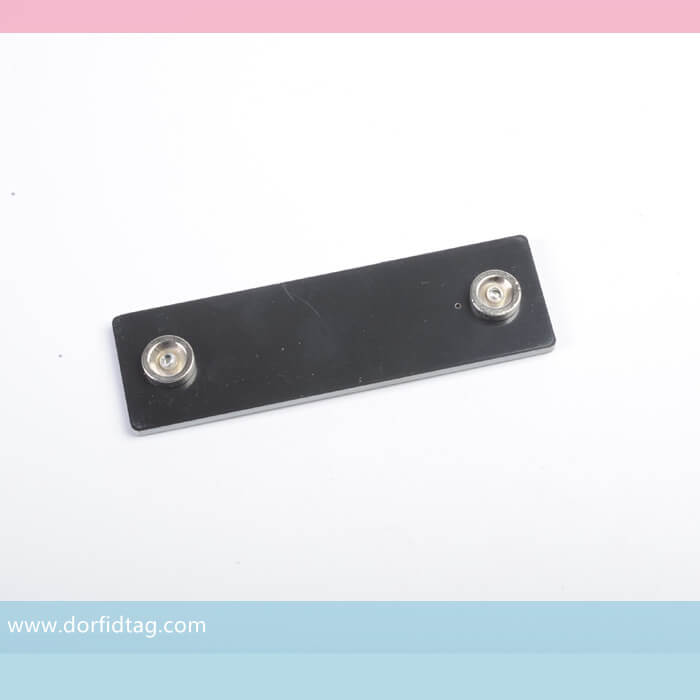
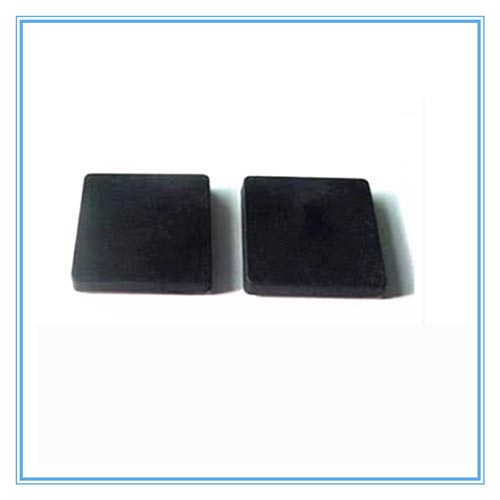

On-metal RFID tags are specially designed to identify and track metal assets where conventional RFID labels may experience poor reading performance. They are widely used for industrial equipment, metal tools, warehouse racks, server cabinets, automotive components, and reusable transport containers.
Unlike standard RFID tags, which may lose communication performance when attached directly to conductive surfaces, on-metal RFID tags use specialized antenna structures and material constructions to support reliable identification on metal.
For manufacturers, warehouse operators, system integrators, and asset management companies, selecting the right tag involves more than choosing an anti-metal model. Frequency, chip type, tag dimensions, reading distance, mounting method, environmental protection, and reader compatibility all influence the final result.
At D.O RFID Group, we manufacture and supply customized RFID tags, readers, cards, and NFC products for industrial and commercial applications. Our product range includes flexible printable UHF anti-metal tags, compact ceramic UHF tags, and anti-metal NFC stickers for different identification requirements.
This guide focuses on the technical specifications, product selection, application scenarios, and purchasing considerations that matter when sourcing on-metal RFID tags for business use.
What Are On-Metal RFID Tags?
On-metal RFID tags, also known as anti-metal RFID tags or metal-mount RFID tags, are specialized radio-frequency identification transponders designed to operate when mounted directly on or near conductive materials.
A typical RFID tag contains three main components:
- RFID chip: Stores identification data and manages communication.
- Antenna: Receives energy from the reader and communicates the tag’s data.
- Substrate or housing: Supports the antenna and protects the electronic components.
An ordinary RFID tag may not work properly when placed directly against metal because the conductive surface changes the electromagnetic environment around its antenna. This can affect antenna impedance, resonance, and communication performance.
An on-metal tag addresses this problem through a design optimized for metal mounting. Depending on the technology, it may incorporate a dielectric spacer, ferrite material, specially tuned antenna, conductive backing, or protective housing.
Different constructions are used for different frequencies and applications. A thin UHF label, a ceramic RFID tag, and an NFC sticker do not necessarily use the same internal structure.
The practical distinction: An on-metal RFID tag is engineered for a particular mounting environment. Its actual performance still needs to be verified on the intended metal asset.
For more background on metal interference and general RFID selection, see our existing guide: RFID Tags for Metal Surfaces: A Complete Guide.
Why Do Standard RFID Tags Have Problems on Metal?
Metal is electrically conductive and interacts with the electromagnetic field generated by an RFID reader.
When a conventional passive UHF tag is attached directly to metal, the metal surface can alter the antenna’s electrical characteristics. This may prevent the tag from receiving sufficient RF energy or communicating correctly with the reader.
Common problems include:
| Problem | Technical Cause | Operational Result |
|---|---|---|
| Antenna detuning | Metal changes the antenna’s electrical environment | Reduced reading performance |
| Short read range | Reduced coupling or antenna efficiency | Operators must move closer to the asset |
| Unstable identification | Tag orientation and mounting conditions affect RF behavior | Inconsistent inventory results |
| Missed reads | Tag does not respond reliably in the reader’s operating zone | Incomplete asset records |
| Installation limitations | Standard labels are not designed for direct metal mounting | Repeated adhesive or reading failures |
An anti-metal RFID tag is designed to manage these interactions through its antenna and material construction.
However, selecting an anti-metal tag does not automatically solve every RF problem. Surrounding equipment, metal thickness, tag position, antenna polarization, reader power, and nearby tags can still affect system performance.
Types of On-Metal RFID Tags
On-metal RFID tags are available in different frequencies, structures, and sizes. Choosing the correct type begins with understanding how the tag will be used.
1. Flexible Printable UHF On-Metal RFID Tags
Flexible printable UHF on-metal RFID tags combine an RFID inlay with a specialized construction that allows direct mounting on compatible metal surfaces.
Compared with bulky hard tags, flexible versions offer a thinner profile and can be suitable for smaller or curved mounting areas.
Common characteristics include:
- Flexible or low-profile construction
- Printable surface for selected RFID label printers
- Customizable dimensions
- UHF EPC Class 1 Gen 2 compatibility
- Adhesive mounting
- Support for encoding by the buyer or supplier, depending on the order
Typical applications:
- IT asset management
- Warehouse rack identification
- Manufacturing tools
- Metal containers
- Hospital and laboratory equipment
- Production-line trays
- Office equipment
DO RFID’s UHF RFID anti-metal tag is one example of this product category. The published product information describes flexible, printable construction, regional UHF frequency options, and multiple dimensions.
According to the product page, the available size options include:
| Model Format | Dimensions | Thickness |
|---|---|---|
| Square | 40 × 40 mm | 1.1 mm |
| Narrow rectangle | 55 × 12.5 mm | 1.3 mm |
| Long rectangle | 96 × 12.5 mm | 1.3 mm |
| Wide rectangle | 96 × 24 mm | 1.3 mm |
The product page lists an Impinj Monza R6-P chip option, EPC Gen2 / ISO 18000-6C protocol, and regional frequency options of 866–868 MHz (ETSI) and 902–928 MHz (FCC).
It also publishes maximum read-range figures of up to 6 m with a long-range reader and up to 3 m with a handheld reader. These are supplier-published figures, not guaranteed distances for every installation. Performance varies by tag size, metal surface, reader configuration, and orientation.
2. Ceramic UHF On-Metal RFID Tags
Ceramic UHF RFID tags are compact rigid tags designed for metal-mounted identification where installation space is extremely limited.
They can be useful for small tools, precision components, and metal parts that cannot accommodate a conventional RFID label.
Compared with a flexible label, a ceramic tag offers a compact rigid form factor. Its suitability depends on available installation space, attachment method, mechanical exposure, and the required reading distance.
DO RFID currently lists two miniature ceramic UHF tag formats.
CER0404 – 4 mm Ceramic UHF RFID Tag
| Specification | Published Details |
|---|---|
| Model | CER0404 |
| Dimensions | 4 × 4 × 3 mm |
| Material | Ceramic |
| Color | Black |
| Weight | 0.3 g |
| Chip | Alien Higgs-3 |
| Protocol | EPC Class 1 Gen 2 / ISO 18000-6C |
| Frequency options | US: 902–928 MHz; EU: 865–868 MHz |
| Memory | EPC 96 bits, User 512 bits, TID 64 bits |
| Mounting | Adhesive, metal surface |
| Read range on metal | Up to 0.8 m with fixed reader; up to 0.4 m with handheld reader |
| Operating temperature | -40°C to +85°C |
| Storage temperature | -40°C to +150°C |
| Protection rating | IP68 |
The CER0404 is designed for very small metal components and tools. Its compact footprint is useful when a larger label cannot fit on the asset. The stated performance should be validated on the actual part and with the intended reader.
Product details: 4 mm Ceramic UHF RFID Tag – CER0404.
CER0505 – 5 mm Ceramic UHF RFID Tag
| Specification | Published Details |
|---|---|
| Model | CER0505 |
| Dimensions | 5 × 5 × 3 mm |
| Material | Ceramic |
| Color | Black |
| Weight | 0.8 g |
| Chip | Alien Higgs-3 |
| Protocol | EPC Class 1 Gen 2 / ISO 18000-6C |
| Frequency options | US: 902–928 MHz; EU: 865–868 MHz |
| Memory | EPC 96 bits, User 512 bits, TID 64 bits |
| Mounting | Adhesive, metal surface |
| Read range on metal | Up to 1.0 m with fixed reader; up to 0.6 m with handheld reader |
| Operating temperature | -40°C to +85°C |
| Storage temperature | -40°C to +150°C |
| Protection rating | IP68 |
The 5 mm model provides a slightly larger footprint than CER0404, with a different published read range. Both models are intended for compact metal-mounted identification, but the final choice should be based on actual installation tests rather than size alone.
Product details: 5 mm Ceramic UHF RFID Tag – CER0505.
3. Anti-Metal NFC Tags
NFC tags operate at 13.56 MHz and are generally intended for short-range communication.
Unlike UHF RFID, which is commonly used for automated inventory and multiple-tag reading, NFC is particularly suitable for close-range interaction with compatible smartphones and NFC readers.
An anti-metal NFC tag includes a construction designed to support communication when mounted on a compatible metal surface. Some models use a ferrite layer to help manage the interaction between the antenna and the metal.
Typical applications include:
- Equipment information access
- Maintenance records
- Product identification
- Smartphone-based asset tracking
- Digital product information
- Authentication workflows
DO RFID’s small micro FPC NTAG213 on-metal tag offers compact formats and customization options. The published page lists available formats such as 8 mm, 10 mm, and 18 mm diameter, along with other compact dimensions, plus options for antenna materials, printing, and packaging.
For applications requiring a visible removal indication, DO RFID also offers an anti-tamper on-metal NFC sticker using NTAG213.
Its published specification includes:
| Specification | Published Details |
|---|---|
| Chip | NXP NTAG213 |
| NFC standard | NFC Forum Type 2 |
| Memory | 144 bytes user memory |
| Dimensions | 45 × 25 mm |
| Material | Flexible ferrite sheet and weather-resistant PET |
| Mounting | Adhesive |
| Security feature | Visible damage when removed |
| NFC read range | Up to 5 cm, depending on device and conditions |
This construction combines on-metal NFC operation with a tamper-evident label feature. The published 5 cm value should be regarded as a maximum reference rather than a guaranteed reading distance on every smartphone or surface.
4. Flexible, PCB, Ceramic, and Rugged Hard Tags
In addition to frequency, the physical construction of the tag is an important purchasing consideration.
| Tag Construction | Main Advantage | Typical Applications |
|---|---|---|
| Flexible on-metal label | Thin profile and printable surface options | IT assets, racks, equipment |
| FPC on-metal tag | Compact and flexible electronic construction | Small devices and embedded applications |
| Ceramic tag | Very compact rigid construction | Small tools and metal components |
| PCB-based tag | Structured electronic substrate | Specialized equipment and compact installations |
| Rugged hard tag | Mechanical protection and selected industrial mounting options | Outdoor assets, containers, machinery |
A thin adhesive label is not a substitute for a rugged tag when the application involves repeated impacts, heavy abrasion, or high-pressure washing.
Likewise, a large hard tag may be unsuitable for a small component with very limited installation space.
The correct selection should reflect the physical conditions of the tagged asset, not simply the most durable specification shown in a product catalogue.
UHF vs. HF vs. NFC: Which On-Metal RFID Technology Should You Choose?
Frequency determines how a tag communicates with a reader and has a major influence on the identification workflow.
| Comparison | UHF RFID | HF RFID | NFC |
|---|---|---|---|
| Typical frequency | Regional UHF bands, commonly within 860–960 MHz | 13.56 MHz | 13.56 MHz |
| Typical interaction | Longer-range reader communication | Short-range reader communication | Close-range tap or scan |
| Multi-tag reading | Suitable for anti-collision inventory systems | Depends on system design | Generally designed for individual close-range interactions |
| Smartphone compatibility | Not native on most standard smartphones | Requires compatible hardware and application | Supported by NFC-enabled phones |
| Common application | Automated asset tracking and inventory | Controlled identification workflows | Product interaction and maintenance information |
| Typical reader | Fixed UHF or handheld UHF reader | HF reader | NFC-enabled phone or NFC reader |
For UHF applications, GS1’s current EPC Gen2 specification, Release 3.0.1, covers the 860–930 MHz air-interface range. Regional operating channels and power requirements still need to be checked for the destination market. DO RFID’s product options are listed separately by regional frequency configuration.
The simplest decision rule is:
- Choose UHF on-metal RFID tags when you need automated inventory, handheld asset scanning, or multi-tag identification.
- Choose HF on-metal tags when the reader system requires 13.56 MHz short-range communication.
- Choose anti-metal NFC tags when employees or customers need to interact with metal-mounted tags using compatible smartphones.
Do not order an NFC tag for a UHF inventory system or assume that a UHF reader can communicate with a 13.56 MHz NFC tag. They are different technologies and require compatible equipment.
How to Choose the Right On-Metal RFID Tag for Your Project
A suitable tag must fit the metal asset, the reading workflow, and the operating environment.
1. Identify the Metal Surface
First, identify whether the target surface is steel, stainless steel, aluminum, or another conductive material.
Also record:
- Flat or curved surface
- Surface dimensions
- Available mounting area
- Surface coating or finish
- Nearby metal structures
- Space restrictions around the mounting position
A flexible tag may suit a curved or narrow mounting area, while a ceramic tag may be more practical for a small metal component.
2. Define the Reading Workflow
The reading method determines what kind of tag and reader combination is appropriate.
Ask:
- Will operators scan one asset at a time?
- Will a handheld reader be used?
- Will fixed antennas identify assets automatically?
- Does the system need to read multiple tags simultaneously?
- Will a smartphone need to interact with the tag?
- What reading distance is required in normal operation?
For example, a tool-management system may need a short reading distance at a controlled workbench. A warehouse portal may require longer-range UHF identification across a defined reading zone.
3. Select the Tag Size
Tag dimensions influence antenna design, available installation space, and practical reading performance.
The smallest tag is not necessarily the best option. A tiny tag may fit the asset but offer a shorter reading distance than a larger construction.
For compact identification, compare the 4 mm ceramic tag and 5 mm ceramic tag.
For larger metal surfaces requiring printable labels, consider a flexible UHF anti-metal construction.
4. Confirm Chip and Memory Requirements
The chip determines the tag’s communication capabilities and available memory.
For many UHF asset-tracking applications, the EPC identifier is sufficient to associate a tag with a record in an ERP, WMS, or asset management database.
The tag does not normally need to store the entire maintenance history. Instead, the tag provides an identifier and the software system stores the detailed asset information.
When selecting a chip, confirm:
- EPC memory capacity
- User memory capacity
- TID information
- Read/write capability
- Supported protocol
- Data encoding requirements
For NFC applications, select the chip according to phone compatibility, memory capacity, security requirements, and intended data format.
5. Check Environmental Requirements
Industrial applications may involve water, dust, oil, chemicals, temperature variation, vibration, and impact.
Check the actual product specification for:
- Operating temperature
- Storage temperature
- IP protection rating
- Chemical resistance
- UV exposure requirements
- Mechanical strength
- Expected service life
For example, the CER0404 and CER0505 ceramic models published by DO RFID specify IP68 protection and an operating range of -40°C to +85°C. Their storage temperature limit is a separate specification and should not be confused with the permitted operating temperature.
An IP rating also does not automatically prove resistance to every chemical, cleaning process, or pressure-washing condition.
6. Confirm the Mounting Method
Common mounting options include:
- Permanent adhesive
- Industrial adhesive
- Screws
- Rivets
- Brackets or holders
- Custom mechanical mounting
Adhesive mounting is convenient for many applications, while screws or rivets may be more appropriate where mechanical retention is required.
Before installation, confirm that the mounting method will not interfere with the tag antenna, damage the asset, or expose the tag to unsuitable temperatures.
7. Test the Tag on the Actual Asset
A catalogue read-range value cannot guarantee the same result on every metal object.
Test the tag using the intended reader, antenna, mounting method, and operating environment.
For a detailed buying checklist, you can also review our RFID tag product range.
Comparison of DO RFID On-Metal Tag Solutions
The following table helps buyers compare several available DO RFID product directions according to the intended application.
| Product | Technology | Main Format | Published Read Range | Best-Fit Application |
|---|---|---|---|---|
| Printable UHF anti-metal tag | UHF EPC Gen2 | Flexible label; several dimensions | Up to 6 m fixed reader; up to 3 m handheld | Warehouse assets, racks, IT equipment |
| CER0404 | UHF EPC Gen2 | 4 × 4 × 3 mm ceramic | Up to 0.8 m fixed; 0.4 m handheld | Very small tools and metal components |
| CER0505 | UHF EPC Gen2 | 5 × 5 × 3 mm ceramic | Up to 1.0 m fixed; 0.6 m handheld | Compact tools and equipment |
| Micro FPC NTAG213 | NFC | Miniature FPC formats | Depends on chip, antenna, and installation | Compact NFC identification |
| Anti-tamper NTAG213 on-metal sticker | NFC | 45 × 25 mm | Up to 5 cm | Metal asset identification with visible tamper evidence |
All read-range values are based on published product information. Actual results depend on the reader, antenna, metal surface, orientation, tag placement, and RF environment. The products also use different frequencies and should not be compared as if they were interchangeable.
On-Metal RFID Tags vs. Other Manufacturers’ Solutions
Established RFID manufacturers offer different product approaches to metal-mounted identification.
A useful comparison is not simply which tag has the longest advertised reading distance. It is which construction provides the right combination of size, durability, mounting convenience, and reading performance for a specific deployment.
1. Flexible Printable On-Metal Labels
HID’s IQ On-Metal label family provides white PET self-adhesive NFC and RAIN UHF products. Its published product information describes printable or encodable label formats and regional FCC and ETSI UHF options, with products delivered on reels.
This product category is useful for buyers who want relatively thin labels and integration with label-printing workflows.
DO RFID also offers flexible printable UHF anti-metal tags, with published size options including 40 × 40 mm and several narrow rectangular formats.
The purchasing distinction is whether the buyer needs an individual label construction, a particular chip configuration, printer compatibility, custom dimensions, or a combined supply solution.
2. Small Ceramic and Micro Tags
Specialist suppliers such as Xerafy publish product families covering compact, rugged, high-temperature, and industrial RFID tags.
Its industrial product guide lists different on-metal models and application-specific specifications, including several IP-rated and high-temperature constructions. It also emphasizes that the actual product datasheet should be used to confirm detailed performance.
DO RFID’s CER0404 and CER0505 ceramic tags address a different size requirement: identifying very small metal components and tools where a larger label cannot fit.
3. Rugged Industrial Hard Tags
HID IronTag is an example of a more rugged industrial UHF tag family. HID publishes applications involving aircraft parts, equipment, and industrial environments, with product features covering chemical exposure, vibration, temperature, and mounting options. Its product information lists resistance to permanent temperatures up to 180°C for 400 hours or 220°C for one hour for the stated product configuration.
This shows why a rugged hard tag and a flexible printable label should not be evaluated using the same purchasing criteria.
A label may be preferable for a low-profile identification requirement, whereas an industrial hard tag may be more appropriate for demanding mechanical or thermal conditions.
What Makes a Useful Comparison?
Before comparing suppliers, prepare the same specification for every candidate:
- Frequency and regional band
- Chip model and memory
- Tag dimensions and thickness
- Read range under a defined test setup
- Metal surface and orientation
- Environmental rating
- Attachment method
- Encoding and printing capability
- Warranty and technical support
This creates a more meaningful comparison than relying on a single maximum read-range figure.
Common Industrial Applications of On-Metal RFID Tags
Manufacturing Equipment and Production Tools
Factories often manage large numbers of tools, molds, fixtures, and machines made from metal.
An RFID tag can connect each physical asset to its corresponding maintenance, inspection, or usage record.
A suitable UHF on-metal tag supports automated identification, while small ceramic formats may be considered for compact tools and components.
Warehouse Racks and Metal Containers
Warehouse operators can use on-metal tags to identify storage locations, containers, racks, and reusable transport assets.
UHF tags can support handheld scanning and automated inventory workflows, depending on the reader setup and reading-zone requirements.
IT Assets and Data Centers
Servers, network cabinets, laptops, and other IT equipment frequently use metal housings.
On-metal RFID labels help connect equipment to inventory records, maintenance history, and asset assignment information.
A flexible low-profile tag can be useful when the asset has a relatively small available mounting surface.
Automotive and Machinery Parts
Metal components move through several stages during manufacturing, assembly, inspection, and storage.
RFID identification can connect parts or work-in-process items to production and quality records. The tag must be positioned where it will not interfere with machining, assembly, handling, or the component’s functional surfaces.
Laboratory and Healthcare Equipment
Medical equipment, laboratory instruments, and reusable metal containers often require regular inventory checks and maintenance records.
A suitable tag can support identification at controlled scan points. For equipment exposed to sterilization or aggressive cleaning, the tag’s environmental specification must be checked against the actual process.
How to Install and Test On-Metal RFID Tags
Correct mounting and system validation are essential for reliable identification.
A practical test procedure should include the following stages.
Step 1: Prepare the Metal Surface
Clean the mounting area according to the adhesive manufacturer’s instructions.
Remove dust, oil, moisture, or loose coatings that could interfere with bonding.
Step 2: Install the Tag
Apply the tag in the specified direction and position.
For adhesive models, follow the recommended application pressure and temperature requirements. For mechanically mounted tags, use the specified fixing method and mounting hardware.
Step 3: Confirm Reader Compatibility
Make sure the reader operates at the same frequency and protocol as the tag.
For UHF applications, the regional frequency configuration must also match the reader’s permitted operating band.
Step 4: Check Reading Distance and Orientation
Test at the required operating distance.
Repeat the scan at different orientations and positions where the deployment requires it. For automated systems, confirm that the reader can identify the asset within the intended reading zone.
Step 5: Test Under Actual Operating Conditions
If the asset is surrounded by other metal objects, test the tag in that environment rather than only on a clean test plate.
Where multiple tags are present, evaluate missed reads, unwanted reads, duplicate inventory events, and anti-collision performance.
Step 6: Record the Results
Document the selected tag, mounting location, reader model, antenna position, reader settings, and test results.
This information helps reproduce the installation and diagnose any future performance changes.
Which RFID Reader Should Be Used with On-Metal RFID Tags?
The RFID tag and reader must be compatible in frequency, protocol, and intended application.
A UHF on-metal tag requires a compatible UHF reader. An NFC tag requires an NFC-compatible phone or reader. Neither can substitute for the other.
Fixed RFID Readers
Fixed readers are suitable for controlled reading zones, such as:
- Warehouse entrances
- Conveyor systems
- Production lines
- Storage areas
- Automated inventory stations
The antenna placement and reader power need to be configured for the required identification zone.
Handheld RFID Readers
Handheld readers are useful for mobile inventory checks, equipment audits, tool management, and field asset tracking.
They let operators scan items at different locations without installing a reader at every point.
DO RFID offers a range of RFID readers, including RFID handheld readers.
When specifying a reader, confirm its operating frequency, supported protocols, antenna characteristics, output power, connectivity, and compatibility with your asset-management software.
Custom On-Metal RFID Tags: OEM and ODM Options
Standard tags are suitable for many applications, but some industrial projects require customized dimensions, chip configurations, printing, or mounting arrangements.
DO RFID supports customized RFID solutions according to product availability and technical feasibility.
Potential customization requirements include:
| Customization Item | Available Considerations |
|---|---|
| Tag dimensions | Customized length, width, diameter, and thickness |
| Frequency | Regional UHF options or selected HF/NFC configurations |
| Chip | Selected chip models according to application and compatibility |
| Antenna | Design selected for the tag size and operating environment |
| Material | Flexible, ceramic, FPC, PET, or selected housing constructions |
| Printing | Logo, text, barcode, QR code, or identification information |
| Encoding | EPC, UID, or selected data preparation requirements |
| Mounting | Adhesive, mechanical fixing, or other suitable arrangements |
| Packaging | Individual pieces, sheets, or rolls where supported |
| Testing | Reading performance, encoding accuracy, and application-specific checks |
OEM Customization Process
- Application review: Provide the asset type, metal surface, required reading distance, and intended workflow.
- Technology selection: Determine whether UHF, HF, or NFC is more suitable.
- Product selection: Compare flexible labels, ceramic tags, FPC formats, and other constructions.
- Technical confirmation: Confirm chip, frequency, memory, dimensions, and mounting method.
- Sample testing: Test the selected tag on the actual metal asset using the intended reader.
- Order confirmation: Approve the specification, quantity, encoding, packaging, and commercial terms.
- Production and inspection: Complete production according to the approved requirements.
- Delivery and support: Confirm delivery arrangements and technical support requirements.
What Determines the Cost of On-Metal RFID Tags?
The price of an on-metal RFID tag depends on its construction, chip, material, size, and performance requirements.
For accurate B2B sourcing, the following factors should be considered:
Chip model: Different RFID chips offer different memory capacities, protocols, sensitivity, and functional capabilities.
Tag dimensions: Larger antenna structures or more specialized constructions may affect material and production costs.
Material and housing: Flexible labels, ceramic tags, PCB-based tags, and rugged hard tags require different manufacturing processes.
Frequency and regional configuration: A project may require a particular regional UHF version or a specialized HF/NFC construction.
Read-range requirement: Higher performance requirements may affect the antenna design, tag size, and overall configuration.
Environmental protection: Waterproofing, chemical resistance, high-temperature tolerance, and mechanical protection can increase product complexity.
Customization: Printing, laser marking, encoding, special mounting methods, and customized shapes may affect the quotation.
Order quantity: Material purchasing, manufacturing setup, and testing requirements influence the final unit cost.
For wholesale buyers, compare the total cost of the deployed solution rather than the tag price alone. Installation labor, reader equipment, software integration, replacement rates, and maintenance should also be considered.
Practical Procurement Example: Selecting Tags for a Tool Management Project
Consider a manufacturing company that needs to identify 2,000 metal tools across multiple production departments.
Its initial requirement is simple: each tool must have a unique RFID identity and be readable during issue, return, and inspection.
However, the tools vary in size, and some have very limited flat surfaces.
A practical selection strategy would be:
For larger tools: Evaluate flexible printable UHF anti-metal labels. They provide a relatively thin identification solution and can support different dimensions.
For small components: Evaluate compact ceramic UHF tags such as CER0404 or CER0505, provided the mounting area and read-range requirements are compatible.
For smartphone-based maintenance: Consider a compatible anti-metal NFC tag where operators need to tap individual assets with an NFC-enabled device.
The company should then test representative samples on different tool surfaces, using its actual handheld reader. It should record the reading distance, tag orientation, mounting method, and identification consistency.
Only after the pilot test should it approve the final tag configuration for the full deployment.
This illustrative scenario shows why one tag model may not be suitable for every asset in the same project. A carefully selected combination of products can be more practical than forcing all assets to use a single construction.
Frequently Asked Questions About On-Metal RFID Tags
What Is the Difference Between On-Metal and Anti-Metal RFID Tags?
The two terms are commonly used to describe RFID tags designed for metal-mounted applications. Both refer to tags that use specialized antenna and material constructions to support communication on or near conductive surfaces.
Can UHF RFID Tags Work Directly on Metal?
Yes. UHF on-metal RFID tags are specifically engineered for mounting on suitable metal surfaces. Their actual reading performance depends on the tag design, metal geometry, mounting position, reader, and antenna configuration.
What Is the Read Range of an On-Metal RFID Tag?
It varies significantly by model and application. DO RFID publishes UHF flexible tag reading distances of up to 6 m with a long-range reader and up to 3 m with a handheld reader. Its compact CER0404 and CER0505 ceramic tags have different, shorter published ranges. These figures should be validated in the actual installation.
Can On-Metal RFID Tags Be Used on Aluminum?
Yes, suitable tags can be designed for conductive surfaces such as aluminum and steel. However, performance depends on the antenna design, surface shape, surrounding metal, and reading environment.
Are On-Metal RFID Tags Waterproof?
Some models provide water-resistant or waterproof constructions. For example, DO RFID’s CER0404 and CER0505 ceramic tags are listed with an IP68 rating. Always check the specific model’s datasheet and relevant test conditions before using it in wet environments.
Can I Print My Logo on an On-Metal RFID Tag?
Selected flexible printable on-metal labels support customized printing. Options may include logos, text, barcodes, and other identification graphics. Confirm compatibility with the intended RFID printer and material construction.
What Is the Difference Between UHF On-Metal RFID and NFC On-Metal Tags?
UHF on-metal tags are generally used for longer-range and automated identification. NFC operates at 13.56 MHz and is designed for short-range communication with compatible smartphones and NFC readers. They require different chips and reading equipment.
Can On-Metal RFID Tags Be Customized?
Customization depends on the selected model and production requirements. Options may include dimensions, frequency, chip type, material, printing, encoding, and mounting method.
How Do I Choose the Right On-Metal RFID Tag?
Start with the asset type, metal surface, required reading distance, mounting area, reader type, and operating environment. Request samples and test them using the actual reader and installation conditions before placing a bulk order.
Get Custom On-Metal RFID Tags from DO RFID
Choosing on-metal RFID tags is not simply a matter of finding a product labeled anti-metal. The correct solution must match the physical asset, frequency, reading distance, mounting method, environmental requirements, and existing reader system.
D.O RFID Group is a China-based RFID product manufacturer with experience in RFID tags, RFID readers, smart cards, and NFC products. According to our company information, our manufacturing operations include RFID chip bonding, card production, lamination, molding, and testing facilities. We support customized products for asset tracking, access control, logistics, and industrial identification applications.
Whether you need flexible printable UHF anti-metal labels, compact ceramic tags, FPC NFC tags, or anti-tamper NFC stickers, our team can help review your application and identify suitable product options.
To request a quotation or product samples, please provide:
- Asset type and metal material
- Required RFID frequency and regional market
- Target reading distance
- Available mounting area
- Reader model or system requirements
- Environmental conditions
- Estimated order quantity
- Customization and encoding requirements
Visit DO RFID Reader to explore our RFID products and customized solutions.
Contact D.O RFID Group
- Website: https://www.dorfidreader.com/
- Product category: RFID Tags
- UHF on-metal products: UHF RFID Anti-Metal Tags
- Email: Contact us through the official website inquiry form.