
As industries move beyond surface labeling toward deeper digital integration, Embedded RFID Tags have become a critical technology for long-term identification, traceability, and lifecycle management. Unlike traditional RFID labels or stickers, embedded RFID tags are built directly into products, components, or materials, enabling secure, durable, and tamper-resistant identification from manufacturing to end-of-life.
This article provides a comprehensive SEO-focused product introduction to embedded RFID tags, explaining what they are, how they work, their materials, frequencies, advantages, application scenarios, and the business problems they solve. If your RFID project requires durability, permanence, and reliability, embedded RFID tags are often the most intelligent choice.
What Are Embedded RFID Tags?
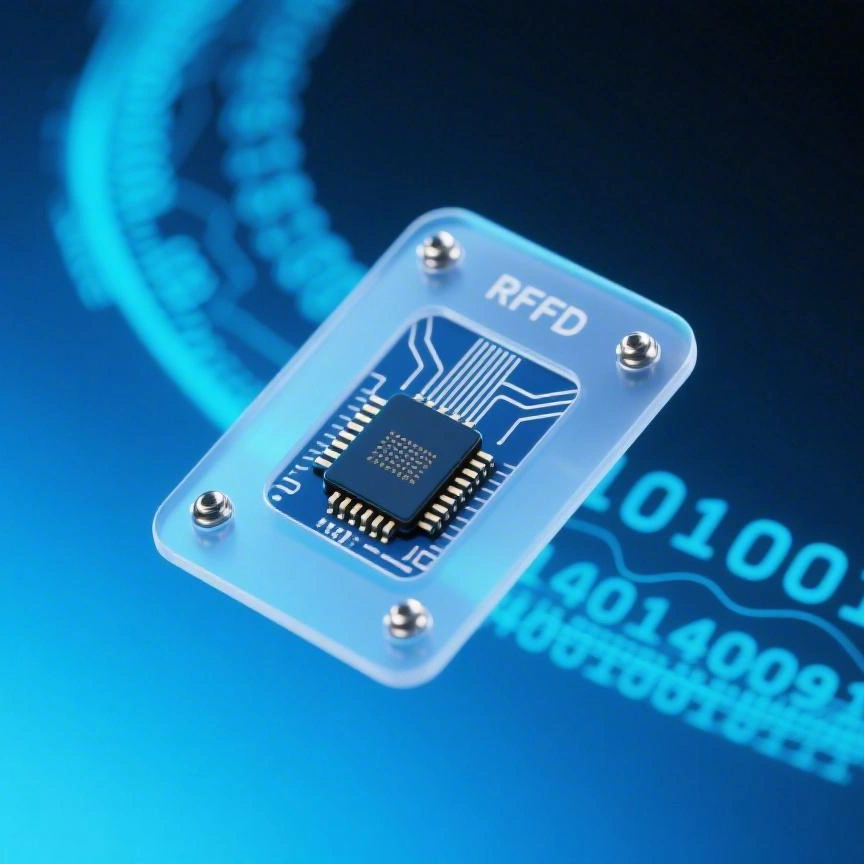
Embedded RFID tags are RFID transponders designed to be integrated inside an object rather than attached externally. They may be molded, injected, laminated, cast, sewn, or mechanically fixed into products during manufacturing or assembly.
Once embedded, the tag becomes a permanent digital identity for the object, protected from environmental damage, tampering, and removal.
Embedded RFID tags typically consist of:
An RFID chip
An antenna (optimized for embedding)
A protective housing or encapsulation material
They can be passive, semi-passive, or active, depending on the application.
How Embedded RFID Tags Work
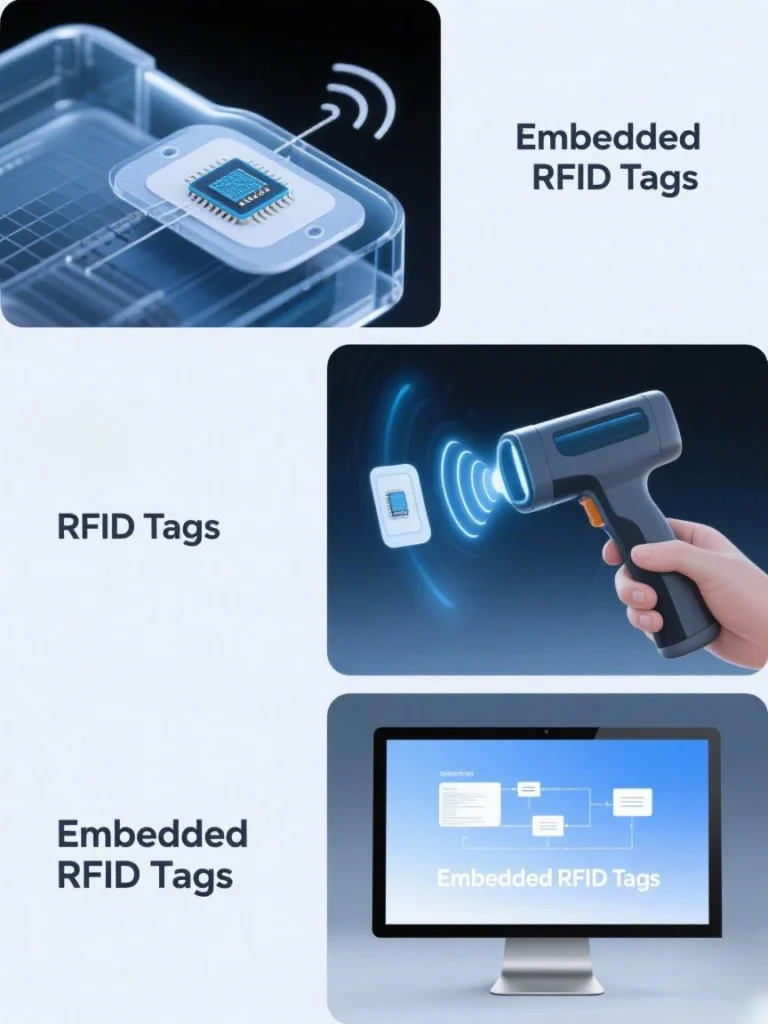
Embedded RFID tags operate on the same basic principles as other RFID tags:
An RFID reader emits a radio frequency signal
The embedded tag receives energy (passive) or activates itself (active)
The tag transmits stored data back to the reader
The reader sends data to backend systems
What makes embedded RFID tags unique is where and how they operate—inside materials such as plastic, rubber, wood, metal housings, or composite structures.
Proper antenna design and frequency selection ensure reliable communication even when the tag is hidden from view.
RFID Frequencies Used in Embedded RFID Tags
LF Embedded RFID Tags (125 kHz / 134.2 kHz)
LF embedded tags are widely used because they:
Perform well near metal and liquids
Are stable in harsh environments
Have predictable short read ranges
Typical applications include:
Tool identification
Industrial molds
Animal identification
Automotive components
Read range is usually limited to a few centimeters, which improves control and security.
HF Embedded RFID Tags (13.56 MHz)
HF embedded RFID tags offer:
Moderate read range
Higher data rates than LF
Compatibility with ISO standards
They are commonly used in:
Industrial asset tracking
Medical instruments
Reusable containers
Anti-counterfeiting solutions
HF tags strike a balance between performance and environmental tolerance.
UHF Embedded RFID Tags (860–960 MHz)
UHF embedded RFID tags provide:
Long read distances
Fast bulk reading
EPC Gen2 / ISO 18000-6C compliance
They are used in:
Automotive supply chains
Logistics containers
Construction materials
Returnable transport items
Special antenna designs and housings are required for reliable UHF performance when embedded.
Materials and Encapsulation Options
The durability of embedded RFID tags depends heavily on their encapsulation.
Common Housing Materials
ABS / Nylon: General industrial use
PPS (Polyphenylene Sulfide): High temperature resistance
Epoxy resin: Chemical resistance
Ceramic: Extreme temperature and metal environments
Silicone / Rubber: Flexible embedding
The housing protects the chip and antenna from:
Heat
Pressure
Moisture
Chemicals
Vibration
Key Features of Embedded RFID Tags
Permanent Identification
Once embedded, the RFID tag becomes inseparable from the object. This ensures:
Long-term traceability
No label loss or damage
Accurate lifecycle data
This is especially important for high-value assets and safety-critical components.
Tamper Resistance
Embedded tags are difficult to remove without destroying the product. This makes them ideal for:
Anti-counterfeiting
Warranty verification
Brand protection
The data stored inside the tag can also be locked or encrypted.
Environmental Durability
Embedded RFID tags are designed to withstand:
High temperatures
Mechanical stress
Oil, grease, and chemicals
Outdoor exposure
This allows RFID tracking in environments where adhesive labels would fail.
Invisible Integration
Because the tag is hidden inside the product:
Product appearance is unchanged
No interference with usage
Improved aesthetics and safety
This is particularly valuable in consumer goods and medical devices.
Typical Technical Specifications
While specifications vary by frequency and design, embedded RFID tags commonly offer:
Frequency: LF / HF / UHF
Standards:
ISO 11784/11785 (LF)
ISO 15693 / ISO 14443 (HF)
ISO 18000-6C (UHF)
Memory:
UID / TID
User memory (optional)
Read Range:
LF: 1–10 cm
HF: 5–50 cm
UHF: Up to several meters
Operating Temperature:
-40°C to +200°C (model dependent)
These parameters make embedded RFID tags suitable for long-term industrial use.
Key Application Scenarios
Manufacturing and Industrial Traceability
Embedded RFID tags are widely used to track:
Molds and dies
Tools and fixtures
Production components
Work-in-progress items
They provide accurate identification even after years of use.
Automotive and Aerospace Industries
In automotive and aerospace manufacturing, embedded RFID tags support:
Component traceability
Quality control
Recall management
Compliance documentation
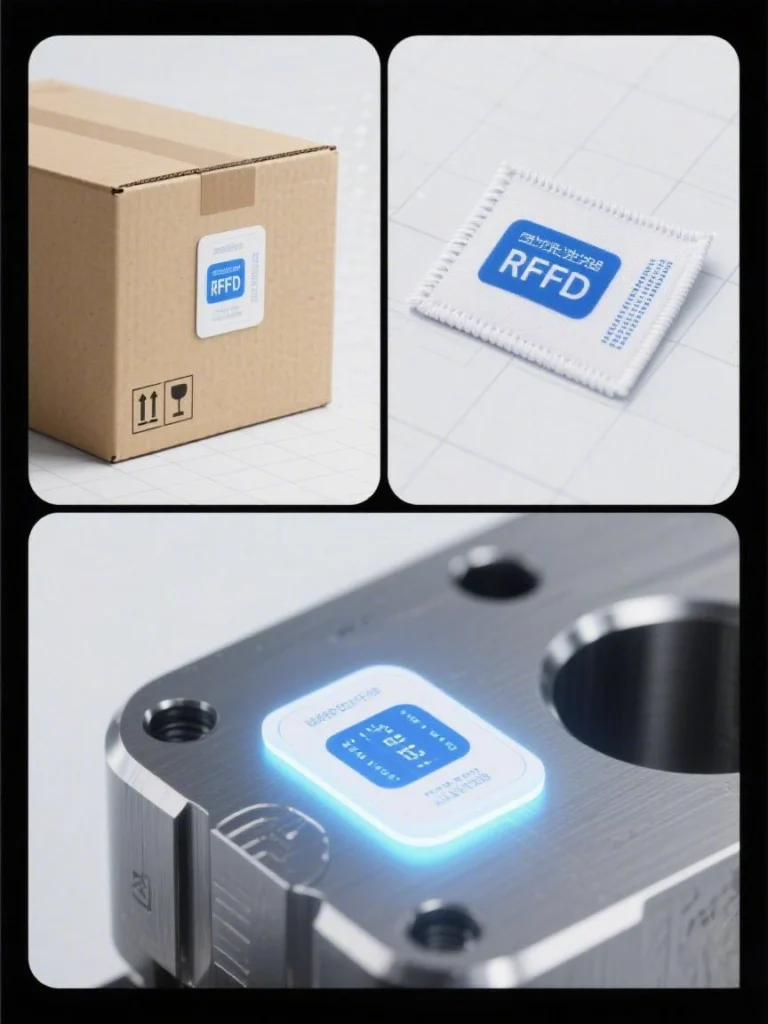
Tags are often embedded into plastic or metal parts during production.
Asset and Equipment Management
For long-term assets such as:
Machinery
Medical equipment
IT hardware
Embedded RFID tags ensure reliable identification throughout the asset’s lifecycle.
Logistics and Returnable Transport Items (RTI)
Reusable containers, pallets, and bins benefit from embedded RFID tags because:
Tags cannot be peeled off
Containers are reused hundreds of times
Tracking accuracy improves
UHF embedded tags enable automated gate reading.
Construction and Infrastructure
Embedded RFID tags are used in:
Concrete elements
Pipes and cables
Building components
They allow identification long after installation, supporting maintenance and inspection.
Medical and Healthcare Devices
In healthcare, embedded RFID tags are used for:
Surgical instruments
Sterilization tracking
Equipment identification
HF and LF frequencies are preferred due to controlled read ranges.
Problems Solved by Embedded RFID Tags
Label Damage and Loss
Traditional RFID labels can tear, peel, or degrade. Embedded tags eliminate this risk.
Counterfeiting and Fraud
Because embedded tags are hidden and difficult to replicate, they enhance product authenticity verification.
Harsh Environment Limitations
Embedded RFID tags operate reliably where paper or plastic labels fail.
Lifecycle Data Gaps
Permanent identification enables data collection from production to disposal, improving analytics and compliance.
Embedded RFID Tags vs Surface RFID Labels
| Aspect | Embedded RFID Tags | Surface RFID Labels |
|---|---|---|
| Durability | Very high | Moderate |
| Tamper resistance | Excellent | Low |
| Visibility | Invisible | Visible |
| Cost | Higher upfront | Lower upfront |
| Lifecycle value | Long-term | Short-term |
For disposable goods, labels may be sufficient. For durable assets, embedded RFID tags provide superior ROI.
Integration and Data Management
Embedded RFID tags integrate seamlessly with:
Fixed RFID readers
Handheld readers
Industrial automation systems
ERP / MES / WMS platforms
Data can be used for:
Traceability
Compliance reporting
Predictive maintenance
Process optimization
Customization Options
Embedded RFID tags can be customized for:
Size and shape
Frequency band
Memory capacity
Housing material
Branding or laser marking
This flexibility allows deployment across diverse industries.
Conclusion
Embedded RFID Tags represent a powerful evolution of RFID technology—moving identification from the surface into the structure of the product itself. By offering permanent identity, durability, tamper resistance, and environmental resilience, they enable reliable tracking and data collection across the entire lifecycle of assets and components.
From manufacturing and logistics to healthcare and infrastructure, embedded RFID tags solve problems that traditional labels cannot. They reduce data loss, improve traceability, and support smarter decision-making in complex environments.
In a world where products are expected to be not just physical objects but data carriers, embedded RFID tags ensure that identity is no longer something that can be scratched off, peeled away, or forgotten—it becomes part of the product’s very existence.