
ECO-Friendly RFID Card: Sustainable Smart Identification for a Greener Future
Plastic built the modern ID industry. PVC cards are everywhere — access badges, hotel keys, membership cards, transportation passes. Billions are produced every year. And most of them eventually end up in landfills.
That’s the uncomfortable math.
Now here’s the hopeful part: RFID technology doesn’t require PVC to function. The chip and antenna can live inside alternative materials. Which means smart cards can become smarter about the planet.
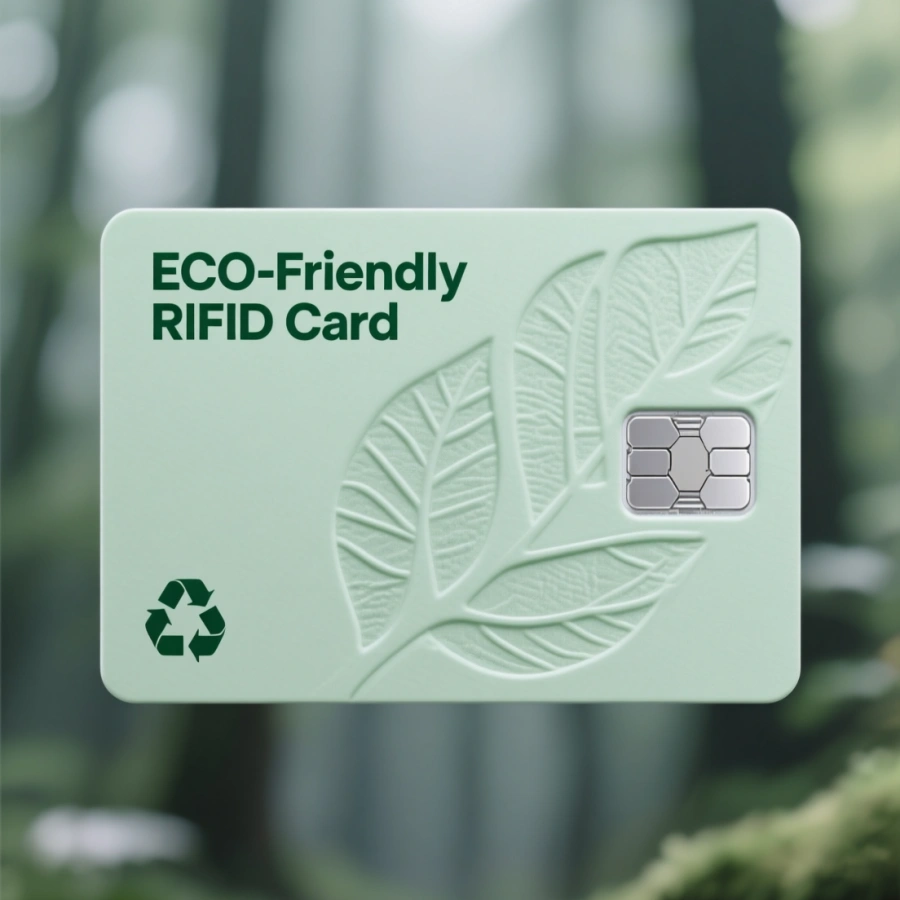
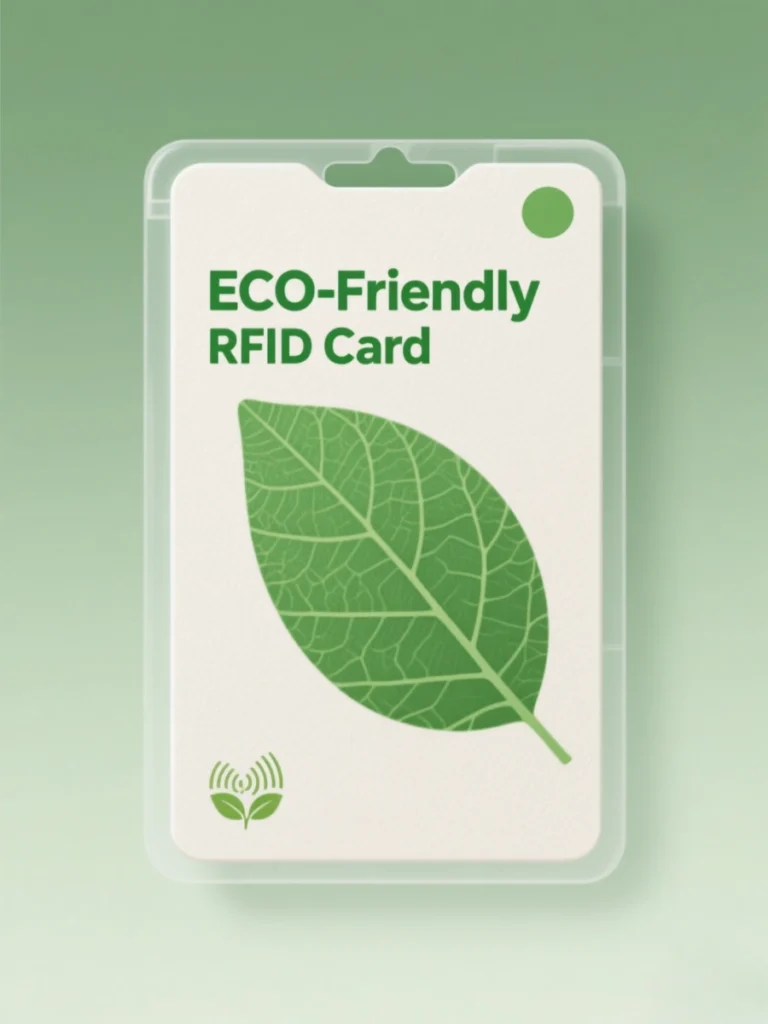
An ECO-friendly RFID card combines contactless identification technology with sustainable materials such as recycled PET, biodegradable PLA, FSC-certified paper, wood fiber composites, or even ocean-recycled plastics. It delivers the same digital functionality while significantly reducing environmental impact.
Let’s unpack what that actually means — technically, commercially, and environmentally.
What Is an ECO-Friendly RFID Card?
An ECO-friendly RFID card is a contactless smart card manufactured using sustainable, biodegradable, recyclable, or recycled materials instead of traditional PVC plastic.
Functionally, it works the same as a standard RFID card:
- It communicates via radio frequency (typically 13.56 MHz or 125 kHz).
- It contains an embedded RFID or NFC chip.
- It stores data securely.
- It enables identification, access control, payment, or tracking.
The difference is in the material composition and production process.
Instead of virgin PVC, eco versions may use:
- Recycled PVC (rPVC)
- Recycled PET (rPET)
- PLA (polylactic acid, plant-based bioplastic)
- Bamboo fiber composite
- FSC-certified paper with laminated structure
- Bio-PVC
- Ocean-recovered plastics
The RFID function remains. The carbon footprint shrinks.
Why the Market Is Moving Toward Sustainable RFID Cards
Sustainability is no longer branding theater. It is procurement policy.
Governments, universities, hotels, event organizers, and corporations increasingly require:
- Reduced carbon footprint
- Recyclable materials
- Lower plastic usage
- Compliance with ESG standards
- Circular economy initiatives
Traditional PVC cards create three main environmental issues:
- PVC production emits harmful chemicals.
- Cards are rarely recycled due to embedded chips.
- They persist in landfills for decades.
An ECO-friendly RFID card addresses these concerns without sacrificing performance.
The goal is not perfection. It is improvement at scale.
Technical Specifications of ECO-Friendly RFID Cards
Below is a general specification reference (chip type may vary depending on project requirements):
| Parameter | Specification |
|---|---|
| Operating Frequency | 13.56 MHz (HF) or 125 kHz (LF) |
| Chip Options | NTAG213 / MIFARE Classic / DESFire / EM4200 |
| Standard | ISO/IEC 14443A / ISO 15693 |
| Memory Size | 144 bytes – 8 KB (depending on chip) |
| Read Distance | 2–10 cm (HF) |
| Card Size | ISO 7810 ID-1 (85.6 × 54 mm) |
| Thickness | 0.76 mm (customizable) |
| Material Options | rPET / PLA / Bamboo / Paper Composite |
| Operating Temperature | -25°C to +70°C |
| Data Retention | 10–25 years |
| Write Cycles | Up to 100,000+ |
| Printing Options | Offset / Digital / Laser engraving |
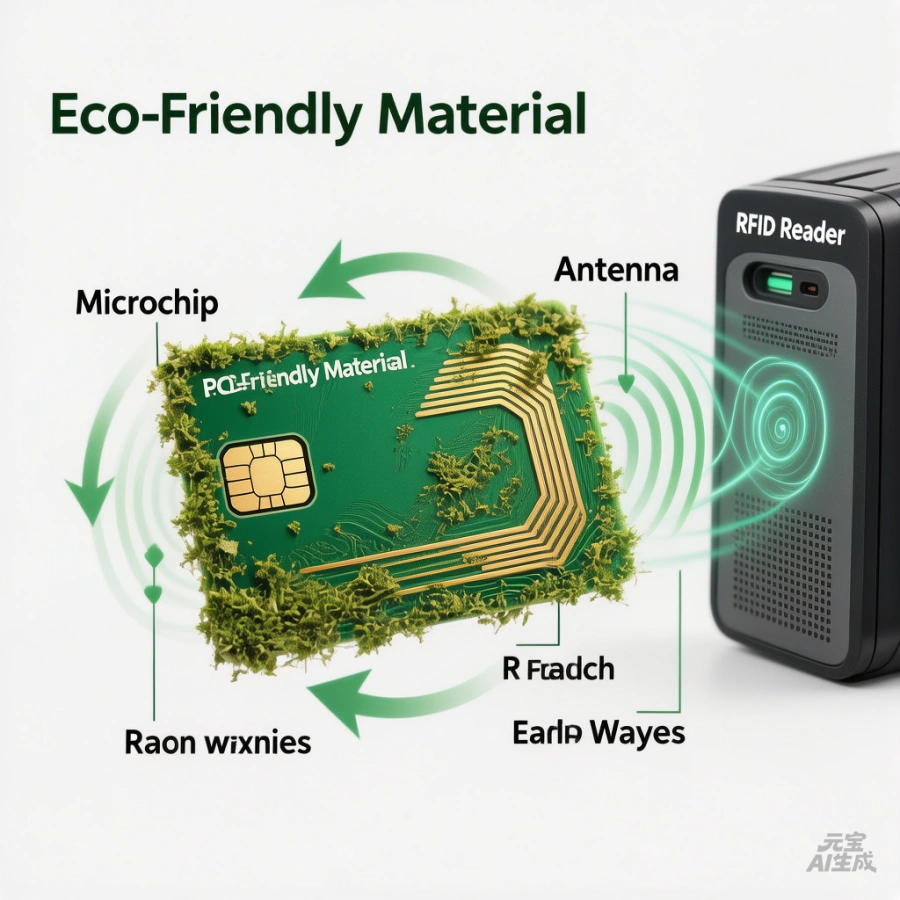
The key point: environmentally conscious materials do not compromise RFID performance.
Physics still works. Radio waves do not care whether the antenna is wrapped in PVC or bamboo composite.
Types of ECO-Friendly RFID Card Materials
1. Recycled PVC (rPVC)
This is PVC made from recycled plastic waste. It reduces reliance on virgin material and lowers emissions.
Advantages:
- Similar durability to standard PVC
- Lower carbon footprint
- Cost-effective transition option
Best for organizations that want sustainability without changing infrastructure.
2. Recycled PET (rPET)
Made from recycled bottles and plastic containers.
Advantages:
- Strong and durable
- Fully recyclable
- Lower environmental impact than PVC
Common in hotel key cards and event badges.
3. PLA (Polylactic Acid)
A biodegradable plastic derived from renewable resources like corn starch or sugarcane.
Advantages:
- Compostable under industrial conditions
- Reduced petroleum usage
- Lower carbon emissions
Ideal for short-term events or limited lifecycle applications.
4. Paper RFID Cards
These use layered FSC-certified paper with a protected inlay.
Advantages:
- Highly recyclable
- Minimal plastic content
- Lightweight
Best for single-use or temporary access cards.
5. Bamboo and Wood Composite Cards
Made from compressed bamboo fibers or thin wooden veneers.
Advantages:
- Natural aesthetic
- Renewable material
- Strong sustainability branding
Often used in eco-hotels, resorts, and premium membership programs.
Key Applications of ECO-Friendly RFID Cards
1. Hotel Key Cards
The hospitality industry produces millions of key cards annually.
Switching to biodegradable or recycled RFID cards:
- Reduces plastic waste
- Enhances brand image
- Supports green certification programs
Guests increasingly notice sustainable details. The key card becomes part of the experience.
2. Corporate Access Control
Companies pursuing ESG initiatives can replace traditional PVC employee badges with eco-friendly alternatives.
Benefits include:
- Alignment with sustainability goals
- Reduced carbon footprint
- Improved brand perception
It is a small change that signals a larger philosophy.
3. Events and Conferences
Events generate enormous badge waste.
PLA or paper-based RFID cards offer:
- Short lifecycle suitability
- Lower environmental impact
- Compliance with green event standards
When 20,000 attendees leave, 20,000 plastic badges should not linger for centuries.
4. Universities and Schools
Educational institutions often lead sustainability efforts.
Eco RFID student ID cards demonstrate:
- Environmental leadership
- Commitment to green policy
- Real-world sustainability education
The ID becomes both a credential and a statement.
5. Membership and Loyalty Programs
Brands that market sustainability can extend that identity to their membership cards.
Consistency builds credibility.
Environmental Benefits Explained
Let’s be realistic: RFID cards still contain microchips and metal antennas. They are not 100% biodegradable.
But eco-friendly versions significantly reduce:
- Virgin plastic consumption
- Carbon emissions during manufacturing
- Long-term landfill impact
For example:
- rPET reduces CO₂ emissions compared to virgin PVC.
- PLA reduces fossil fuel dependency.
- Paper composite cards reduce overall plastic mass.
Sustainability is often incremental. Ten percent improvement at massive production scale equals meaningful impact.
Addressing Common Industry Pain Points
Pain Point 1: “We Want Sustainability But Not Higher Costs”
Solution: rPVC and rPET cards offer competitive pricing compared to standard PVC.
For large-volume orders, the price difference is often marginal.
Pain Point 2: Durability Concerns
Eco RFID cards can achieve similar lifespan to PVC when properly manufactured.
For short-term use (events), durability requirements are lower anyway.
Pain Point 3: Printing Quality
Modern digital and offset printing techniques work well on rPET and composite materials.
Surface lamination ensures color stability and scratch resistance.
Pain Point 4: Compatibility with Existing Readers
Eco-friendly RFID cards use standard chips.
They are fully compatible with existing:
- Access control systems
- NFC smartphones
- Hotel locking systems
- Ticketing readers
No infrastructure replacement required.
Manufacturing Process of ECO-Friendly RFID Cards
The production process typically includes:
- Chip and antenna inlay embedding
- Lamination with eco-material layers
- High-temperature compression
- Die-cutting into ISO card shape
- Surface printing and finishing
- Quality testing (RF performance, durability)
Advanced factories ensure:
- Accurate antenna tuning
- Strong layer bonding
- RF stability
- Environmental compliance
Material changes do not mean engineering shortcuts.
Certification and Compliance
Eco RFID cards can comply with:
- ISO/IEC 14443
- ISO 7810 ID-1 size standards
- RoHS
- REACH
- FSC certification (paper-based)
- GRS (Global Recycled Standard for rPET)
These certifications are increasingly required in government and corporate tenders.
Branding and Marketing Advantages
An ECO-friendly RFID card is more than a technical component.
It becomes:
- A sustainability statement
- A visible brand commitment
- A conversation starter
Imagine a hotel printing:
“This key card is made from recycled ocean plastic.”
That message travels with every guest.
Marketing loves symbols. Sustainability cards are physical proof.
Cost Considerations
Pricing depends on:
- Material type
- Chip selection
- Order volume
- Printing complexity
- Personalization requirements
General cost hierarchy (lowest to highest):
- rPVC
- rPET
- PLA
- Paper composite
- Bamboo/wood premium versions
Large-scale orders significantly reduce unit cost.
Sustainability no longer requires luxury pricing.
Comparing ECO RFID Cards vs Standard PVC Cards
| Feature | Standard PVC | ECO-Friendly RFID Card |
|---|---|---|
| Material Source | Virgin plastic | Recycled / renewable |
| Carbon Footprint | Higher | Reduced |
| Recyclability | Limited | Improved |
| Branding Value | Neutral | Positive |
| Durability | High | Comparable |
| Reader Compatibility | Yes | Yes |
Performance remains equal.
Environmental impact improves.
The Future of Sustainable Smart Cards
As environmental regulations tighten and corporate sustainability targets become measurable metrics, eco-friendly RFID cards are expected to grow rapidly.
Future developments may include:
- Fully biodegradable antenna materials
- Reduced metal content designs
- Modular chip recovery systems
- Carbon-neutral manufacturing
Innovation moves in layers. Today’s recycled card becomes tomorrow’s circular system.
Technology evolves. Responsibility must evolve with it.
Conclusion: A Smarter Card for a Smarter Planet
An ECO-friendly RFID card does not reinvent RFID technology.
It refines it.
It acknowledges that billions of identification cards exist — and will continue to exist — but asks a better question:
Can we reduce the environmental cost without sacrificing functionality?
The answer is yes.
With recycled materials, biodegradable substrates, and sustainable production processes, eco RFID cards provide:
- Secure contactless performance
- Full system compatibility
- Reduced environmental footprint
- Strong sustainability branding
- Long-term ESG alignment
The chip still communicates at 13.56 MHz.
The door still unlocks.
The metro gate still opens.
But the material tells a different story.
In a world that runs on data and identity, even something as small as a card can carry more than information.
It can carry intention.
And intention, when multiplied by millions of units, becomes impact.