
An RFID handheld reader is a portable device used to read and write RFID tags wirelessly in real time. It allows users to identify, track, and manage tagged items without line-of-sight scanning. Typical specifications include support for LF, HF (13.56 MHz), or UHF (860–960 MHz) frequencies, adjustable read range, built-in antenna, touchscreen display, rechargeable battery, and wireless connectivity such as Wi-Fi or Bluetooth. RFID handheld readers solve problems like slow manual inventory counts, inaccurate asset tracking, and high labor costs, making them ideal for retail, warehouse management, logistics, and field operations.
- Date
- September 7, 2026
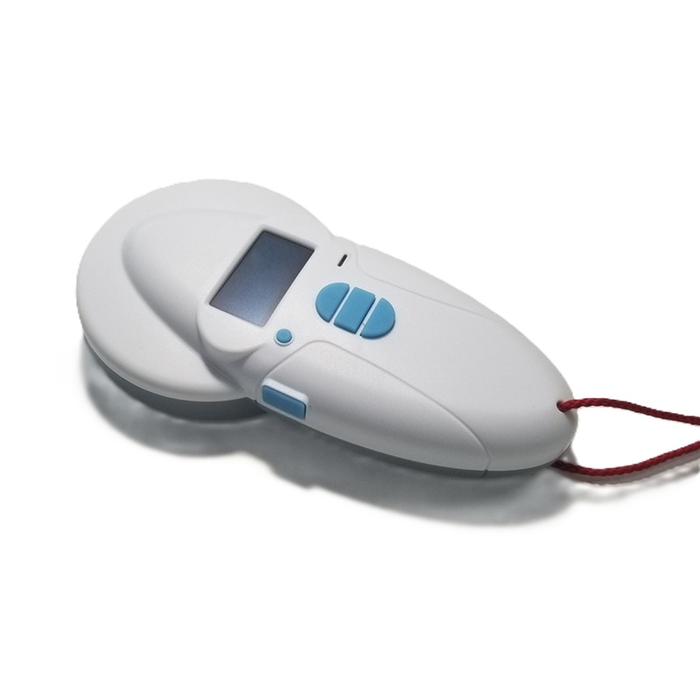
See temperature on screen from compatible sensing microchips. Explore animal ID support and USB/Bluetooth connections with DO RFID reader manufacturer.- Date
- March 30, 2026
The Handheld UHF RFID Reader is a high-performance Android-based handheld reader with integrated antenna designed for asset tracking and inventory management in demanding fieldwork environments. Produced by DO RFID Reader manufacturer, it provides reliable performance for professional industrial systems. It features:
- Android 9.0 OS & Robust Memory: The 4GB RAM and 64GB storage ensure smooth operation of complex inventory applications and data logging for large-scale deployments.
- Global UHF Frequency Range (860-960 MHz): This wide band compatibility guarantees reliable tag reading performance across different regions and industrial tag types.
- 1-10 Meter Reading Range: Offers flexible operational distance for efficient bulk scanning of pallets or precise identification of individual items.
- Date
- March 30, 2026
The Combo Gun-Type Handheld Device is a high-performance UHF RFID reader with integrated barcode scanner designed for industrial asset tracking and logistics management. Produced by DO RFID Reader manufacturer, it provides reliable performance for professional industrial systems. It features:
- Long-Range UHF RFID Reading: Enables efficient bulk identification of tagged items from a distance, streamlining large-scale inventory audits.
- Integrated 2D/1D Barcode Scanner: Provides versatile data capture for mixed environments, ensuring compatibility with existing labeling systems.
- Rugged Handheld Form Factor: Offers durable and ergonomic operation for reliable use in demanding warehouse and factory settings.
- Date
- March 30, 2026
The UHF Android Handheld RFID Reader is a high-performance UHF RFID reader with integrated antenna designed for asset tracking and inventory management in demanding environments. Produced by DO RFID READER, it provides reliable performance for professional industrial systems. It features:
- Wide Frequency Range (840-960 MHz): Ensures global compatibility and reliable tag reads for large-scale international deployments.
- Rugged Android Mobile Computer: Combines versatile data processing with a durable design suitable for bulk scanning operations in industrial settings.
- Integrated UHF RFID Functionality: Delivers efficient, hands-free identification to streamline logistics and warehouse management workflows.
- Date
- March 29, 2026
The Handheld UHF Gen 2 RFID Reader is a high-performance wireless UHF RFID reader designed for mobile asset tracking and inventory management in industrial environments. Produced by DO RFID Reader, it provides reliable performance for professional industrial systems. It features:
- Bluetooth Data Transfer: Enables flexible, real-time data synchronization with PDAs, laptops, or smartphones for efficient field operations.
- Host Connectivity Flexibility: Simplifies integration into existing systems, supporting streamlined workflows for large-scale deployments.
- Handheld UHF Operation: Delivers reliable long-range tag reading for accurate bulk inventory counts and asset verification.
- Date
- March 29, 2026
The Android UHF Gen 2 RFID Handheld Data Terminal is a high-performance UHF RFID handheld computer designed for large-scale asset tracking and inventory management in demanding industrial environments. Produced by DO RFID Reader, it provides reliable performance for professional industrial systems. It features:
- Superior Multi-Tag Identification: This ensures rapid and accurate bulk scanning of tagged items, significantly improving operational efficiency in warehouse and logistics applications.
- Android-Based Operating System: The flexible platform supports the deployment of custom business applications, enabling tailored workflows and seamless system integration.
- Industrial-Grade Reliability: Engineered for durability, the terminal delivers consistent performance in challenging conditions, supporting continuous, large-scale deployment.
- Date
- March 28, 2026
The Industrial Android Tablet UHF/NFC/Barcode/Infrared Mobile Reader is a high-performance rugged multi-technology data capture terminal designed for asset tracking, inventory management, and field service operations in demanding environments. Produced by DO RFID Reader, it provides reliable performance for professional industrial systems. It features:
- Multi-Modal Data Capture: This integrated UHF RFID, NFC, barcode, and infrared scanning capability streamlines bulk inventory audits and complex identification tasks on a single device.
- Rugged Android Platform: The industrial-grade tablet design ensures durability for large-scale deployment in warehouses, yards, and manufacturing floors.
- Long-Range UHF Reading: Extended read ranges enable efficient pallet and rack scanning, significantly accelerating warehouse logistics and asset verification processes.
- Date
- March 28, 2026
The Android Fixed RFID Reader is a high-performance UHF RFID reader with integrated Impinj chipset designed for large-scale asset tracking and industrial automation. Produced by DO RFID Reader manufacturer, it provides reliable performance for professional industrial systems. It features:
- Android 9.0 Operating System: Enables flexible on-device application development and seamless integration with enterprise software for customized deployments.
- Impinj R2000/E710 RFID Chipset: Delivers superior read accuracy and dense reader mode operation for reliable performance in challenging RF environments.
- Scalable 4 or 8-Port Design: Supports connection to multiple antennas for extended coverage, making it suitable for warehouse portals and production line monitoring.
- Date
- March 28, 2026
The Handheld Enterprise Digital Assistant is a high-performance rugged mobile data terminal designed for demanding asset tracking and field service operations. Produced by DO RFID Reader manufacturer, it provides reliable performance for professional industrial systems. It features:
- IP67 & MIL-STD-810G Ruggedness: Ensures dependable operation in harsh industrial environments, supporting large-scale deployment in warehouses, yards, and manufacturing floors.
- Integrated UHF RFID & Barcode Scanning: Enables versatile and rapid data capture for bulk inventory management, logistics verification, and asset audits from a single device.
- Multi-Protocol Connectivity (4G/Wi-Fi/GPS): Provides real-time data synchronization and location tracking for mobile workforces and distributed supply chain applications.
- Date
- March 28, 2026
The Wearable UHF RFID Reader is a high-performance wearable RFID terminal designed for hands-free inventory management and asset tracking in warehouses and logistics centers. Produced by DO RFID Reader, it provides reliable performance for professional industrial systems. It features:
- High-Speed Multi-Tag Reading: A read rate exceeding 900 tags per second enables rapid, accurate audits of large-scale inventories.
- Robust Industrial Design: Lightweight construction with IP65 sealing ensures durability and operator comfort in demanding environments.
- Integrated Wireless Connectivity: Wi-Fi and Bluetooth support real-time data transfer and seamless integration into existing enterprise systems.
- Date
- March 28, 2026
The Long Range RFID Scanner is a high-performance UHF RFID reader with integrated antenna designed for automated livestock management and traceability systems. Produced by DO RFID READER, it provides reliable performance for professional industrial systems. It features:
- USB-C Charging: This ensures easy field deployment and reduces operational downtime with convenient, universal power delivery.
- 13cm Read Range: It enables efficient, hands-free scanning for high-throughput applications in demanding agricultural and industrial environments.
- ISO 11784/11785 Compliance: This guarantees seamless compatibility for global animal identification and supports large-scale, regulatory-compliant deployments.
- Date
- March 28, 2026
The GAORFID R5 Bluetooth Wearable UHF RFID Reader is a high-performance wearable UHF RFID reader designed for efficient inventory management and asset tracking in warehouse and logistics environments. Produced by DO RFID READER, it provides reliable performance for professional industrial systems. It features:
- Bluetooth Connectivity: Enables seamless wireless data transfer to mobile devices for real-time inventory updates and flexible operation.
- Ergonomic Wearable Design: Allows for hands-free scanning, improving operator efficiency and safety during large-scale inventory audits.
- Long-Range UHF Reading: Ensures accurate and rapid bulk identification of tagged items from a distance, streamlining warehouse workflows.
- Date
- March 27, 2026
The Android 10.0 Handheld UHF RFID Reader is a high-performance rugged handheld computer with integrated UHF RFID designed for large-scale asset tracking and inventory management in demanding environments. Produced by DO RFID READER, it provides reliable performance for professional industrial systems. It features:
- Long-Range UHF Reading: Enables efficient bulk scanning of tagged assets from a distance, streamlining warehouse and yard operations.
- IP65 Rugged & Waterproof Design: Ensures dependable operation in industrial settings, resisting dust, water jets, and accidental drops.
- High-Capacity 9000mAh Battery: Supports extended shift-long deployment without frequent recharging, maximizing workforce productivity.
- Date
- March 27, 2026
The Bluetooth 4.0 EDA/PDA UHF RFID Sled RFID Reader is a high-performance UHF RFID sled reader designed for mobile asset tracking and inventory management in warehouse and logistics environments. Produced by DO RFID READER, it provides reliable performance for professional industrial systems. It features:
- Bluetooth 4.0 Connectivity: Ensures stable, low-power wireless communication with mobile devices for efficient large-scale deployment.
- Integrated High-Performance Antenna: Delivers extended read range and reliable tag capture for bulk scanning applications.
- Rugged Sled Design: Protects the device in demanding industrial use and provides a secure grip for prolonged operation.


FEATURES:
- Truly provides long distance, multiple tags reader.
- High performance Handheld RFID UHF reader.
- Excellent Mechanical Protection.
- Outstanding Design.
- Ultra Long Operating Time.
This RFID handheld reader is passive UHF long range data collection terminal.Over-molding and ergonomic hardware design can satisfy most of the tough environment from different fields.
Every detail has been well refined.The appearance is compact, elegant and balanced, which makes the product eye -catching and impressive.
The UHF long range RFID handheld reader writer with Impinj Indy R2000 chip, offers the best performance and excellent multi-tag identification ability in the industry.
Excellent Mechanical Protection for any harsh environment, The safety drop height is 2m / 656ft., IP64 protection grade can resist dusts and splashes effectively
Top Class Materials of CNC aluminum, nylon(Bayer) and 1.1mm thickness tempered glass offer excellent strength + heat dissipation + electromagnetic shielding. The soft material around the handle offers comfort.Industrial and military grade components ensure stability and endurance in harsh environments
Pistol style hotswapping battery system makes backup battery more convenient to be restored, so that the operating time is unlimited. A standard product package has two 6,OOOmAh batteries included.Android 6.0 intergrated, optimized version is continuously updated.
RFID handheld reader writer with high performance and muital communication wifi, bluetooth,GPS,USB ect,Heavy duty applications such as massive data collection, 3D real-time display can be operated smoothly.
This reader can be used to different applications, such as warehouse management, clothes management, library management and animals management,asset tracking etc.
USED FOR
- warehouse management
- Track inventory in the warehouse
- Clothes management
- Library management
- animals management
- Retail
- Manufacturing
- asset tracking
| Performance parameters | |
|---|---|
| Working Frequency | 902~928 MHz or 865~868MHz |
| Protocol | ISO18000-6C(EPC C1 GEN2) |
| Operating System | Android 6.0 |
| RFID hardware | Impinj R2000 |
| Performance Parameters | |
| CPU | Quad-core Cortex-A17/1.8GHz |
| GPU | ARM Mali-T764/ High performance3D engine |
| Chip | Impinj R2000 |
| RAM | 2G/4G LPDDR3 |
| Software & SDK | DEMO and C#, VC , Java |
| Storage space | 32G/64GEMMC 5.0(customized) |
| LCD | 5.0 Inches /1280°720/ IPS /180 view angle |
| Touch Screen | a1.1mm thickness tempered glass / lO-dot touch / Can be operated with glove |
| Hotswapping Battery | One-way relay output, One-way I/O input |
| PSAM | PSAM02 / TI TCA5013 (Optional) |
| Bluetooth | 61uetooth 4.0 |
| WIFI | IEEE 802.11 b/g/n |
| 3G | Huawei MU609/ Vehicle grade (Optional) |
| 4G | uawei ME 909s /Vehicle grade (Optional) |
| Physical Parameters | |
| Shell material | CNCaluminum + nylon(Bayer) |
| Item size | Profile 160x82x129mm |
| Grip 111*38*47mm | |
| Net weight | 640g( Include battery / Standard version) |
| Working temperature | -20℃ to 60℃ |
| Storage temperature | -40℃ to 70℃ |
| Humidity | 5%RH to 95%RH(non-condensing) |
| Protection Grade | IP64 |
| Safety Drop Height | 2m /6.56ft |
What RFID handheld reader can do ?


An RFID handheld reader is a portable device that allows operators to identify RFID-tagged products, assets, equipment, and materials while moving through a warehouse, retail store, manufacturing facility, or other work environment. Unlike a fixed RFID reader, which monitors a defined reading zone, a handheld reader moves with the user and captures tag information wherever the work takes place.
For businesses handling hundreds or thousands of tagged items, a handheld UHF RFID reader can simplify inventory counting, asset inspections, receiving, shipping verification, and item searching. Many industrial models combine an RFID module, antenna, Android operating system, touchscreen, wireless connectivity, and rechargeable battery in one mobile terminal.
However, not every handheld RFID reader offers the same capabilities. Some are complete Android computers, while others are Bluetooth accessories designed to work with smartphones or tablets. Their frequency bands, supported protocols, antenna performance, reading distance, and software interfaces can also differ.
This guide explains how to select an RFID handheld reader for commercial and industrial projects, how to evaluate its real-world performance, and what distributors, system integrators, and OEM buyers should confirm before placing a bulk order.
What Is an RFID Handheld Reader?
An RFID handheld reader is a mobile identification device that communicates wirelessly with compatible RFID tags. It usually contains an RFID radio module and antenna, allowing the operator to read identification data without scanning every tag individually.
For industrial applications, UHF RFID handheld readers are especially useful because they can identify multiple compatible passive tags in a reading area. Depending on the device, they may also support writing tag data, barcode scanning, GPS, Wi-Fi, Bluetooth, and mobile data communication.
A typical handheld RFID system includes:
| Component | Function |
|---|---|
| RFID reader module | Sends RF signals and receives tag responses |
| Integrated antenna | Establishes the RFID reading zone |
| RFID tags | Store identification information and respond to the reader |
| Android terminal | Displays results and runs inventory or asset applications |
| Wireless connection | Transfers information to a server or enterprise system |
| Battery | Powers the reader during mobile operations |
| Optional barcode scanner | Captures printed 1D or 2D codes alongside RFID data |
For example, an operator can walk along a warehouse aisle, activate the RFID inventory function, and collect information from compatible tagged cartons or assets. The application can then compare the detected EPC numbers with the warehouse database.
This is why businesses often use handheld readers for cycle counting and exception handling rather than installing a fixed reader at every shelf.
You can explore the DO RFID handheld reader product range to see an example of an integrated UHF data collection terminal.
How Does a Handheld RFID Reader Work?
A handheld UHF RFID reader communicates with passive tags through radio-frequency signals. Unlike a barcode scanner, it does not need to see a printed code directly.
A typical reading process follows these steps:
- RF activation: The handheld reader generates an RF signal through its antenna.
- Tag response: Compatible passive tags receive energy and respond with their stored identification information.
- Data capture: The RFID module receives and decodes the tag response.
- Data processing: The device displays the information and may filter repeated reads.
- Data transmission: The application stores the results locally or sends them to a warehouse, retail, or asset management system.
The reading process can be repeated while the operator moves through different areas.
For inventory applications, the reader may also provide additional information such as signal strength (RSSI), depending on the module and SDK. This can help an operator locate a particular tagged asset.
However, receiving an RFID signal does not automatically tell the software where an item is located. The system needs a defined workflow, such as associating a scan with a warehouse zone, shelf, work order, or operator.
Three Main Types of RFID Handheld Readers
The term “RFID handheld reader” covers several device designs. Understanding the differences is important because each type offers a different balance of mobility, integration, cost, and operating convenience.
1. Integrated Android RFID Handheld Reader
An integrated Android RFID handheld reader combines a mobile computer and RFID reading hardware in one device.
Typical components include:
- Android operating system.
- Built-in UHF RFID module.
- Integrated RFID antenna.
- Touchscreen display.
- Rechargeable battery.
- Wi-Fi and Bluetooth.
- Optional 1D/2D barcode scanner.
- Optional GPS and cellular connectivity.
The main advantage is that users do not need to connect a separate RFID accessory to a smartphone. They can run inventory software directly on the device and process collected data in the field.
This type is suitable for warehouse inventory, manufacturing traceability, logistics, retail stocktaking, and industrial asset management.
DO RFID offers different Android UHF handheld reader configurations for buyers evaluating mobile RFID data collection equipment.
2. Bluetooth RFID Handheld Reader
A Bluetooth RFID handheld reader communicates with a smartphone, tablet, or other compatible host device.
The RFID accessory performs the tag reading, while the connected device runs the business application and displays the results.
Advantages include:
- Lower investment when compatible mobile devices are already available.
- Flexible deployment across different mobile platforms.
- Convenient replacement of the host device.
- Compact options for field technicians and retail staff.
The main limitation is that compatibility depends on the host device, Bluetooth connection, operating system, and available SDK. Buyers should also consider whether the reader can store data locally when the wireless connection is interrupted.
3. RFID Sled or Pistol-Grip Handheld
An RFID sled is an accessory that adds RFID functionality to a compatible mobile computer or smartphone. It often provides a trigger handle, integrated antenna, and additional battery capacity.
For example, the Zebra RFD40 Premium is a UHF RFID sled designed for compatible mobile computing devices. It is not the same product category as a standalone Android RFID terminal.
Pistol-grip readers, on the other hand, may be designed as independent equipment with a dedicated handle and trigger.
They are useful when workers need to perform frequent RFID scans over long shifts. The ergonomic grip can reduce the need to hold a tablet or phone while operating the RFID antenna.
Comparison of Handheld RFID Reader Types
| Feature | Android Integrated Reader | Bluetooth Reader | RFID Sled / Pistol-Grip |
|---|---|---|---|
| Independent operation | Yes, with its own mobile platform | Usually requires a host device | Depends on the model |
| Screen | Built-in on Android models | Uses the connected phone or tablet | May have its own screen or depend on a host |
| RFID antenna | Integrated | Integrated | Usually integrated |
| Software | Runs compatible Android applications | Uses compatible host software | Depends on device architecture |
| Battery | Built-in or removable, model-dependent | Separate rechargeable battery | Often a dedicated rechargeable battery |
| Typical users | Warehouse and industrial teams | Mobile workers and field technicians | High-volume inventory operators |
| Main consideration | Device lifecycle and application integration | Host compatibility and connection stability | Ergonomics and accessory compatibility |
According to GS1’s guidance on RFID reader form factors, handheld interrogators are typically used for mobile operations, while fixed and embedded readers serve different installation and automation requirements. See the GS1 reader form factor guide.
RFID Frequencies: LF, HF, and UHF Handheld Readers
Before selecting a handheld device, buyers must identify the frequency technology used by their RFID tags.
A device that supports UHF RFID should not automatically be expected to read LF or HF tags. These frequencies use different communication technologies and require compatible hardware.
| RFID Technology | Frequency | Typical Applications | Key Consideration |
|---|---|---|---|
| LF RFID | 125kHz or 134.2kHz | Animal identification, selected access control and industrial applications | Short-range identification |
| HF RFID | 13.56MHz | NFC, smart cards, ticketing and selected access systems | Requires compatible HF protocol and chip |
| UHF RFID | Regional bands within approximately 860–960MHz | Warehouse inventory, logistics, retail and asset tracking | Suitable for longer-range and multi-tag reading |
For most warehouse and industrial inventory projects, UHF RFID is the most relevant handheld technology.
Why UHF RFID Is Popular for Inventory Management
UHF RFID uses EPC Gen2-compatible tag technology in many commercial applications and supports efficient identification of multiple tags.
Its benefits include:
- Reading tags without direct visual contact.
- Identifying multiple tagged items in one operation.
- Supporting shelf and pallet inventory checks.
- Helping operators locate assets across large facilities.
- Providing flexible integration with inventory software.
However, UHF does not mean every tag can be read from the same distance. The antenna, tag design, orientation, RF power, and surrounding materials all affect performance.
Which UHF Frequency Band Should You Choose?
UHF RFID operating bands are regulated regionally. Common examples include:
| Market | Common UHF Frequency Allocation |
|---|---|
| United States | 902–928MHz |
| European ETSI region | 865–868MHz |
| Certain Asian markets | Regional allocations vary |
| Other international markets | Must be confirmed against local regulations |
Some reader specifications advertise a broad frequency range such as 860–960MHz. This does not mean every device can operate across that entire range in every country.
For international distribution, confirm the exact hardware and firmware frequency configuration for the destination market. Also check the applicable RF output power and regulatory requirements.
Important Technical Specifications of an RFID Handheld Reader
A professional buyer should evaluate the entire device rather than focusing only on its maximum reading distance.
The following table summarizes the key parameters to compare.
| Specification | What to Check | Why It Matters |
|---|---|---|
| RFID frequency | 865–868MHz, 902–928MHz, or other regional band | Ensures regional operation |
| Protocol | EPC Class 1 Gen 2 / ISO 18000-6C or specified compatible protocol | Determines tag communication compatibility |
| Reading distance | Tested range using the target tag | Determines practical working coverage |
| Read/write capability | Read EPC, write EPC, access User memory, or other supported functions | Prevents incorrect feature assumptions |
| Antenna | Circular or linear polarization, gain and design | Affects tag orientation and detection |
| Reading speed | Tags per second under stated test conditions | Important for dense inventory operations |
| Operating system | Android version and security support | Affects software lifecycle |
| RAM and storage | Available memory configuration | Influences application and data processing |
| Battery | Capacity, operating time and replacement options | Determines shift coverage |
| Connectivity | Wi-Fi, Bluetooth, USB, 4G and GPS | Supports field communication |
| Barcode scanner | Optional 1D or 2D scanning engine | Enables combined identification |
| Protection | IP rating and drop specification | Important in industrial environments |
| SDK | Supported programming languages and sample applications | Determines integration effort |
Reading Distance: Why Maximum Range Can Be Misleading
A long reading distance is useful for locating pallets, containers, or tagged equipment across a warehouse. However, it is not the only measure of RFID performance.
The real reading distance depends on several variables:
Tag size and antenna design: Larger tags often provide a different reading performance from compact labels. A tag designed for an ordinary carton may not perform well when attached directly to metal.
Tag orientation: Circularly polarized reader antennas can help reduce orientation sensitivity, but they do not eliminate every missed read.
RF output power: Higher output power can increase the reading zone, subject to device limits and local regulations. It may also increase unintended reads from adjacent areas.
Surrounding materials: Metal, liquid, dense packaging, and other RF-interfering materials can affect signal propagation.
Installation and operating conditions: A warehouse with metal racks and closely packed goods creates different conditions from an open-air test area.
For these reasons, ask the supplier to provide a test result using your actual tag model and intended installation environment.
Reading Speed: What Does Tags per Second Mean?
Reading speed is especially important when a warehouse needs to count hundreds of tagged products in a short period.
Some industrial handheld readers publish very high multi-tag reading rates. For example, the Chainway C72 product page lists a rate of more than 1,300 tags per second under specified laboratory conditions.
This is a useful performance reference, but it should not be interpreted as the guaranteed rate of every handheld reader or every warehouse installation.
A better purchasing test is to prepare a representative group of tags and measure:
- How many tags are detected during a defined scan period.
- How many expected tags are missed.
- Whether duplicate reads are filtered correctly.
- Whether tags remain readable in their actual orientations.
- Whether the device can identify a specific tag in a dense group.
A reader that reports a high theoretical speed but misses tags during real inventory operations may not deliver the productivity improvement the project requires.
How to Choose the Right RFID Handheld Reader
The most suitable device depends on the work process, tag technology, application software, and operating environment.
Step 1: Confirm the RFID Tag Type
Start by identifying the tag frequency and protocol.
For UHF projects, confirm whether the tags support EPC Class 1 Gen 2 / ISO 18000-6C and whether the reader supports the required memory operations.
Do not assume that all UHF tags have identical performance. Label size, antenna design, chip selection, and mounting surface can all affect reading results.
DO RFID offers different UHF RFID tags for identification and tracking applications. For metal equipment and metal shelving, evaluate UHF RFID anti-metal tags rather than assuming an ordinary label will work reliably.
Step 2: Define the Required Reading Distance
Different applications require different reading zones.
| Application | Typical Requirement |
|---|---|
| Individual item search | Controlled reading zone for locating one tag |
| Retail stocktaking | Reliable reading of many products on shelves |
| Warehouse cycle counting | Broad coverage and multi-tag recognition |
| Pallet identification | Longer-range reading of grouped items |
| Industrial asset audit | Stable identification around equipment and metal structures |
The purpose is not always to maximize the distance. A narrower reading zone may be better when staff need to identify one particular asset among nearby tagged objects.
Step 3: Check the Android Platform and SDK
For an integrated Android RFID terminal, hardware compatibility is only one part of the project.
The application must be able to:
- Start and stop RFID inventory operations.
- Receive EPC information from the reader module.
- Filter repeated reads.
- Display the required tag information.
- Save inventory results.
- Upload records to the business system.
- Handle network interruption and offline data.
Ask whether the supplier provides an SDK, API documentation, sample code, and technical support. Confirm that the development kit supports the actual device model and firmware version.
For a large deployment, also check the Android operating system version, security update policy, application permissions, and mobile device management compatibility.
Step 4: Choose the Right Battery and Ergonomic Design
RFID inventory work may require operators to hold a device for several hours.
Evaluate battery capacity, charging time, removable battery options, device weight, trigger position, grip shape, screen readability, and performance when used with gloves.
A high-capacity battery is valuable, but actual runtime also depends on RFID scanning frequency, screen brightness, Wi-Fi or 4G use, barcode scanning, and application workload.
Step 5: Consider Barcode and Other Data Capture Functions
Some projects require both RFID and barcode identification.
For example, a warehouse may use UHF RFID to count tagged cartons but still need to scan a printed barcode on a shipping document or package.
A device with an optional 1D/2D barcode engine can combine both functions. Make sure the barcode module is included in the quoted configuration, as it may not be standard on every reader.
Step 6: Match Durability to the Work Environment
For warehouse, manufacturing, and outdoor projects, check:
- IP protection rating.
- Drop resistance and test conditions.
- Operating temperature.
- Screen and housing materials.
- Connector protection.
- Battery replacement method.
An IP rating and a drop-resistance specification are different tests. A device should not be considered waterproof simply because it has passed a drop test.
Main Applications of RFID Handheld Readers
1. Warehouse Inventory Management
Warehouse inventory management is one of the most common uses of UHF handheld readers.
Operators can use the device for:
- Receiving verification.
- Shelf inventory.
- Cycle counting.
- Pallet identification.
- Picking verification.
- Shipment confirmation.
- Missing item searches.
For example, a warehouse operator can scan the RFID tags in a storage aisle and compare the detected EPC values with the expected inventory list.
If a tag is not detected, the software can flag it for further inspection. If an unexpected tag appears, the application can identify it as a possible misplaced item.
The greatest benefit comes when reading results are integrated with the warehouse management system rather than stored only on the handheld device.
2. Retail and Apparel Inventory
Retail stores use RFID handheld readers to count merchandise, verify stock levels, and locate products.
Applications include:
- Apparel stocktaking.
- Shelf replenishment.
- Store-to-warehouse transfer checks.
- Online order picking.
- Item-level inventory audits.
In apparel projects, tag placement matters. Hanging garments, folded clothing, and tightly packed merchandise can produce different reading results.
A pilot test using real products and tag positions is therefore recommended before large-scale deployment.
3. Jewelry Inventory Management
Jewelry items are small, valuable, and often stored in display cases or trays. Manual counting can be time-consuming, especially when inventory needs to be checked frequently.
A handheld RFID reader can help store staff identify tagged rings, watches, necklaces, and bracelets during inventory audits or item searches.
However, jewelry RFID requires careful tag selection because of small tag dimensions and nearby metal components. The reader, tag, and antenna configuration should be tested together.
See the DO RFID jewelry management system guide for more information about combining RFID tags, readers, and inventory software in jewelry retail.
4. Manufacturing and Industrial Asset Tracking
Manufacturers use handheld RFID readers to identify tools, components, work-in-process items, and production equipment.
Typical applications include:
- Tool room inventory.
- Work-in-process identification.
- Equipment inspection.
- Maintenance records.
- Returnable container tracking.
- Production material verification.
For assets mounted on metal surfaces, use tags designed for on-metal operation. Standard UHF labels may suffer from reduced performance when mounted directly against conductive surfaces.
5. Logistics and Transportation
Logistics operators can use handheld readers to verify tagged goods during loading, unloading, transfer, and yard inspections.
A mobile device allows staff to perform identification checks at different locations without installing a permanent RFID reading station at each point.
For automated vehicle or conveyor identification, however, a fixed or integrated reader may be more suitable.
Handheld RFID Reader vs. Fixed RFID Reader vs. Desktop Reader
Not every RFID project needs a handheld terminal. Choosing the correct reader type can reduce installation costs and improve operational efficiency.
| Reader Type | Best Use | Main Advantage | Main Limitation |
|---|---|---|---|
| Handheld RFID reader | Inventory checks and mobile asset audits | Portable and flexible | Requires operator action |
| Fixed RFID reader | Gates, conveyors and automated checkpoints | Continuous or event-based reading in a defined area | Requires installation and antenna planning |
| Integrated RFID reader | Single doors, lanes and compact reading zones | Combines reader and antenna in one enclosure | Coverage depends on the built-in antenna |
| Desktop RFID reader | Card enrollment and item identification at a desk | Convenient for controlled close-range reading | Limited mobility |
| Embedded RFID module | OEM equipment and custom terminals | Flexible product integration | Requires engineering and enclosure design |
A handheld reader cannot fully replace a fixed reader where automatic, unattended tag detection is required. Similarly, a desktop reader is usually a more practical option for controlled item presentation or tag enrollment.
DO RFID also provides UHF long-range RFID reader modules for system integrators and manufacturers designing their own RFID equipment.
How to Integrate an RFID Handheld Reader with WMS or ERP Software
A handheld RFID reader becomes more valuable when its data is connected to the company’s existing software.
A typical data workflow includes:
1. User authentication: The operator logs in with an account or employee ID.
2. Task selection: The application loads an inventory count, receiving order, asset audit, or shipping task.
3. RFID scanning: The operator activates the reader and captures compatible tag data.
4. Data filtering: The application removes repeated reads and applies business rules.
5. Record matching: EPC values are compared with the expected item list.
6. Exception handling: Missing, unexpected, or incorrectly assigned items are flagged.
7. Data synchronization: The application uploads approved results to the WMS, ERP, or asset management database.
For an OEM or software development project, confirm whether the reader SDK offers the necessary functions, such as:
- Start and stop inventory.
- Set RF output power.
- Configure the antenna or reading mode.
- Read EPC, TID, and supported memory areas.
- Write tag data, where supported.
- Obtain signal strength, if available.
- Return scan results to the Android application.
Not every handheld reader supports every operation. Read/write functions and memory access depend on the RFID module, chip, firmware, and software permissions.
For projects requiring tag programming as well as mobile inventory, compare the available RFID reader writer solutions.
DO RFID Handheld Reader Solutions for Wholesale and OEM Projects
DO RFID provides RFID readers, tags, cards, and related products for commercial and industrial identification applications.
Its handheld reader portfolio includes UHF mobile data collection products designed for warehouse inventory, asset tracking, retail operations, and field inspections.
Different configurations are available for buyers with different hardware and integration requirements.
Android UHF Handheld Reader
One published DO RFID configuration lists the following features:
| Parameter | Published Configuration |
|---|---|
| Operating system | Android 9.0 |
| Memory | 4GB RAM + 64GB storage |
| RFID frequency | 860–960MHz product-family description; actual regional band must be confirmed |
| Protocol | ISO 18000-6C |
| Published reading distance | 1–10 meters |
| Device type | Integrated UHF handheld terminal |
The stated reading distance is a product-specific specification, not a guaranteed result for every tag or environment.
High-Performance Android UHF Handheld Reader
Another published configuration describes a high-performance handheld device with:
- Built-in 8 dBi circularly polarized antenna.
- UHF reading and writing capability.
- Published reading/writing range of approximately 1–6 meters.
- Removable 10,000mAh battery.
- Approximately 8 hours of continuous operation under the stated configuration.
- Optional barcode and fingerprint functions.
- Additional LF identification support in the listed configuration.
These specifications belong to different published configurations and should not be combined into one universal product specification.
For model details, see the DO RFID Android UHF handheld reader and the high-performance Android handheld reader.
Customization for B2B and OEM Buyers
For distributors, system integrators, and equipment manufacturers, the final configuration should be defined before sample approval.
Depending on the selected model and engineering feasibility, project requirements may include:
- RFID frequency and regional configuration.
- RFID module and antenna selection.
- Read/write functions.
- Barcode scanning options.
- Battery and charging configuration.
- Operating system and memory.
- Wi-Fi, Bluetooth, USB, GPS, and cellular connectivity.
- SDK and application development support.
- Branding, packaging, and accessories.
For a new equipment design, provide the intended application, tag model, target reading distance, operating environment, and software requirements. This helps the engineering team evaluate whether an existing reader configuration is suitable or whether further customization is required.
What Should You Test Before Buying RFID Handheld Readers in Bulk?
For wholesale orders and large deployments, evaluating one device in an office environment is not enough.
A practical acceptance test should use the actual tags, products, racks, shelves, and software environment of the project.
| Test Item | Recommended Evaluation |
|---|---|
| Tag compatibility | Test every agreed RFID tag model |
| Reading distance | Record results at several distances |
| Tag orientation | Test different angles and directions |
| Multi-tag performance | Read a representative group of tags together |
| Missed-tag rate | Compare detected tags with the known test quantity |
| Duplicate filtering | Confirm repeated reads do not inflate inventory counts |
| Metal environment | Test tags on their actual mounting surfaces |
| Barcode function | Test the required 1D/2D codes if included |
| Wireless connection | Check Wi-Fi, Bluetooth, and cellular communication |
| Offline operation | Confirm local data storage and later synchronization |
| Battery performance | Test during a realistic working shift |
| Software integration | Verify SDK, API, data fields, and database updates |
| Physical durability | Check the device against the agreed IP and drop specifications |
A useful project acceptance record should document the reader model, firmware version, tag type, antenna setting, RF output power, test distance, number of tags, and environmental conditions.
This provides a repeatable reference for future production batches and replacement units.
How Much Does an RFID Handheld Reader Cost?
There is no single price for all RFID handheld readers. A basic Bluetooth reader and an industrial Android UHF terminal have very different hardware and software requirements.
The main cost factors include:
| Cost Factor | Effect on Price |
|---|---|
| RFID module | Chipset performance and supported functions |
| Antenna | Antenna design, gain, and integration |
| Operating system | Android platform, licensing, and hardware configuration |
| Memory | RAM and storage capacity |
| Battery | Capacity, replaceability, and charging accessories |
| Barcode module | Optional 1D or 2D scanning engine |
| Connectivity | Wi-Fi, Bluetooth, GPS, and cellular functions |
| Durability | Housing, IP protection, and drop resistance |
| Software | SDK, application development, and integration support |
| Customization | Branding, firmware, enclosure, and accessories |
| Order quantity | Sample, small batch, and bulk procurement requirements |
When comparing supplier quotations, request a complete configuration sheet. A lower-priced device may exclude the barcode scanner, charging cradle, spare battery, or software development support required by your project.
The most useful comparison is the total cost of deploying and maintaining the equipment, rather than the hardware price alone.
Frequently Asked Questions About RFID Handheld Readers
1. What is an RFID handheld reader used for?
An RFID handheld reader is used to identify and track RFID-tagged products, assets, equipment, and materials. Common applications include warehouse inventory, retail stocktaking, manufacturing, logistics, jewelry management, and asset inspection.
2. What is the difference between an RFID handheld reader and an RFID scanner?
An RFID handheld reader communicates with RFID tags through radio waves and can identify multiple compatible tags without direct line-of-sight scanning. A barcode scanner reads printed codes, usually one code at a time with the scanning area directed toward the label.
3. What is the typical reading distance of a UHF handheld RFID reader?
The distance varies by model, antenna, RF output power, tag design, and environment. Some handheld readers are designed for a few meters, while higher-performance configurations may specify longer distances under suitable test conditions. Always verify the range with the actual tag and application.
4. Can a handheld RFID reader read multiple tags simultaneously?
Yes. UHF RFID handheld readers commonly support multi-tag inventory operations using anti-collision procedures. The actual number of successfully identified tags depends on tag density, reader configuration, interference, tag orientation, and software handling.
5. Can an RFID handheld reader write data to tags?
Some models support both reading and writing, while others are read-only. Write capability depends on the reader module, firmware, tag chip, memory type, and access permissions. Buyers should confirm the exact required operation before ordering.
6. Can an RFID handheld reader connect to an Android phone?
Some handheld readers connect through Bluetooth or other supported interfaces. An integrated Android RFID terminal, however, runs applications directly on its own operating system and does not need a separate phone.
7. What RFID protocol is commonly used by UHF handheld readers?
EPC Class 1 Gen 2 and ISO 18000-6C are widely used for passive UHF RFID inventory applications. The exact protocol and regional frequency configuration should be checked against the reader and tag specifications.
8. Can a handheld RFID reader scan metal products?
Yes, but the tag must be suitable for the mounting surface. Standard UHF labels may lose performance when attached directly to metal. Use an appropriate on-metal RFID tag and test it with the selected reader.
9. Is an Android RFID handheld reader suitable for warehouse management software?
Yes. An Android handheld reader can run compatible inventory applications and connect to WMS or ERP systems through supported SDKs, APIs, or data communication interfaces. Compatibility should be verified using the intended device model and software version.
10. What should I provide when requesting an RFID handheld reader quotation?
Provide the application, RFID tag model, frequency, required reading distance, tag quantity, operating environment, Android requirements, barcode options, communication interfaces, estimated order quantity, and any customization requirements. A physical tag sample is especially helpful for compatibility testing.
Request an RFID Handheld Reader for Your Project
Selecting a handheld RFID reader is not simply a matter of choosing the longest advertised reading distance. The right product must work with the actual tags, support the required regional frequency, perform consistently in the intended environment, and communicate reliably with your business software.
For warehouse operators, distributors, manufacturers, and system integrators, the most important steps are to identify the tag technology, define the reading workflow, confirm the device configuration, and complete sample testing before mass deployment.
DO RFID supplies RFID handheld readers, UHF RFID tags, reader modules, and related identification products for different industrial and commercial applications.
Visit DO RFID to discuss your project. Send us your RFID tag specifications, required reading distance, target market, software requirements, and estimated order quantity so we can evaluate a suitable handheld RFID reader configuration.