
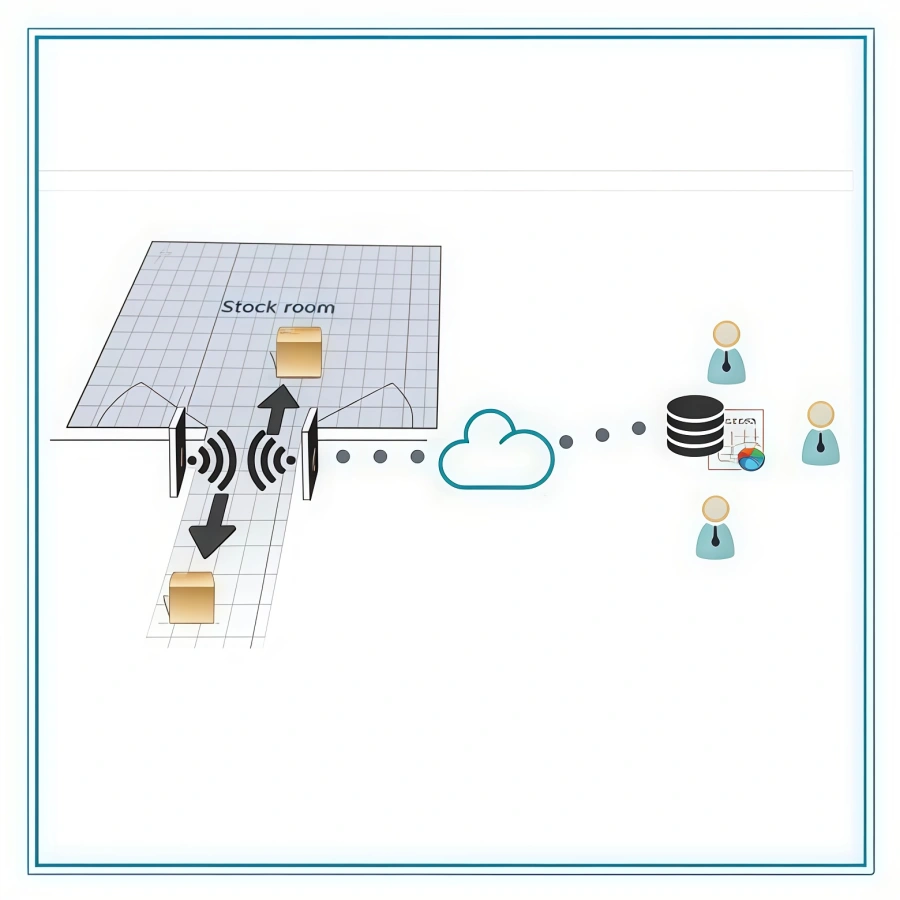
Introduction: Why Traditional Weighbridge Monitoring Is No Longer Enough
Weighbridges sit at a strange crossroads of modern industry. They are critical infrastructure—used in mining, logistics, ports, construction sites, waste management, and agriculture—yet many still rely on manual processes that belong to the previous century.
Paper tickets. Human verification. License plate recording by hand. Disputes about weights. Vehicles queuing longer than necessary. Data that lives in spreadsheets instead of systems.
This is exactly where long-range UHF RFID readers quietly transform the weighbridge from a static scale into a smart, automated monitoring node.
A weighbridge monitoring solution based on long-range UHF RFID technology enables automatic vehicle identification, unmanned weighing, real-time data synchronization, and seamless integration with enterprise systems. The result is higher accuracy, faster throughput, lower labor costs, and—most importantly—trustworthy data.
This article provides a comprehensive SEO-focused product introduction explaining how long-range UHF RFID readers work in weighbridge monitoring systems, what components are involved, how they solve industry pain points, and why they have become the preferred technology worldwide.
1. Understanding the Role of Weighbridge Monitoring Systems
1.1 What Is a Weighbridge Monitoring System?
A weighbridge monitoring system is designed to:
-
Identify vehicles
-
Measure gross, tare, and net weight
-
Record transaction data
-
Control vehicle flow
-
Prevent fraud and manipulation
-
Integrate weight data with ERP or logistics systems
Traditional systems rely heavily on manual intervention, which introduces errors, delays, and opportunities for abuse.
1.2 Why Automation Is Critical in Modern Weighbridge Operations
Industries handling high vehicle volumes face recurring challenges:
-
Congestion at weighing points
-
Disputes over weight records
-
Unauthorized vehicle access
-
Duplicate or fake weighing
-
Human error and corruption risks
Automation is not a luxury—it is an operational necessity.
This is where long-range UHF RFID readers become the backbone of intelligent weighbridge monitoring.
2. What Are Long-Range UHF RFID Readers?
2.1 Definition and Working Principle
A long-range UHF RFID reader is a radio-frequency device operating in the UHF band (860–960 MHz) that can identify RFID tags from distances typically ranging from 5 to 15 meters, and sometimes more under controlled conditions.
The reader:
-
Emits an RF signal
-
Powers passive UHF RFID tags
-
Receives the tag’s unique ID
-
Transmits data to a backend system
This process occurs in milliseconds, without physical contact or line-of-sight.
2.2 Why UHF Is Ideal for Weighbridge Monitoring
UHF RFID offers:
-
Long read range
-
Fast multi-tag anti-collision
-
High-speed vehicle identification
-
Stable performance in outdoor environments
-
Compatibility with vehicle-mounted tags
Compared to LF or HF RFID, UHF is better suited for moving vehicles, wide lanes, and industrial settings.
3. Architecture of a UHF RFID-Based Weighbridge Monitoring Solution
A complete solution typically includes:
-
Long-range UHF RFID readers
-
Directional RFID antennas
-
Vehicle-mounted UHF RFID tags
-
Weighbridge load cells and indicators
-
Edge controllers or industrial PCs
-
Monitoring software and cloud systems
-
Barrier gates and traffic lights (optional)
The RFID reader is the identity trigger that synchronizes vehicle data with weight data.
4. Long-Range UHF RFID Readers: Core Product Features
4.1 Reading Distance and Accuracy
Industrial-grade long-range UHF RFID readers typically support:
-
Adjustable RF output (20–33 dBm)
-
Stable reading distance of 8–12 meters
-
Directional reading with antenna tuning
This allows accurate identification even when vehicles:
-
Approach slowly
-
Stop briefly
-
Move continuously across the weighbridge
4.2 Multi-Vehicle Anti-Collision Capability
Weighbridges often experience:
-
Close vehicle spacing
-
Queues near entry points
Advanced UHF RFID readers support EPC Gen2 anti-collision protocols, allowing them to:
-
Read multiple tags simultaneously
-
Select the correct vehicle based on antenna zone logic
-
Prevent duplicate or ghost reads
4.3 Industrial-Grade Durability
Weighbridge environments are harsh:
-
Dust
-
Rain
-
Extreme temperatures
-
Electromagnetic interference
Long-range UHF RFID readers used in weighbridge systems are designed with:
-
IP65/IP67 enclosures
-
Wide operating temperature ranges
-
Surge and lightning protection
-
Industrial connectors
Reliability matters more than raw specifications.
5. RFID Tags Used in Weighbridge Monitoring
5.1 Vehicle-Mounted UHF RFID Tags
Common tag types include:
-
Windshield RFID tags
-
Hard RFID tags for trucks
-
Tamper-proof RFID labels
-
License plate embedded tags
These tags store a unique ID linked to:
-
Vehicle number
-
Cargo type
-
Customer account
-
Contract or order information
5.2 Why Tamper-Proof Tags Are Critical
Weighbridge fraud often involves:
-
Tag swapping
-
Unauthorized vehicles using valid credentials
Tamper-proof RFID tags self-destruct or become unreadable when removed, ensuring vehicle-to-tag integrity.
6. How Long-Range UHF RFID Readers Work with Weighbridges
6.1 Step-by-Step Operational Flow
-
Vehicle approaches the weighbridge
-
UHF RFID reader identifies the vehicle tag
-
System validates authorization
-
Barrier opens (if installed)
-
Vehicle moves onto weighbridge
-
Weight data is captured
-
RFID ID and weight data are bound together
-
Records are stored locally and in the cloud
-
Vehicle exits automatically
No driver interaction required.
6.2 Synchronization of Identity and Weight Data
The key advantage of RFID is data binding:
-
RFID identifies who
-
Weighbridge measures how much
-
Software binds both into a single transaction
This eliminates disputes and manual reconciliation.
7. Unmanned and Automated Weighbridge Solutions
7.1 What Is an Unmanned Weighbridge?
An unmanned weighbridge operates without on-site staff, relying on:
-
Long-range RFID readers
-
Automatic barriers
-
Traffic lights
-
Surveillance cameras
-
Software logic
RFID is the primary trigger for automation.
7.2 Benefits of Unmanned Weighbridge Systems
-
Reduced labor costs
-
24/7 operation
-
Faster vehicle throughput
-
Elimination of human bias
-
Improved auditability
Long-range RFID readers make unmanned operation feasible and reliable.
8. Integration with IoT and Enterprise Systems
8.1 RFID Readers as IoT Devices
Modern UHF RFID readers support:
-
Ethernet
-
TCP/IP
-
MQTT
-
HTTP/HTTPS
-
RS485
They act as edge IoT nodes, transmitting data to:
-
Cloud platforms
-
ERP systems
-
Warehouse management systems
-
Logistics platforms
8.2 Data Analytics and Reporting
RFID-based weighbridge data enables:
-
Vehicle frequency analysis
-
Load optimization
-
Overloading detection
-
Compliance reporting
-
Revenue tracking
Data that was once isolated becomes actionable.
9. Comparing RFID with Other Vehicle Identification Technologies
9.1 RFID vs License Plate Recognition (ANPR)
ANPR limitations:
-
Sensitive to lighting and weather
-
Higher maintenance
-
Privacy concerns
-
Misreads due to dirt or damage
RFID advantages:
-
Works in rain, fog, dust
-
Faster identification
-
Lower long-term cost
-
No image processing errors
Many systems combine both, but RFID remains the primary identification layer.
9.2 RFID vs Manual Card Systems
Manual card systems:
-
Require stopping
-
Are prone to loss
-
Increase transaction time
Long-range RFID allows drive-through weighing, even for heavy trucks.
10. Key Industries Using RFID Weighbridge Monitoring Solutions
10.1 Mining and Quarry Operations
-
Raw material tracking
-
Load verification
-
Theft prevention
10.2 Logistics and Freight Terminals
-
Inbound/outbound control
-
Contract-based weighing
-
Automated billing
10.3 Ports and Container Yards
-
High-volume truck traffic
-
Integration with port management systems
10.4 Waste Management and Recycling
-
Vehicle classification
-
Weight-based billing
-
Regulatory compliance
10.5 Agriculture and Grain Handling
-
Crop intake monitoring
-
Farmer account management
-
Seasonal traffic handling
11. Preventing Fraud and Data Manipulation
RFID-based weighbridge monitoring prevents:
-
Duplicate weighing
-
Fake vehicle identity
-
Manual record alteration
-
Weight ticket tampering
Every transaction is digitally signed by:
-
RFID ID
-
Timestamp
-
Weight data
-
System logs
Trust shifts from people to systems.
12. Installation and Deployment Considerations
12.1 Reader and Antenna Placement
Critical factors include:
-
Lane width
-
Vehicle speed
-
Antenna polarization
-
Mounting height and angle
Proper RF planning ensures accurate reads and avoids cross-lane interference.
12.2 System Scalability
Long-range UHF RFID readers support:
-
Multi-lane expansion
-
Multi-site integration
-
Centralized monitoring
Adding vehicles is a software task, not a hardware bottleneck.
13. Cost Efficiency and ROI
13.1 Initial Investment vs Long-Term Savings
While RFID systems require upfront investment, they deliver:
-
Lower labor costs
-
Reduced disputes
-
Faster throughput
-
Better data utilization
ROI is often achieved within 12–24 months, depending on traffic volume.
14. Future Trends in RFID-Based Weighbridge Solutions
-
AI-assisted weight anomaly detection
-
Blockchain-backed weight records
-
Integration with smart city infrastructure
-
Predictive maintenance using IoT data
-
Fully barrier-free weighing corridors
RFID remains central to these innovations.
Conclusion: Long-Range UHF RFID Readers Are the Backbone of Smart Weighbridge Monitoring
A weighbridge is no longer just a scale. It is a data gateway.
Long-range UHF RFID readers transform weighbridge operations by:
-
Automating vehicle identification
-
Synchronizing identity with weight data
-
Enabling unmanned, 24/7 operation
-
Improving accuracy, transparency, and efficiency
For industries where weight equals money—and errors equal losses—RFID is not optional. It is foundational.
In modern weighbridge monitoring solutions, long-range UHF RFID readers are not accessories.
They are the system’s intelligence layer.